An outdoor vertical platform lift does not have one universal travel limit. The height depends on the model, the structure, and the code in your area, so the brochure number is only part of the picture. Many installations cover a short rise from grade to a porch, deck, or landing, while taller runs need more engineering and stricter review.
If you are comparing options for a home, church, clinic, or small commercial building, the real question is not only how high the lift can go. It is also how safely it can go there, how it will hold up outside, and whether the site passes local accessibility rules.
The best place to start is with the site itself. The lift should fit the building, the weather, and the way people will use it.
Key Takeaways
- There is no single outdoor travel height for every vertical platform lift.
- Many outdoor units handle a short rise, often around a porch or deck change.
- The maximum travel depends on the manufacturer, structure, and local code.
- Weatherproofing matters as much as height when the lift sits outside.
- Taller or higher-traffic projects may call for a different lift type.
What actually sets an outdoor lift's travel height
The first limit is the manufacturer's rated travel. Every lift model is built and tested for a specific range, and that range is tied to its frame, drive system, and support requirements. A unit that works well for a porch entry may not be right for a taller public landing.
Local code matters just as much. A lift used for public access has to fit the adopted accessibility rules in that jurisdiction, and that can include ADA and ASME A18.1 requirements. A lift that passes in one city may need different details in another.
A taller lift also creates more load on the structure. That means the wall, footings, anchors, and landings all need to support the run safely. When the project sits outdoors, the materials and controls must also stand up to rain, sun, humidity, and corrosion.
A simple way to think about it is this: the lift height is not chosen in isolation. It is the result of the model, the site, and the approval process working together.
| Factor | What it affects | Why it matters |
|---|---|---|
| Manufacturer rating | Maximum travel and platform setup | The lift can only go as high as the tested design allows |
| Structure and mounting | Anchors, footings, and support points | A taller run puts more stress on the building |
| Local code | Accessibility, safety, and inspection | The installation has to meet the rules in that area |
| Outdoor exposure | Materials, wiring, and controls | Weather can shorten service life without the right protection |
The tallest lift is not always the right lift. The right one is the one that fits the site, code, and daily use.
Typical outdoor vertical platform lift ranges
Most outdoor vertical platform lifts are used for one level of access. In real projects, that often means a short rise from grade to a porch, deck, terrace, or raised landing. Many of those installs fall in the rough 6 to 14 foot range, which covers a lot of home and small-building needs.
That said, higher travel is possible on certain commercial-grade models. Once the rise gets taller, the lift needs more careful structural design, more attention to safety details, and more review from the permit office. The higher the platform travels, the less forgiving the installation becomes.
Common outdoor use cases usually include:
- a front porch that sits above the driveway or walkway
- a backyard deck that needs accessible access from the patio
- a raised side entrance at a church, clinic, or office
- a small commercial landing where a ramp would take too much space
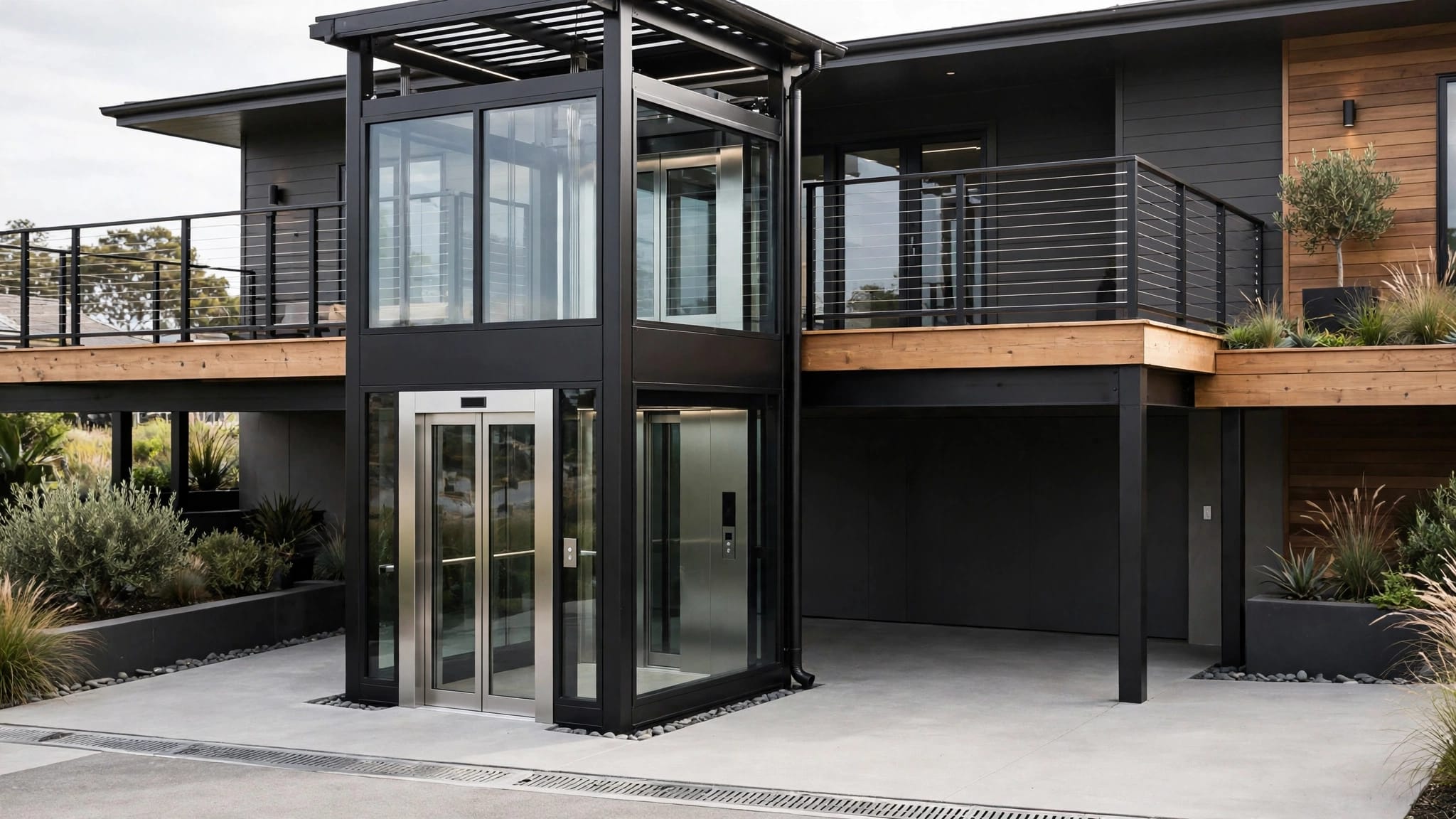
If the building needs repeated passenger trips across more than one floor, the project may call for a different solution. In that case, a passenger-compliant elevator can be a better fit because it handles enclosure, traffic, and code demands in a different way.
The key point is that "outdoor" does not mean "unlimited." It usually means a short, direct rise with the right weather protection and safety setup.
What an outdoor installation needs
A good outdoor installation starts with the landing layout. The platform needs enough room to enter and exit safely, and the lift needs a solid base or mounting surface. If the site is cramped, the travel height may be fine on paper but awkward in real use.
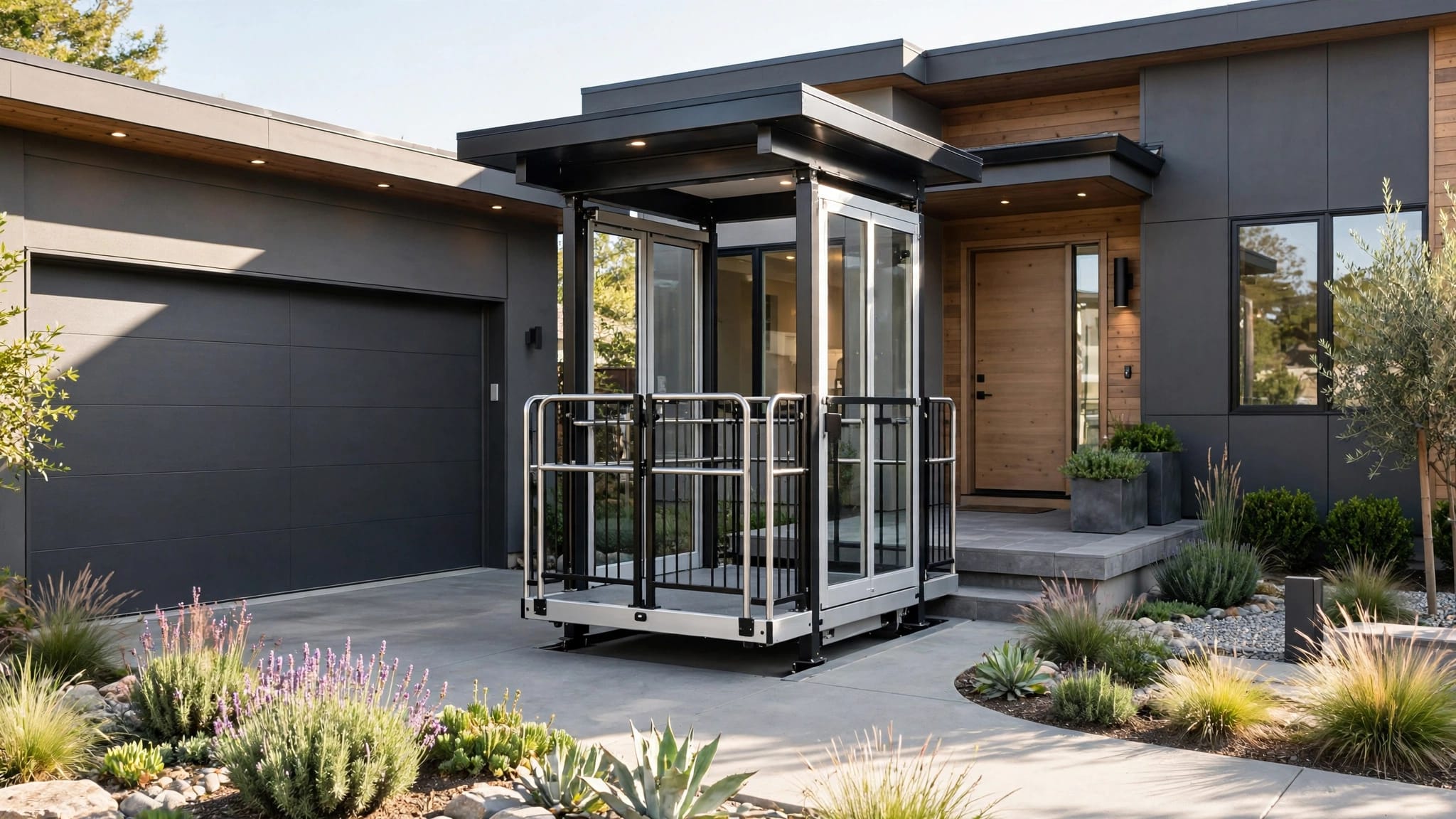
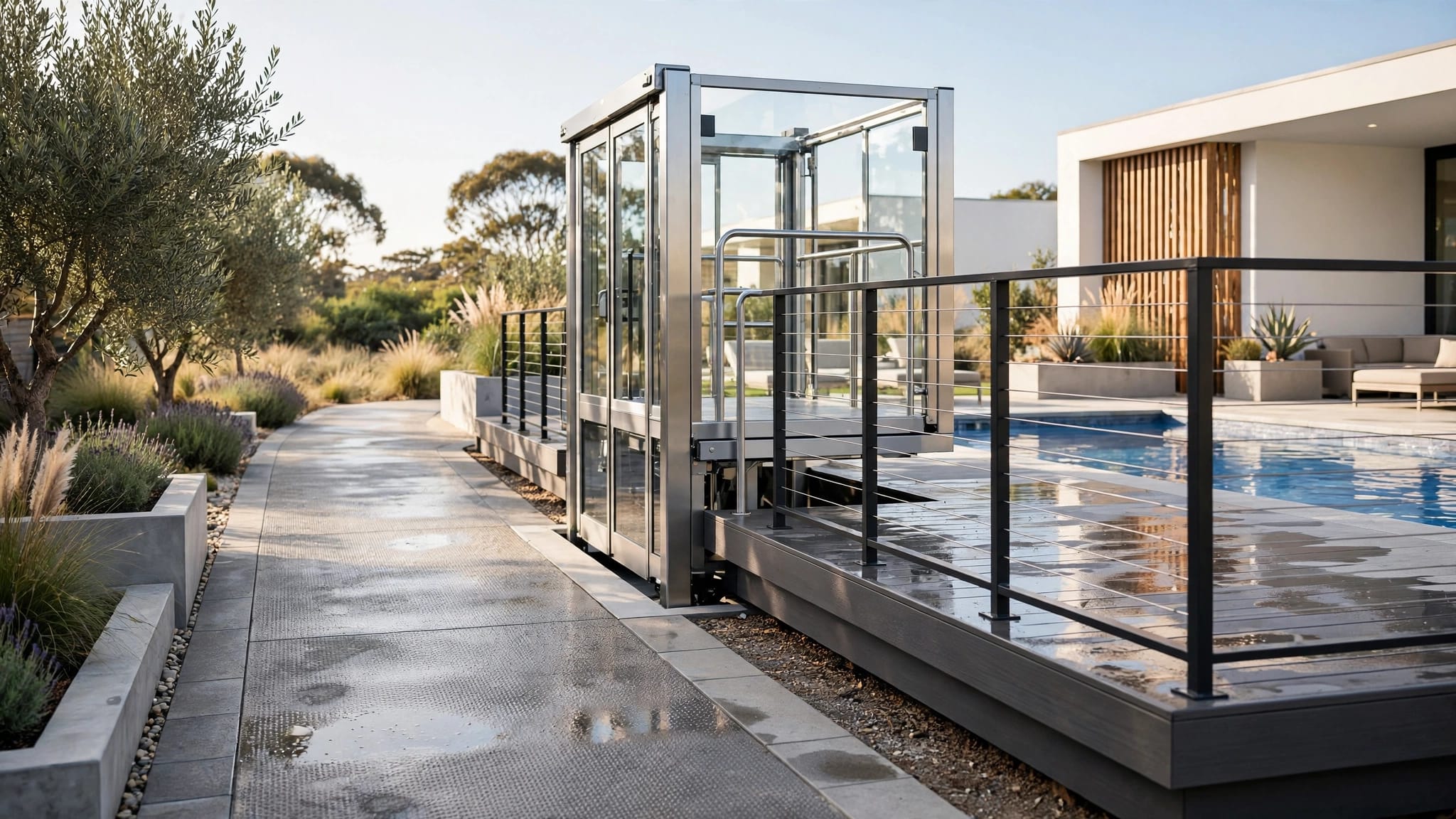
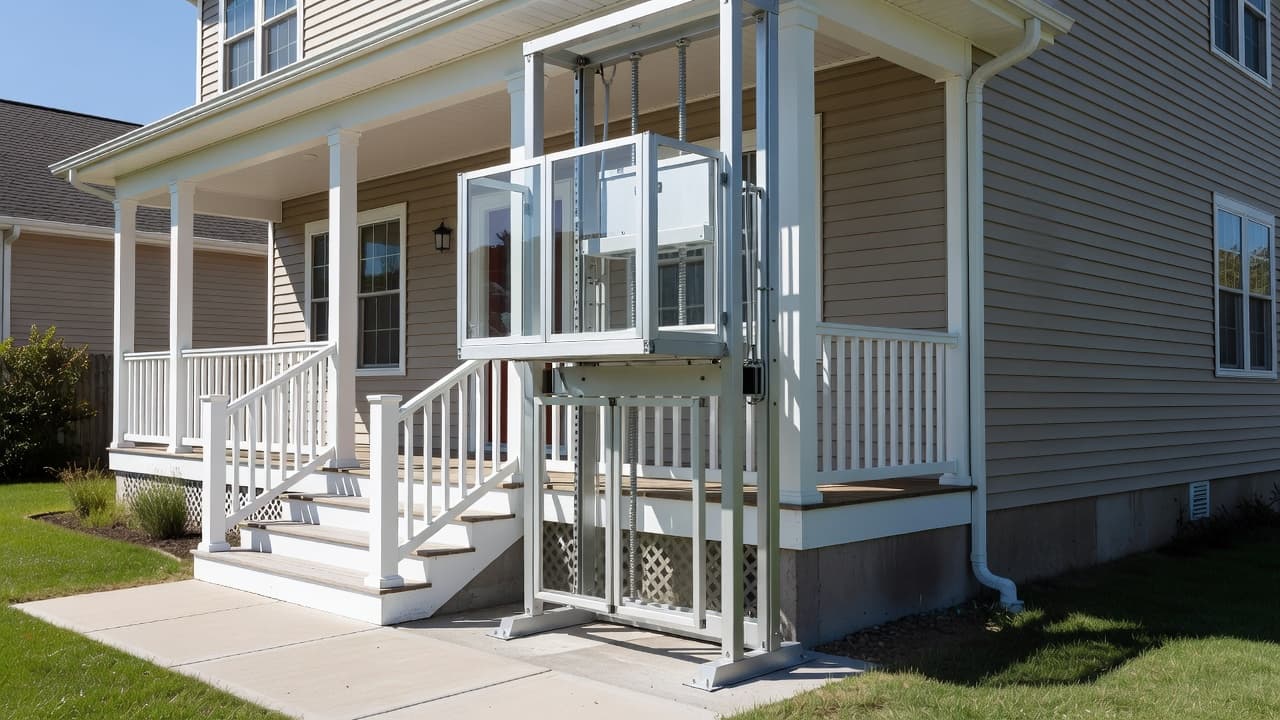
The image above shows the kind of straight, outdoor access path many homeowners need. It also shows why layout matters. The lift has to clear the stairs, line up with the landing, and leave room for the gate and platform movement.
Power is part of the plan too. The lift needs the correct electrical supply, and the route for that power should be protected from water and damage. Drainage matters as well. Water should not pool around the base, because standing water can create problems for both the structure and the mechanical parts.
Overhead clearance, platform size, and gate swing all need to be checked before installation starts. So does the path for maintenance access. If a technician cannot reach the drive components or control box easily, the system becomes harder to service later.
Outdoor work also has to account for wind, splash, and sun exposure. In coastal areas, salt air can be especially hard on weak finishes and unprotected hardware. That is why site planning matters as much as the lift itself.
Weatherproofing and safety details that matter outside
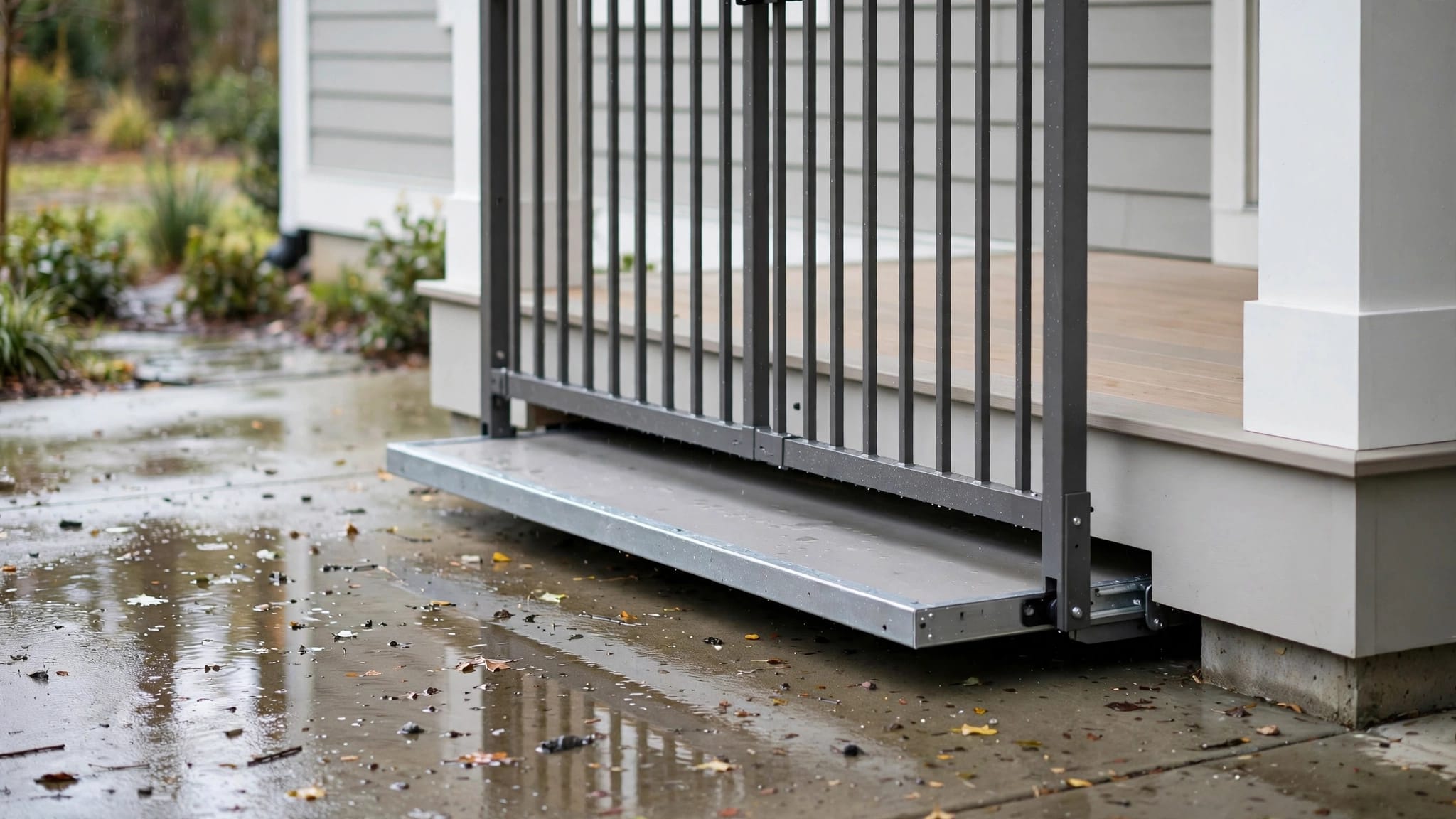
An outdoor vertical platform lift lives in a harsher environment than an indoor unit. Rain, humidity, heat, and UV exposure all take a toll over time. For that reason, weatherproofing is not a small detail. It is part of the lift's job.
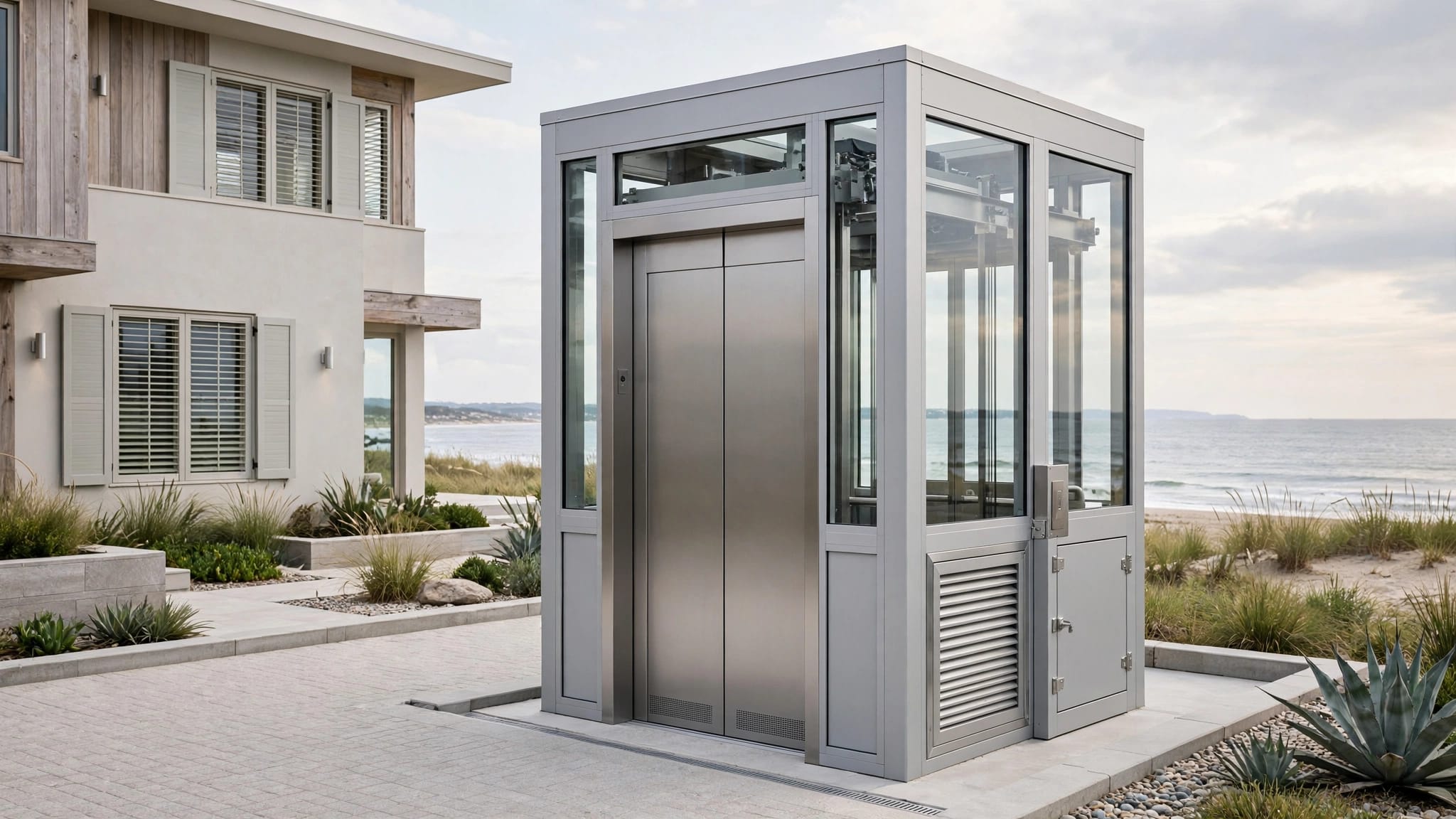
Good outdoor units usually rely on corrosion-resistant metals, sealed electrical components, and finishes that can handle exposure. In humid places like southwest Florida, those choices help the lift keep working longer with less wear. The controls should also be easy to reach and protected from the elements.
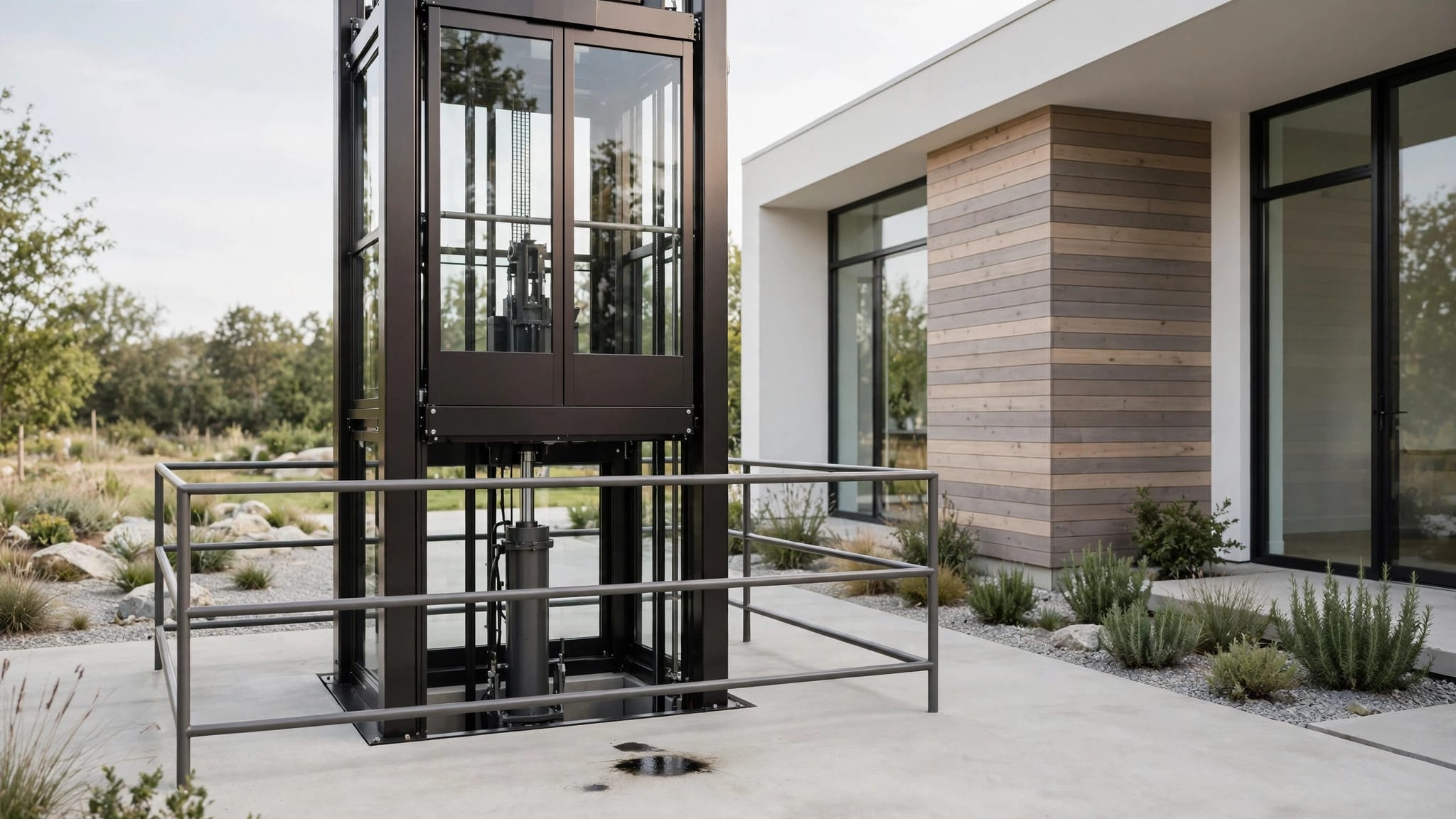
Safety hardware matters just as much. Buyers should ask about landing gates, platform guards, non-slip surfaces, emergency lowering, and any redundant safety systems built into the drive. Some lifts use multiple cables or patented braking systems to add another layer of protection. Those features do not replace code compliance, but they do add peace of mind.
Daily use should feel simple and secure. The platform should stop smoothly, the landing should align cleanly, and the gate should operate without forcing the user to improvise. If people have to work around the lift every day, the design is missing something.
Outdoor use also means regular inspection. Debris, water intrusion, and hardware wear show up faster outside, so a maintenance plan should be part of the purchase decision.
When a taller run points to a different lift
A short rise and a high-rise job are not the same project. A vertical platform lift works well when the goal is accessible access over a modest height, with direct entry and exit. It also fits well when the building needs help for one person or a small number of users at a time.
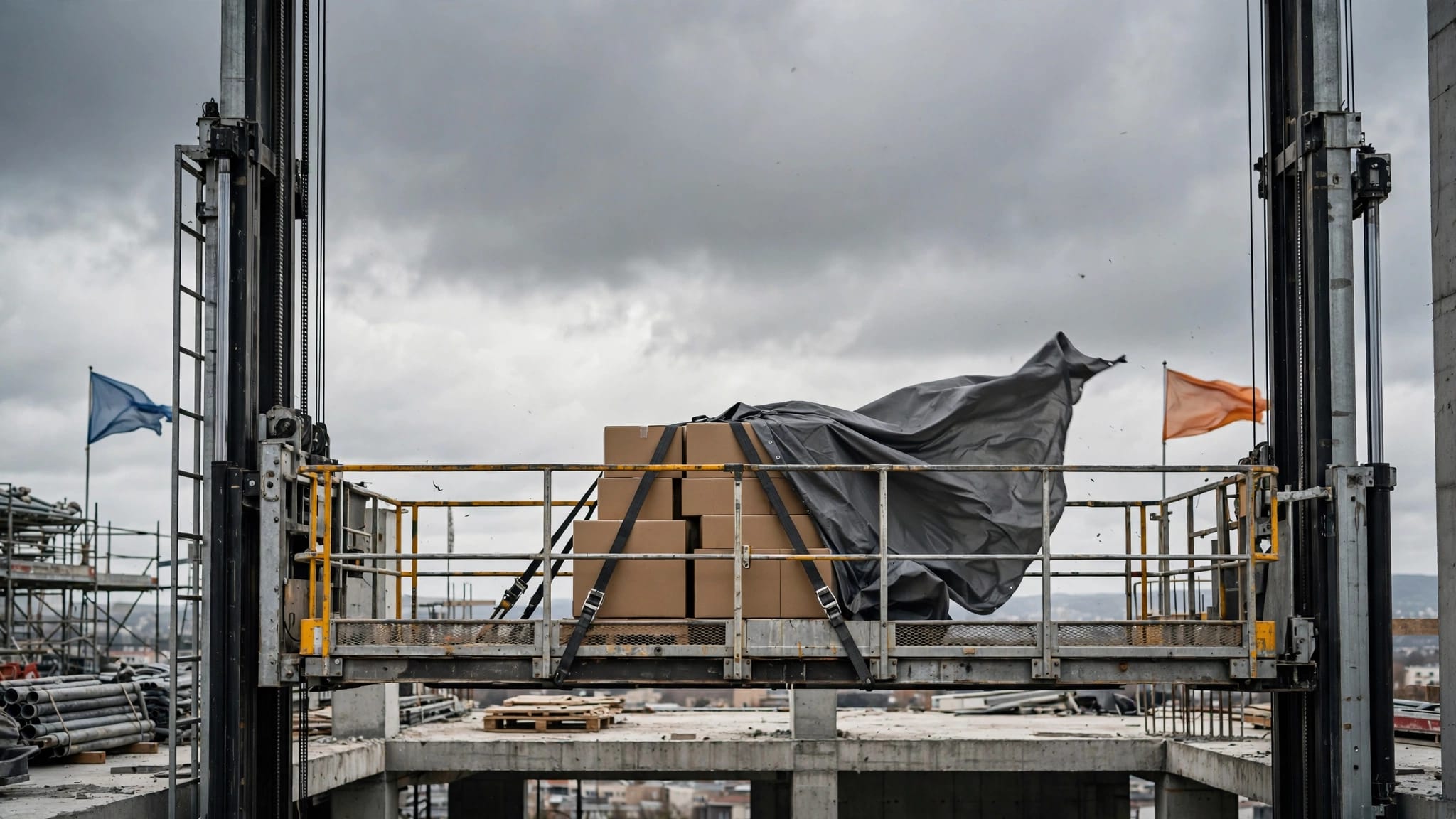
A cargo lift makes more sense when the main goal is moving materials, boxes, or equipment instead of passengers. That is a different duty cycle and a different kind of load. By contrast, a passenger elevator is better when the building needs enclosed service, more frequent use, or travel across more than one floor.
A simple field check can help narrow the choice:
- Choose a vertical platform lift when the rise is short and access is straightforward.
- Choose a cargo lift when the main load is freight, not people.
- Choose a passenger elevator when the building needs enclosed, multi-floor passenger service.
Once the project leaves the simple porch-and-landing category, plan on more design work, more permitting, and more inspection. That is normal. It is also the point where the cost of getting the wrong lift becomes obvious.
The smartest move is to verify the manufacturer's travel specification, then compare it with the local building and accessibility rules. If the numbers do not line up, the site needs a different solution, not a stretch of the spec sheet.
Conclusion
So, how high can an outdoor vertical platform lift travel? High enough for many porches, decks, and short commercial entries, but not by one universal number. The real limit comes from the model, the structure, and the code that governs the installation.
If you keep the site, the weather, and the daily use in view, the choice becomes much clearer. The right lift is the one that fits the travel height and still works safely outdoors, year after year.
Recent Posts