Aluminum vs Steel Towers for Coastal Lift Systems

Share this article

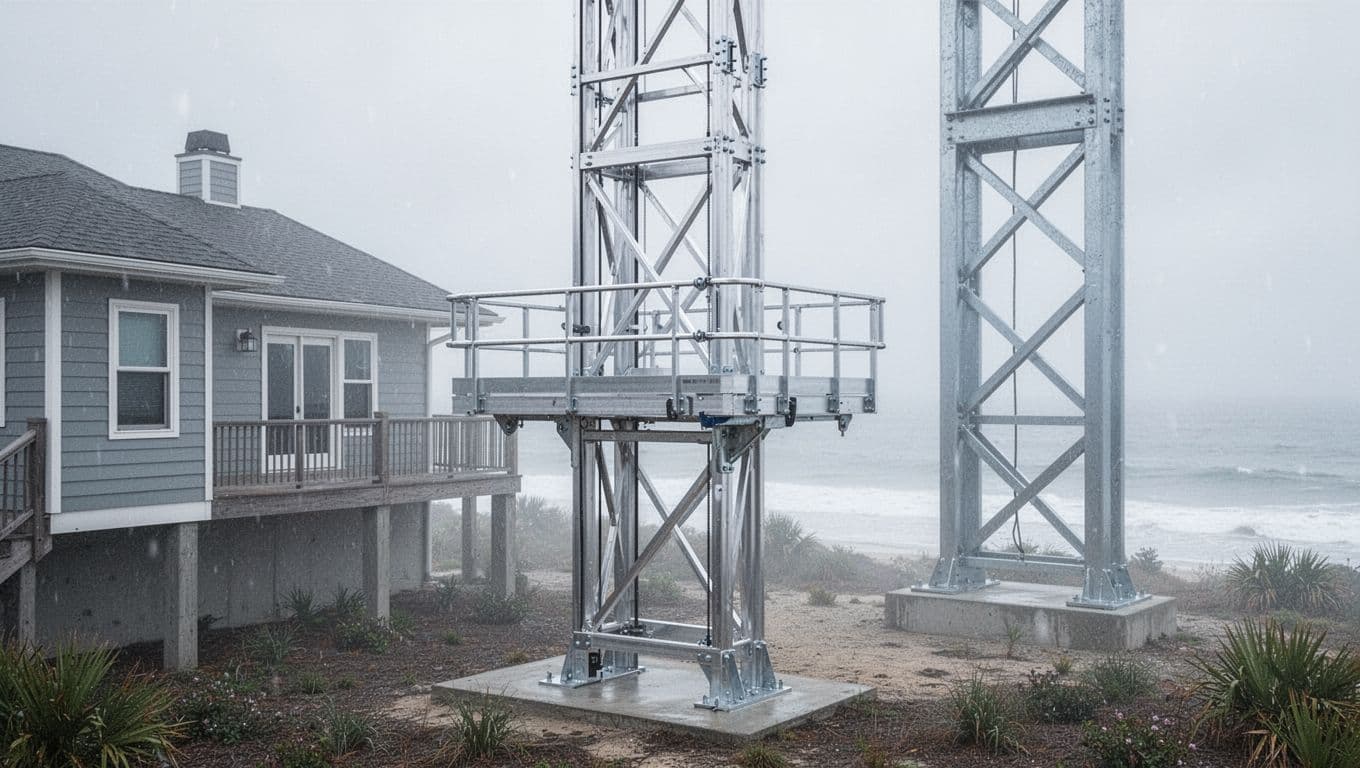
Salt air can shorten the life of an outdoor lift long before the main frame looks damaged. For a coastal lift, the aluminum vs steel towers decision affects corrosion maintenance, hardware, installation, and long-term cost.

Aluminum often performs well near the ocean because it forms a protective oxide layer. Steel can also work, but its performance depends on the selected grade, coating system, joints, and maintenance plan. The comparison starts with how salt reaches the lift.

Why salt air changes outdoor lift design

Coastal corrosion is an electrochemical reaction that needs moisture and a conductive contaminant. Airborne chlorides settle on tower members, rails, gates, fasteners, and electrical enclosures. Humidity creates a thin moisture film, while repeated drying leaves concentrated salt deposits.

Rain can remove some residue, but roof runoff and wind can move salt into sheltered areas. A tower under a covered porch may receive less direct spray while still facing high humidity around its base and connections. Salt air damage to outdoor elevators can affect moving parts and controls as well as structural metal.

Chloride exposure is more than surface rust

Carbon steel often shows red-brown rust when its protective coating breaks down. That warning is useful, but corrosion can also begin under paint, around fasteners, or inside crevices. Pitting reduces the effective section of a member and can weaken a connection without covering the whole surface.

Aluminum doesn't produce red rust, but it isn't immune to salt damage. Chlorides can cause pits where deposits stay wet or where a joint blocks drainage. Pitting, crevice corrosion, and galvanic corrosion deserve attention during design and inspection.

Site exposure determines the maintenance burden

An open oceanfront site usually puts more salt on equipment than a property several blocks inland. Wind direction, elevation, nearby seawalls, canals, vegetation, and roof drainage also affect exposure. The tower's distance from the shoreline matters, but it isn't the only site variable.

A site review should record where spray can reach the lift, where water can collect, and whether technicians can safely clean the structure. Flood conditions and storm preparation add design questions that the frame material can't solve by itself.

How aluminum vs steel towers resist salt air

The two materials need different protection strategies. Aluminum's protection begins with the metal itself, while ordinary steel needs a barrier or a corrosion-resistant alloy. In both cases, connection design can decide whether the tower performs well.

Aluminum's natural oxide protection

When aluminum meets oxygen, it quickly develops a thin oxide film. That layer adheres to the surface and slows further oxidation. If the surface is scratched, fresh aluminum can form oxide again, which gives the material useful protection outdoors.

Salt water changes the picture. Chloride ions can penetrate weak points in the oxide film and produce localized pitting. Alloy selection, surface finish, member geometry, weld quality, and drainage all affect the result. A marine-grade label without a clear material and fabrication specification doesn't tell an engineer enough.

Aluminum's lower density can simplify handling during installation. However, the tower still needs adequate strength, stiffness, anchorage, and resistance to wind and operating loads. A lighter member isn't automatically a better structural design.

Steel depends on its corrosion system

Carbon steel needs a durable barrier, such as galvanizing, paint, or a qualified coating system. Galvanizing adds zinc, which protects the underlying steel while the zinc remains available. Paint and powder coatings can provide a strong barrier, but chips, cut edges, drilled holes, and damaged weld areas need proper treatment.

Stainless steel uses a passive chromium-rich oxide film. Marine projects may specify 316 stainless where chloride exposure is high because it generally resists chlorides better than common 304 stainless. Even 316 can stain or corrode in stagnant salt deposits and tight crevices.

For steel towers, request the full corrosion system: base material, coating or galvanizing method, surface preparation, weld treatment, fastener grade, and field-repair procedure. That information is more useful than saying a tower is simply "coastal rated."

Details that decide real-world performance

A frame can have sound members and still develop problems at its connections. Salt collects where surfaces overlap, water drains slowly, or dissimilar metals touch.

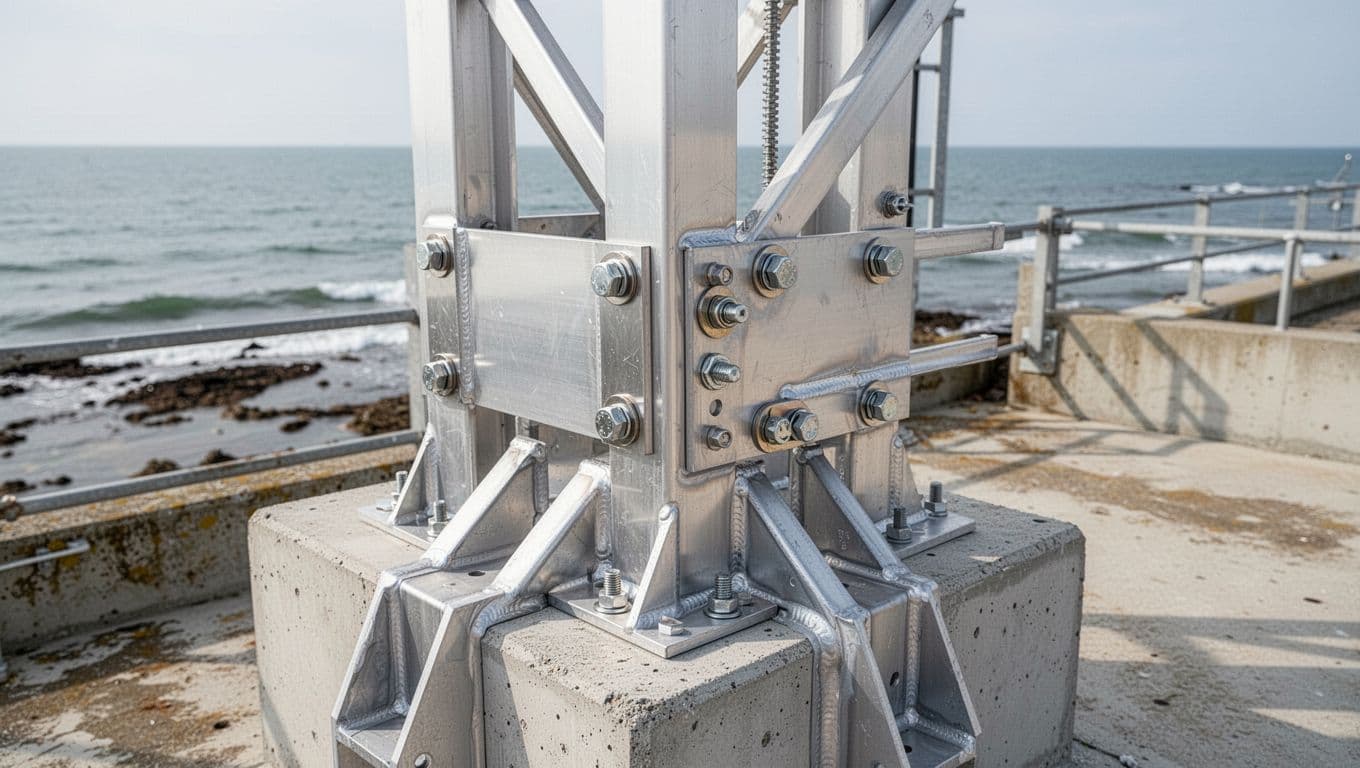
Joints and hardware create local risk

Bolts, washers, hinges, rail brackets, gate hardware, cable attachments, and base plates all need their own corrosion review. Stainless fasteners may resist salt better than ordinary plated hardware, but the grade, finish, and surrounding materials still matter.

When aluminum contacts stainless steel or carbon steel in saltwater, the metals can form a galvanic couple. The less noble metal, often aluminum or carbon steel, may corrode faster. Insulating washers, sleeves, sealants, compatible coatings, and controlled drainage can reduce that risk.

Connections also need inspection access. A hidden bracket that cannot be rinsed or examined can cost more to maintain than an exposed connection that is easy to reach.

Welds, crevices, and drainage need attention

Welding changes the local condition of a metal and its surface protection. Steel welds may need cleaning and coating repair. Aluminum welds need controlled procedures because heat affects local properties and the oxide film must be managed during fabrication.

Closed tubes and horizontal ledges need a planned way to handle water. Drain holes, sloped surfaces, sealed ends, and venting should match the tube design and local conditions. Water shouldn't discharge onto a lower joint, rail, or electrical component.

A coastal tower is only as protected as its most exposed connection. Base plates, gate hinges, and rail brackets deserve the same material review as the main columns.

Compare total cost of ownership, not the first quote

A lower purchase price may not produce the lower long-term cost. Compare the whole service plan with the material selection.

Cost factor Aluminum tower Steel tower
Handling Lower member weight may simplify lifting Higher weight may require more handling capacity
Corrosion protection Natural oxide layer, plus attention to alloy and joints Coating, galvanizing, stainless grade, or a combination
Field damage Pits and galvanic attack still need repair Scratches, rust, and coating breakdown need treatment
Inspection focus Pitting, crevices, welds, and mixed-metal contacts Rust, blisters, exposed edges, welds, and fasteners
Long-term cost Depends on fabrication, access, cleaning, and repairs Depends on coating life, touch-ups, access, and repairs

Aluminum may reduce handling effort and avoid some coating work, but fabrication and material costs vary by design. Steel may provide an economical structural solution, yet difficult coating repairs can require scaffolding, equipment, or lift shutdowns. Stainless components can add cost while reducing risk in selected locations.

Include labor, cleaning access, replacement hardware, technician travel, corrosion inspections, and lost use of the lift. Commercial owners should also price interruptions to deliveries or accessibility. Residential owners may focus on keeping the lift available for occupants, groceries, luggage, and maintenance work.

How to choose aluminum vs steel towers for a coastal lift

There is no universal winner. The right choice connects the material, lift category, structure, exposure, and service plan.

Match the frame to the lift category

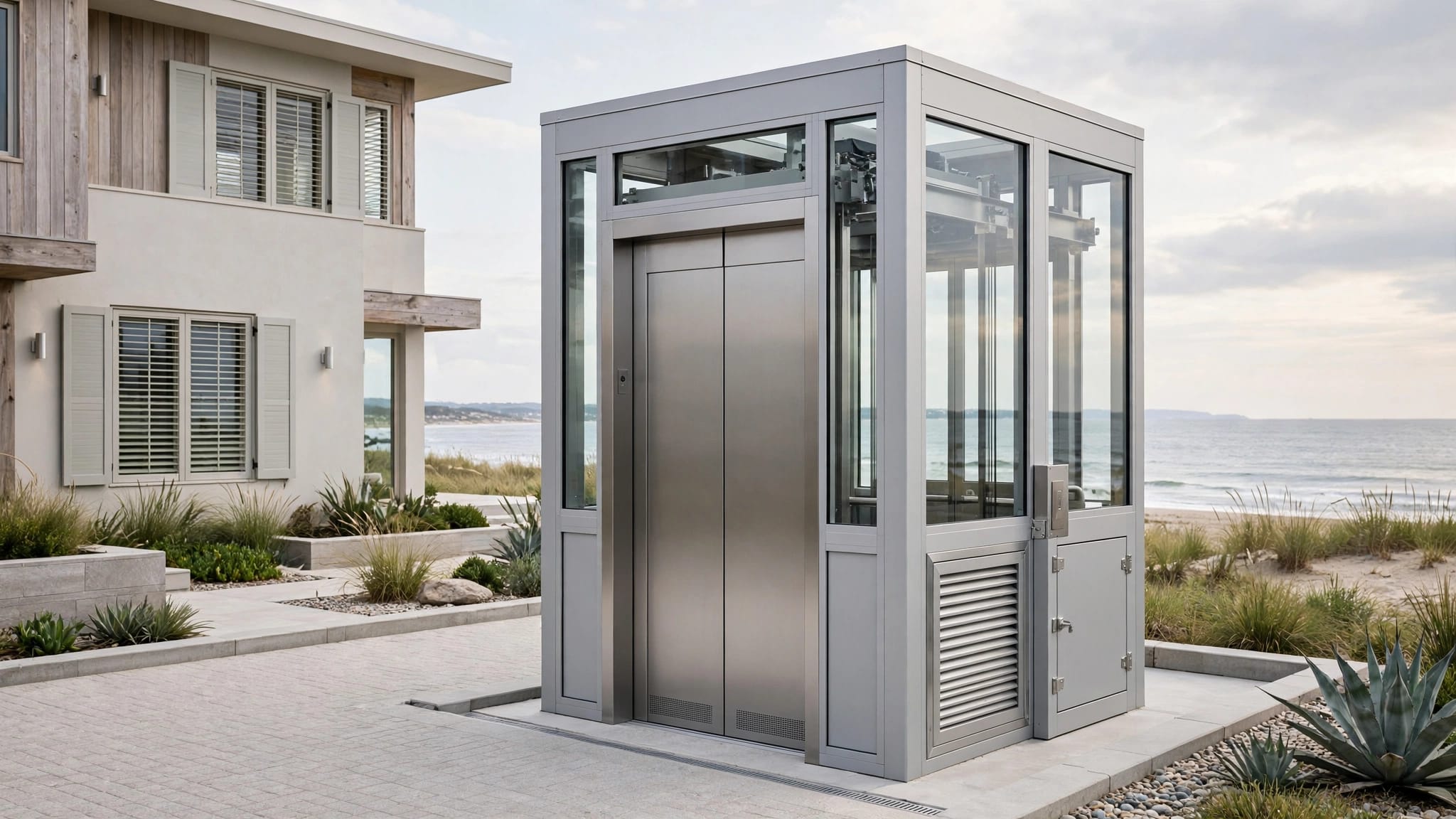
A passenger-compliant outdoor elevator carries people and requires a design that addresses entrances, gates or doors, controls, guarding, emergency operation, and applicable elevator requirements. A vertical platform lift supports accessibility over its approved travel and capacity. A cargo lift moves materials and shouldn't carry people unless the manufacturer designed and approved it for that use.

The equipment category affects loads, duty cycle, safety systems, and inspection requirements. Review the passenger, cargo, and platform lift code distinctions before selecting the tower material. A frame suited to a low-use platform lift may not suit a busy commercial cargo application.

Account for structure and access

Wind loads, building attachment, foundation conditions, flood exposure, travel height, and gate arrangement should guide the structural design. Steel's higher stiffness can help limit deflection with a compact section. Aluminum can reduce member weight, which may help with handling and installation. The engineer still must check strength, deflection, connections, anchorage, and local requirements.

Plan maintenance access at the same time. If technicians cannot reach a base plate, wash a rail, or inspect a gate hinge, the material advantage may disappear. Planning an exterior lift for a beach house early leaves room for drainage, service clearances, and attachment details.

Specify coastal protection before installation

Material choice works best when the project documents the details before fabrication. Vague descriptions create gaps between drawings, the quote, and the finished tower.

Ask for a written materials schedule

Request the aluminum alloy and finish, or the steel grade and coating system. The schedule should also identify exposed fasteners, washers, bushings, hinges, weld treatment, isolation materials, drainage openings, and enclosure protection.

Ask how the installer will repair field cuts, scratches, drilled holes, and damaged coatings. Confirm which cleaners are approved for the finish. Also ask how the design protects electrical controls, brake components, moving linkages, and cable terminations from saltwater.

A site survey should document shoreline exposure, prevailing wind, splash zones, runoff, flood conditions, and technician access. It should also identify nearby metals that could create unwanted contact or drainage paths.

Build the maintenance plan into handover

Fresh-water rinsing can remove salt deposits, but the frequency should match site exposure and the manufacturer's instructions. Cleaning isn't a substitute for inspection. Technicians should examine joints, bases, rails, gates, fasteners, welds, cables, controls, and protective finishes.

Keep records of cleaning, corrosion findings, coating repairs, replacement hardware, and safety inspections. Use the coastal outdoor lift maintenance checklist to organize routine care, then follow the manufacturer's requirements for safety-critical work.

A contractor shouldn't cover corrosion with fresh paint without addressing the cause. Remove deposits, assess the affected metal, restore isolation or drainage, and use an approved repair method.

Conclusion

The best aluminum vs steel towers decision comes from the complete coastal system, not the frame alone. Aluminum's oxide layer can reduce routine corrosion risk, while steel can perform well when its grade, coating, welds, hardware, and repairs receive careful attention.

Joints, drainage, salt deposits, and dissimilar-metal contact often control maintenance costs. Select the lift category first, document the protection system, plan technician access, and compare expected service work with the initial quote. In salt air, dependable performance comes from matching the material to details that keep it dry, inspectable, and repairable.

Recent Posts

By Veranda 'Vator August 14, 2026
Salt air can damage lift components long before rust becomes visible. Outdoor home lifts also face humidity, wind-driven rain, storm debris, floodwater, and power interruptions that rarely affect an indoor installation. For coastal homeowners, the choice between hydraulic and...
By Veranda 'Vator August 13, 2026
A machine room isn't automatically part of an outdoor elevator installation. Many exterior passenger elevators, cargo lifts, and vertical platform lifts place their drive equipment inside the shaft or in a protected cabinet nearby. An outdoor elevator machine room isn't automa...
By Veranda 'Vator August 12, 2026
An outdoor elevator can move groceries, luggage, tools, and people between floors, but it also adds a major piece of equipment to your coastal property. If a storm damages the lift or a guest gets hurt using it, the right policy details matter. Beach house insurance may cover...
By Veranda 'Vator August 11, 2026
Rain can turn an exterior elevator landing into a dangerous entry point within minutes. Snow, ice, salt spray, and tracked-in grit create added problems for anyone carrying groceries, pushing a wheelchair, or moving cargo. The right non-slip elevator surfaces help maintain tra...
By Veranda 'Vator August 10, 2026
When outdoor elevator error codes appear, the display is giving you a starting point, not a repair instruction. Weather, power quality, moisture, corrosion, and safety circuits can all trigger a shutdown. Property owners and facility managers need a clear response that protect...
By Veranda 'Vator August 9, 2026
Floodwater can turn a working outdoor lift into an electrical and mechanical hazard within minutes. A flooded outdoor lift may look clean after the water drains, but hidden damage can remain inside controls, wiring, brakes, and moving parts. If water has reached a cargo lift,...
By Veranda 'Vator August 8, 2026
An outdoor lift can stop because of a power failure, control fault, or weather-related problem. When that happens, exterior elevator emergency phones give occupants a direct way to contact help without relying on a personal cell phone. Emergency phones and alarm systems work t...
By Veranda 'Vator August 7, 2026
A beach house outdoor elevator can make an elevated home far easier to use. Groceries, luggage, beach chairs, tools, and mobility equipment no longer need to travel up several flights of stairs. However, buying a home with an existing lift adds another inspection project. The...
By Veranda 'Vator August 6, 2026
A coastal home gives pests easy access to moisture, shelter, and food. An outdoor elevator adds enclosed spaces, landing areas, control cabinets, and platform edges that need regular attention. Good exterior elevator pest prevention keeps insects and rodents away without creat...
By Veranda 'Vator August 5, 2026
A lightning strike can damage an outdoor elevator without hitting the lift directly. Current can travel through nearby metal, power lines, communication cables, or building steel before reaching sensitive controls. For Florida property owners, outdoor elevator lightning protec...
Show More