
Florida Accessibility Tax Benefits for Home Lifts

Share this article

An accessibility lift can make a Florida home usable again, but the tax result depends on medical need, property value, and who paid the bill. Florida accessibility tax benefits usually come through federal medical-expense rules, not a special Florida homeowner credit.

That distinction matters when you're comparing a vertical platform lift, residential elevator, or cargo lift. Before signing a contract, identify the equipment's purpose, separate medical costs from personal upgrades, and keep records for the tax year in which you pay.

Florida accessibility tax benefits: Start with federal rules

Many homeowners search for a Florida tax credit after installing a wheelchair lift or home elevator. As of August 2026, the main homeowner tax path is usually a possible federal medical expense deduction . It isn't an automatic credit, and buying accessibility equipment alone doesn't guarantee a tax benefit.

The main federal path is a medical expense deduction

IRS Publication 502 allows certain costs for special equipment installed in a home when the main purpose is medical care for the taxpayer, spouse, or dependent. It also addresses permanent home improvements made to accommodate a disability.

A lift may fit this category when a resident can't safely use stairs and the equipment provides necessary access between levels. The IRS still expects the expense to be reasonable and connected to the documented medical condition.

The possible deduction applies through Schedule A , which means the homeowner must itemize deductions. The amount must also be unreimbursed and exceed the applicable percentage of adjusted gross income.

Florida has no individual income tax

Florida doesn't impose an individual state income tax. Therefore, a homeowner can't claim a Florida personal income-tax deduction for a residential lift in the way a federal Schedule A deduction may apply.

That doesn't settle every state tax question. Florida sales tax and property tax rules are separate, and neither should be assumed to provide an exemption for a home elevator or wheelchair lift.

When an accessibility lift may qualify as medical care

The equipment's name doesn't determine its tax treatment. The facts behind the installation matter more than whether a contractor calls it an elevator, VPL, or accessibility lift.

Medical purpose and reasonable cost matter

The strongest case usually includes a documented disability or medical condition that makes stairs unsafe or impractical. A doctor's recommendation, medical records, or a written explanation of the resident's mobility needs can help connect the installation to medical care.

The installation should also match that need. A vertical platform lift that reaches an elevated entry may be easier to connect to wheelchair access than a system selected mainly for convenience. A passenger elevator can also be medically necessary, but its size, finishes, and added features may require closer review.

IRS guidance excludes extra costs for architectural or aesthetic reasons. Premium finishes, expanded living space, decorative structures, or features selected mainly for resale may not receive the same treatment as basic access equipment.

A mixed-use lift requires care. If the system helps a disabled resident but also moves household goods or improves convenience for everyone, a tax professional may need to evaluate which costs relate to medical care.

Home value can limit the deductible amount

A permanent improvement that raises a home's value usually requires a value adjustment. IRS Publication 502 says the homeowner generally subtracts the increase in fair market value from the improvement's cost. The remaining amount may qualify as a medical expense, subject to the other rules.

For example, if a lift and related accessibility work cost $40,000 and a qualified appraisal supports a $10,000 increase in home value, $30,000 may be the starting point for medical-expense analysis. That figure isn't automatically a deduction. Reimbursements, itemization, the 7.5% AGI threshold, and reasonable-cost rules still apply.

If the improvement doesn't increase the home's value, IRS guidance may allow the full cost to count as a medical expense. A before-and-after appraisal or another well-supported valuation can be useful when the amount is significant.

Match the lift to the access problem

Tax records can't correct a mismatch between the equipment and its intended use. A device that moves people has a different purpose and code path from one designed to move cargo.

VPLs and residential elevators

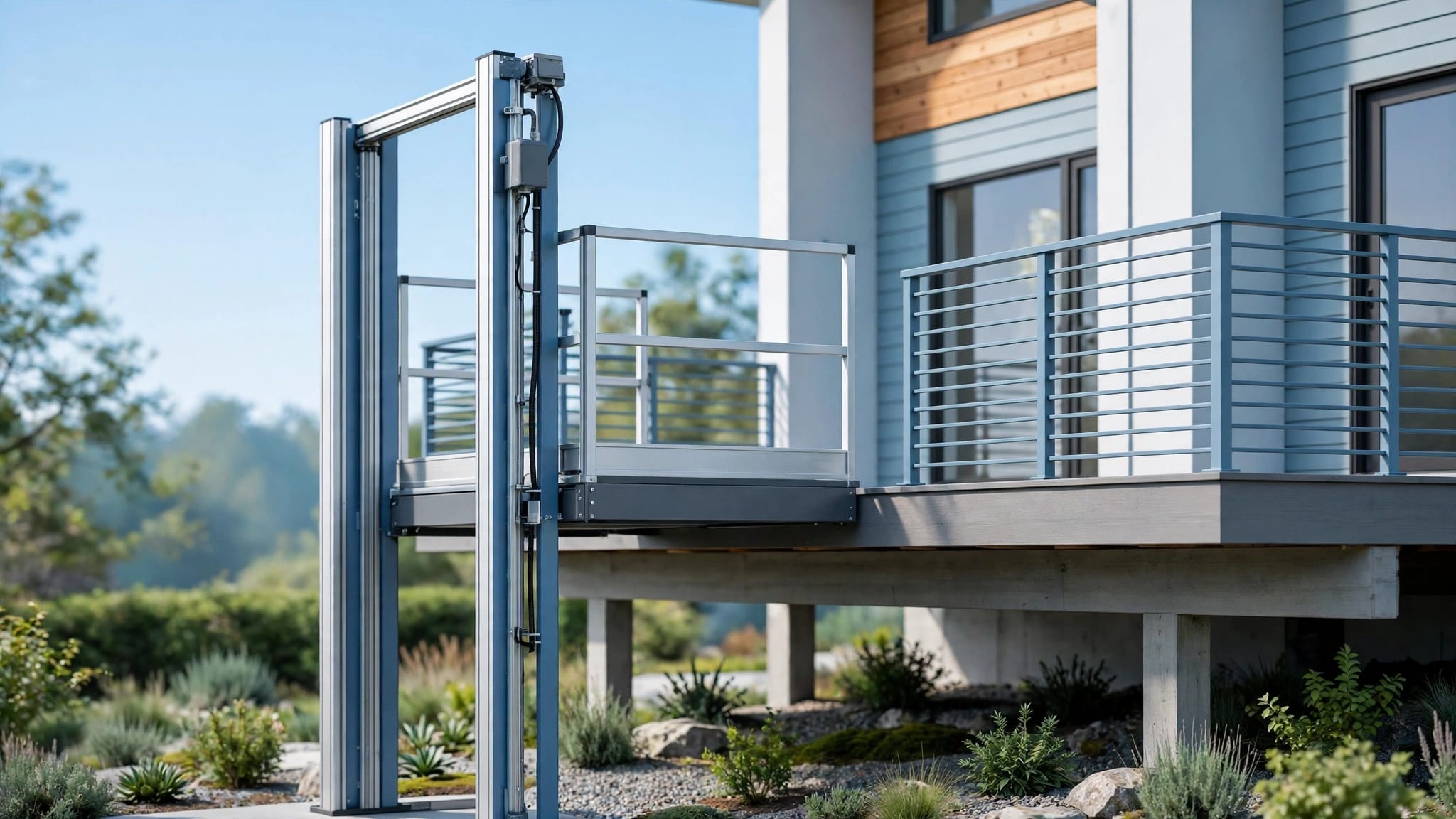
A vertical platform lift, or VPL, carries a wheelchair and its occupant over a vertical rise. Homeowners often use one to reach a porch, deck, balcony, or raised entry. A passenger-compliant outdoor elevator moves people between floors and follows different design and safety requirements.

Before construction, confirm the equipment category, platform or cab size, landing layout, gates, controls, and local permitting requirements. The project should also match the resident's actual mobility needs. Review the Florida outdoor elevator code requirements before final plans are approved.

Early planning can also prevent structural changes that later complicate the budget. A detailed guide to planning a Florida exterior lift can help homeowners discuss space, access points, and construction requirements with the project team.

Cargo lifts serve a different function

A cargo lift is designed to move materials, groceries, luggage, or supplies. Many cargo lifts aren't passenger-compliant, so they shouldn't be presented as a wheelchair access solution.

A cargo lift purchased mainly for household convenience usually has a weaker medical-purpose argument than equipment selected to move a person with a disability. If a project includes both a cargo lift and an accessibility lift, keep their proposals and costs separate. The distinction between a cargo lift and passenger elevator also matters for safety, permitting, and tax documentation.

Schedule A: Calculate the possible federal benefit

A qualifying lift expense doesn't produce a dollar-for-dollar refund. The deduction only reduces taxable income, and several limits can prevent a homeowner from receiving a federal benefit.

The 7.5% AGI threshold applies

IRS Topic 502 states that itemizers can deduct qualifying medical and dental expenses only to the extent they exceed 7.5% of adjusted gross income .

For example, a homeowner with $100,000 of AGI has a $7,500 threshold. If the homeowner has $20,000 in qualifying, unreimbursed medical expenses for the year, only the amount above $7,500 may be considered, assuming the person itemizes and meets the other requirements.

The lift cost is combined with other eligible medical expenses paid during that tax year. A homeowner who takes the standard deduction generally won't receive a separate Schedule A benefit for the lift.

Expenses paid in 2026 generally belong on the 2026 federal return filed in 2027. Costs paid in 2025 generally belong to the 2025 return filed during the 2026 filing season. Confirm the rules, forms, and thresholds for the actual year involved.

Reimbursements can change the result

Only the unreimbursed portion can generally support a medical expense deduction. Subtract amounts paid by health insurance, an assistance program, or another source before calculating the possible deduction.

HSA and FSA payments also require care. A cost reimbursed through one of these accounts generally can't be deducted again on Schedule A. However, whether a particular lift expense qualifies for HSA or FSA reimbursement can depend on medical necessity, plan rules, and supporting records.

Keep insurance explanations of benefits, account statements, and reimbursement dates. If reimbursement occurs in a different tax year, ask a qualified tax professional how that timing affects the return.

Florida sales, property, and business tax questions

The absence of a Florida individual income tax doesn't mean every part of the purchase is tax-free. Homeowners should review sales and property tax treatment before paying a deposit.

Don't assume a Florida sales or property tax exemption

Florida has targeted sales-tax exemptions for certain products and uses, but no clearly verified, broad statewide homeowner exemption was identified for a privately installed residential stair lift, VPL, or home elevator as of August 2026.

Ask the seller or contractor to explain the sales-tax treatment in writing. You can also confirm the answer with the Florida Department of Revenue or a tax professional before signing. The contract structure, equipment classification, and installation work may affect the analysis.

No clearly verified statewide property-tax exemption was identified solely for installing a residential accessibility lift. A lift may affect a property's appraisal in ways that vary by project. Keep the installation records and contact the county property appraiser if you have questions about assessed value or a homestead-related issue.

The Disabled Access Credit is for businesses

The federal Disabled Access Credit under Internal Revenue Code Section 44 is a business credit. It helps eligible small businesses with certain costs connected to access requirements under the Americans with Disabilities Act.

It isn't a homeowner credit for a lift installed at a personal residence. If the equipment serves a business location, rental operation, or commercial property, a separate tax analysis may apply. Business use, eligibility, property ownership, and the type of expense all matter.

Don't use business-credit rules to support a personal residential claim. A CPA or enrolled agent can help separate household, rental, and business expenses when a property has more than one use.

Documents to gather before claiming anything

Build a tax file before installation begins. Strong records won't create eligibility, but missing records can make a valid claim difficult to support.

Keep these items together:

  • A doctor's recommendation or medical records that explain why the resident needs safer access between levels.
  • An itemized proposal that separates the lift, installation, electrical work, concrete, structural work, permits, landings, and optional finishes.
  • The signed contract, final invoices, receipts, canceled checks, and other proof of payment.
  • A manufacturer description showing whether the equipment is a VPL, passenger elevator, or cargo lift.
  • Insurance statements, HSA or FSA records, and documentation of every reimbursement.
  • An appraisal or other evidence showing whether the improvement increased the home's fair market value.
  • Proof of the date each payment was made, especially when work spans two tax years.

Ask your tax professional about the treatment before work starts, not after filing. This article provides general information, not tax or legal advice. Consult a qualified CPA, enrolled agent, or tax attorney for individualized guidance based on your medical records, property, reimbursements, and applicable tax year.

Conclusion

Florida accessibility tax benefits are narrower than many homeowners expect. A medically necessary lift may support a federal Schedule A medical-expense deduction, but itemization, the 7.5% AGI floor, reimbursements, reasonable costs, and any increase in home value can reduce or eliminate the benefit.

Start by choosing equipment that matches the access need, then document the medical purpose and full project cost. A careful review before installation gives your tax professional the facts needed to assess the claim accurately.

Recent Posts

By Veranda 'Vator August 19, 2026
A commercial building may need an accessible route, but that doesn't automatically mean it needs an elevator or that any wheelchair lift will satisfy ADA platform lift requirements . The right solution depends on the building's use, route, construction type, and the limited si...
By Veranda 'Vator August 18, 2026
Sunlight can age an outdoor lift long before owners notice an obvious failure. A review of UV exposure lift components should start with the plastics, elastomers, coatings, and cable jackets that face direct sunlight. Outdoor elevators, cargo lifts, and vertical platform lifts...
By Veranda 'Vator August 18, 2026
A lift can meet its travel requirements and still fail an accessibility review if the controls or handrail interfere with boarding. Good VPL handrail placement keeps the platform usable, protects the rider, and gives installers a clear layout to verify before construction. VPL...
By Veranda 'Vator August 17, 2026
An outdoor VPL can make a raised entry usable, but a platform that fits a wheelchair doesn't prove the surrounding layout works. The VPL turning space must let a wheelchair user align with the gate, enter without a sharp correction, exit onto a level landing, and change direct...
By Veranda 'Vator August 16, 2026
A platform lift can fit a wheelchair and still fail at the doorway, landing, or gate. Choosing the right VPL platform size starts with the complete power wheelchair and its occupant, not the seat width alone. A vertical platform lift, or VPL, carries a person and mobility devi...
By Veranda 'Vator August 15, 2026
Salt air can shorten the life of an outdoor lift long before the main frame looks damaged. For a coastal lift, the aluminum vs steel towers decision affects corrosion maintenance, hardware, installation, and long-term cost. Aluminum often performs well near the ocean because i...
By Veranda 'Vator August 14, 2026
Salt air can damage lift components long before rust becomes visible. Outdoor home lifts also face humidity, wind-driven rain, storm debris, floodwater, and power interruptions that rarely affect an indoor installation. For coastal homeowners, the choice between hydraulic and...
By Veranda 'Vator August 13, 2026
A machine room isn't automatically part of an outdoor elevator installation. Many exterior passenger elevators, cargo lifts, and vertical platform lifts place their drive equipment inside the shaft or in a protected cabinet nearby. An outdoor elevator machine room isn't automa...
By Veranda 'Vator August 12, 2026
An outdoor elevator can move groceries, luggage, tools, and people between floors, but it also adds a major piece of equipment to your coastal property. If a storm damages the lift or a guest gets hurt using it, the right policy details matter. Beach house insurance may cover...
By Veranda 'Vator August 11, 2026
Rain can turn an exterior elevator landing into a dangerous entry point within minutes. Snow, ice, salt spray, and tracked-in grit create added problems for anyone carrying groceries, pushing a wheelchair, or moving cargo. The right non-slip elevator surfaces help maintain tra...
Show More