

What Is an Elevator Buffer, and When Does It Need Service?

Share this article

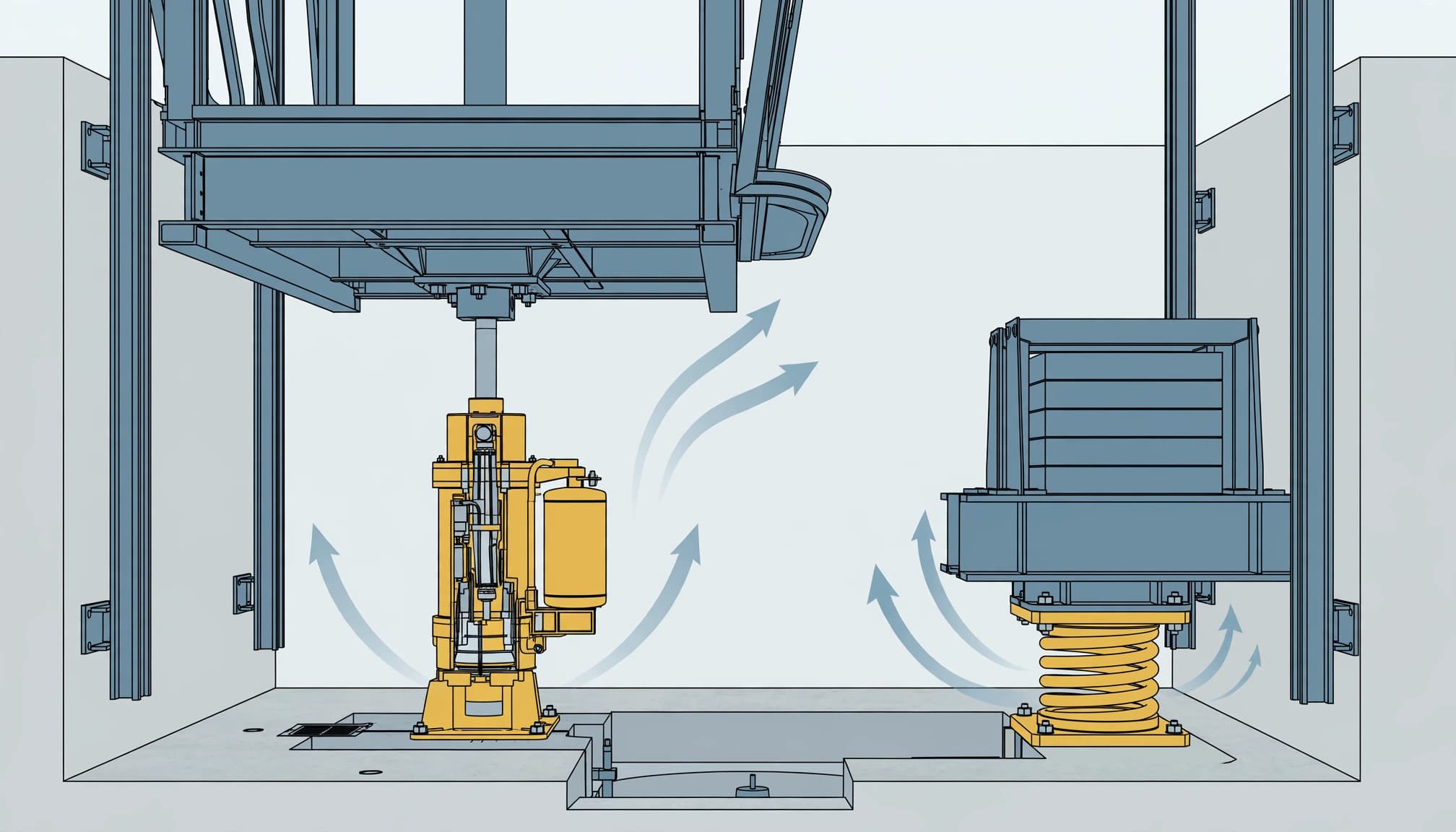
An elevator buffer cushions the impact if an elevator car or counterweight travels beyond its normal lower stopping point. It's a backup safety component , rather than a device that handles everyday stops.

Service timing follows the equipment's maintenance instructions, applicable requirements, and maintenance plan. Damage or an unexpected buffer engagement also calls for professional assessment before normal use resumes.

Understanding its role starts with where it sits and how it manages energy.

Key Takeaways

  • Buffers help manage impact energy at the bottom of the hoistway, but they don't replace brakes or other protective systems.
  • Spring, elastomeric, and hydraulic designs handle that energy differently.
  • Inspection determines condition, while repair and replacement address identified defects.
  • Service requirements depend on the installed equipment, its operating conditions, and local rules.

What Does an Elevator Buffer Do?

Buffers generally sit in the elevator pit, beneath the travel path of the car or counterweight. If either descends beyond its intended stopping position, contact with the buffer provides a controlled stopping distance instead of an abrupt impact against a rigid surface.

That movement matters because a moving load carries kinetic energy. A buffer manages that energy through compression, material deformation, or resistance to hydraulic fluid flow.

The arrangement depends on the elevator design. Buffers have defined load, speed, and travel limits; they don't provide unlimited protection.

They also have a different job than braking equipment. Our explanation of how elevator safety brakes work describes the systems that control stopping, holding, and certain unintended movements.

Main Types of Elevator Buffers

Spring and elastomeric buffers

A spring buffer compresses under contact, storing energy as the spring deflects. Its suitability depends on the elevator's speed, load, and approved design. Because a spring can release stored energy as it expands, its behavior differs from an energy-dissipating hydraulic device.

Elastomeric buffers use a deformable material, such as polyurethane, to manage impact energy. Their performance depends on their material properties and shape. Although these designs may look simple, dimensions and ratings determine whether they suit a particular installation.

Hydraulic buffers

Hydraulic buffers resist movement by forcing oil through controlled passages as a plunger moves into the body. This converts much of the moving load's energy into heat and controls deceleration.

They commonly appear in applications that need greater energy-dissipating capability. However, appearance alone doesn't establish a buffer's rating or compatibility. The specified model must match the installation's operating conditions.

Passenger elevators, cargo lifts, and vertical platform lifts can have different protective arrangements. One equipment category's buffer requirements shouldn't be assumed to apply to another.

When Does an Elevator Buffer Need Service?

Scheduled inspection and maintenance

Buffer attention belongs within the elevator's planned maintenance program. The manufacturer's documentation defines approved care and service needs, while the authority having jurisdiction establishes applicable inspection and testing obligations.

In the United States, many jurisdictions reference ASME A17.1/CSA B44 for elevators, with adopted editions and amendments varying by location. The installed equipment and applicable rules determine the work required.

Outdoor exposure also affects maintenance planning. Salt air, humidity, rain, and drainage problems can damage equipment even during periods of inactivity. Our guide to comparing lift maintenance services explains why inspection and maintenance coverage deserve separate attention.

Damage or an unexpected event

Visible damage, corrosion, unexplained leaks, or components that appear displaced warrant professional assessment. These are general equipment concerns, not proof that a buffer caused the problem.

Similarly, unusual noise, uneven stops, or a displayed fault can involve several elevator systems. Stop normal use and report those symptoms rather than attempting repeated restarts.

After a reported buffer engagement, qualified personnel need to assess the equipment and investigate why contact occurred. A compressed or activated buffer shouldn't simply be reset so operation can continue.

Restoring a component's position doesn't establish that the cause of an unexpected contact event has been corrected.

Inspection, Repair, and Replacement Mean Different Things

An inspection establishes the equipment's condition and whether further action is necessary. It doesn't automatically mean a part needs replacement. Testing is a separate activity performed when required by the equipment instructions or applicable rules.

A repair addresses a defect through work permitted for that equipment. The technician determines whether an approved repair can restore the component to acceptable condition.

Replacement means installing a suitable component when the existing one cannot remain in service or receive an approved repair. Replacing a buffer doesn't automatically require replacing the entire elevator.

Keep the inspection findings, corrective work, and any required test results with the elevator's service records. That history helps identify recurring problems and documents what happened after a safety-related event.

Frequently Asked Questions

Can an owner inspect the buffer?

Owners can report observations from safely accessible areas, but they shouldn't enter the pit, remove guards, or manipulate safety components. Qualified elevator personnel should handle buffer inspection and service.

Does a buffer problem always cause an error code?

No. A fault message doesn't reliably identify a buffer problem, and the absence of a message doesn't establish safe condition. Our guidance on responding to elevator faults covers safe owner responses.

Does every activated buffer need replacement?

Activation alone doesn't establish the outcome. The buffer design, event conditions, manufacturer's instructions, and professional assessment determine the required action.

Keep Buffer Service Within the Elevator's Safety Plan

An elevator buffer provides a limited, purpose-designed way to manage impact energy after travel exceeds the normal stopping point. Its readiness depends on planned maintenance and appropriate follow-up after damage or unexpected engagement.

Keep service records together and report changes promptly. Leave pit access, testing, and corrective work to qualified elevator personnel.

Recent Posts

By Veranda 'Vator • November 26, 2026
A restaurant kitchen cargo lift works best when its size, location, and operating schedule match the way your team moves goods between floors. Start with the busiest service and delivery periods, then plan the platform, landings, and building work around those demands. Safe lo...
By Veranda 'Vator • November 25, 2026
A home elevator for caregiver-assisted use needs room for two people to travel safely, plus any mobility equipment they bring. The best plan starts with the whole trip , including how the user approaches the elevator, enters the cab, and exits at each floor. A cab that fits a...

By Veranda 'Vator • November 24, 2026
Yes, a residential elevator can serve a rooftop terrace when the selected equipment and building design support that arrangement. However, opening directly outdoors requires planning for weather exposure , landing safety, waterproofing, and access control. A protected rooftop...

By Veranda 'Vator • November 23, 2026
Compare residential elevator quotes by matching the equipment, assigning every construction task, and separating fixed prices from allowances and exclusions. The lowest equipment price doesn't necessarily produce the lowest completed-project cost . Two proposals can describe s...
By Veranda 'Vator • November 22, 2026
Elevator traveling cables provide a flexible electrical connection between the moving elevator car and stationary building equipment. They bend during travel, so damage, poor routing, or worn connections can cause problems that deserve professional attention. For building owne...
By Veranda 'Vator • November 21, 2026
Elevator doors include parts that move with the cab and parts that stay at each floor. Knowing which is which helps you understand how passengers enter safely and how a lift's openings should be planned. The key distinction is location: a cab door moves with the elevator , whi...
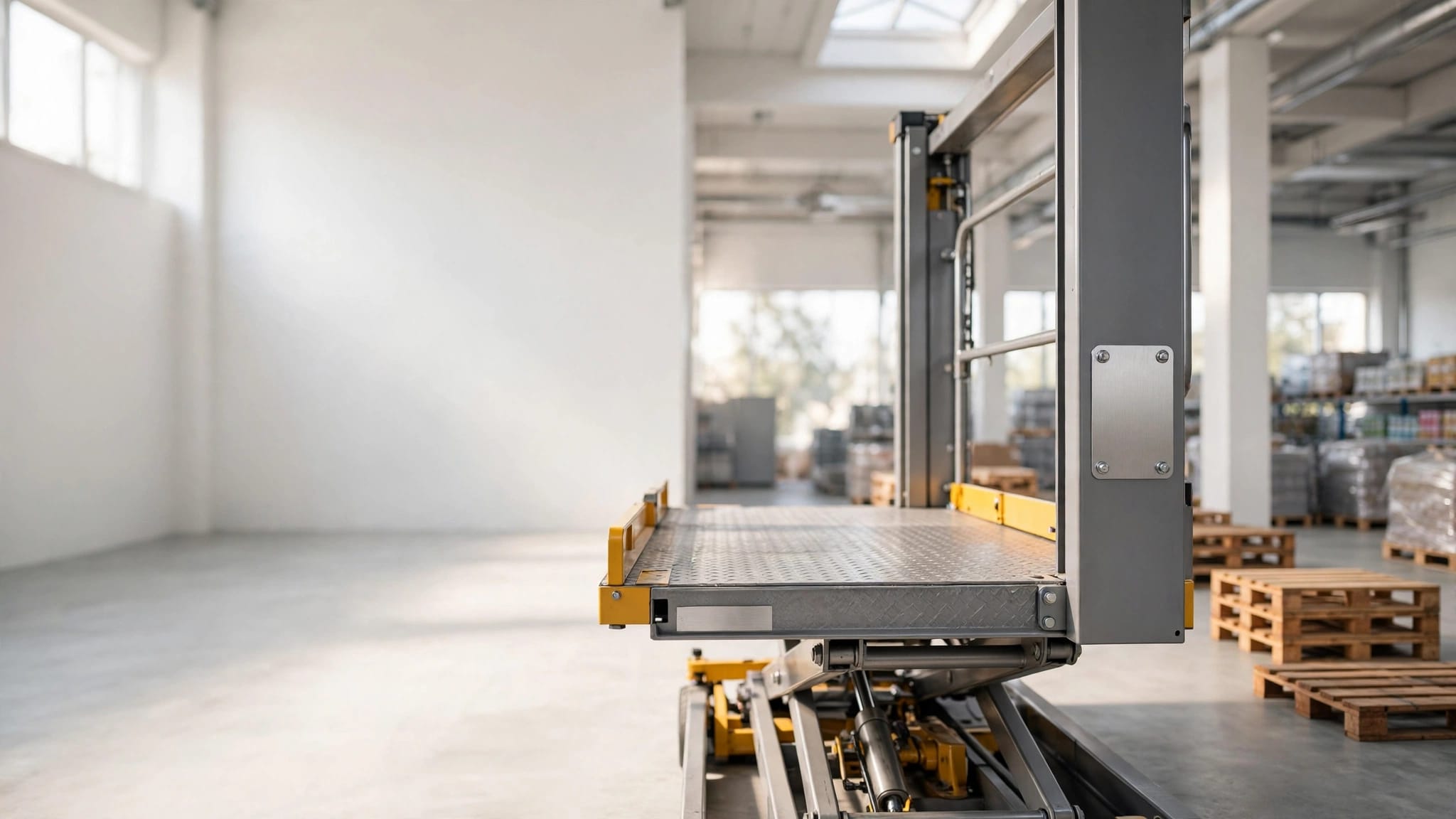
By Veranda 'Vator • November 20, 2026
A cargo lift capacity plate tells you how much the lift can carry under its stated conditions. Before loading, read the full rating, match the units, and account for the load's position and the lift's configuration. The plate is only part of the picture. Platform size, handlin...
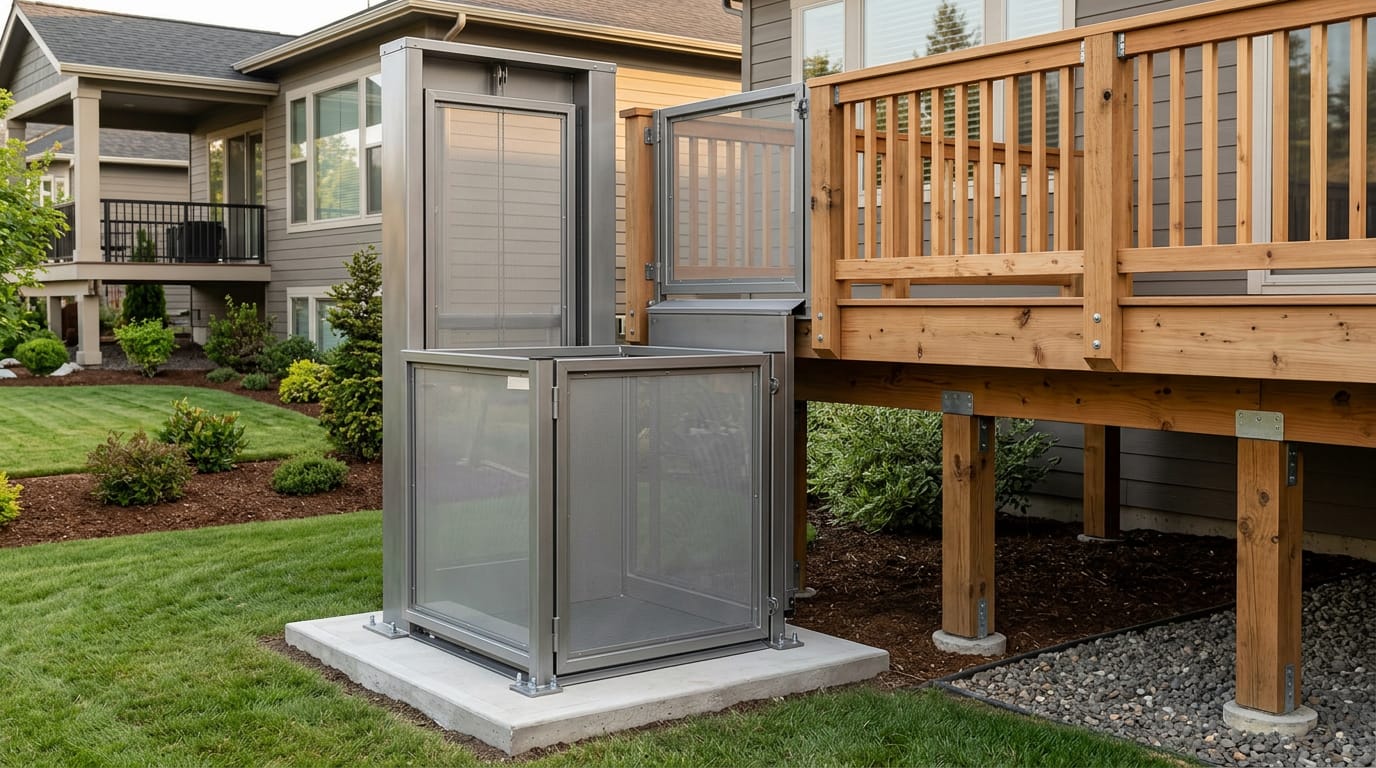
By Veranda 'Vator • November 19, 2026
Yes, an outdoor lift can be installed at a wooden deck when the structure and lift support system are designed for the equipment's loads. Depending on the site, that may mean reinforcing the deck, building a separate foundation, or combining the two. For a safe outdoor lift in...
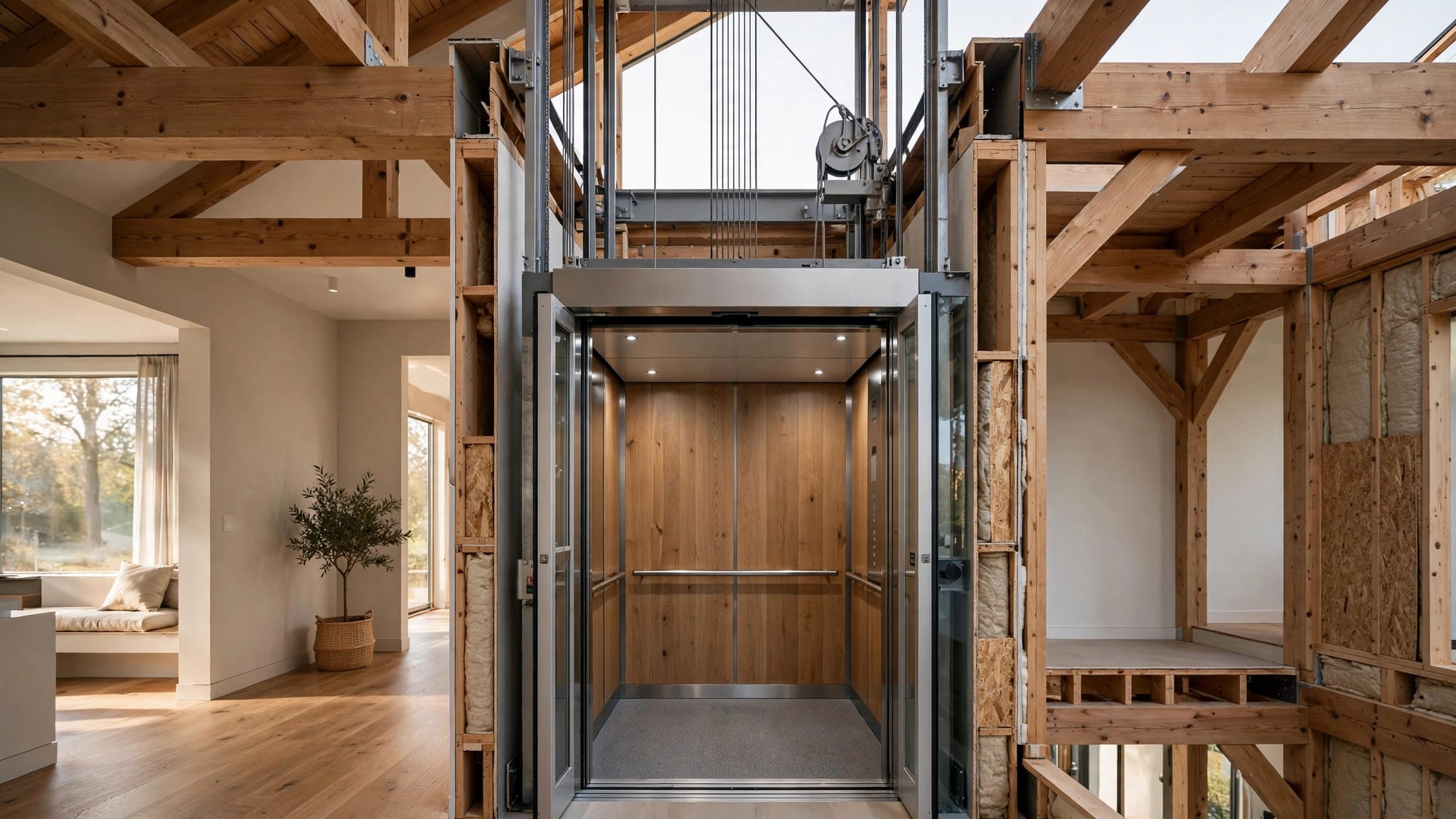
By Veranda 'Vator • November 17, 2026
Residential elevator overhead clearance depends on the model and its configuration. Published manufacturer examples range from 90.8 inches to 135 inches , but those figures apply to specific products, not every home elevator. If you're planning a lift, the space above the top...
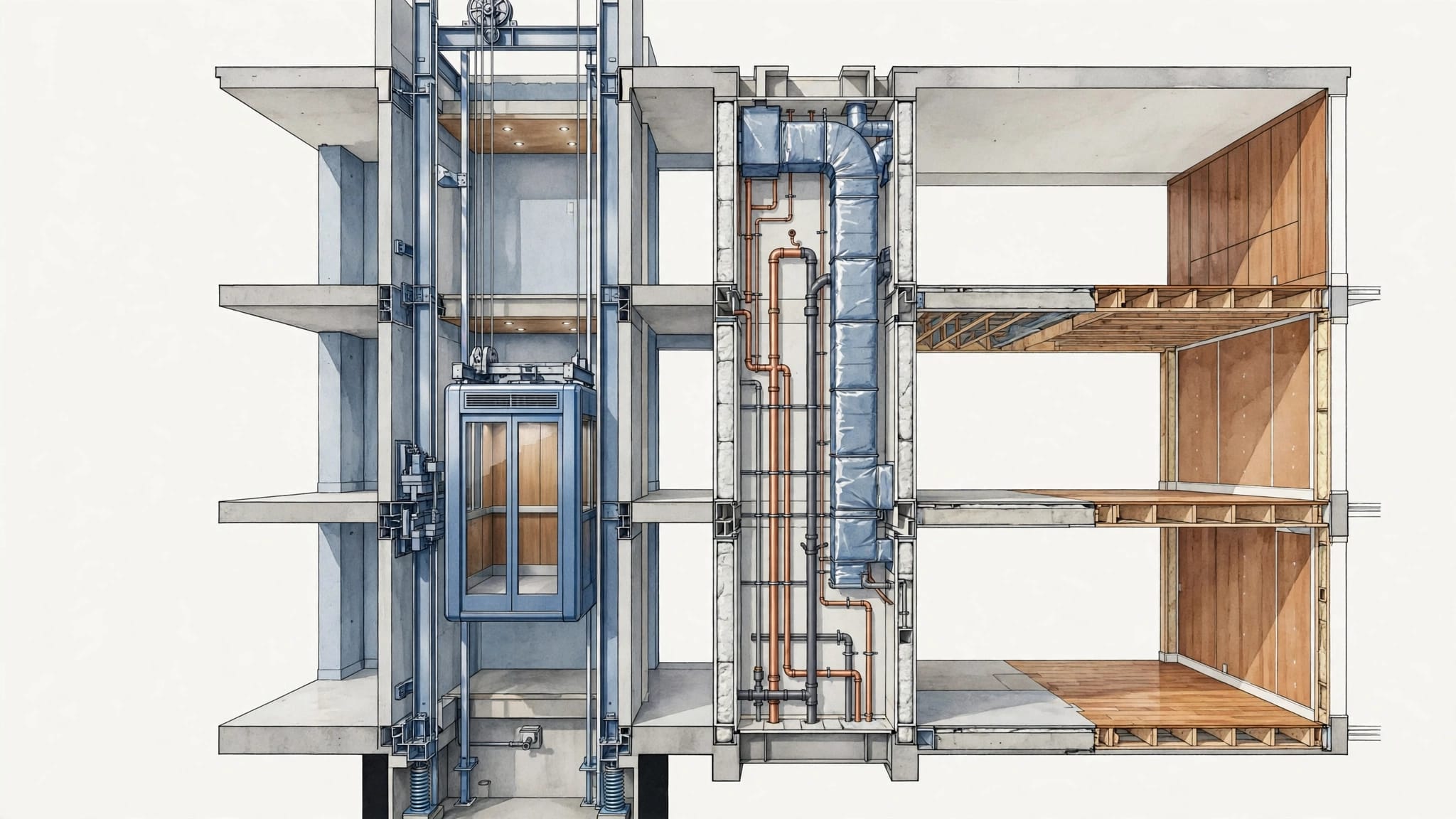
By Veranda 'Vator • November 16, 2026
Ordinary household plumbing and HVAC lines generally should not pass through a residential elevator shaft. Limited provisions can allow certain services for the elevator space itself, as well as drainage equipment at the shaft base. For homeowners planning elevator shaft utili...
Show More