When outdoor elevator error codes appear, the display is giving you a starting point, not a repair instruction. Weather, power quality, moisture, corrosion, and safety circuits can all trigger a shutdown.
Property owners and facility managers need a clear response that protects people, preserves equipment, and gives the technician useful information. The first step is to identify the fault category without assuming that a code means the same thing on every elevator.
How to Read Outdoor Elevator Error Codes Safely
Elevator manufacturers use different displays, code numbers, abbreviations, and diagnostic systems. An E-05 code on one model may relate to a door circuit, while the same number on another model may indicate a drive or position fault. No manufacturer-specific code is universal.
Read the code together with the elevator's make, model, serial number, and operating symptoms. Record whether the lift stopped at a landing, failed to start, stopped during travel, or opened its doors without moving. Also note recent weather conditions and any power interruption.
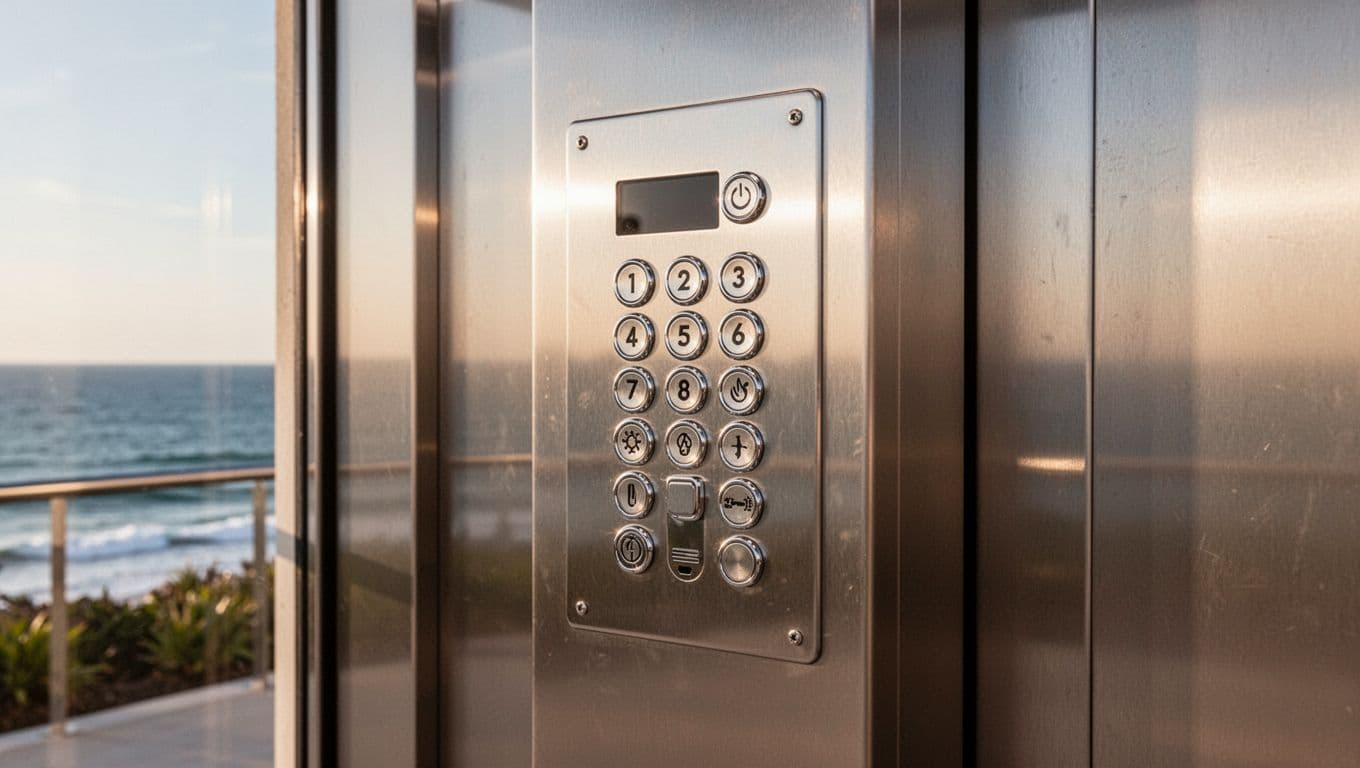
A photo of the display can help a qualified elevator technician identify the correct service procedure. Take it before anyone cycles power or attempts to operate the lift again. If the code disappears, the technician may lose useful information from the fault history.
Common categories include:
- Door or gate interlock faults, which indicate that the system can't verify a safe closed position.
- Overload or current faults, which can occur when the load exceeds the rated capacity or the motor meets unusual resistance.
- Limit or position faults, which affect landing recognition and travel limits.
- Communication faults, which involve controllers, call stations, sensors, or monitoring equipment.
- Low-voltage or phase faults, which often follow outages, generator transfers, or electrical surges.
- Thermal faults, which occur when a motor, drive, pump, or control enclosure gets too hot.
- Safety circuit faults, which require a technician to test the related switches and controls.
A fault code doesn't prove that the named component has failed. It may identify the point where the controller detected an unsafe condition. For example, a door code may result from water in a switch enclosure, a misaligned gate, damaged wiring, or a control problem.
A code that clears after a dry day still matters. Moisture can leave corrosion or insulation damage that causes a later failure.
Outdoor Elevator Error Codes and First Response
Treat every shutdown as a safety event until the cause is known. Keep passengers and workers away from the cab, platform, shaft, gates, and machinery spaces. Don't allow anyone to ride a cargo lift unless the equipment is specifically designed, approved, and labeled for passenger use.
Use the table below as a field reference, not as a substitute for the manufacturer's service manual.
| Error or code category | Likely cause | Safe response | When to call a qualified elevator technician |
|---|---|---|---|
| Door, gate, or interlock fault | A gate is not fully closed, a switch is misaligned, moisture entered the enclosure, or wiring has corrosion | Keep the lift out of service. Check only for an obvious object blocking a gate, without reaching into the mechanism | Call immediately if the code remains, returns, or involves a passenger door, gate, lock, or interlock |
| Overload or motor current fault | Excess weight, a jammed mechanism, mechanical drag, or a motor or drive problem | Remove people from the operating area. Don't add or shift loads inside a suspended cab or platform | Call before further operation, especially if the lift stopped under load or made an unusual sound |
| Limit or position fault | A limit switch, encoder, sensor, or landing reference has failed or moved out of alignment | Stop use and keep every landing clear. Don't move the cab by force | Call before any movement, because incorrect position feedback can create a travel hazard |
| Low-voltage, phase, or power fault | Utility outage, surge, loose connection, failed phase, or generator transfer issue | Confirm whether the property has power without opening elevator equipment. Keep the lift idle | Call when power has returned but the elevator remains faulted, or after a storm or generator event |
| Thermal or over-temperature fault | High ambient heat, blocked ventilation, repeated operation, or motor, pump, or drive stress | Allow the equipment to cool without opening covers or placing fans near electrical components | Call if the fault repeats, the enclosure smells hot, or the lift stops again after cooling |
| Communication or call-station fault | Water intrusion, damaged cable, network interruption, or failed call button | Keep the unit out of service if communication is required for safe operation | Call when a call station, alarm, emergency communication, or controller link fails |
| Safety circuit fault | Open safety switch, damaged wiring, brake monitoring issue, or control failure | Do not bypass, bridge, or reset the circuit. Keep people away from the lift | Call immediately. Safety circuit work belongs to a qualified elevator technician |
The safest owner response is limited and deliberate. Photograph the code, secure the area, check for visible hazards, and contact the service provider. Avoid repeated start attempts, because cycling the equipment can turn an intermittent fault into a harder-to-diagnose failure.
Weather Problems That Trigger Elevator Faults
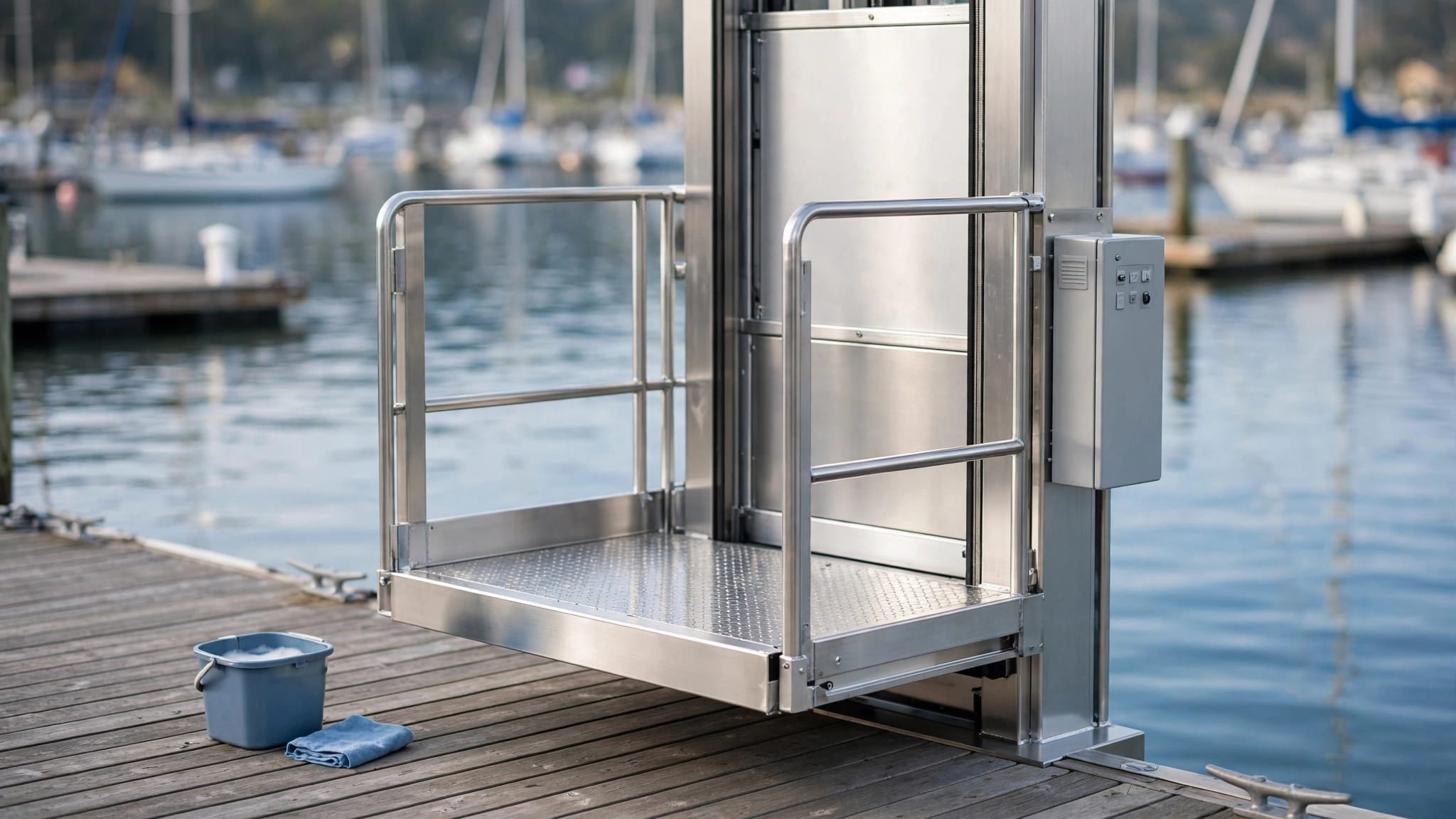
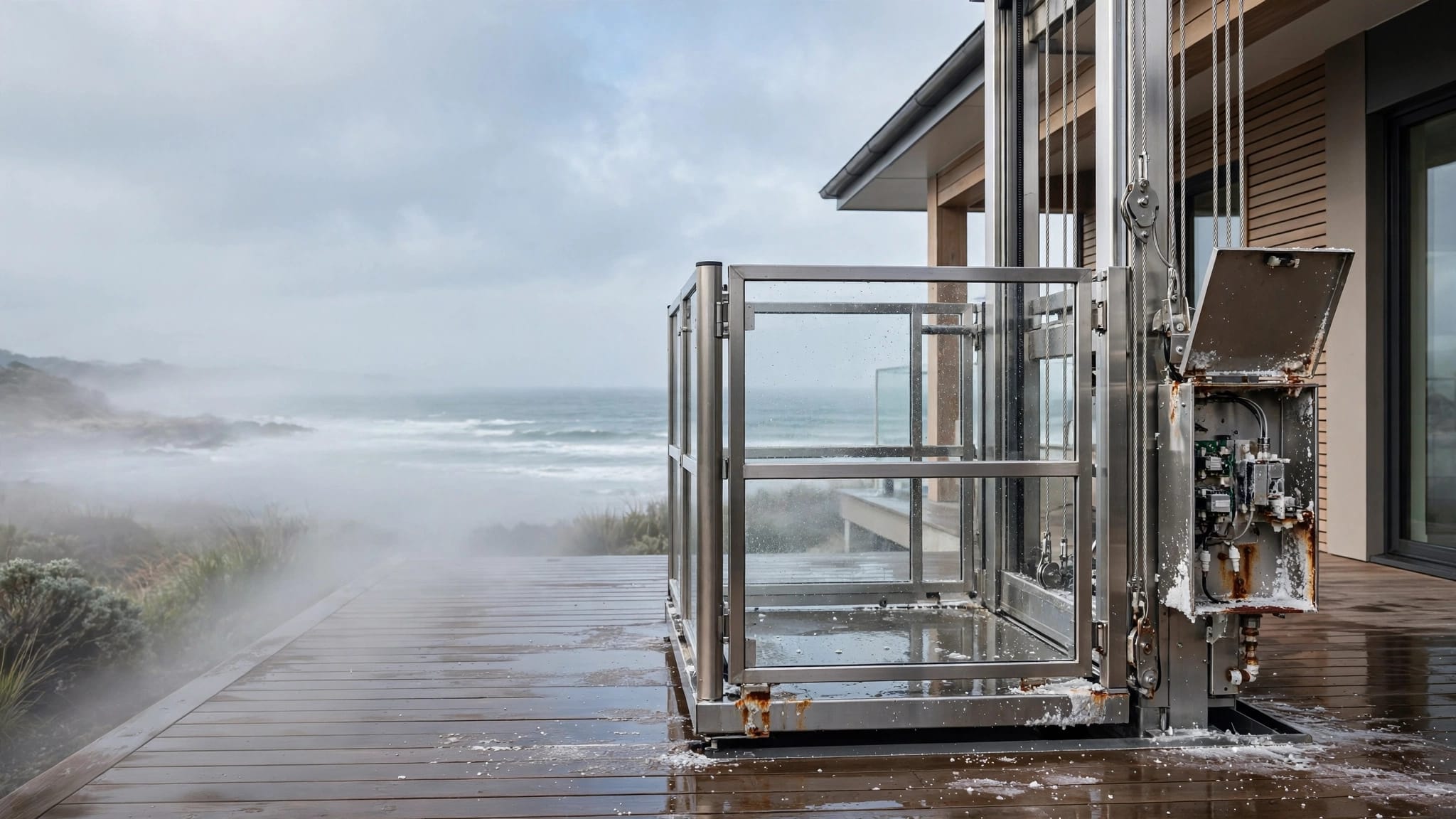
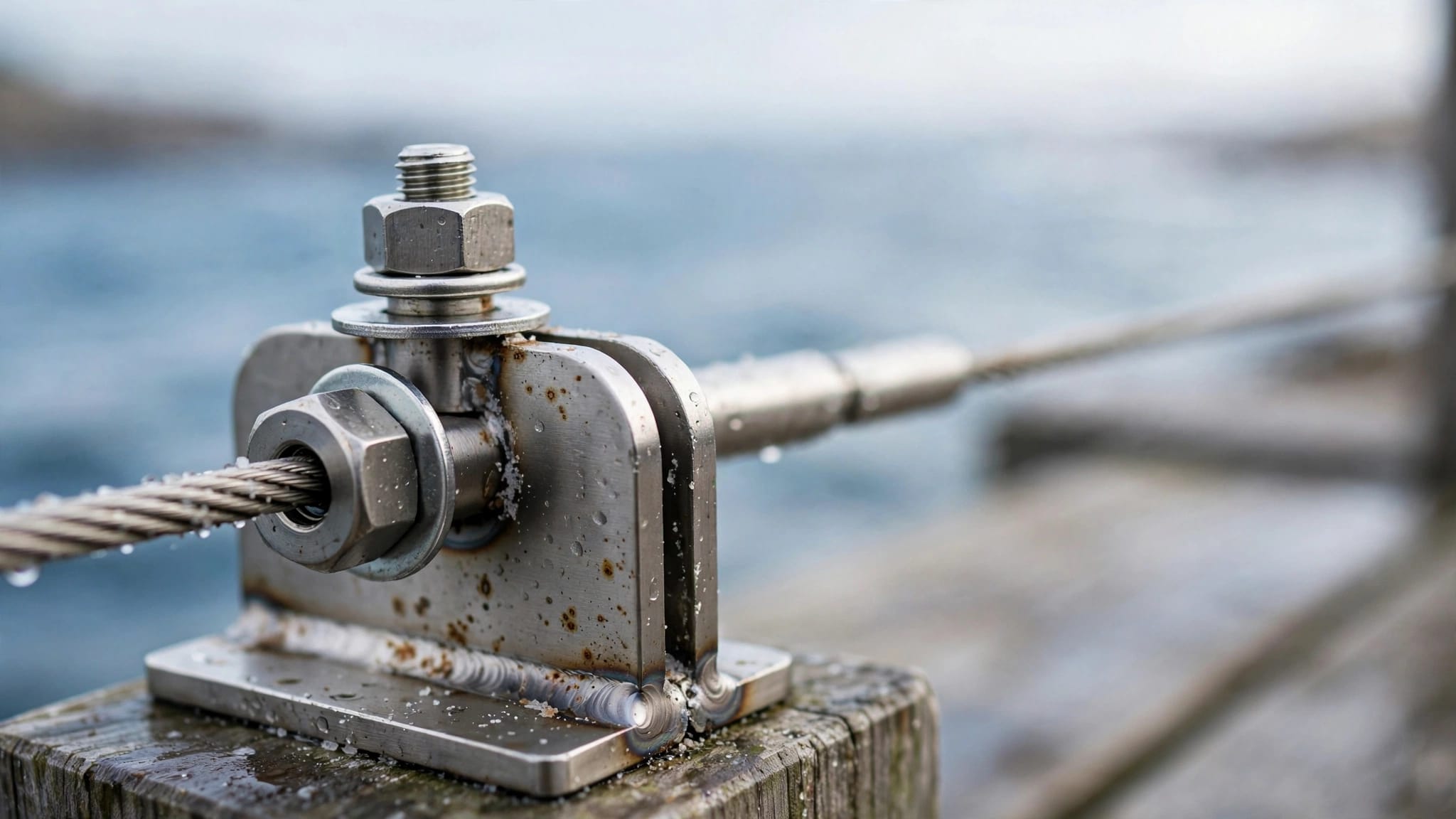
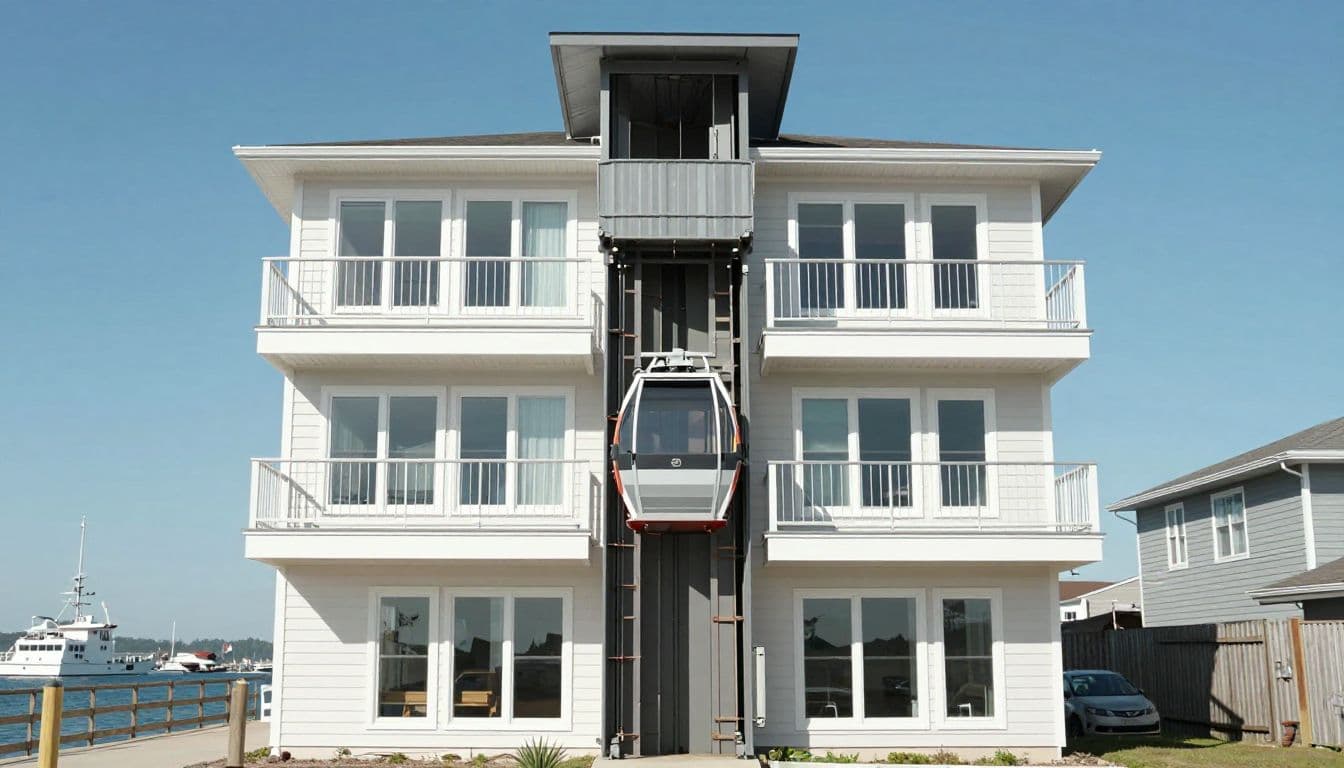
Outdoor equipment faces conditions that indoor elevators avoid. Rain can enter through damaged seals, poorly protected conduit, door openings, or cable penetrations. Wind can drive water against enclosures and landing gates. In coastal areas, salt spray speeds corrosion on fasteners, terminals, switches, and exposed metal.
Moisture-related outdoor elevator error codes may appear as door, communication, low-voltage, or safety circuit faults. A dry exterior doesn't prove that the inside of a junction box or control enclosure is dry. Never remove a cover to investigate water, and don't spray electrical cleaner or lubricant into a switch or controller.
Temperature also affects operation. High heat can trigger thermal protection in motors, pumps, and variable-frequency drives. On hydraulic systems, cold temperatures can change fluid behavior and slow movement. Batteries, displays, and electronic components can also behave differently during temperature extremes.
Corrosion requires more than wiping visible rust from a surface. A corroded terminal may create high resistance, intermittent signals, or voltage loss. A technician may need to test connections, inspect insulation, check grounding, and replace damaged parts.
Before a major storm, follow the equipment manufacturer's shutdown and securing procedure. If the manual directs you to place the elevator at a specific landing or turn off a designated disconnect, follow those written instructions exactly. Otherwise, ask the service provider before changing the operating state.
Storm-Related Power and Generator Faults
Storms can damage utility lines, cause voltage fluctuations, and interrupt power in quick succession. Even when lights and other appliances work, an elevator controller may detect voltage conditions outside its operating range.
A standby generator adds another possible source of trouble. The elevator may not be compatible with the generator's capacity, transfer time, voltage, frequency, or phase arrangement. A transfer switch can also create a fault if the elevator sees an unstable supply during the changeover.
Don't connect an outdoor elevator to temporary power or a portable generator unless the manufacturer and a qualified electrician approve the arrangement. Never open the controller or attempt to restore power inside the elevator system.
After a storm, inspect the area from a safe position. Look for standing water, damaged conduit, fallen branches, loose panels, exposed wiring, or debris near the shaft and landings. If any of these conditions exist, keep the equipment isolated and call for service.
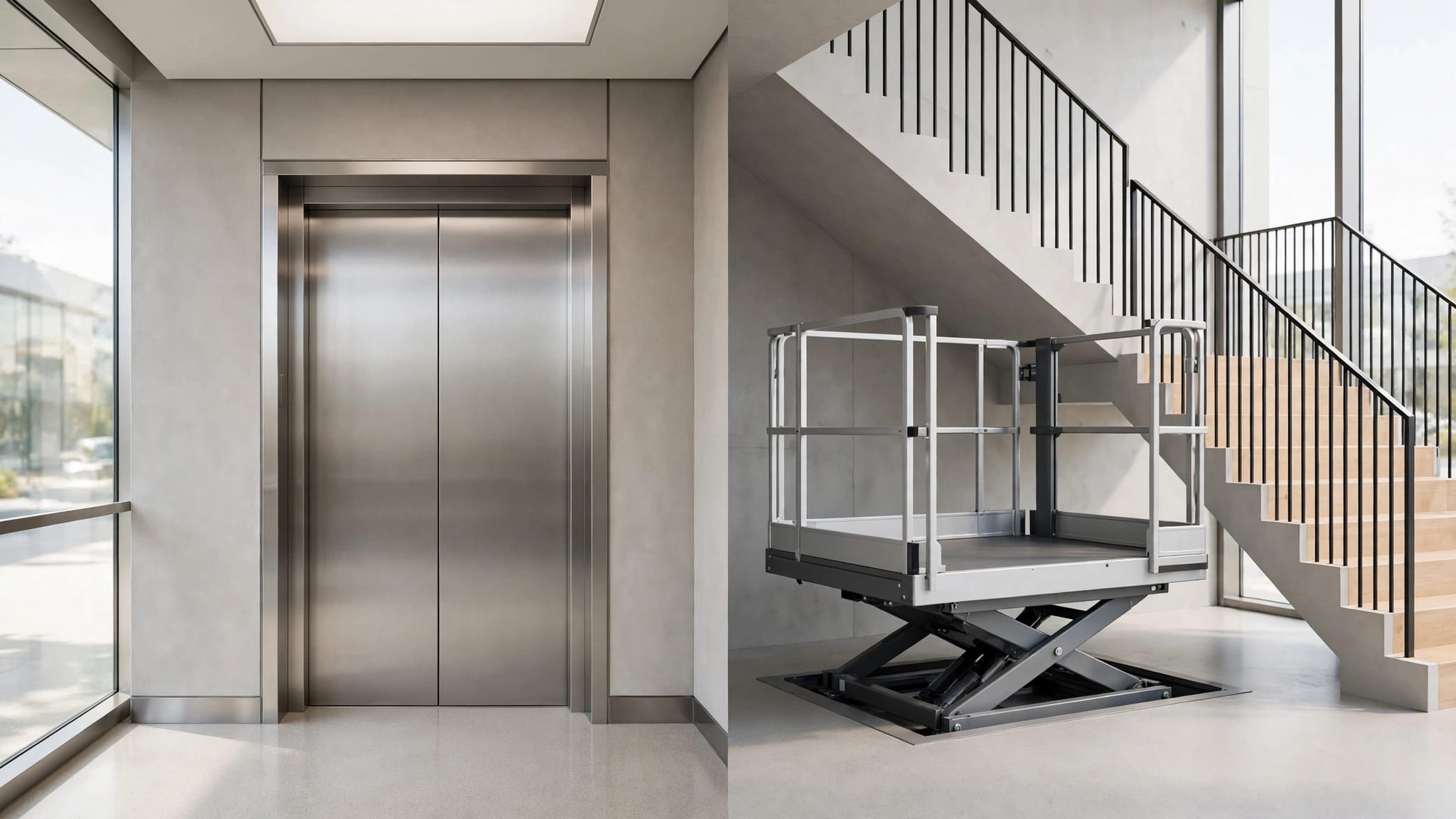
Owners who compare exterior and interior installations can review these outdoor passenger elevators vs indoor home elevators before selecting equipment for an exposed location. The choice affects enclosure protection, drainage, access, maintenance, and storm planning.
What Information the Technician Needs
A useful service call begins with accurate details. Provide the technician with the exact code, a photo of the display, and the time the fault occurred. Include the elevator's location, model information, and whether anyone was inside.
Describe what happened immediately before the shutdown. Useful details include:
- The lift was carrying a known load or an empty platform.
- The fault appeared during travel, at a landing, or before movement.
- Rain, flooding, lightning, extreme heat, or high winds occurred nearby.
- The building experienced an outage or switched to generator power.
- The equipment made a new sound, moved slowly, stopped unevenly, or showed a door problem.
- The code appeared once or returned after an attempted operation.
If a passenger is trapped, use the emergency communication process posted for that elevator and contact emergency services when needed. Don't pry open doors, climb out between landings, or ask an untrained person to release a brake or move the cab.
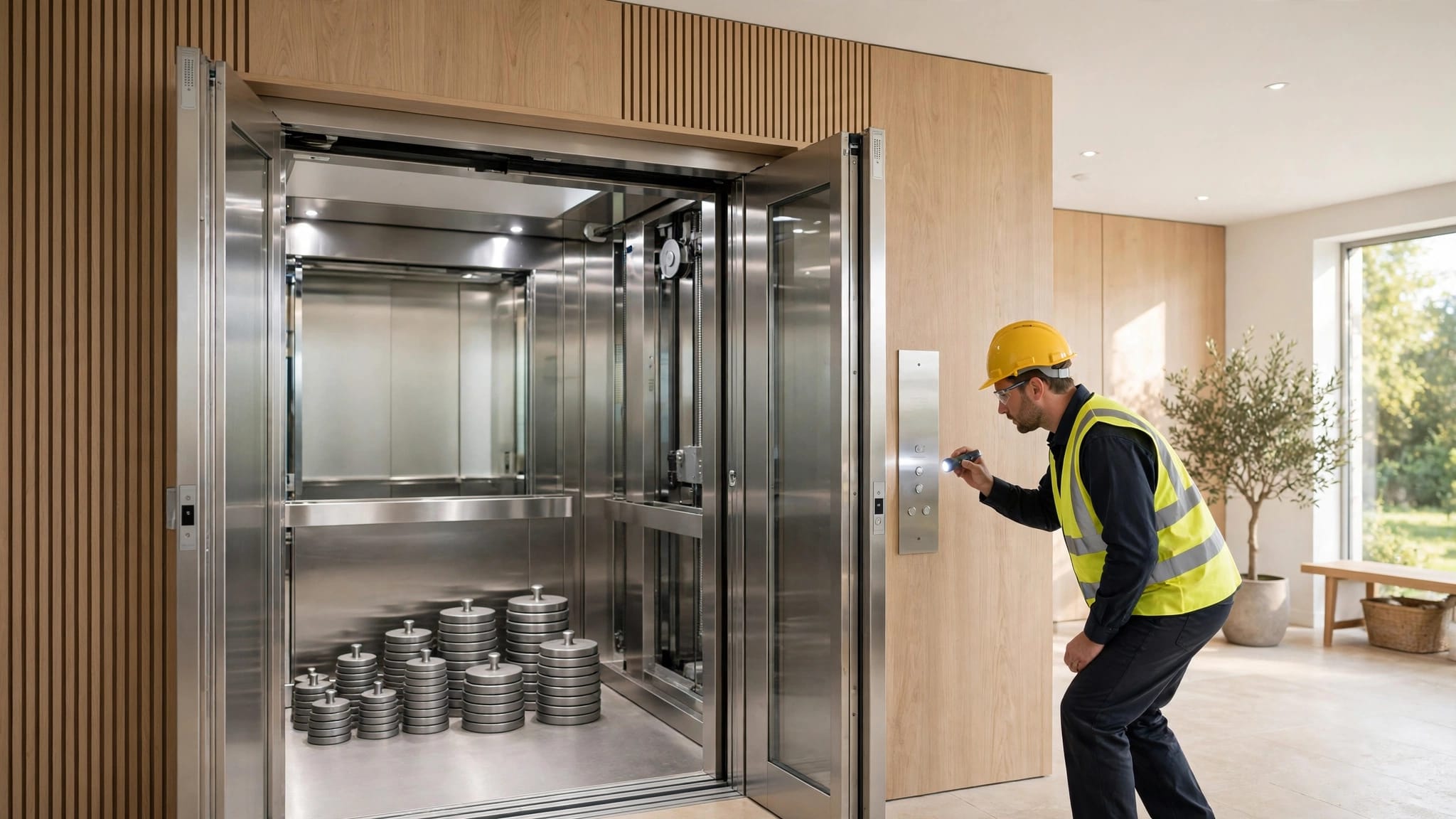
Service personnel will typically check the fault history, safety circuit, power supply, door and gate interlocks, limits, sensors, drive or pump, wiring, and signs of moisture or corrosion. The exact inspection depends on the equipment and the reported code.
Preventing Repeat Outdoor Elevator Faults
A service visit should address the cause, not only the visible code. Ask whether the technician found water entry, corrosion, a power-quality issue, mechanical wear, poor drainage, or a recurring overload. Keep the written service report with the elevator records.
Routine care also reduces avoidable shutdowns. Keep landing areas clear, maintain drainage around the shaft, remove leaves and debris, and report damaged seals or covers. Don't store tools, chemicals, or loose materials near gates, controls, or moving parts.
Maintenance frequency depends on the lift design, usage, exposure, and local requirements. A coastal commercial property with daily passenger traffic needs a different service plan than a residential cargo lift used occasionally. Follow the manufacturer's maintenance schedule and local inspection rules.
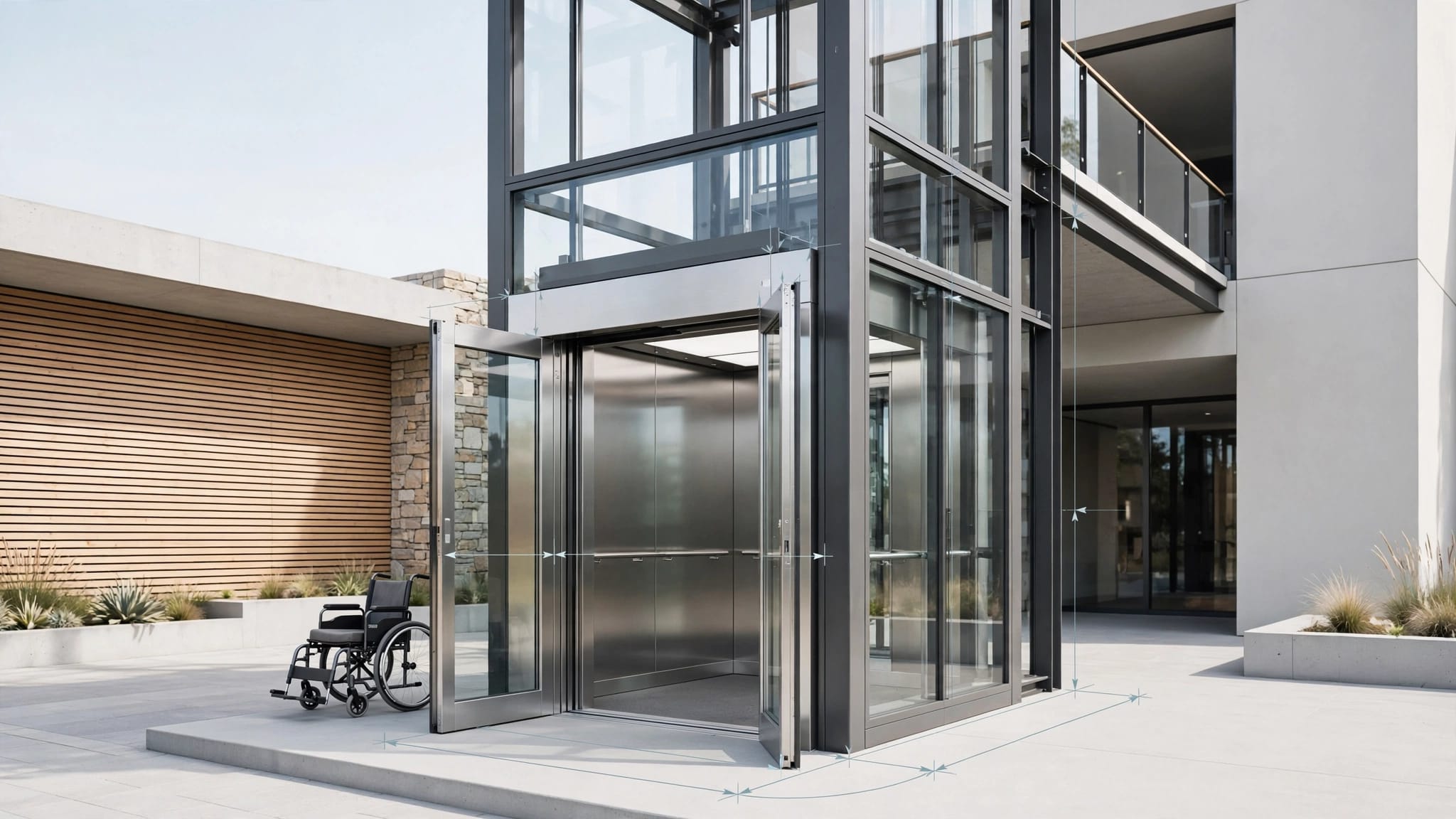
When selecting or replacing equipment, match the lift to its use. Passenger applications require equipment designed for passengers, while cargo systems need a suitable rated capacity and loading procedure. For accessibility projects, review passenger compliant elevators with the required platform size, gates, safety features, and site conditions.
Conclusion
Outdoor elevator error codes help technicians locate unsafe or abnormal conditions, but they don't give owners permission to experiment. Weather exposure, moisture, corrosion, heat, cold, and storm-related power changes can affect several systems at once.
Photograph the code, keep people clear, avoid resets and bypasses, and report the conditions surrounding the shutdown. Safe uptime starts with the right service response , not with forcing an elevator back into operation.
Recent Posts