Elevator traveling cables provide a flexible electrical connection between the moving elevator car and stationary building equipment. They bend during travel, so damage, poor routing, or worn connections can cause problems that deserve professional attention.
For building owners and facility managers, the priority is recognizing changes early without entering restricted areas or attempting repairs. Understanding how these cables differ from lifting ropes helps you report the right concern and respond safely.
Key Takeaways
- Traveling cables connect moving and stationary equipment; they don't lift or support the elevator car.
- Cable construction and routing must accommodate repeated movement without excessive bending, rubbing, or strain.
- Visible damage and unexplained operating changes warrant professional assessment, although symptoms alone don't identify the cause.
- Owners should document observations from safe locations and leave equipment access, testing, and repairs to qualified elevator professionals.
What Elevator Traveling Cables Connect
A flexible connection for a moving car
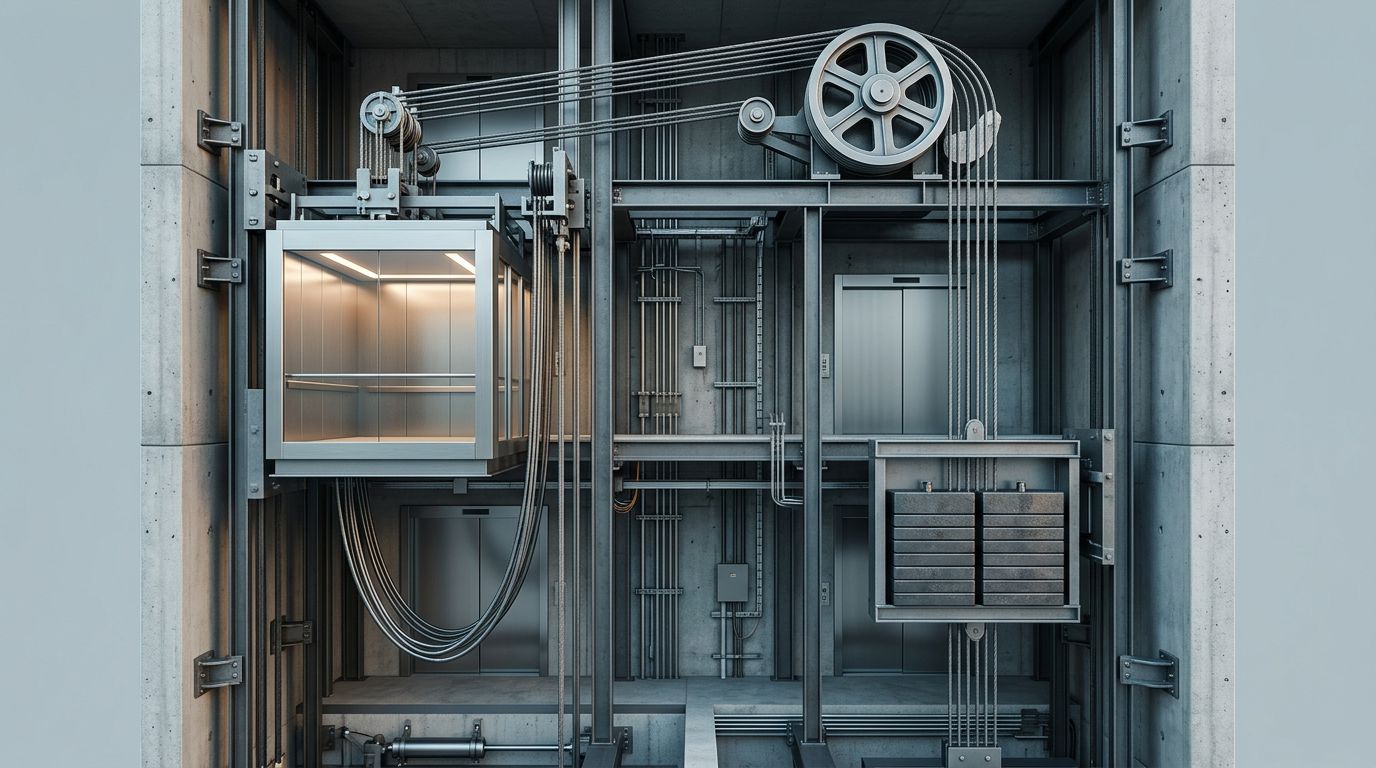
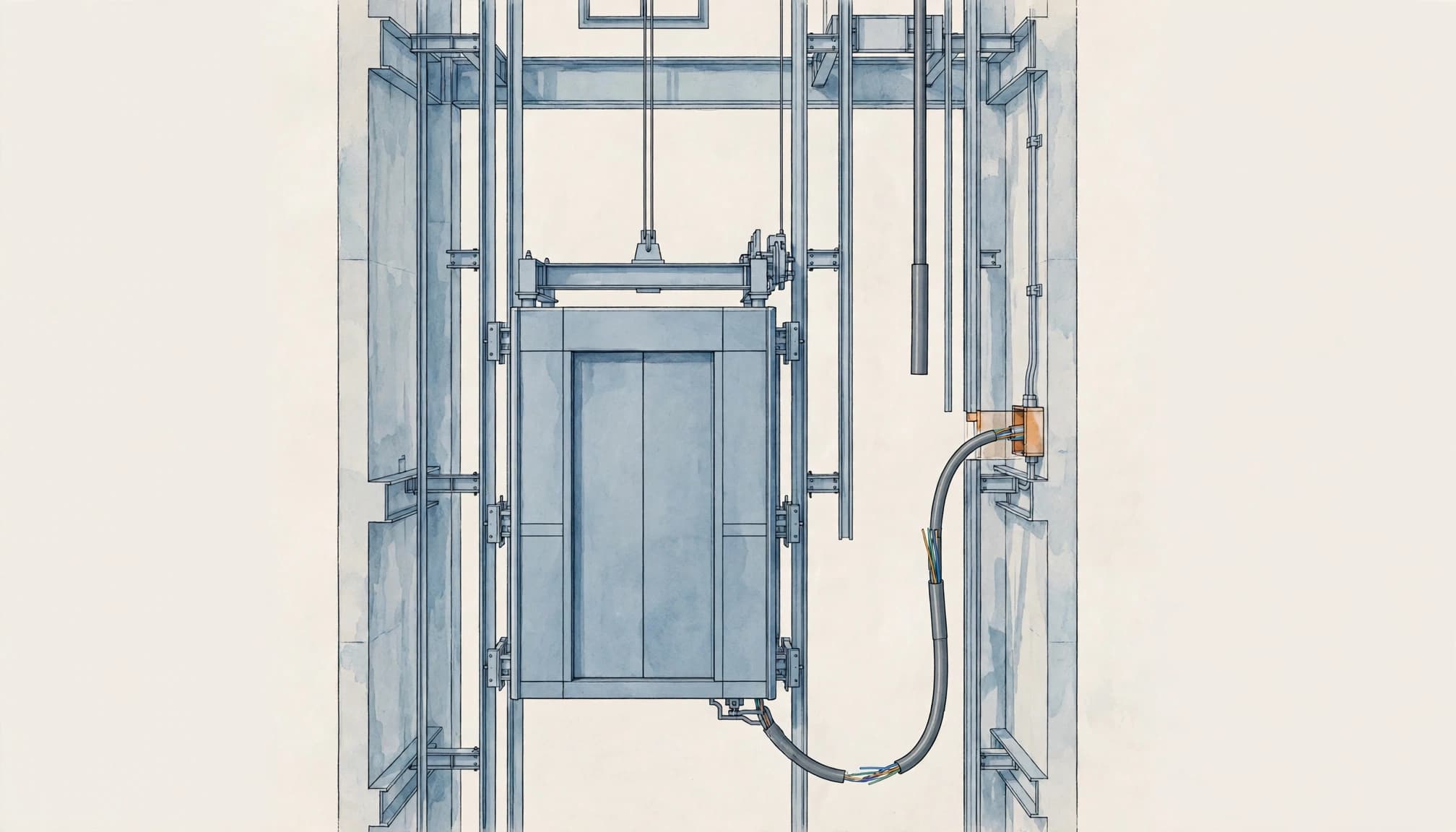
An elevator car moves while much of the building's elevator equipment remains stationary. A traveling cable bridges that moving connection through a flexible assembly designed for the installation.
Rather than pulling tight during each trip, the cable hangs in a planned arrangement that accommodates the car's movement. Attachment points support the cable, while its routing provides room for it to bend and travel.
The arrangement varies by equipment design. Owners shouldn't judge cable condition by comparing its hanging shape with a different elevator or by assuming a visible loop means something is loose.
Traveling cables differ from lifting ropes
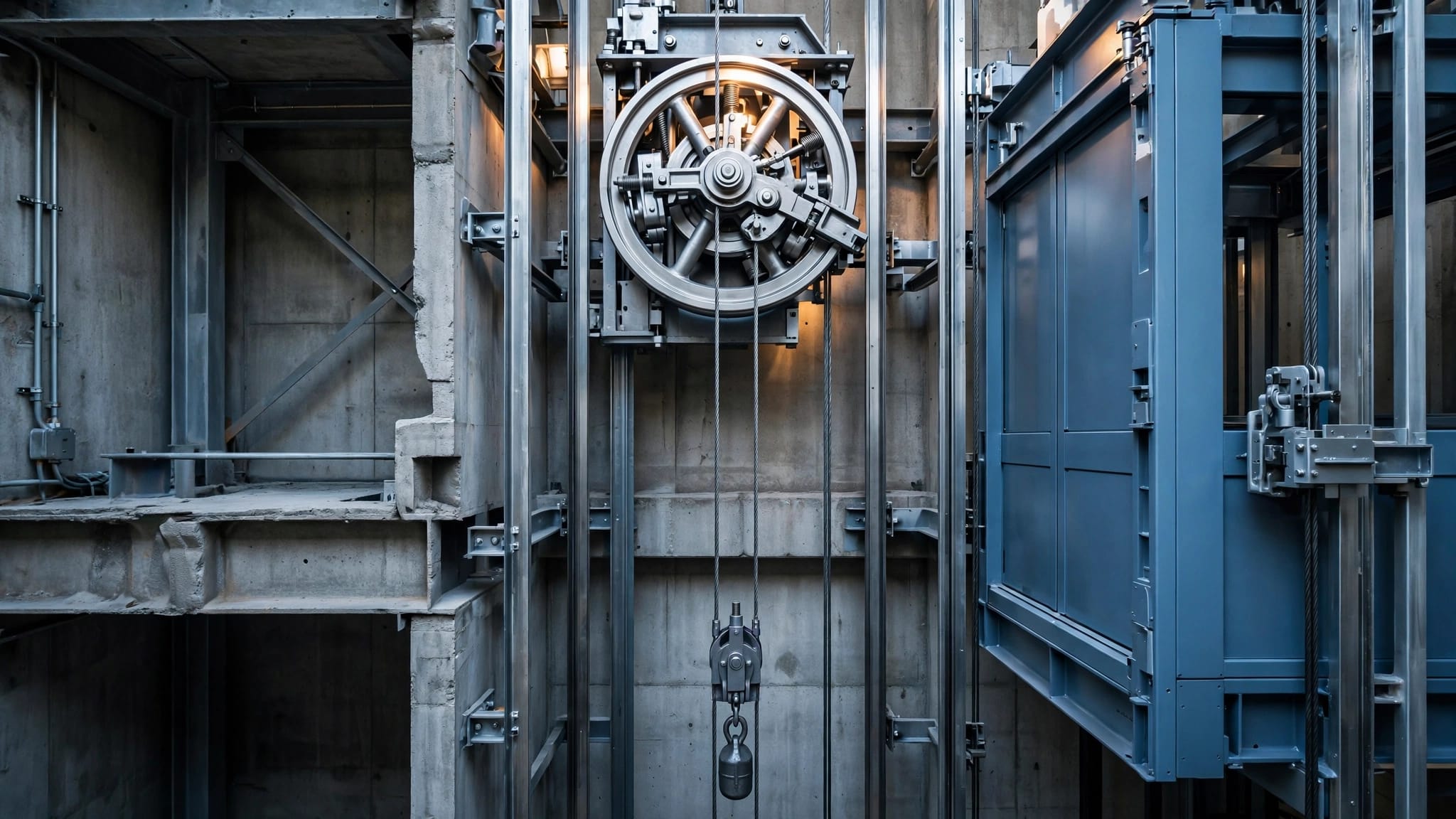
A traveling cable is an electrical assembly. A suspension rope, where the elevator design uses one, performs a separate mechanical job.
That distinction matters when describing damage. Broken wires, rope diameter, sheave condition, and rope tension belong to an assessment of the relevant lifting system. They aren't interchangeable criteria for evaluating a flexible electrical cable.
If you're unsure which component you're seeing, describe its location and appearance without naming it. A technician can identify the component without an owner approaching it.
How Cable Construction Accommodates Movement
Protection, flexibility, and support
Traveling cables combine flexible insulated conductors with an outer protective covering. Depending on the design, supporting elements may help carry the cable's own suspended weight.
The outer jacket protects internal components, but it doesn't reveal everything underneath. Therefore, an apparently intact surface can't rule out an internal problem or a fault at a connection.
Attachment hardware also matters. The installation must support the cable without placing inappropriate strain on its terminations. A damaged hanger or displaced mounting can affect an otherwise serviceable cable.
Owners should never pull on a cable to assess its support or flexibility.
Flat and round configurations
Elevator traveling cables are available in flat and round configurations. Their shape affects how they hang, bend, and fit within the available space.
Neither shape is a universal replacement for the other. A suitable assembly must match the equipment's electrical requirements, suspension arrangement, movement, and installation conditions.
Likewise, ordinary building wire isn't an acceptable substitute simply because it fits between two connection points. A moving installation requires a cable intended for that application.
For an owner reviewing a repair proposal, the useful distinction is whether the work addresses the cable, its attachments, its connections, or several of those items.
What Increases Traveling Cable Wear
Repeated movement and poor clearance
Every elevator trip moves the traveling cable through its operating path. Usage therefore belongs in the maintenance history, alongside reported faults and previous repairs.
Our explanation of elevator duty cycles helps distinguish occasional operation from more demanding use.
However, movement alone doesn't explain every problem. Rubbing against surrounding equipment, an unsuitable bend, twisting, or displaced supports can create localized stress.
A cable may also encounter trouble after nearby work changes its clearance. Building alterations, added equipment, and debris in the travel area deserve attention during professional assessment.
Report when a symptom began, particularly if it followed construction or another service visit.
Weather, moisture, and contamination
Outdoor installations face rain, humidity, temperature changes, and windblown debris. Coastal locations also expose equipment to salt deposits.
These conditions can affect exposed hardware, connections, and protective surfaces. Water intrusion or contamination may create problems even when the visible cable covering appears unchanged.
After severe weather, don't assume dry-looking equipment is ready for use. Equipment affected by flooding or visible storm damage needs professional assessment before normal operation resumes.
Owners can help by keeping accessible approaches clear and maintaining drainage around the installation. However, don't pressure-wash equipment or direct cleaning water toward electrical enclosures.
Signs That Traveling Cables May Need Service
Visible changes worth reporting
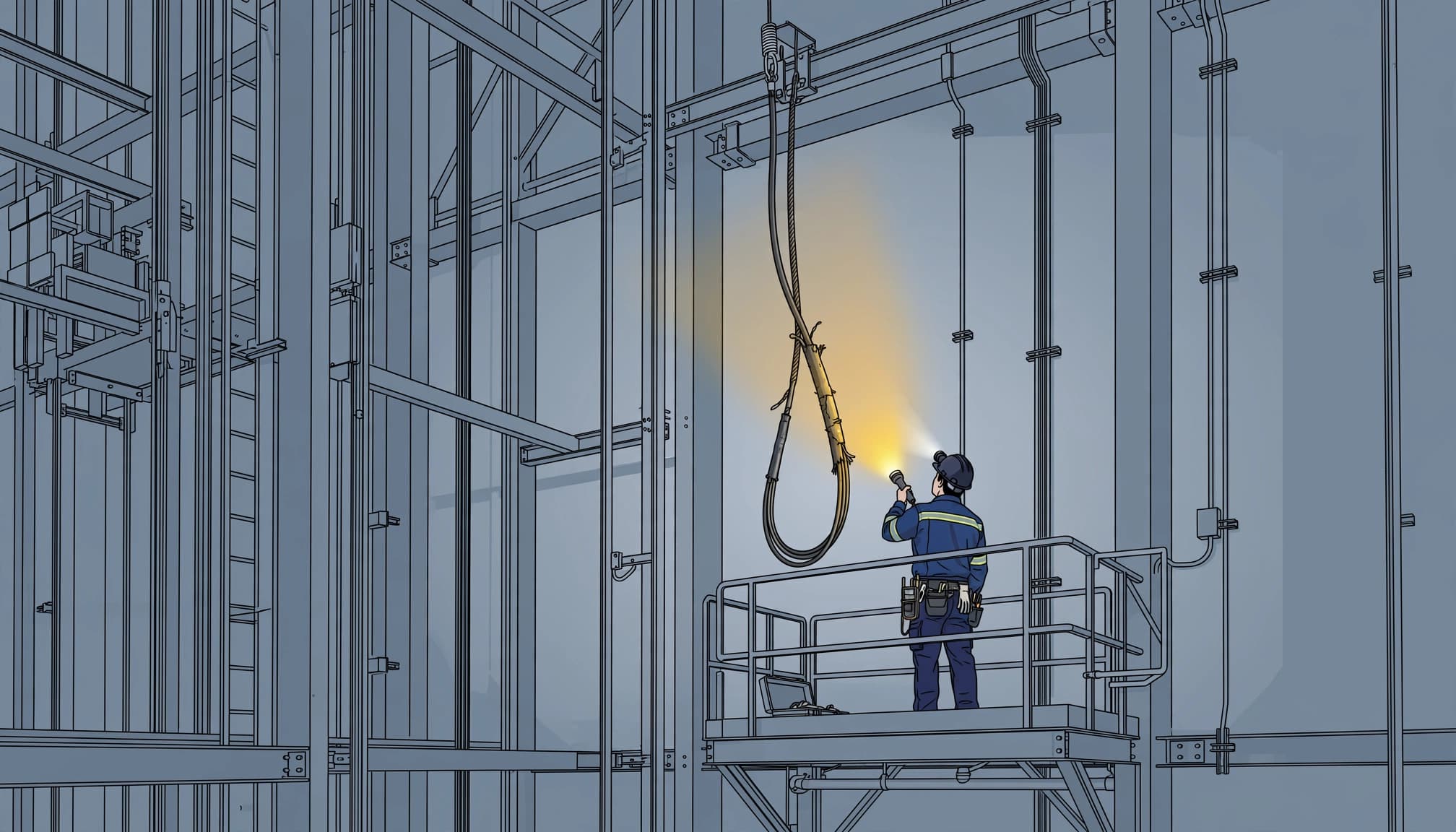
Report splits, abrasion, exposed internal material, crushing, or other changes visible from an approved access area. Also report a cable that appears caught, displaced, or newly in contact with surrounding equipment.
A hanging loop is part of many installations, so a change in appearance provides more useful information than an owner's judgment about acceptable slack.
Don't touch the surface, move closer to examine damage, or attempt to straighten anything. Our guidance on outdoor elevator cable inspection follows the same boundary: observe from safe, unrestricted areas without reaching through guards or openings.
Operating changes without visible damage
Intermittent operation, unexpected stops, or a change in equipment response can justify a service call. However, those symptoms don't establish that the traveling cable has failed.
Other electrical or mechanical components can produce similar behavior. New scraping, clicking, vibration, or uneven travel also warrants attention, regardless of the eventual diagnosis.
A fault that appears near one landing gives the technician a useful location to investigate; it doesn't identify the failed component.
Record what happened during ordinary use. Don't run extra trips, add weight, or repeatedly reset the equipment to reproduce the fault.
What Professional Inspection and Repair Involve
Diagnosis looks beyond one cable
A qualified elevator professional starts with the reported symptoms, equipment information, and available service history. The assessment should distinguish a traveling-cable concern from faults elsewhere in the elevator.
For general elevator fault diagnosis, service personnel may examine fault history, the power supply, safety circuits, interlocks, sensors, wiring, and moisture or corrosion. That broader review helps avoid replacing a cable when another component caused the problem.
Where the traveling cable is involved, the technician assesses its condition, attachments, routing, and connections using procedures appropriate to the equipment. Electrical testing requires suitable isolation and protection of connected components.
Repair must address the cause
The findings determine whether the work involves a connection, support, routing problem, damaged cable assembly, or another component.
Replacing a damaged assembly without correcting the rubbing surface or displaced support can leave the original cause unresolved. Likewise, clearing a fault message alone doesn't establish that the equipment is safe.
Before work begins, qualified personnel must control electrical, mechanical, gravitational, and other stored-energy hazards. Switching off an operating control doesn't remove every hazard.
After repair, the technician completes the applicable operational and safety testing before releasing the lift for use. Keep written findings, completed work, and return-to-service instructions with the equipment records.
How Owners Should Respond to a Suspected Problem
For suspected cable damage, abnormal movement, or another safety-related fault, protect users first. Follow an owner shutdown procedure only through normal, safely accessible controls.
- Stop normal use and keep other users away from the equipment.
- Contact the elevator service provider with the equipment identification and observed symptoms.
- Record the date, affected landing, displayed message, recent weather, and any nearby work.
- Wait for professional clearance before returning the equipment to use.
Use safe elevator fault responses rather than repeated resets or attempts to bypass a protective device.
Never force a door, adjust a cable, open an electrical enclosure, or attempt a mechanical rescue. If someone is trapped, use the emergency communication system and contact emergency services when needed.
We distinguish cargo-only lifts from equipment approved for passengers. Never ride a cargo-only lift to investigate a noise or inspect a component.
For a public facility, communicate the closure and identify another accessible route when one exists. Staff should know who receives fault reports and who can authorize reopening.
Frequently Asked Questions
Does a normal-looking cable rule out a problem?
No. A safe visual observation can't establish the condition of hidden components, internal conductors, or terminations. An operating fault still needs attention even when nothing unusual is visible.
Give the technician the behavior you observed rather than a proposed diagnosis. A landing location and an exact displayed message are more useful than an unsupported conclusion that the cable needs replacement.
Can maintenance staff photograph suspected damage?
A photograph can help when staff can take it from a safe, unrestricted position. Keep the camera and your body outside guards, openings, and barriers.
A close-up isn't a prerequisite for requesting service. If the component isn't visible without entering a restricted area, leave photography to the elevator professional. The same boundary applies to cleaning, touching, or moving a suspect cable.
Keep Cable Concerns Separate From Cable Diagnosis
Elevator traveling cables need flexibility, suitable support, and a clear operating path. Their condition matters, but a visible change or operating symptom requires diagnosis before anyone assigns a cause.
Your most useful role is safe observation and clear reporting . Stop use when damage or a safety-related fault is suspected, document what happened, and leave inspection and repair to qualified elevator professionals.
Recent Posts