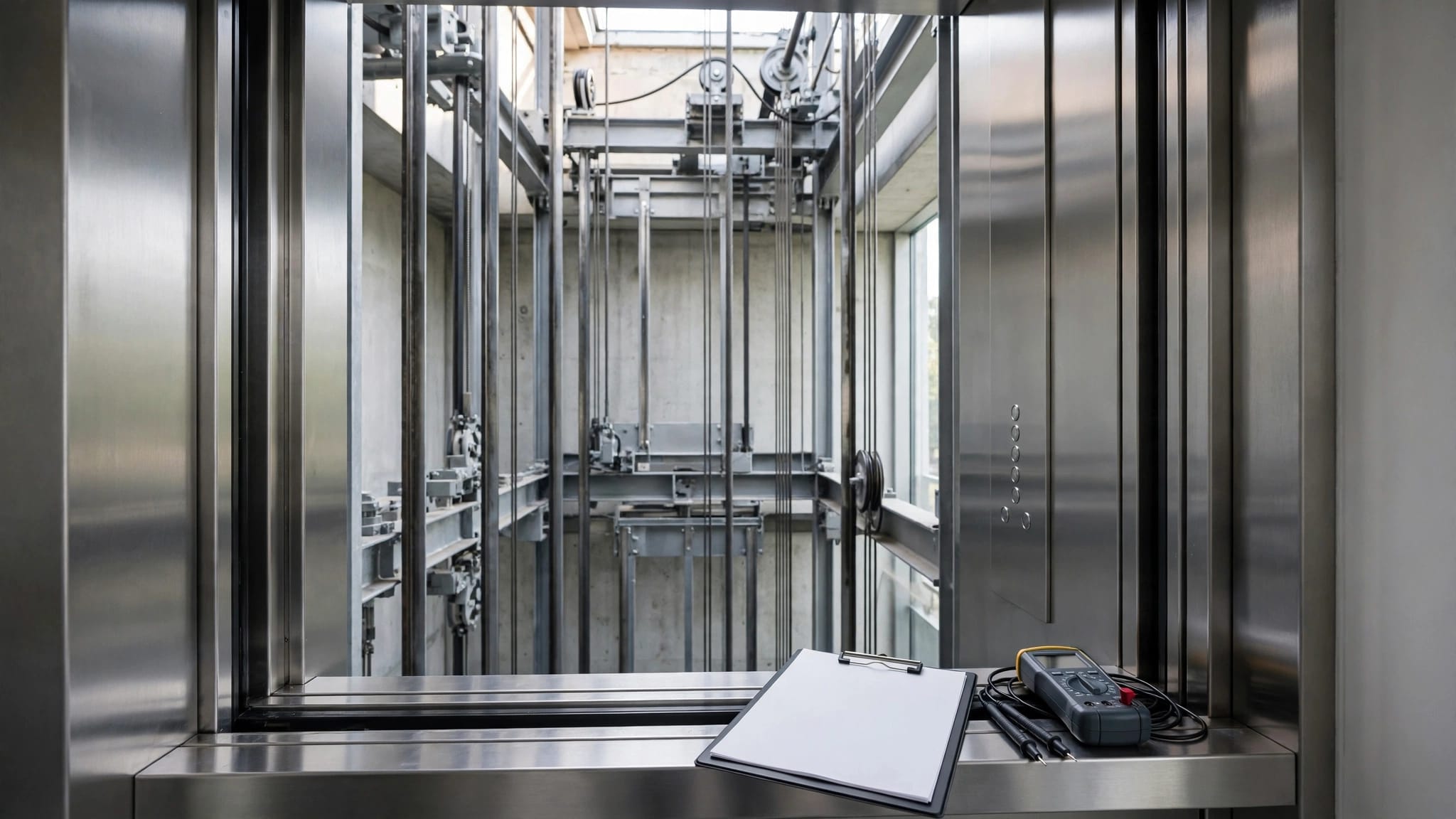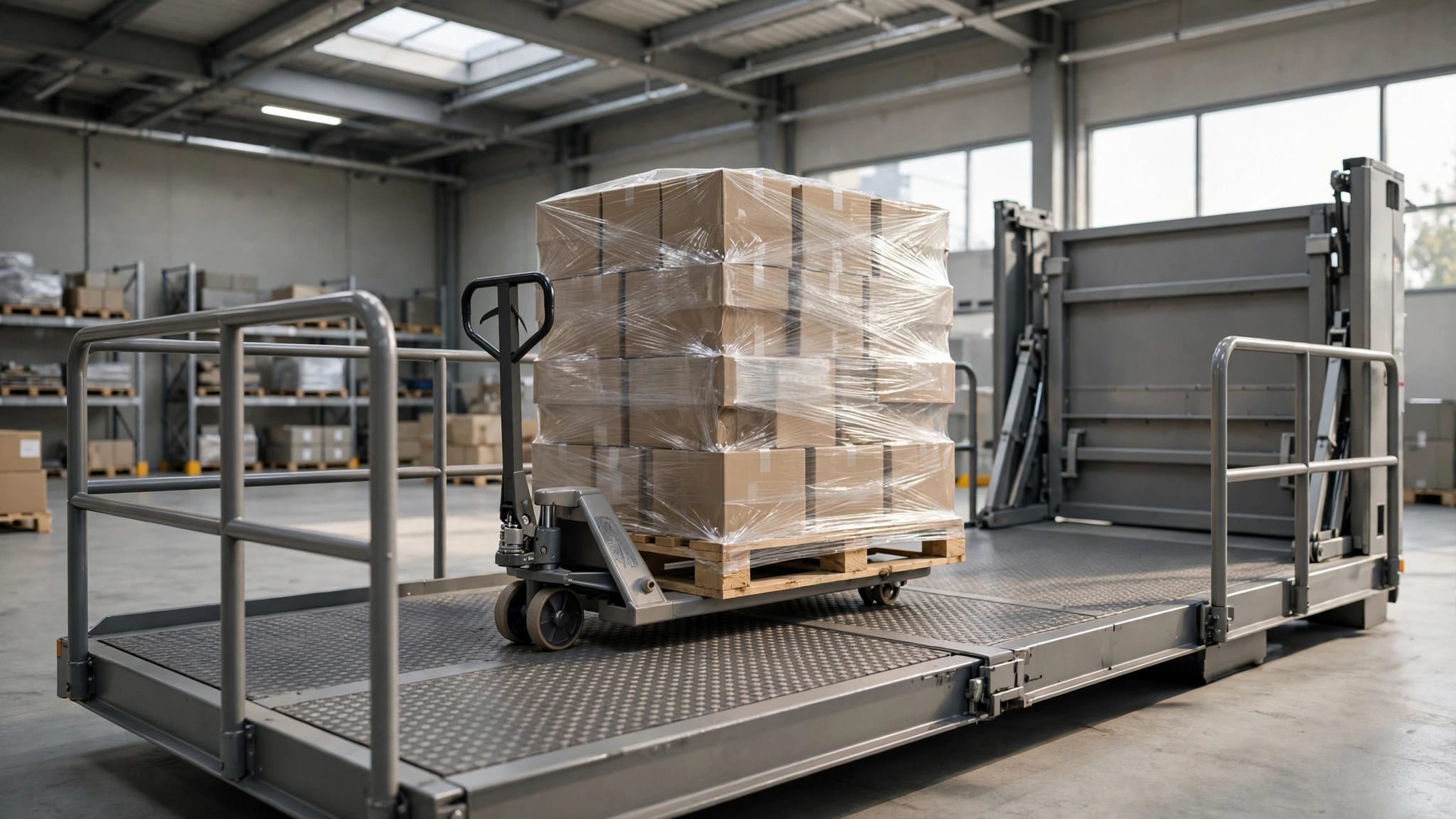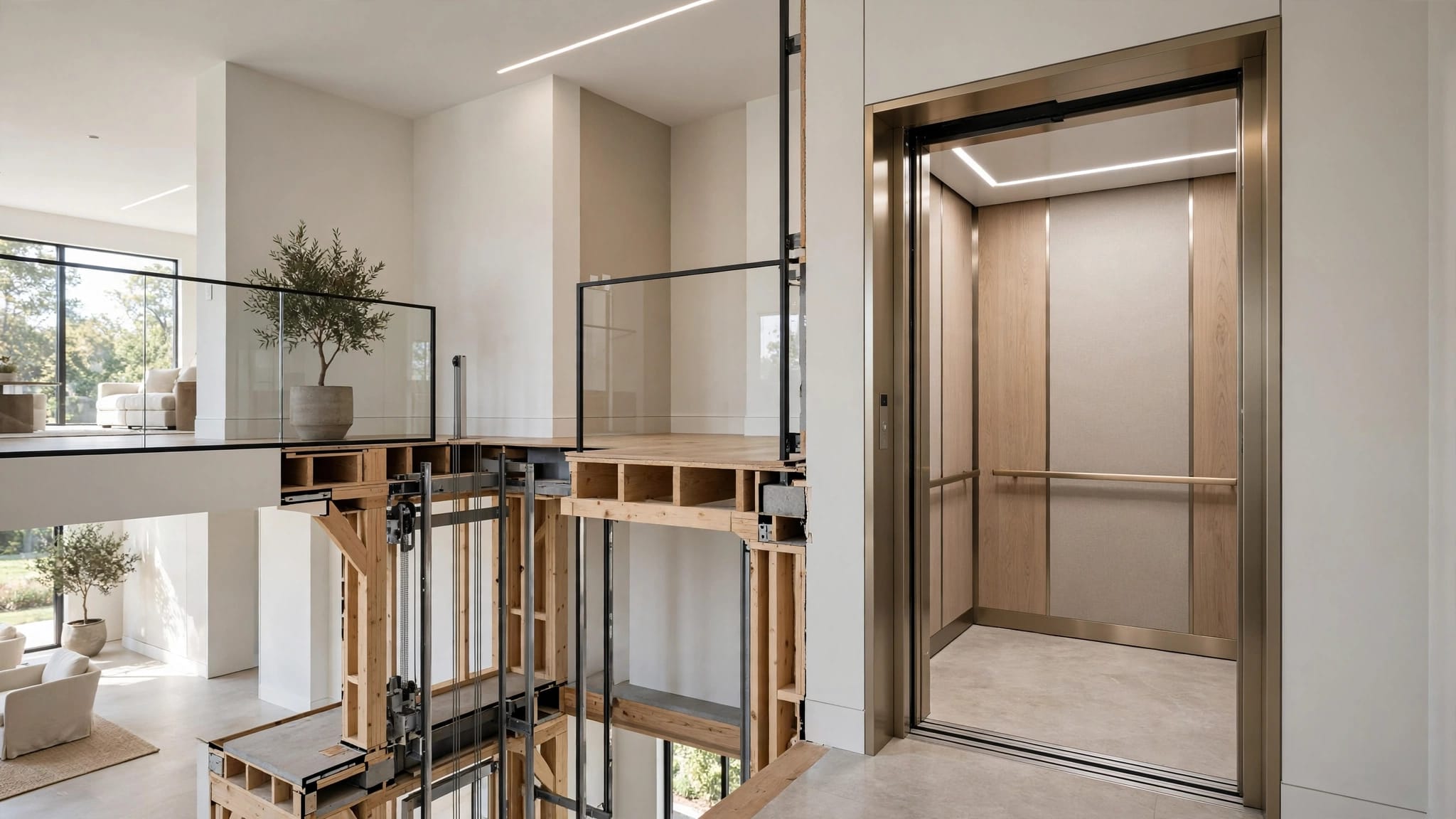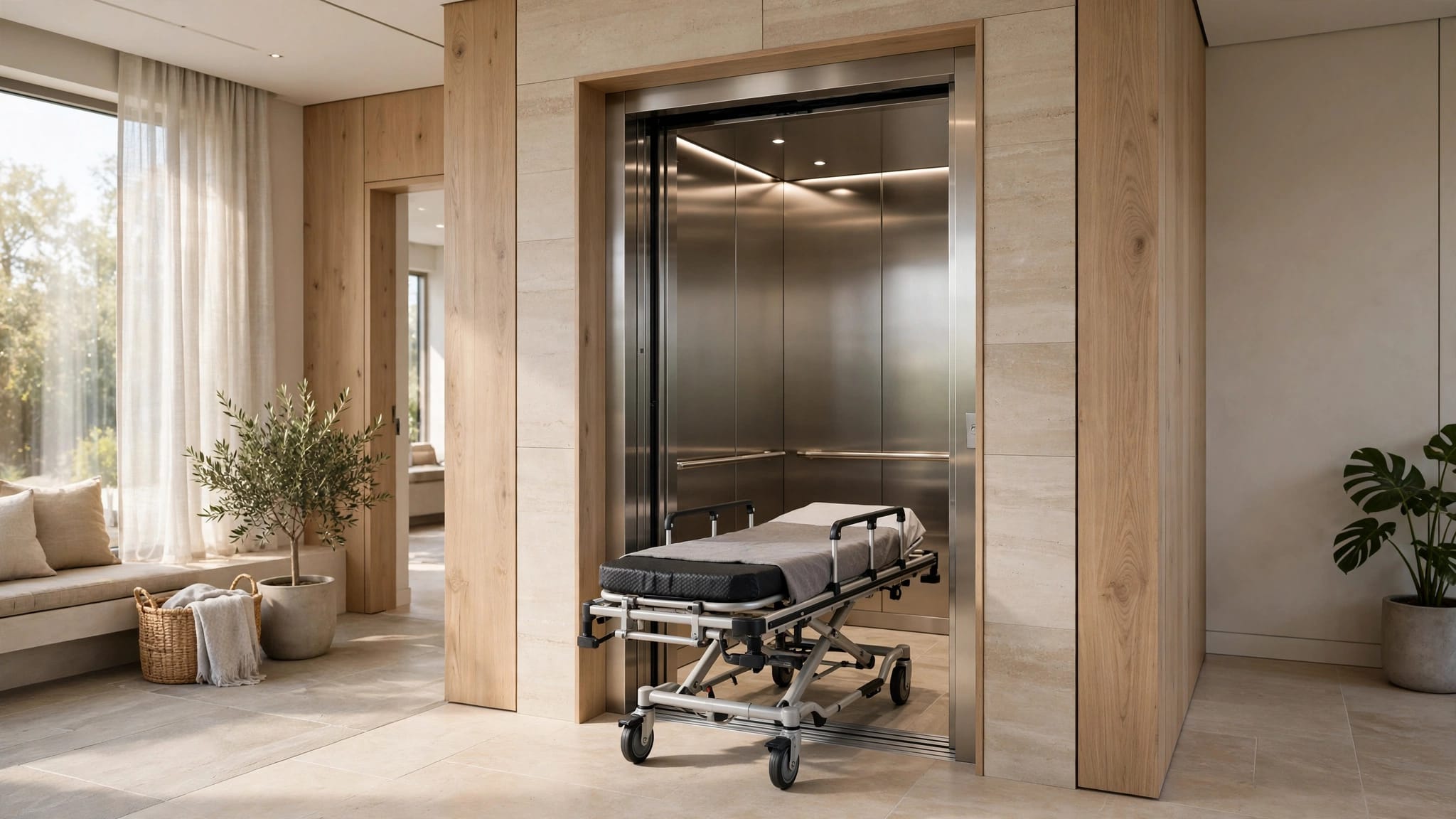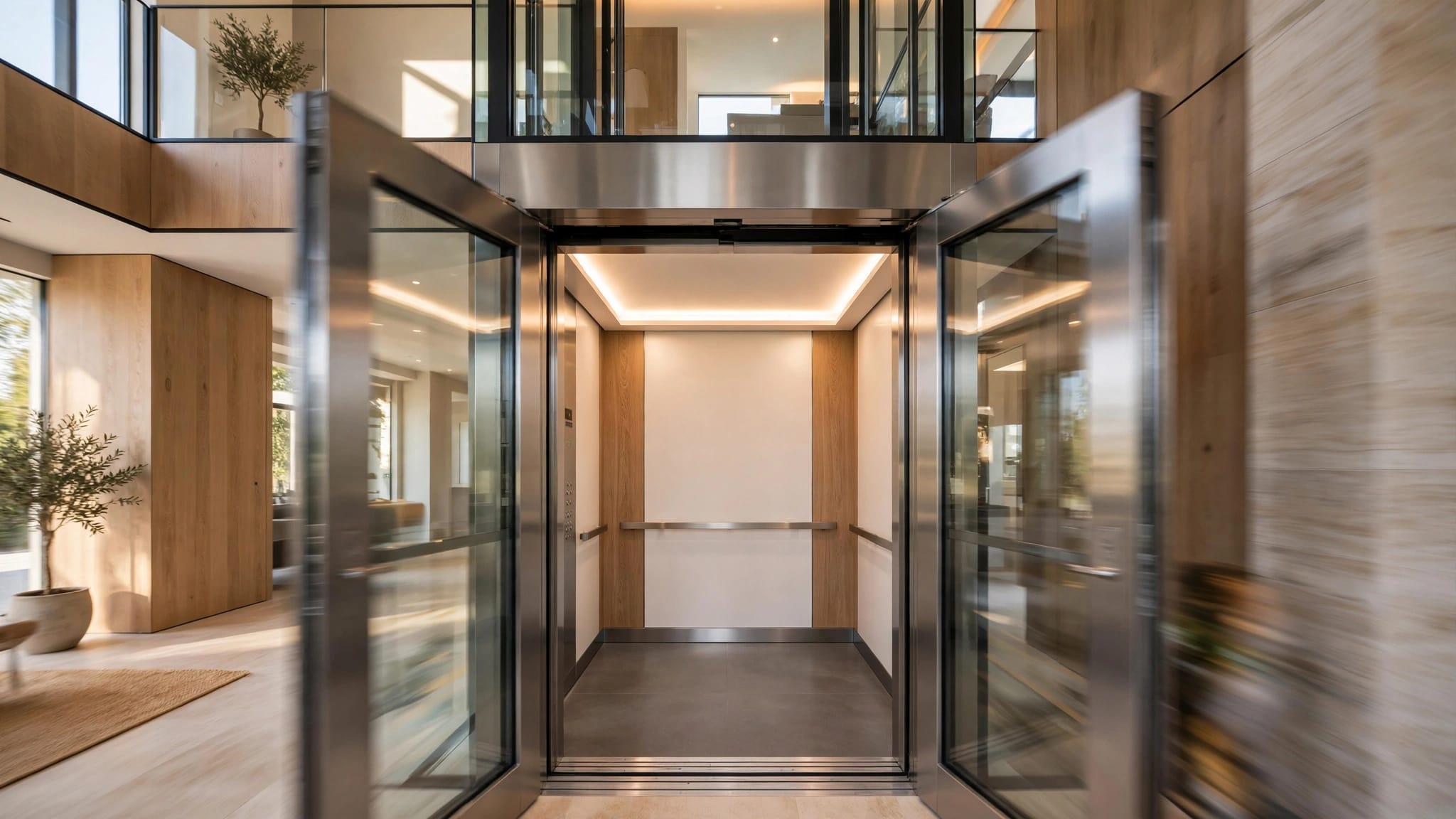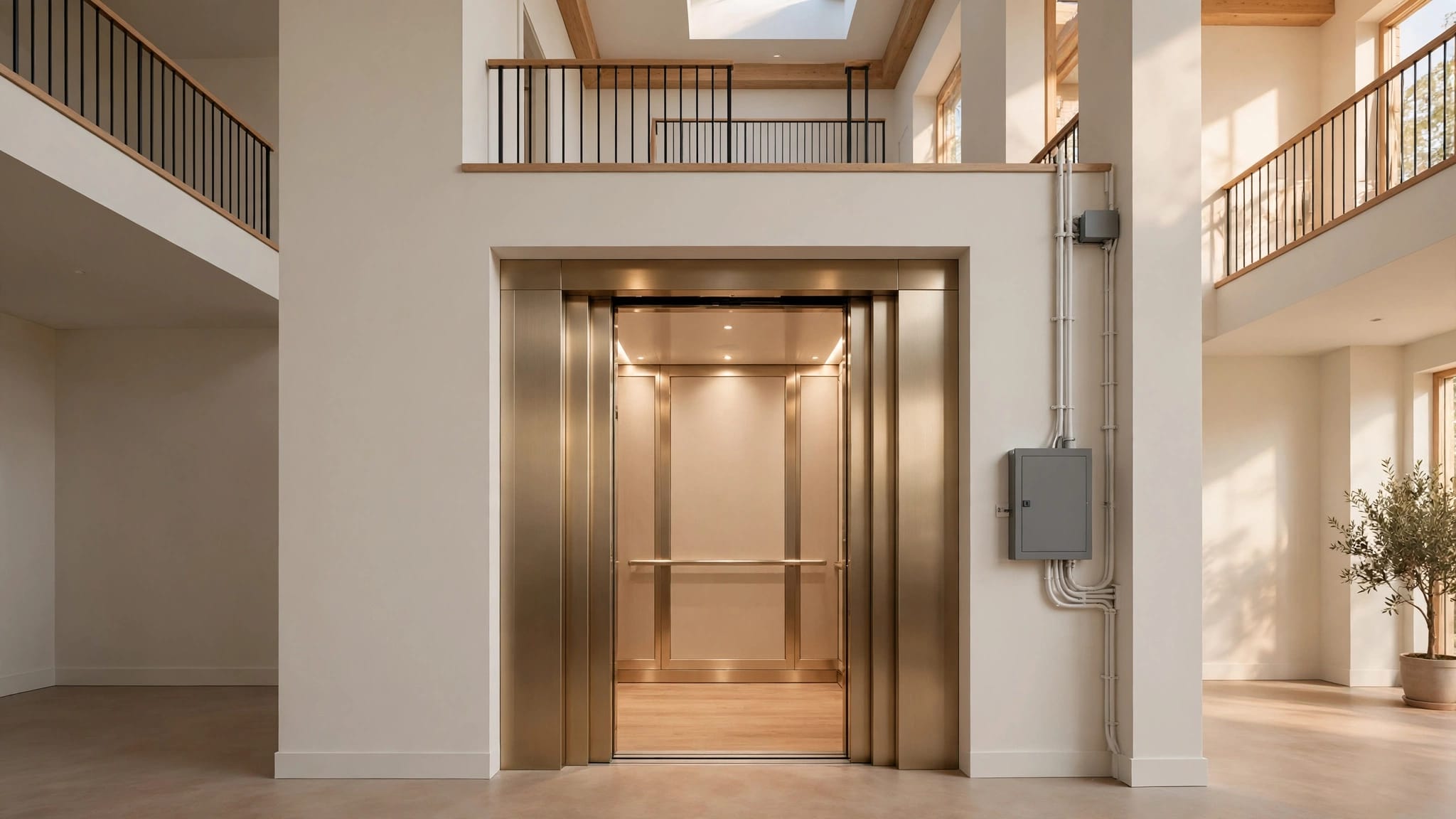
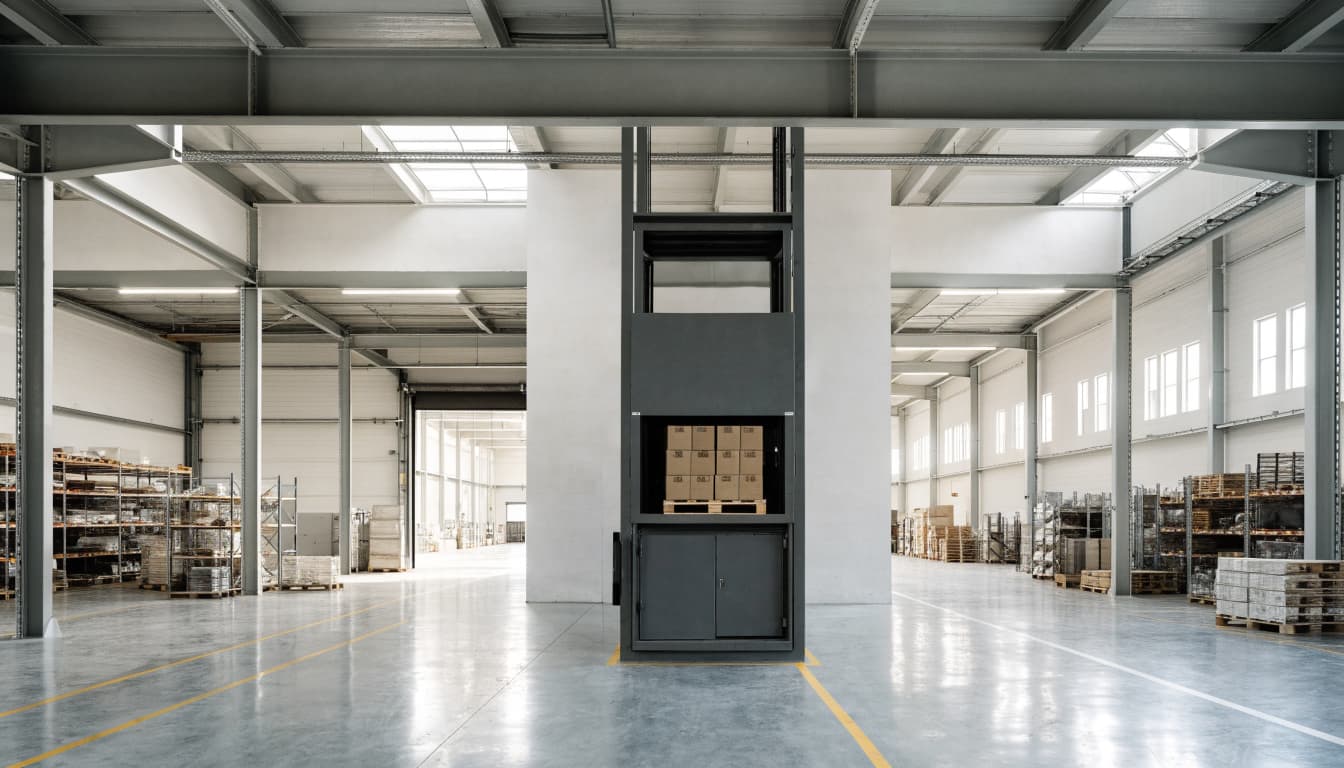
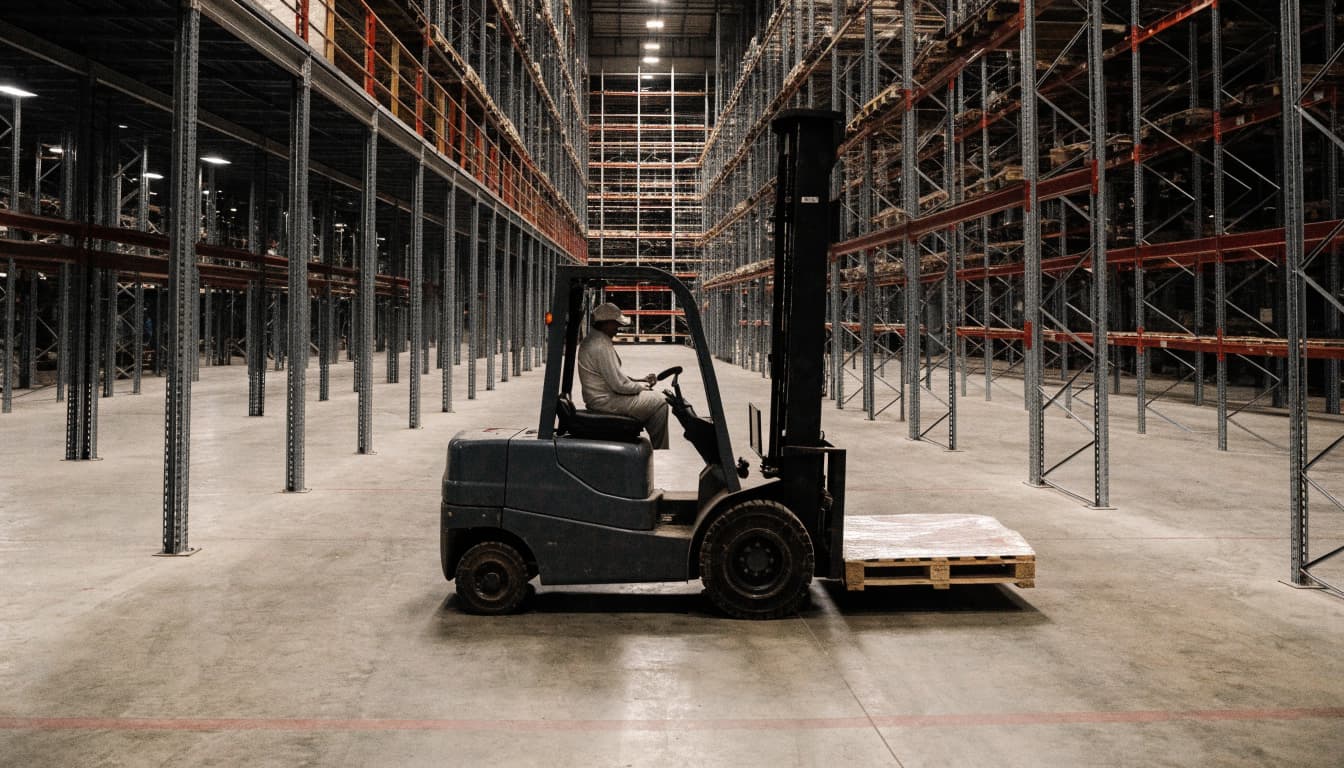
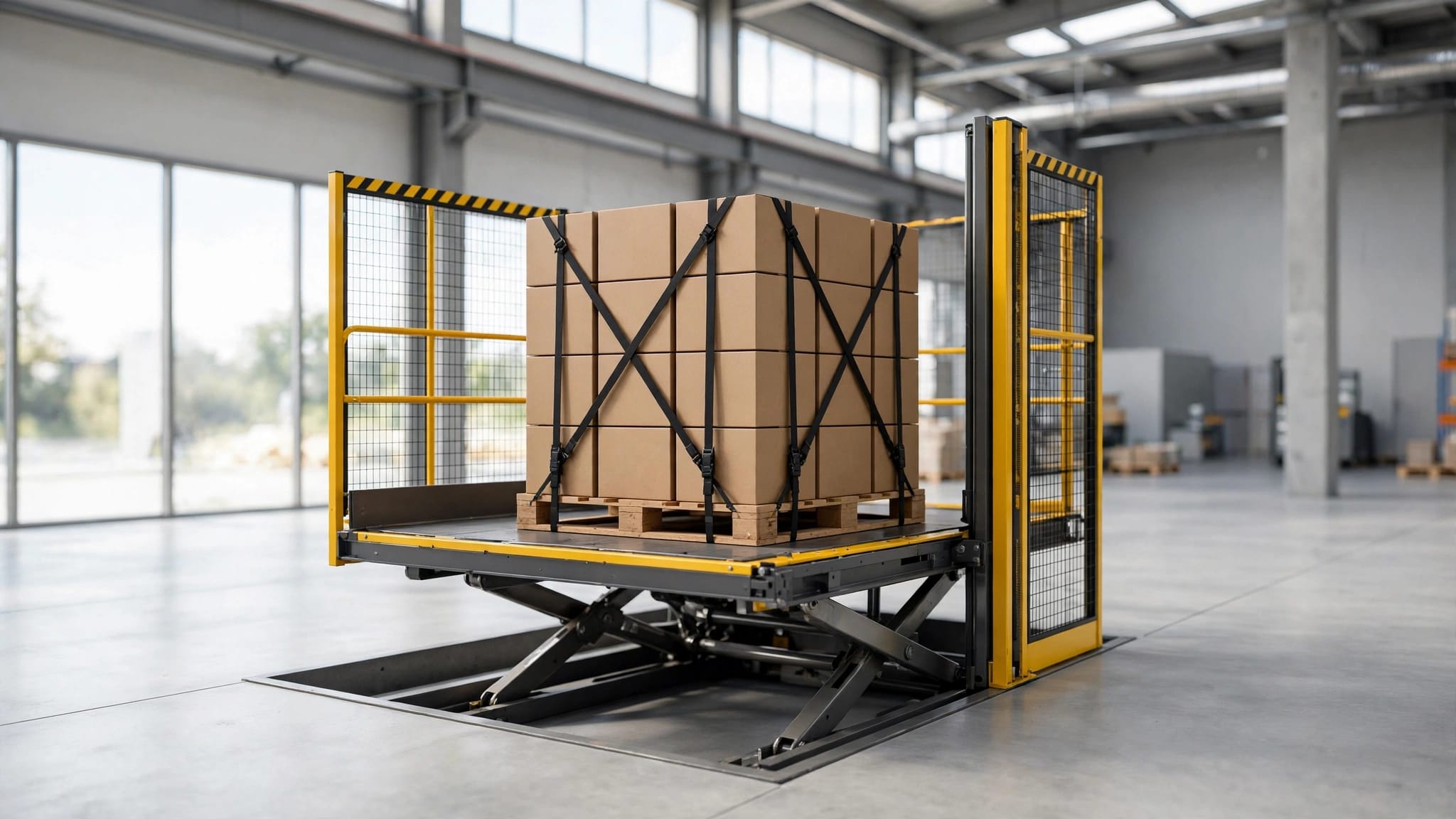
A freight lift moves goods between warehouse floors, while a forklift handles horizontal transport, stacking, and loading. For many multilevel warehouses, the practical answer is both : a forklift brings goods to a landing, and a lift carries them to another level.
The right setup depends on what you move, how often you move it, and where each load needs to go. Start by separating the two jobs before deciding which equipment your building needs.
How a Freight Lift and Forklift Divide the Work
A warehouse with an upper storage floor needs a safe route for goods between levels. It also needs a way to move those goods across each floor. A freight lift and a forklift address different parts of that route.
Freight lifts connect fixed landings
A freight or cargo lift travels along a fixed vertical path. Depending on its design, it can connect a ground-level loading area with a mezzanine, upper floor, elevated dock, or other landing.
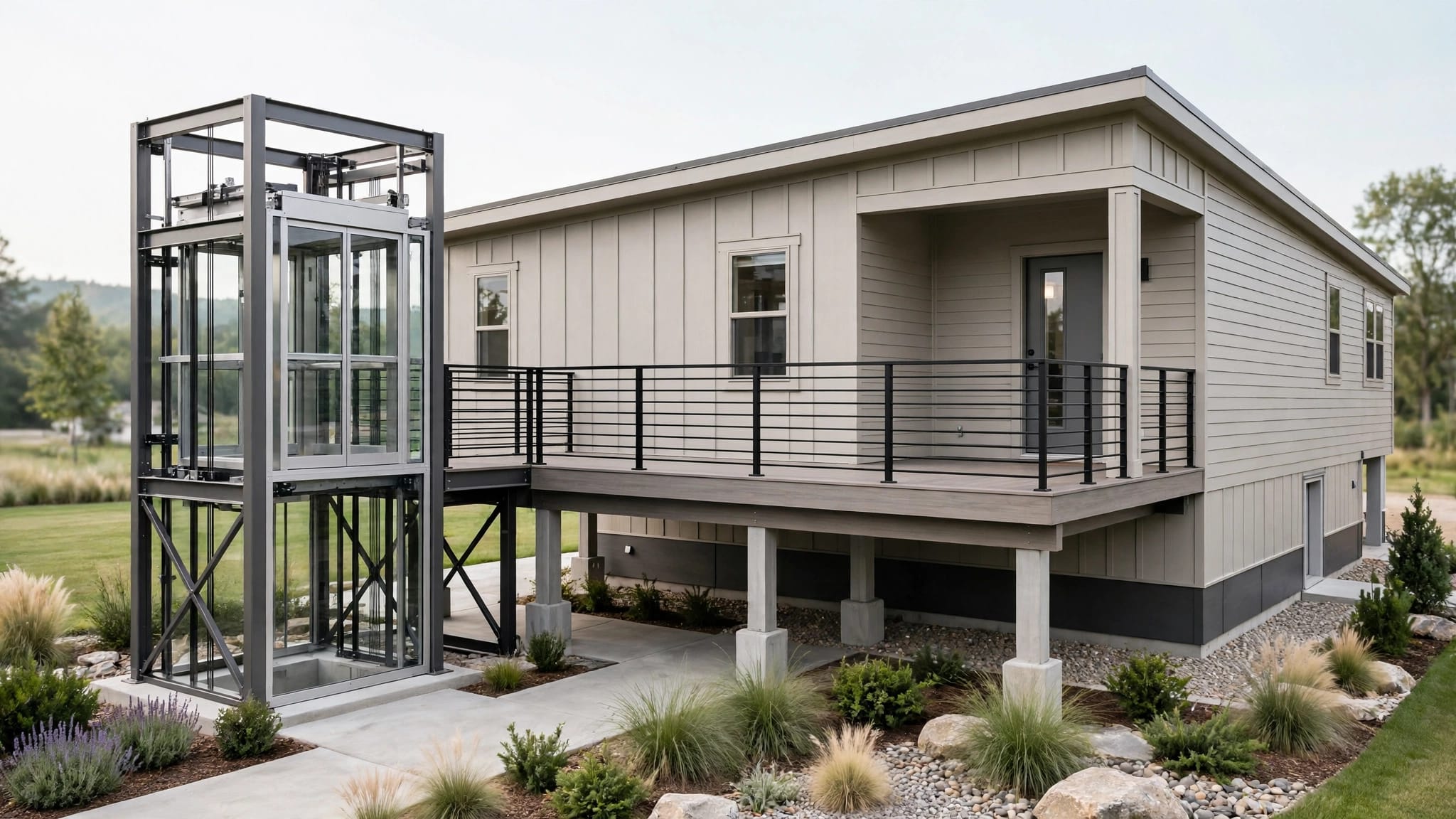
For example, a warehouse can move cartons to a second-floor storage area without carrying them up stairs. Outdoor freight lifts for commercial loading areas can also connect exterior loading zones with upper landings, reducing the need to route goods through interior corridors.
Forklifts move goods across the floor
A forklift travels through a warehouse to pick up, transport, stack, and place suitable loads. At a loading area, it can position palletized goods for the next stage of the journey.
A forklift's raised forks can reach an elevated position, but that doesn't automatically provide a safe transfer to an upper floor. The landing, edge protection, load, and equipment all need to suit the operation.
Freight Lift vs Forklift at a Glance
The distinction starts with the direction each piece of equipment travels.
| Feature | Freight lift | Forklift |
|---|---|---|
| Main movement | Vertical travel between landings | Horizontal travel across a floor |
| Route | Fixed path | Travels through accessible work areas |
| Typical role | Transfers goods between levels | Picks up, carries, stacks, or loads goods |
| Connection to other work | Receives and releases loads at landings | Moves loads to and from storage or loading points |
A lift connects levels; a forklift moves through the spaces around them. Your layout determines how those jobs connect.
Plan Workflow Around the Whole Trip
A useful equipment plan follows a load from arrival to its destination. That includes the approach to the lift, the transfer at each landing, and the route to storage or dispatch.
Map each handoff
Start at the receiving area. Identify where goods are unloaded, how they're packaged, and what equipment moves them to the vertical transfer point. At the upper landing, determine whether staff will use a cart, pallet jack, forklift, or another method to move the load onward.
Each handoff needs enough room for the load and its handling equipment. It also needs a clear path away from the landing so goods don't collect in front of a gate or doorway.
If goods move in both directions, plan where incoming and outgoing loads will wait. Marking separate staging areas can help workers keep finished goods apart from incoming supplies.
Account for busy periods
Throughput depends on the complete cycle, including loading, travel, unloading, and the return trip. Time spent waiting for a clear landing or repacking an oversized load is part of that cycle, too.
Review the busiest part of the day rather than relying only on an average. A lift used for occasional maintenance supplies has a different workload from one that supports repeated transfers to an upper storage floor.
Match Capacity to the Load and Handling Method
The weight of the goods is only one part of a load. A pallet, crate, cart, container, or protective packaging also adds weight and takes up space.
Size the lift for the complete load
Choose a freight lift with a rated capacity suited to the heaviest planned load, including anything that travels on the platform with it. Leave room in the planning process for normal variation in load weight rather than selecting a system based on a narrow estimate.
Platform dimensions matter as much as the rating. A load may be light enough for a lift but too long to enter through its gate or too wide to sit securely. Door openings, platform layout, and the way the load enters all affect usability.
Load distribution matters as well. A concentrated piece of machinery can place different demands on a platform than evenly distributed cartons. A qualified lift professional can assess the proposed load and support arrangement.
Use the forklift's rated limits
Forklift capacity depends on the specific truck and its rated operating conditions. The load's weight, dimensions, and position affect whether it can be handled within those limits.
Attachments can also affect a forklift's rated capacity. Operators need the equipment's applicable rating information and an appropriate method for securing and carrying each load.
Fit the Equipment to the Building
A freight lift needs more than a spot for its platform. A forklift needs more than a clear aisle. Both must fit the building's structure and the routes workers use every day.
Plan the lift's landings and support
Measure the travel height and identify every floor that needs service. Each landing needs usable access, room for the intended load, and suitable protection around the opening.
An interior location may put the lift close to storage areas. An exterior location can connect a loading zone directly to an upper landing, though it also brings weather exposure and vehicle traffic into the plan.
The installation may need structural support, a foundation, electrical work, drainage, or other site changes. A qualified installer or engineer should assess the building and the proposed mounting arrangement.
Protect routes and floor space
Forklift routes need clearance for the truck, its load, and the movements required at racks and loading points. Pay particular attention to doorways, overhead obstructions, corners, and areas where pedestrians cross.
If a forklift will operate on an upper floor, the structure must support the proposed equipment and loads under the intended conditions. An engineer can assess the floor, including concentrated loads and the effects of operation. Don't assume a mezzanine is suitable because it holds stored pallets.
Budget for Installation and Ongoing Operation
Equipment price is only one part of a warehouse project. The building work and the cost of operating the system also belong in the budget.
Freight lift project costs
A lift project can include the equipment, delivery, installation, and electrical connection. Depending on the site, the budget may also need to cover structural work, landing modifications, gates, barriers, permits, and inspections.
Outdoor installations can require additional attention to drainage and exposure. Multiple stops and difficult access may also affect the scope of work. A written proposal should identify the work included and any building work handled separately.
Once installed, the lift needs scheduled maintenance and inspections. Allow for service access and downtime when planning its role in daily operations.
Forklift operating costs
A forklift budget can include purchase or rental, operator training, maintenance, inspections, and replacement parts. Electric trucks also need a suitable charging arrangement. Fuel-powered equipment requires an appropriate fueling plan.
Consider the truck's work area as part of the expense. A change to aisle layout or a dedicated loading zone may be necessary for the intended operation.
Choose Equipment for the Goods and Site
The goods themselves can rule out a layout that looks workable on a floor plan. Record their dimensions, packaging, and handling needs before settling on a loading method.
Cartons and smaller containers may suit a platform loaded by hand or with an appropriate cart. Pallets require enough space for the pallet and the device used to move it. Long materials and machinery need particular attention to entry clearance, stability, and weight distribution.
Weather-sensitive goods also affect the choice of location. An exterior lift may offer a direct route to an upper floor, but loads need suitable protection during outdoor handling. An enclosed arrangement may be appropriate where exposure is a concern.
For an existing facility, consider how the new route connects with receiving and storage. Placing a lift close to the goods it serves can reduce unnecessary movement through the building.
Set Separate Safety Rules for Each Operation
A safe plan covers the lift, the forklift, and the point where their work meets. Written procedures should tell workers where to stand, how to load equipment, and what to do when something isn't working properly.
Keep cargo lifts for their approved use
A cargo lift isn't automatically approved to carry people. Workers should stay off a material-only platform, and a facility that needs passenger travel should use equipment designed and approved for that purpose.
Gates, guards, controls, and landing protection must suit the installation. Keep loads stable and within the rated limits, and keep the travel path clear.
For an existing system, modernizing an older outdoor cargo lift may be worth considering when equipment condition or access arrangements no longer suit the work.
Control forklift and pedestrian traffic
Forklift operators need training for the truck and workplace conditions. Keep pedestrians clear of operating areas, protect lift equipment from vehicle impact, and provide space for safe loading at each landing.
Never use a worker to steady a suspended load or stand beneath raised forks. If a transfer requires work near an elevated edge, the landing and its protection need a planned procedure, not an improvised handoff.
A Decision Checklist for Your Warehouse
Use these points to identify the equipment and building work your operation needs:
- Map the route each load takes between receiving, storage, and dispatch.
- Record the heaviest complete load, including its pallet, container, or cart.
- Measure bulky goods and the openings they must pass through.
- Identify every landing and the space available for loading and staging.
- Account for peak transfer periods and movement in both directions.
- Assess floor and structural support for the planned equipment and loads.
- Separate goods transport from any need to move passengers.
- Include installation, site work, maintenance, and training in the budget.
Choose the Route Before the Equipment
A freight lift gives goods a route between levels. A forklift handles work across the floor. When a warehouse needs both jobs, the handoff between them deserves as much attention as either machine.
At Veranda 'Vator, we manufacture cargo lifts and passenger elevators for different purposes. Start with the load, the landings, and the people who need access. That gives you a practical basis for choosing the right system.
Recent Posts