
Load Centering on Cargo Lifts: A Practical Safety Guide

Share this article

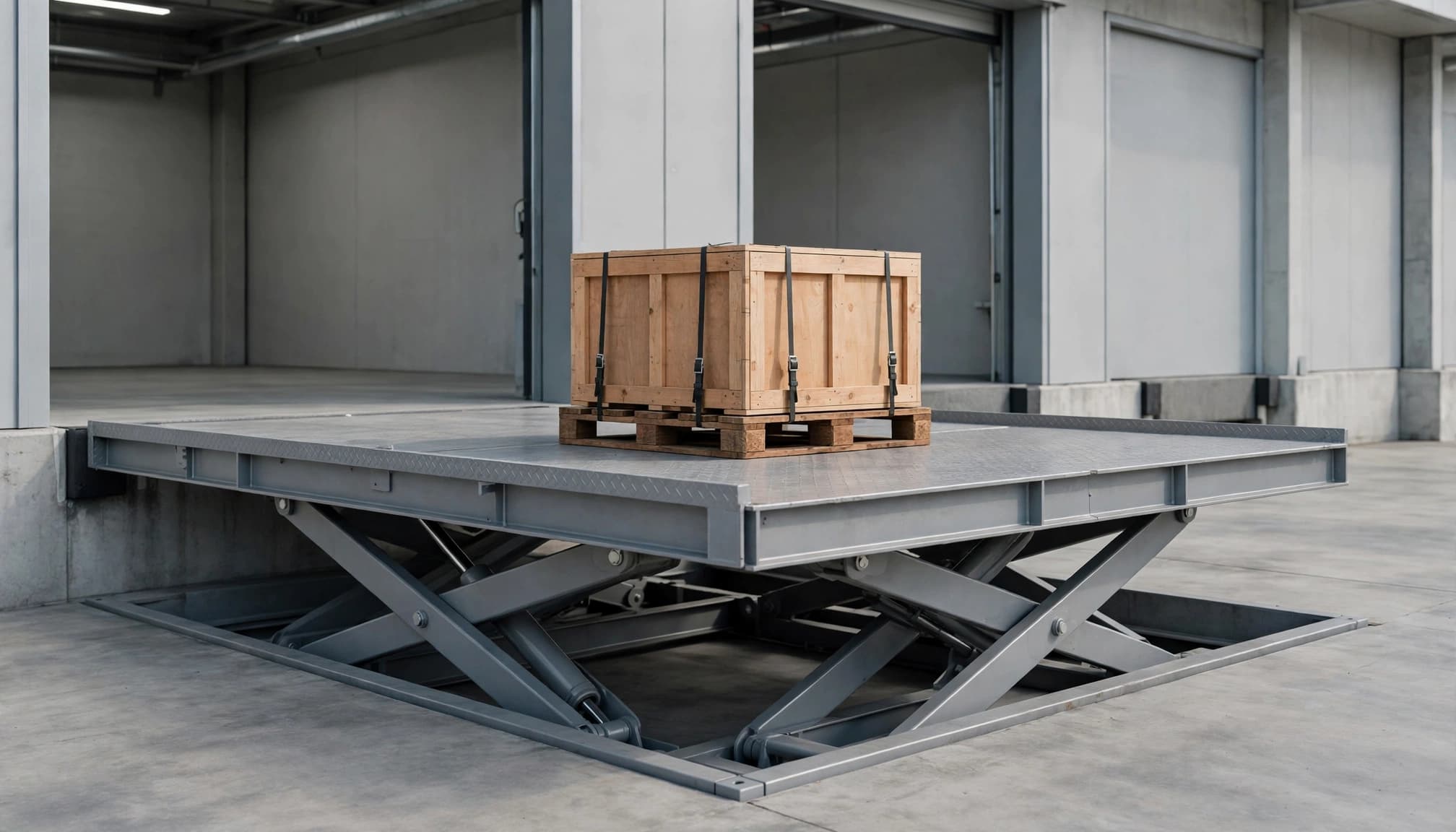
Safe cargo lift load centering means placing the load's center of gravity within the lift's permitted loading area and keeping the cargo stable throughout travel. The total weight matters, but so do the position of heavy items and the way they rest on the platform.

A box can look centered while most of its weight sits near one edge. A cart can start in the right position and roll out of it. A consistent loading routine helps you catch both problems before the lift moves.

Key Takeaways

Place dense items low and near the platform's center, following the lift's loading instructions. Include pallets, carts, and restraints in the total load weight, and keep cargo within the platform boundaries.

Secure anything that could roll, slide, or tip. If the weight distribution is uncertain or the lift shows signs of trouble, stop and resolve the problem before operating it.

What Load Centering Means

The goal is to keep the combined weight of the cargo positioned where the lift is designed to carry it. That requires more than putting the middle of a box over the middle of the platform.

Center of gravity versus visible shape

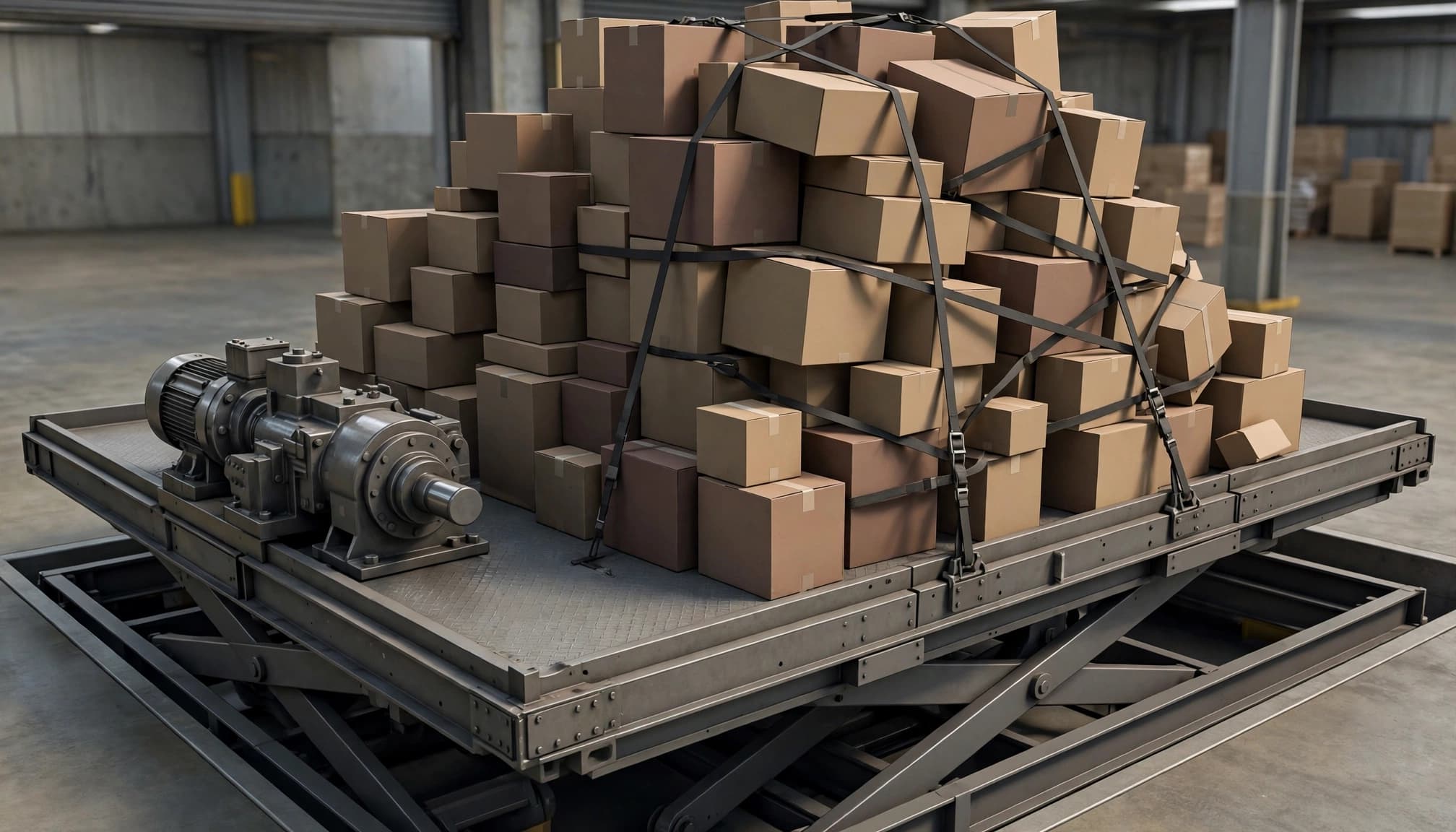
The center of gravity is the balance point of an object. An empty cabinet with a heavy motor at one end may have its balance point closer to the motor. The same is true of a crate containing machinery packed on one side.

When several items travel together, they have a combined center of gravity. A small, heavy toolbox can have more influence on that balance point than a large, light package.

Look for weight information and markings on the cargo. If you can't determine where a heavy or irregular load will balance, don't guess. A qualified material-handling professional can help establish a safe way to move it.

Weight distribution across the platform

A centered balance point doesn't necessarily mean every part of the platform carries the same pressure. A machine resting on four small feet, for example, concentrates its weight at those contact points.

The lift's instructions may limit concentrated loads or require particular support arrangements. Don't add a pallet, board, or other support on the assumption that it makes the load acceptable. Use the loading method specified for the equipment and the cargo.

Start With the Lift's Loading Limits

Before positioning cargo, identify the limits that apply to the installed lift and the way it will be loaded. The operating instructions and capacity label give the operator a starting point.

Account for everything on the platform

The load includes the cargo and anything that travels with it, such as a pallet, cart, protective container, or restraint. Use known weights rather than judging by size. Small machinery and filled containers can be much heavier than they look.

If a cart or handling device will remain on the platform during travel, its weight belongs in the total. A forklift or other powered device should enter the platform only when the lift and the loading procedure permit it.

For properties that move dock equipment and supplies, our guide to calculating cargo lift capacity covers the items that can be easy to overlook.

Follow equipment-specific instructions

Lift designs differ, and their loading instructions can differ too. For example, the Genie Lift operator's manual directs operators to center loads on its forks or platform and keep the load center within the machine's specified zone. Its capacity depends on that load center.

That guidance applies to the Genie equipment covered by the manual. Your installed lift's instructions govern its permitted load position and operating method.

How to Center Cargo on a Lift Platform

A repeatable sequence helps operators position the weight before gates close and the platform moves. Use the installed lift's instructions and site procedure alongside these steps.

  1. Identify the weight and heavy side of each item. Include any pallet, cart, or container that will stay on the platform.
  2. Prepare a stable load. Close containers, secure loose parts, and remove items that could fall during travel.
  3. Place the heaviest portion low and near the permitted center of the platform. Position the cargo so its combined center of gravity falls within the lift's loading limits.
  4. Distribute the remaining weight around that position. Avoid stacking light items high on top of a heavy load if they could slide or tip.
  5. Secure the cargo using restraints and attachment points approved for the lift and the load. Set cart brakes and use approved means to prevent movement.
  6. Keep the entire load inside the permitted platform area. Handles, straps, pipes, and other projecting parts must stay clear of gates and the travel path.

After loading, look at the platform from more than one side. The load should rest securely on its intended supports, with nothing pressing against a gate or extending into moving equipment.

If the cargo won't fit securely, divide it into smaller trips when the items can be separated safely. Don't hold a load in place by hand while the platform travels.

Common Examples of Uneven Loads

Uneven loads are common in homes, warehouses, and waterfront properties. Recognizing where the weight sits helps you plan its position before it reaches the platform.

Furniture and equipment with a heavy end

A refrigerator, cabinet, or machine may contain a motor or other dense component near one end. Placing the item's outer shape in the middle of the platform may leave that heavy component off-center.

Position the item according to its known weight distribution and the lift's instructions. Empty loose contents first, and secure removable parts separately when appropriate.

Tall furniture also needs room to travel without contacting an overhead obstruction. Our guide to moving furniture with a residential cargo lift covers preparation and landing safety.

Mixed supplies and rolling carts

A load of coolers, tools, and supply bins can appear evenly arranged while the heaviest container sits against one side. Place dense items near the center, then arrange lighter items so they can't slide into a gate or over the edge.

A cart adds another concern: its contents and wheels can move independently. Set the brakes, secure loose contents, and use any additional restraint required by the lift's instructions. If the cart remains unstable, unload it and move the contents using an approved method.

Risks From Off-Center or Shifting Loads

An off-center load puts additional turning force on the platform and its guide system. Depending on the lift and the position of the weight, the platform may be more prone to uneven movement or contact with nearby components.

A shifting load can also change position during a start or stop. Packages may slide, a cart may roll, or a tall item may tip against a gate. Even if nothing falls, the cargo can obstruct the landing or make unloading unsafe.

Outdoor conditions add another force. A large box, sheet, or tall piece of furniture can catch wind while the lift is raised. Follow the manufacturer's wind limits and postpone the trip when conditions exceed them.

A centered load can still shift if it isn't stable. Position and restraint need attention on every trip.

Checks to Make Before Raising Cargo

Once the load is positioned, the operator should inspect the lift area and prepare for travel. These checks belong to the normal operating routine, not a substitute for maintenance or formal inspection.

Look at the cargo and platform

Make sure the load remains inside the permitted boundaries and rests securely on its supports. Brakes should be set, approved restraints attached, and loose handles or straps clear of moving parts.

Look for visible platform damage, debris, or anything that prevents a gate from closing. If a latch, guard, or other safety component appears damaged, take the lift out of service rather than attempting a trip.

Clear the travel path and landings

Check above and below the platform for people, pets, branches, stored materials, and other obstructions. Keep people away from the platform path and open landing edges.

Close and latch the required gates. The designated operator should have a clear view or use the site's agreed communication procedure with a signal person. If communication breaks down, stop the operation.

Our cargo lift operator training checklist covers control checks and other habits for outdoor equipment.

What to Do if the Load or Lift Moves Abnormally

Stop the lift using its approved control if cargo shifts, the platform moves unevenly, or you hear an unfamiliar grinding or scraping sound. Wait until all motion stops, and keep everyone clear of the travel area.

Don't reach into the lift path or try to straighten cargo while the platform is moving. If the platform stops away from a safe landing, don't climb onto it or enter a shaft to unload it. Follow the equipment's emergency procedure and call a qualified technician when assistance is needed.

A gate that won't latch, visible cable damage, or repeated abnormal operation also calls for the lift to remain out of service. A centered load won't correct an equipment fault.

Cargo Lift Load Centering FAQ

Can two separate items share one lift trip?

They can if their combined weight and distribution meet the lift's instructions and both items can be secured. Arrange them around the permitted load center rather than assuming that one item on each side creates a balanced load.

Can someone ride with the cargo to steady it?

Keep people off a cargo platform unless the equipment is designed and approved for passenger travel. Under OSHA's construction rules, material hoists prohibit riders except for inspection and maintenance. Anyone who needs to travel between floors needs equipment approved for that purpose.

Make Safe Loading a Routine

A safe trip starts with knowing where the weight sits. Center the combined load within the lift's permitted area, keep it stable, and make sure the travel path is clear.

When the load can't be positioned securely, choose a different arrangement or make separate trips. At Veranda 'Vator, we manufacture cargo lifts for moving materials and passenger elevators for people who need their own way between floors.

Recent Posts

By Veranda 'Vator • October 31, 2026
Routine elevator service keeps equipment maintained, while a formal elevator inspection assesses it against applicable safety requirements. Both matter, but they answer different questions and produce different records. As an owner, you need to know which work your provider pe...
By Veranda 'Vator • October 30, 2026
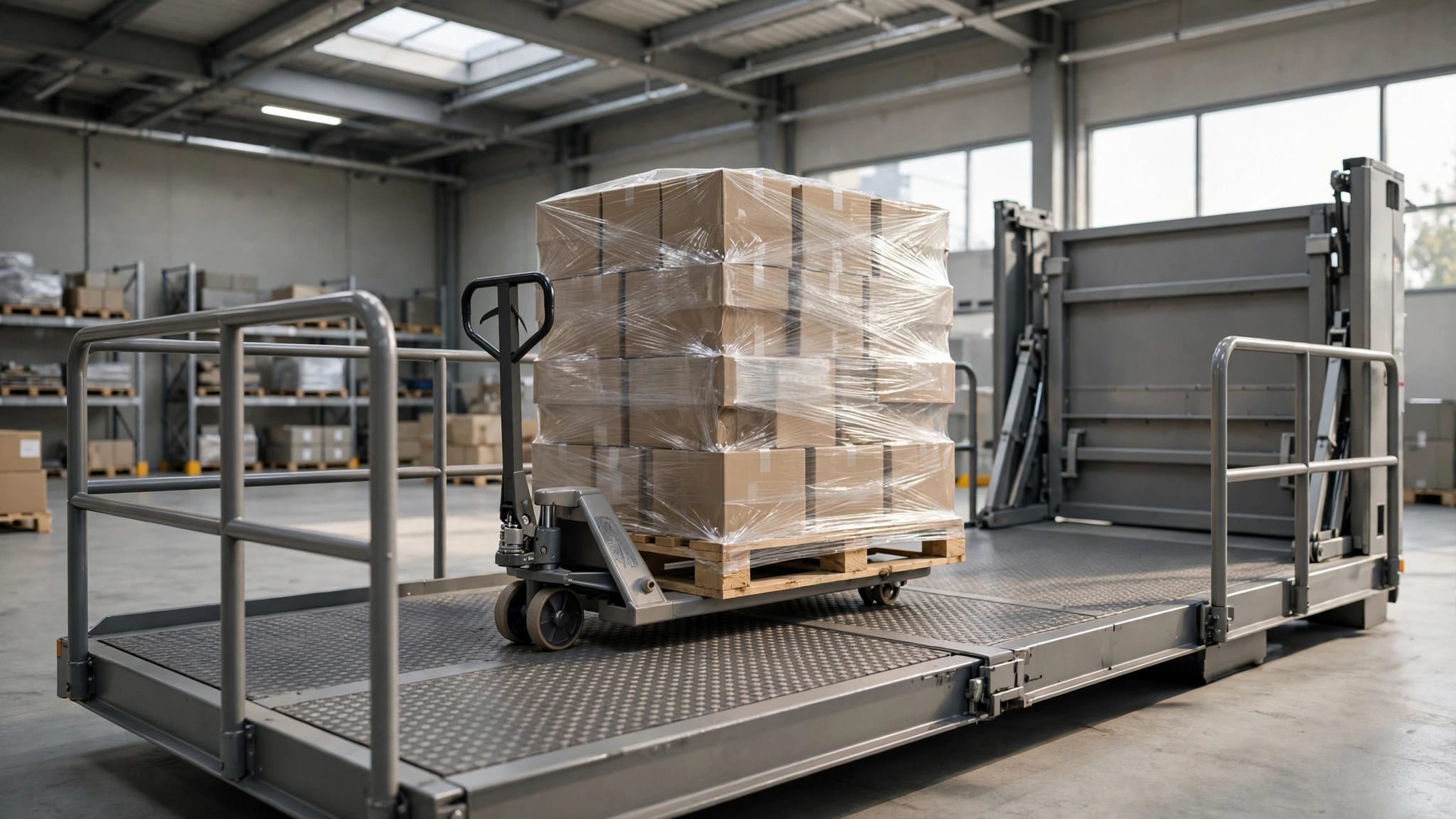
Yes, a cargo lift can carry a pallet jack and loaded pallet when its rated capacity, usable platform dimensions, and loading design accommodate both. The total includes the goods, pallet, pallet jack, and anything else traveling on the platform. However, weight capacity alone...

By Veranda 'Vator • October 29, 2026
Adding a stop to an existing residential elevator may be feasible when the equipment and building can accommodate the change. The answer depends on the elevator's design, available shaft space, structural conditions, controls, and applicable code requirements. An additional la...

By Veranda 'Vator • October 28, 2026
A residential elevator can fit a medical stretcher if its doorway, cabin, and approach accommodate that stretcher's actual dimensions. However, there's no single universal "standard stretcher" size, and physical fit alone doesn't establish safe patient transport. For your home...

By Veranda 'Vator • October 27, 2026
A residential elevator's speed depends on the model, and its listed travel speed doesn't tell you the complete ride time. Starting, stopping, leveling, and operating the doors all contribute to a one-floor trip. For you, the useful distinction is between time in motion and the...

By Veranda 'Vator • October 26, 2026
Yes, a residential elevator can be installed in some manufactured homes, but feasibility depends on the structure, foundation, available space, elevator type, and local requirements. Not every home can support the installation , even when there appears to be room. For a raised...

By Veranda 'Vator • October 25, 2026
Braille and tactile labels aren't automatically required on every residential elevator in the United States. Residential elevator Braille requirements depend on the building's use, the equipment classification, and the applicable federal, state, and local rules. An elevator se...

By Veranda 'Vator • October 24, 2026
An outdoor elevator can increase a home's resale value, but there's no dependable percentage you can apply to every property. Its strongest selling point is usable access , especially when stairs separate the driveway from the main living space. For homeowners, the financial q...

By Veranda 'Vator • October 23, 2026
Residential elevator electricity use includes power for trips and standby systems , so travel time alone won't explain your bill. TK Elevator has published an example reaching 4,000 kilowatt-hours (kWh) annually for a hydraulic lift in a three-story building. That figure isn't...

By Veranda 'Vator • October 22, 2026
An outdoor elevator may be movable, but relocating it is rarely a simple matter of taking it apart and reinstalling it. Outdoor elevator relocation depends on the lift's type and condition, manufacturer requirements, and whether the new property can support the equipment safel...
Show More