Do Residential Elevators Need Braille and Tactile Buttons?

Share this article

Braille and tactile labels aren't automatically required on every residential elevator in the United States. Residential elevator Braille requirements depend on the building's use, the equipment classification, and the applicable federal, state, and local rules.

An elevator serving only a private single-family home generally doesn't fall under the ADA merely because it carries passengers. However, state and local requirements still matter . The first distinction is between a private-residence elevator and an elevator serving shared or public spaces.

Key Takeaways

  • Where ADA Section 407 applies, elevator car controls require tactile identification and Braille.
  • Private-residence elevators have a separate technical section in the ADA Standards, but federal coverage depends on the setting.
  • Adopted elevator standards and local amendments can add requirements beyond federal accessibility rules.
  • Raised buttons, raised-character labels, and Braille are different features.

Which Rules Govern Residential Elevator Controls?

Private single-family homes

An elevator used only within an ordinary private single-family home generally isn't subject to federal ADA requirements. That doesn't eliminate building permits, equipment safety standards, or applicable state accessibility provisions.

The label "residential elevator" alone doesn't establish the requirements. The equipment's classification and approved use matter, along with the building it serves. A homeowner's preference for simple controls cannot override a requirement in the adopted code.

Shared residential and public spaces

An elevator serving condominium common areas, apartments, an inn, or public-facing premises needs a different analysis. Depending on the property, accessibility obligations can arise under the ADA, the Fair Housing Act, or state and local building codes.

Likewise, a vertical platform lift isn't interchangeable with a passenger elevator. Our guide to platform lifts and passenger elevators explains how their accessibility pathways differ. Building use and equipment type must be considered together.

What the ADA Requires for Elevator Buttons

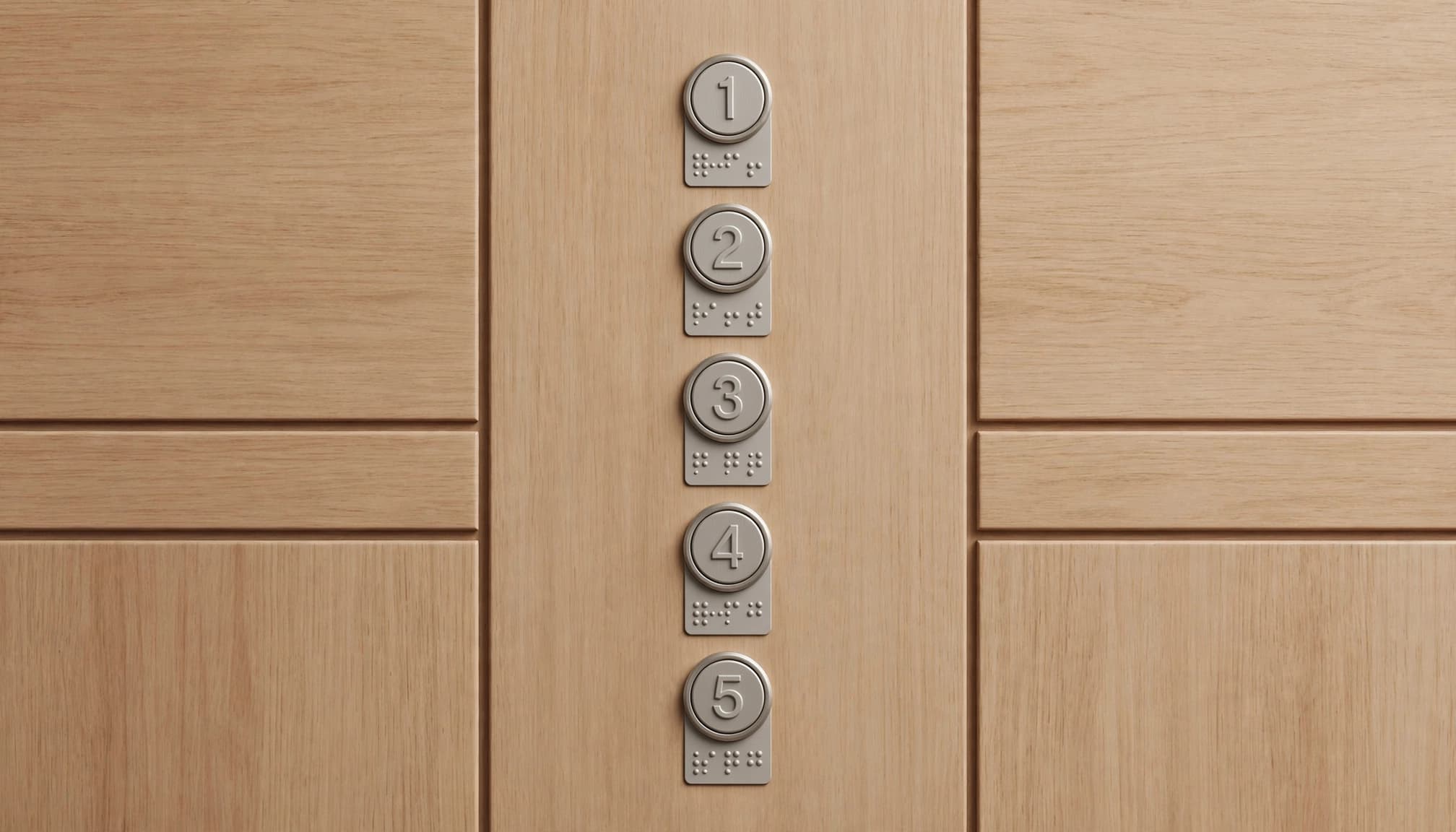
A tactile control panel can include several distinct features: a physical button, raised characters identifying its function, and Braille identification. A button that protrudes from the panel doesn't necessarily provide all three.

Passenger elevators under Section 407

For elevators covered by Section 407 of the 2010 ADA Standards, car-control buttons require tactile character identification. Raised-character and Braille designations generally belong immediately to the left of the corresponding button. An exception addresses existing panels where space prevents that placement.

The Standards specify contracted, or Grade 2, Braille under Section 703.3. Separately, Section 407 requires tactile and Braille floor designations at hoistway-door jambs. Those landing markings aren't substitutes for car-control identification.

Private-residence elevators under Section 409

Section 409 provides separate technical criteria for private-residence elevators where those provisions apply. Its car-control requirements include raised or flush buttons and a minimum button dimension of 3/4 inch.

However, Section 407's button-labeling provisions shouldn't automatically be transferred to every private-residence installation. Section 409's existence also doesn't make the ADA applicable to every home. Federal coverage and the relevant technical requirements are separate questions.

Why State and Local Elevator Codes Still Matter

Federal accessibility requirements aren't the entire code framework. Elevator projects can also involve state elevator regulations, locally adopted building codes, and referenced equipment standards.

ASME A17.1/CSA B44 addresses elevator safety, while ASME A18.1 addresses platform lifts and stairway chairlifts. Jurisdictions adopt particular editions and may add amendments. Consequently, the same equipment category can face different approval requirements in different locations.

For example, the Kansas State Fire Marshal announced implementation of ASME A17.1-2022 effective July 1, 2024, with transition provisions for earlier projects. That date isn't a nationwide adoption date.

Our Florida outdoor elevator code guide covers another jurisdiction-specific context. Have a qualified elevator professional coordinate applicable requirements with the authority having jurisdiction, which may include the building department or elevator authority.

Choose Controls for the People Using the Lift

Even when Braille isn't mandated, accessible controls can support independent use. Consider the actual users, including residents with low vision, reduced dexterity, or limited reach.

Raised identification and Braille help users locate functions by touch. Meanwhile, clear contrast and readable markings support people who retain some vision. Button placement, operating force, and an unobstructed approach also affect usability.

Emergency controls deserve equal attention. Our explanation of elevator emergency phones and alarms covers communication features beyond ordinary floor selection.

Adding Braille labels doesn't make cargo-only equipment suitable for passengers or establish accessibility compliance for the complete installation.

Keep passenger transportation and material handling separate unless the equipment is expressly designed and approved for both.

Frequently Asked Questions

Does a residential address mean the ADA never applies?

No. A property can contain private living areas alongside public-facing or shared facilities. Applicable obligations depend on the use and legal coverage of the particular space, not simply its address.

Are raised buttons the same as tactile labels?

No. A raised button describes the physical control. Tactile labels identify its function through raised characters or symbols, while Braille provides a separate reading system. One feature doesn't automatically satisfy requirements for another.

Can Braille stickers make an elevator ADA compliant?

Braille labels alone cannot establish compliance. Where accessibility standards apply, the review also includes the car, entrances, controls, signals, clearances, and other required features. Adhesive labels don't resolve unrelated equipment or installation deficiencies.

The Requirement Starts With the Installation

Residential elevator Braille requirements depend on building use and equipment classification , together with the rules governing the project. ADA passenger-elevator provisions don't automatically apply to every private home.

Where tactile identification and Braille are required, they belong within a complete, compliant control design. Where they're optional, they can still make the elevator easier for residents and visitors to use.

Recent Posts

By Veranda 'Vator • October 24, 2026
An outdoor elevator can increase a home's resale value, but there's no dependable percentage you can apply to every property. Its strongest selling point is usable access , especially when stairs separate the driveway from the main living space. For homeowners, the financial q...
By Veranda 'Vator • October 23, 2026
Residential elevator electricity use includes power for trips and standby systems , so travel time alone won't explain your bill. TK Elevator has published an example reaching 4,000 kilowatt-hours (kWh) annually for a hydraulic lift in a three-story building. That figure isn't...
By Veranda 'Vator • October 22, 2026
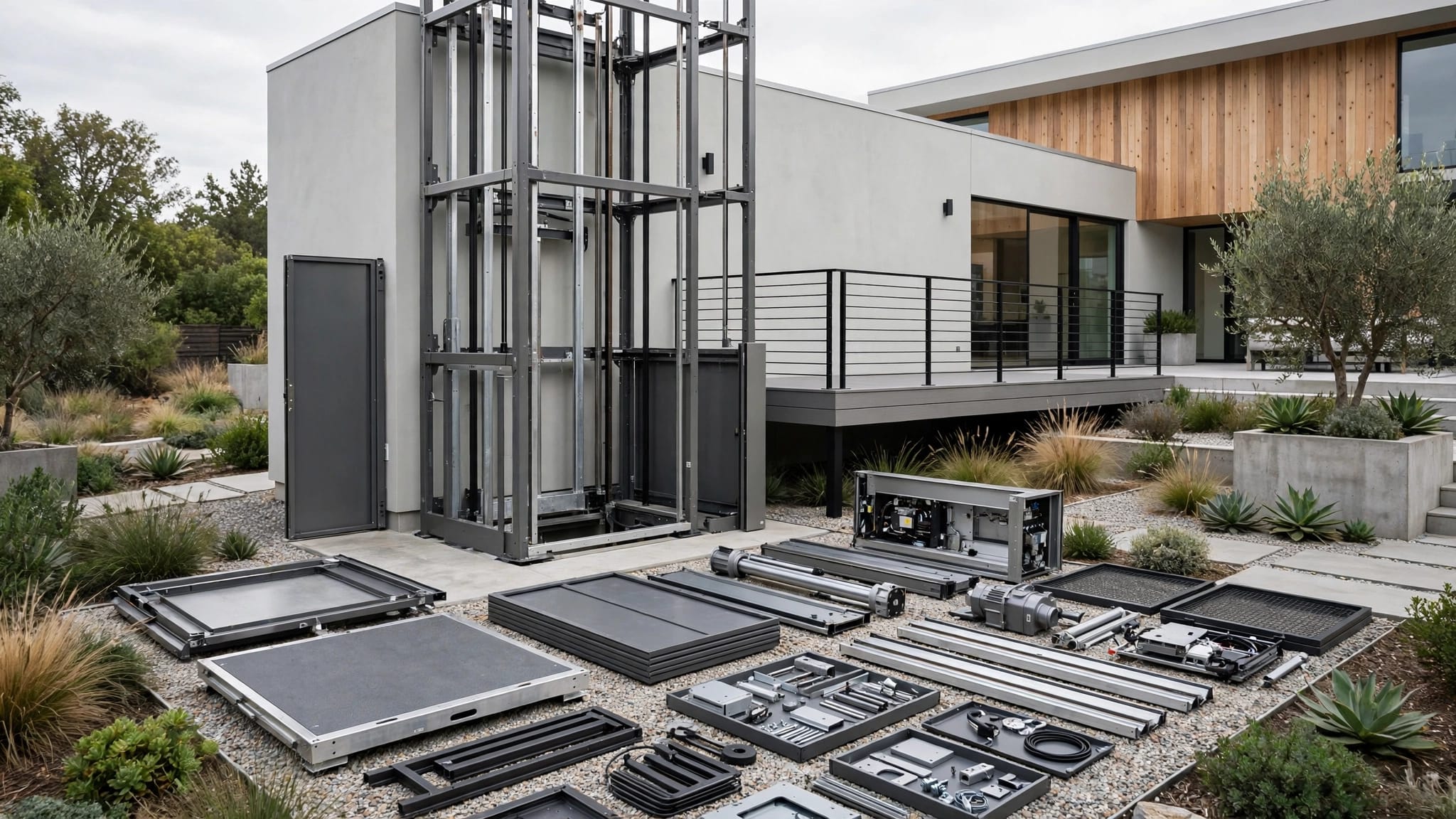
An outdoor elevator may be movable, but relocating it is rarely a simple matter of taking it apart and reinstalling it. Outdoor elevator relocation depends on the lift's type and condition, manufacturer requirements, and whether the new property can support the equipment safel...
By Veranda 'Vator • October 21, 2026
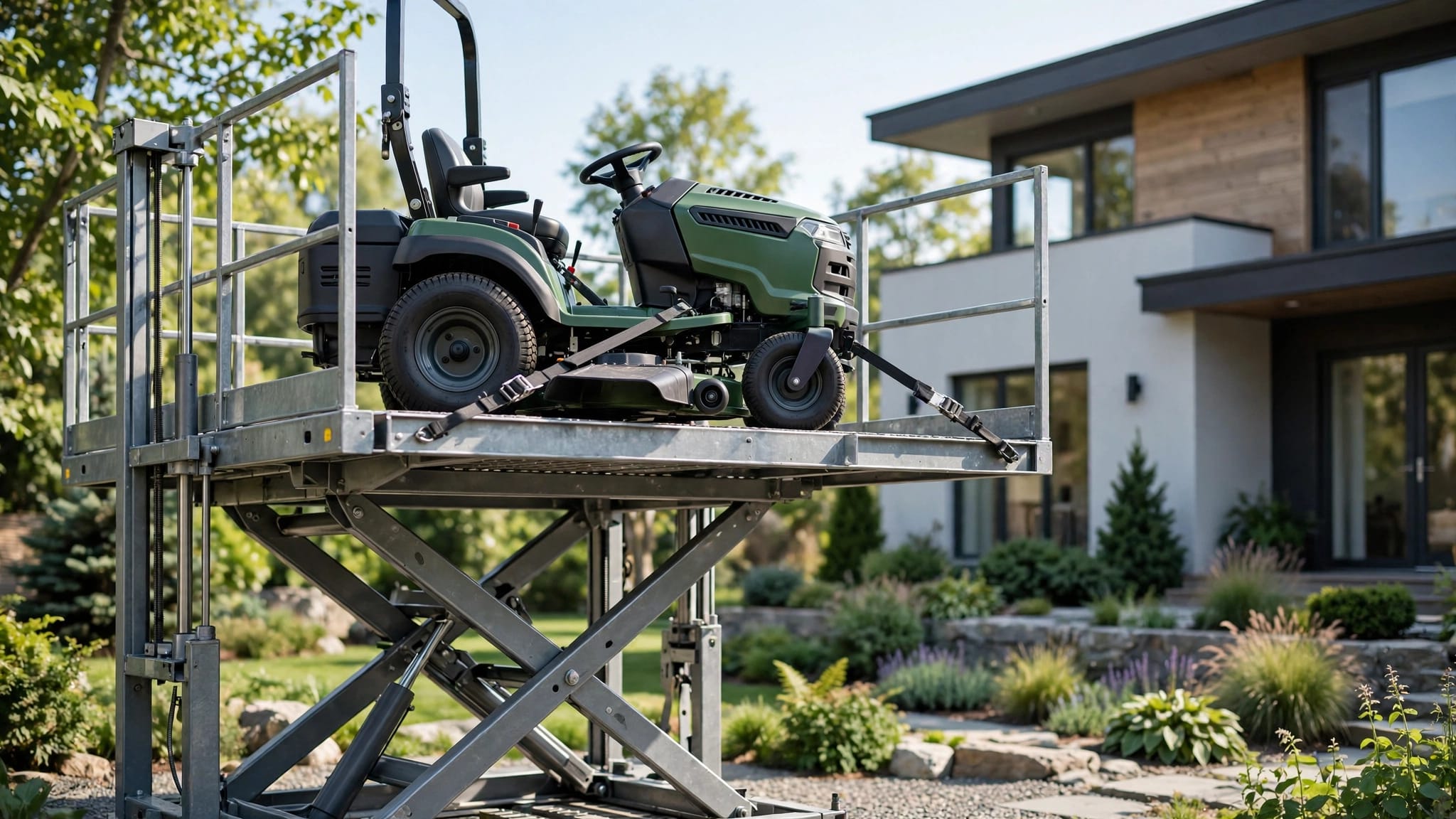
An outdoor cargo lift can move a riding lawn mower when its rated capacity and usable platform dimensions suit the loaded mower. The mower must also be loaded and secured in a way the lift's instructions permit. A mower's weight alone doesn't settle the question. Attachments,...
By Veranda 'Vator • October 20, 2026
An elevator duty cycle describes the work a lift is expected to perform over time. It accounts for how often the equipment starts, how much it carries, and how long it runs. These details help you choose equipment that fits expected use, rather than relying on capacity alone....
By Veranda 'Vator • October 19, 2026
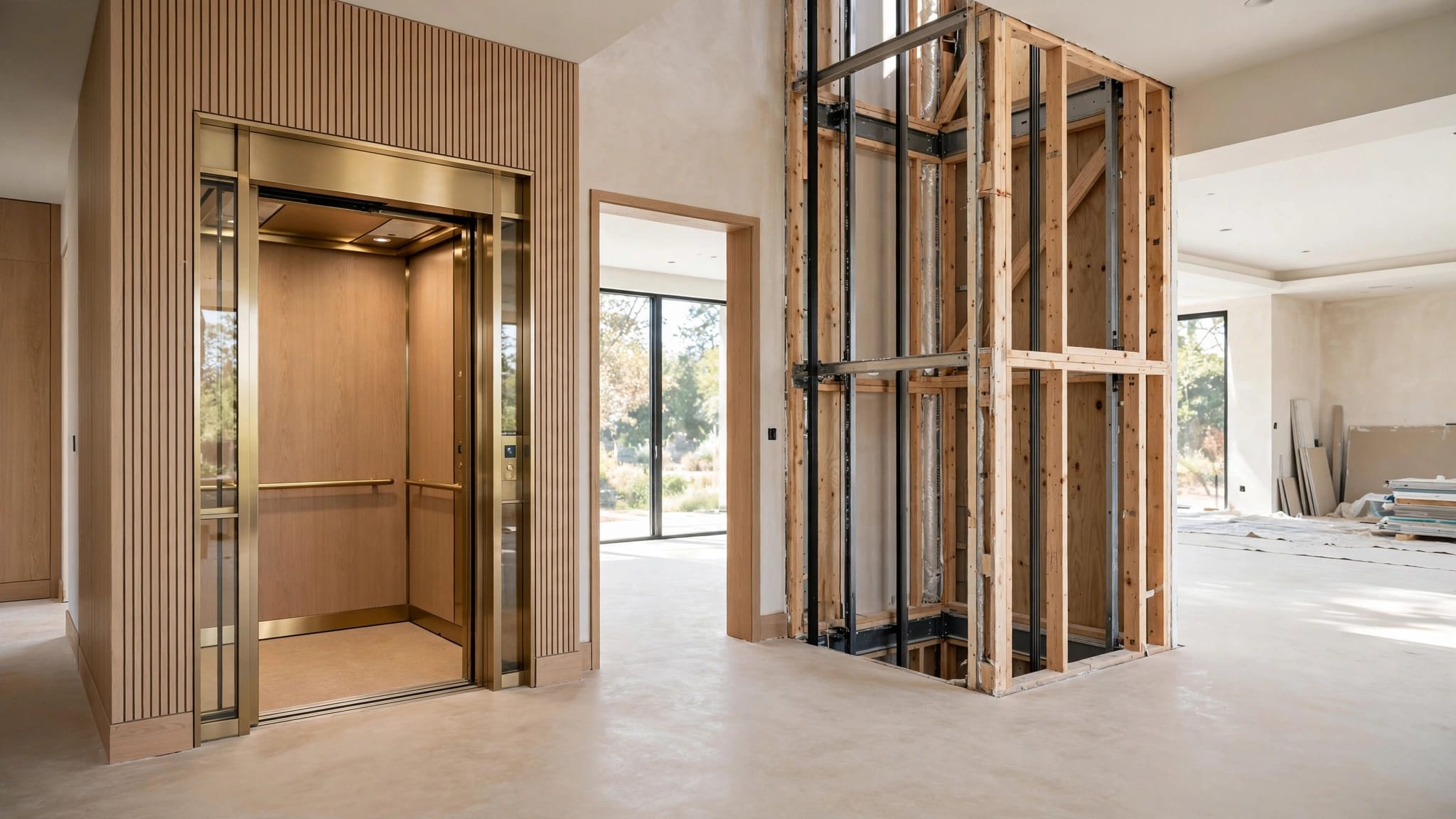
A residential elevator needs more room than its cab alone suggests. The right allowance depends on the lift's intended use, its manufacturer, and the structure around it, so there isn't one footprint that fits every home. When planning residential elevator dimensions, separate...
By Veranda 'Vator • October 18, 2026
A split-level home can make a short trip between rooms feel like a daily obstacle when stairs are difficult or heavy items need moving. A well-planned split-level home elevator connects the floors you use, without blocking the routes and rooms that make the house work. The fir...
By Veranda 'Vator • October 17, 2026
An outdoor home elevator can remain useful for many years, but there's no single lifespan that applies to every installation. The equipment type, installation quality, climate, exposure, usage, and maintenance all affect how long the complete system stays in service. It also h...
By Veranda 'Vator • October 16, 2026
A poolside lift faces more than rain and sun. Splash, humid air, and repeated cleaning can expose its finish to pool water and treatment chemicals. Pool chlorine corrosion is a concern when chemical exposure combines with moisture and time, but the effect varies by material an...
By Veranda 'Vator • October 15, 2026
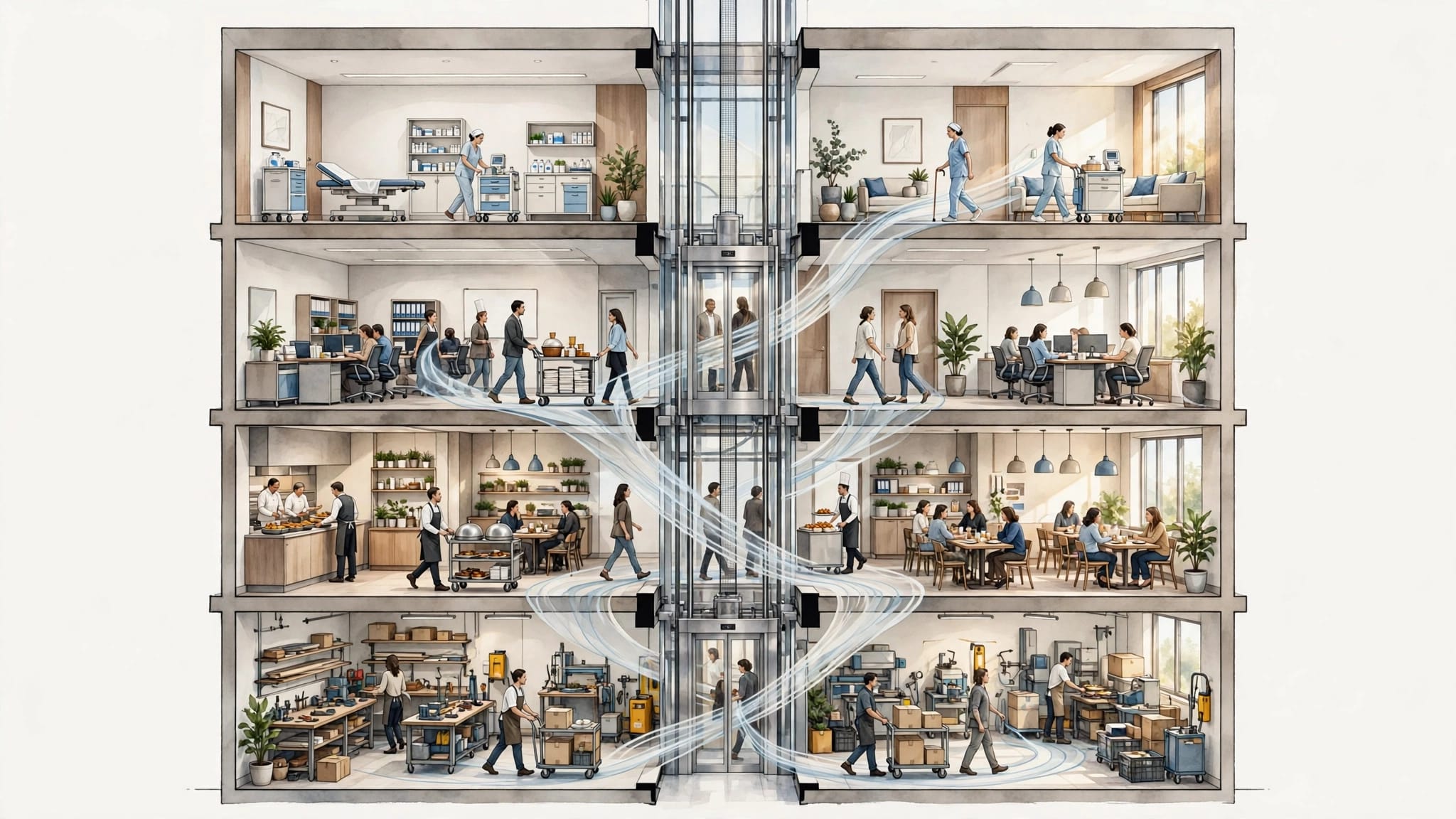
A small building can still have complicated elevator traffic. A clinic, restaurant, office, and workshop may have the same number of floors, but their passengers, delivery patterns, and busiest hours differ. Good elevator traffic planning starts with the building's actual use....
Show More