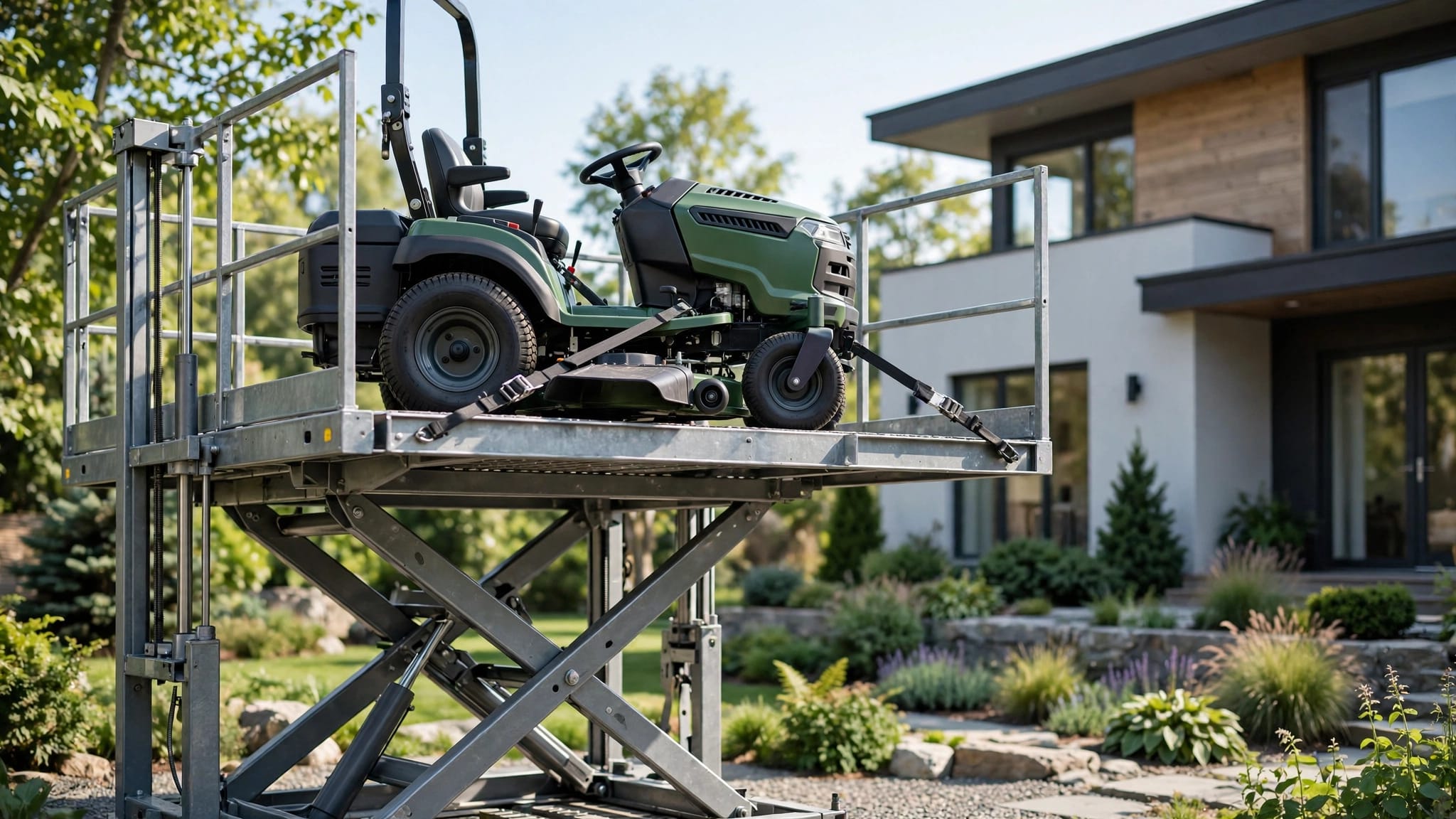
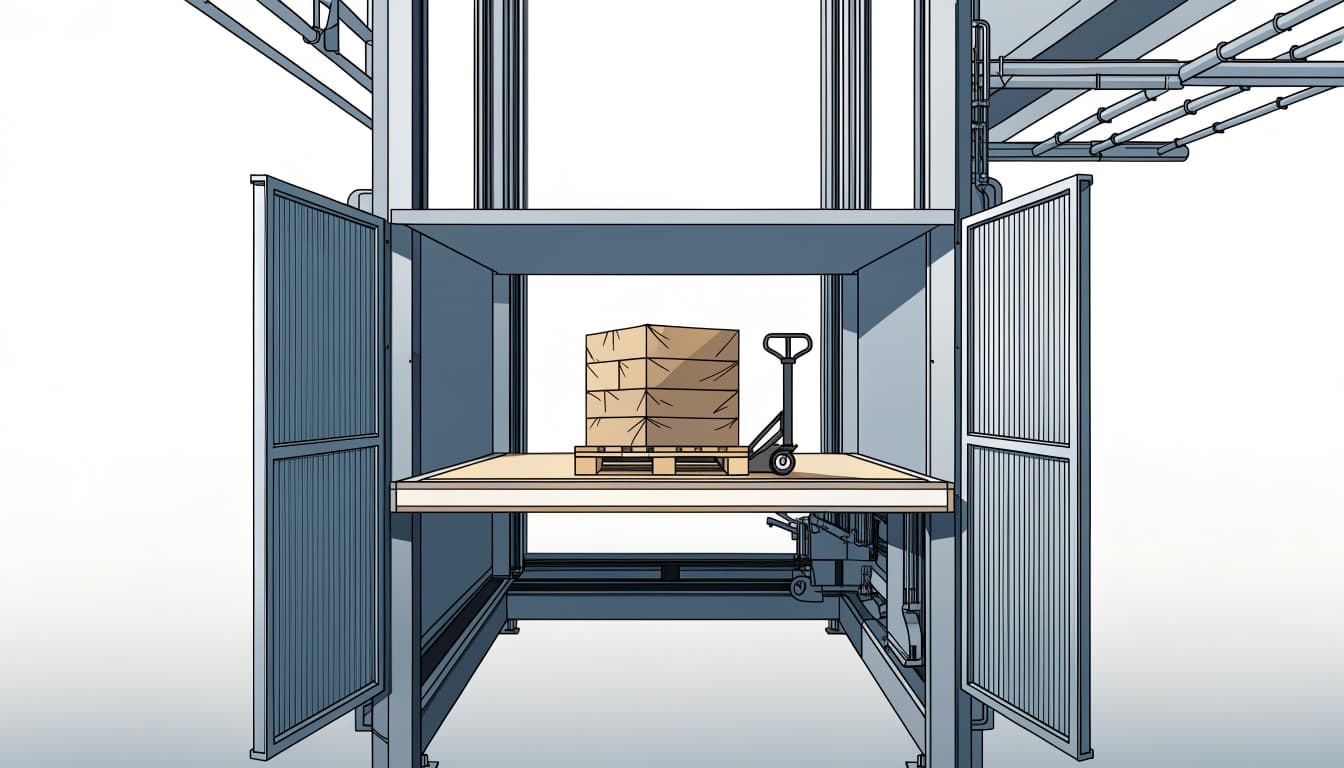
Yes, a cargo lift can carry a pallet jack and loaded pallet when its rated capacity, usable platform dimensions, and loading design accommodate both. The total includes the goods, pallet, pallet jack, and anything else traveling on the platform.
However, weight capacity alone isn't enough : the entire assembly must fit through the gate, sit safely on the deck, and clear the travel path. Start with the complete load, then consider how you'll move it on and off.
Key Takeaways
- Include the pallet jack, pallet, goods, and restraints in the total carried weight.
- Measure the full assembly, including the jack's handle, load overhang, and space needed to position it.
- Follow the lift's loading requirements, secure rolling equipment, and keep operators off cargo-only platforms during travel.
Cargo Lift Capacity Includes the Pallet Jack
Calculate everything traveling on the platform
The weight printed on a shipment may describe the goods without including the pallet or handling equipment. That difference matters when you're sizing a lift.
Calculate the total this way:
Total carried weight = goods + pallet + pallet jack + other carried equipment.
Include packaging and restraints if they aren't already counted. Use actual weights rather than estimates based on appearance. Also distinguish a manual pallet jack from an electric model, since the equipment weight can differ substantially.
Account for wheel loads and distribution
A load can remain below the lift's overall rating yet create unsuitable loading conditions. Pallet-jack wheels concentrate weight on small areas instead of spreading it across the deck.
The platform floor, frame, and supporting structure must accommodate that distribution. Our guidance on platform loading and surface design addresses why total capacity doesn't describe every loading condition.
A qualified lift installer or engineer should assess concentrated wheel loads and structural support for this application.
Measure the Full Pallet-Jack Footprint
Use clear dimensions, not overall equipment size
The usable deck area matters more than the lift's outside dimensions. Rails, posts, gate hardware, and other components can reduce the space available for cargo.
Measure the loaded pallet at its widest and longest points, including wrapping or overhanging cartons. Then measure the jack-and-pallet assembly in its travel position. The handle and steering assembly may extend beyond the pallet.
The full load must remain inside the permitted platform area without obstructing gates, controls, or protective equipment.
Allow room for entry, steering, and exit
A pallet may fit on the deck but still be impossible to maneuver through the entrance. Gate width, approach angle, and landing space all affect whether the jack can enter and leave safely.
Also consider load height and overhead obstructions. At the threshold, small pallet-jack wheels need a suitable transition without catching or jolting the goods.
Planning commercial freight lift capacity and platform sizing means considering the loading route at every stop, not simply drawing a pallet-sized rectangle on the platform.
Load and Unload Without Shifting the Cargo
Safe handling starts before the jack reaches the gate. Clear the approach and receiving landing, remove loose debris, and keep bystanders away from the loading area.
Use the model's operating instructions and loading arrangement throughout the move:
- Bring the platform to the landing and let it stop completely. Don't roll a loaded jack across a misaligned threshold or an unsupported gap.
- Move the assembly into the specified loading position. Avoid striking gates, rails, or platform edges, and distribute the weight as directed.
- Secure the goods and prevent the jack from rolling. Use the specified restraint method; lowering the forks alone doesn't immobilize the jack.
- Close the gates and operate the lift from the designated controls. At the destination, wait for a complete stop and proper landing alignment before unloading.
A pallet jack's concentrated wheel loads matter during entry and exit, even if the pallet rests directly on the deck during travel.
Nobody should ride a cargo-only platform to steady the handle or hold a shifting pallet. If the load won't remain stable unattended, change the loading method before operating.
Our cargo lift operator training checklist covers load preparation, gate operation, and keeping the travel zone clear. Stop operation when a load shifts, a gate won't close, or movement appears abnormal.
Frequently Asked Questions
Does the pallet jack's lifting rating determine the lift's capacity?
No. The pallet jack and cargo lift have separate ratings. A jack capable of handling a heavy pallet doesn't increase the lift's allowable load.
The cargo lift must support the entire combination, while the jack must handle the pallet and goods within its own operating limits. Neither rating establishes that the assembly fits the platform.
Can the operator ride with the loaded pallet?
Only equipment designed, equipped, approved, and permitted for passenger use may carry people. A larger deck or stronger motor doesn't make a cargo-only lift suitable for riders.
Cargo lifts and passenger elevators have different requirements for controls, gates, and other safeguards. If workers need to travel between floors, that need belongs in the equipment selection.
Choose for the Complete Loading Operation
A suitable cargo lift must handle the combined weight, fit the full assembly, and support the loading conditions. Capacity and clearance work together ; neither can compensate for the other.
Base the choice on your heaviest planned use and the actual pallet jack involved. Safe loading, secure travel, and controlled unloading must all fit the lift's design.
Recent Posts