Residential elevator electricity use includes power for trips and standby systems , so travel time alone won't explain your bill. TK Elevator has published an example reaching 4,000 kilowatt-hours (kWh) annually for a hydraulic lift in a three-story building.
That figure isn't a forecast for your home because elevator designs and daily use differ. A useful estimate starts by separating the electricity used during travel from consumption between trips.
Key Takeaways
- Operating energy depends on the drive system, model, load, travel distance, and number of trips.
- Controls, lighting, and other standby equipment can consume electricity when the elevator isn't moving.
- Estimate monthly cost by multiplying total monthly kWh by your local electricity rate.
Operating Energy Versus Standby Consumption
Electricity used during trips
The motor or hydraulic pump draws power while moving the elevator. However, its electrical demand can change during a trip, including acceleration and stopping.
Power and energy measure different things. Kilowatts (kW) describe electrical demand at a particular moment. Kilowatt-hours measure energy consumed over time, which is what your utility bills.
A motor's rated power doesn't mean it draws that amount continuously. Multiplying its nameplate rating by every hour in the month would greatly overstate operating consumption.
Electricity used while waiting
An idle elevator can still need power for its controller, safety circuits, lighting, and battery charger, depending on the model.
Although standby demand is lower than travel demand, it lasts much longer. As a result, it deserves attention in a lightly used home elevator's energy estimate.
Counting only the seconds spent moving leaves out the equipment that stays powered between rides.
What Affects Residential Elevator Electricity Use?
Drive system and model
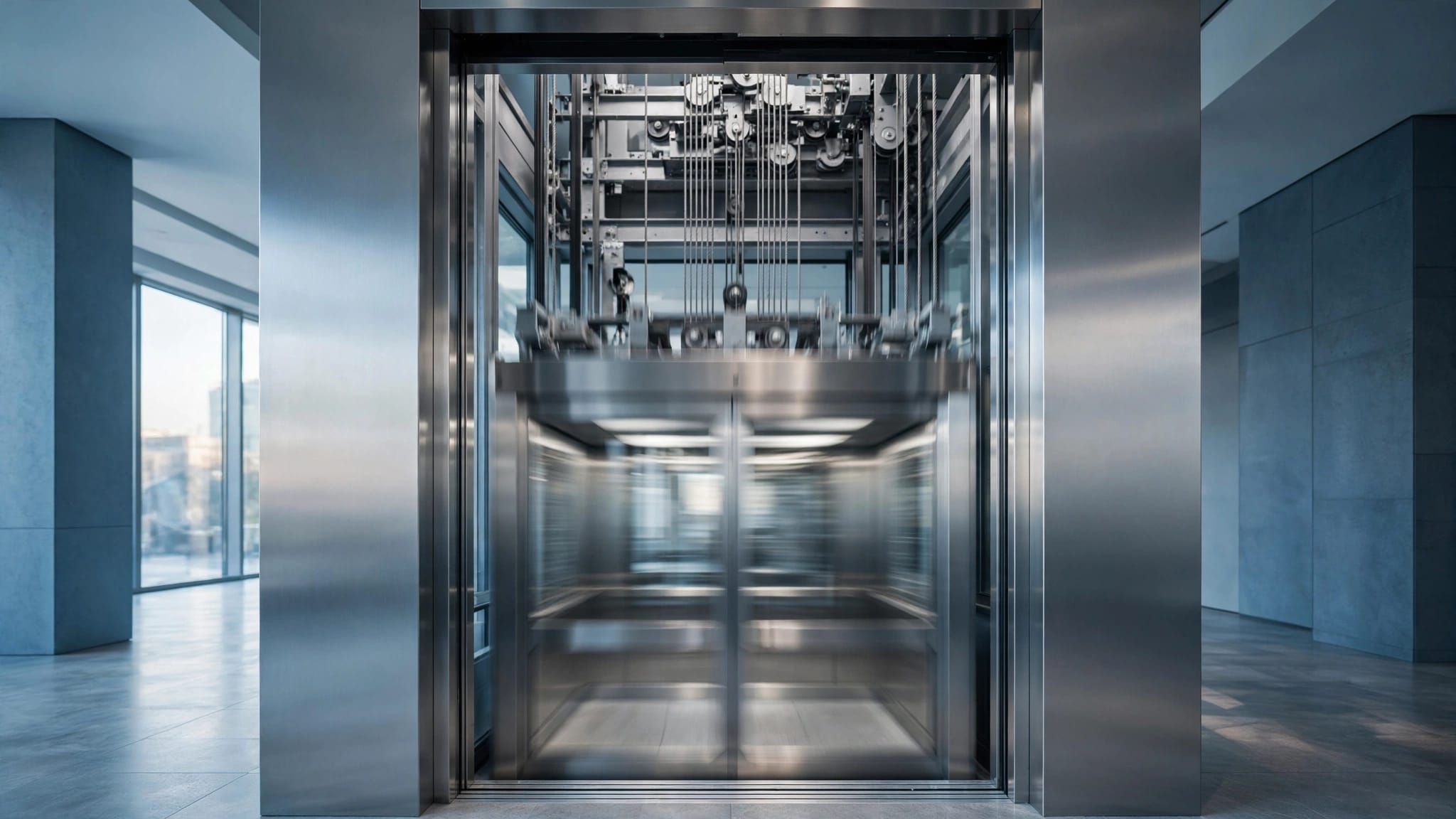
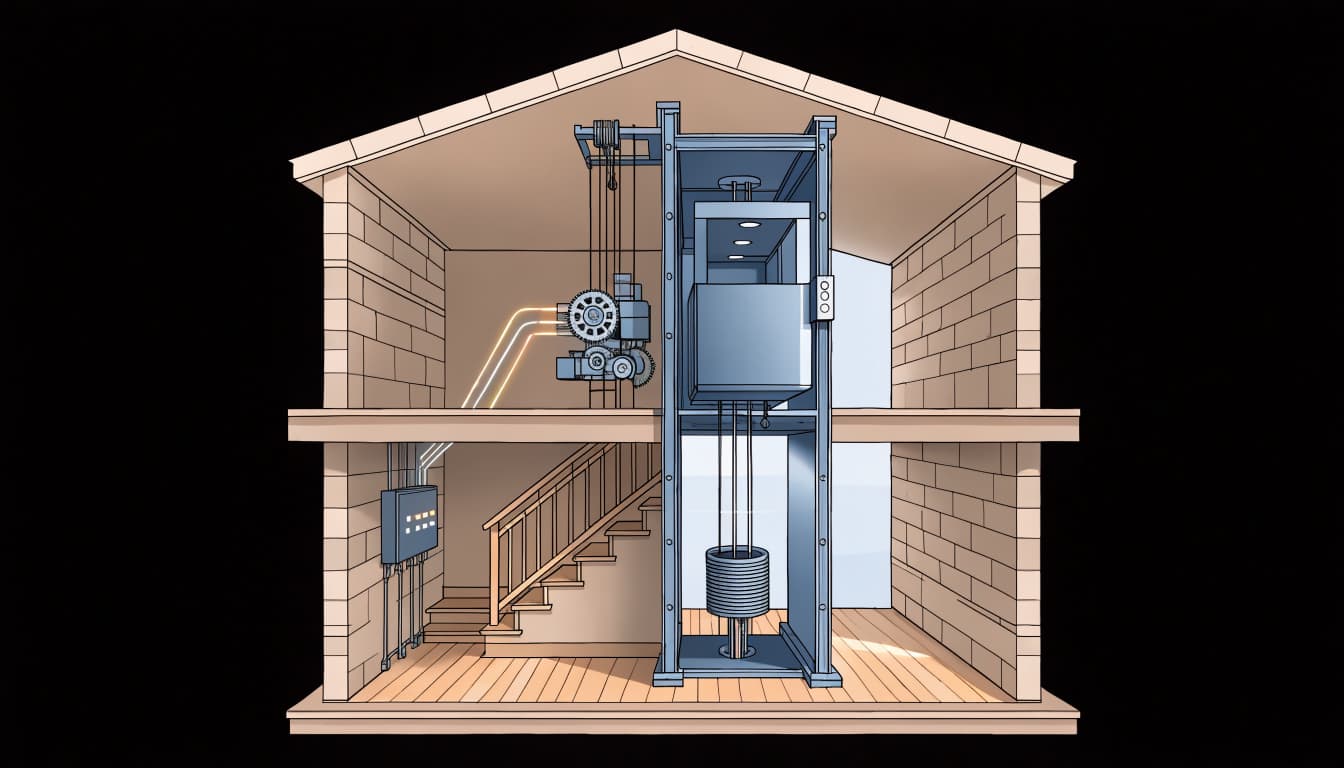
Under comparable operating conditions, electric traction elevators generally consume less electricity than hydraulic elevators. Traction systems use a motor with ropes or belts, often with a counterweight. Hydraulic systems use a pump to raise the car, while valves control descent.
However, "electric" covers several drive arrangements. It doesn't automatically mean traction or guarantee a particular energy saving.
Our comparison of hydraulic versus electric home lifts explains these differences, including the published hydraulic-use example.
Travel distance, load, and frequency
Longer travel generally requires more operating time. Likewise, frequent trips increase monthly energy use, even when each ride is short.
Load also affects demand, although its effect depends on the drive arrangement. A counterweighted traction system behaves differently from a hydraulic lift.
The number of stops, speed, motor efficiency, and controls also matter. Two elevators serving similar homes can therefore produce different electricity bills.
How to Estimate Monthly Elevator Electricity Cost
Start with operating and standby energy for the same billing period:
Monthly electricity cost = total monthly kWh x local electricity rate per kWh
For a runtime-based estimate, operating kWh equals average electrical input in kW multiplied by operating hours. Add standby consumption separately. If standby demand is expressed in watts, divide watts multiplied by standby hours by 1,000.
Use average electrical input rather than assuming the motor's maximum rating applies throughout every trip. Also, keep any separately powered elevator lighting or accessories within the estimate's scope.
Applying the published hydraulic example
Dividing the TK Elevator example's 4,000 annual kWh by 12 gives approximately 333.3 kWh per month . That's a monthly average, not a prediction of identical consumption each month.
These illustrative costs apply only to that example, using assumed electricity rates:
| Assumed electricity rate | Estimated monthly energy charge |
|---|---|
| $0.15 per kWh | $50.00 |
| $0.20 per kWh | $66.67 |
| $0.30 per kWh | $100.00 |
The same energy consumption costs twice as much at $0.30 as at $0.15 per kWh.
Using your local rate
Use your utility bill's applicable per-kWh charges, including variable delivery charges where relevant. Fixed account fees generally don't change because you add an elevator.
For time-of-use billing, separate consumption by the applicable rate period. A dedicated energy meter installed by a qualified electrician can provide a clearer picture of actual consumption.
Electrical Requirements Don't Predict the Monthly Bill
An elevator's supply voltage, circuit rating, and starting demand describe electrical installation needs. They don't directly state monthly energy consumption.
Starting power may matter when sizing wiring or a generator, even though that demand lasts briefly. Meanwhile, standby consumption can accumulate for many hours.
Our guide to outdoor elevator electrical requirements covers installation planning. Electrical work belongs with qualified professionals, and energy-saving changes must preserve safety circuits, emergency functions, and approved operation.
Frequently Asked Questions
Do all electric home elevators use traction?
No. Electric lifts can use traction, screws, chains, or other drive arrangements. Those differences affect operating behavior and equipment needs. Our home elevator FAQs explain several drive systems, so the word "electric" alone isn't a useful consumption estimate.
Is a cargo lift a lower-energy substitute for a passenger elevator?
Energy use alone can't determine that choice. Cargo lifts and passenger elevators have different intended uses and safety requirements. A materials-only lift must not carry people. When residents, guests, or wheelchair users need transportation, choose equipment designed and approved for passenger travel.
Estimate the Whole System, Not Only the Ride
A useful electricity budget includes travel and standby consumption , matched to your elevator and household routine. Apply your local rate to that combined monthly energy figure.
Published examples provide context, but they don't establish a universal home-elevator bill. The most useful estimate reflects the drive system, actual usage, and equipment that remains powered between trips.
Recent Posts