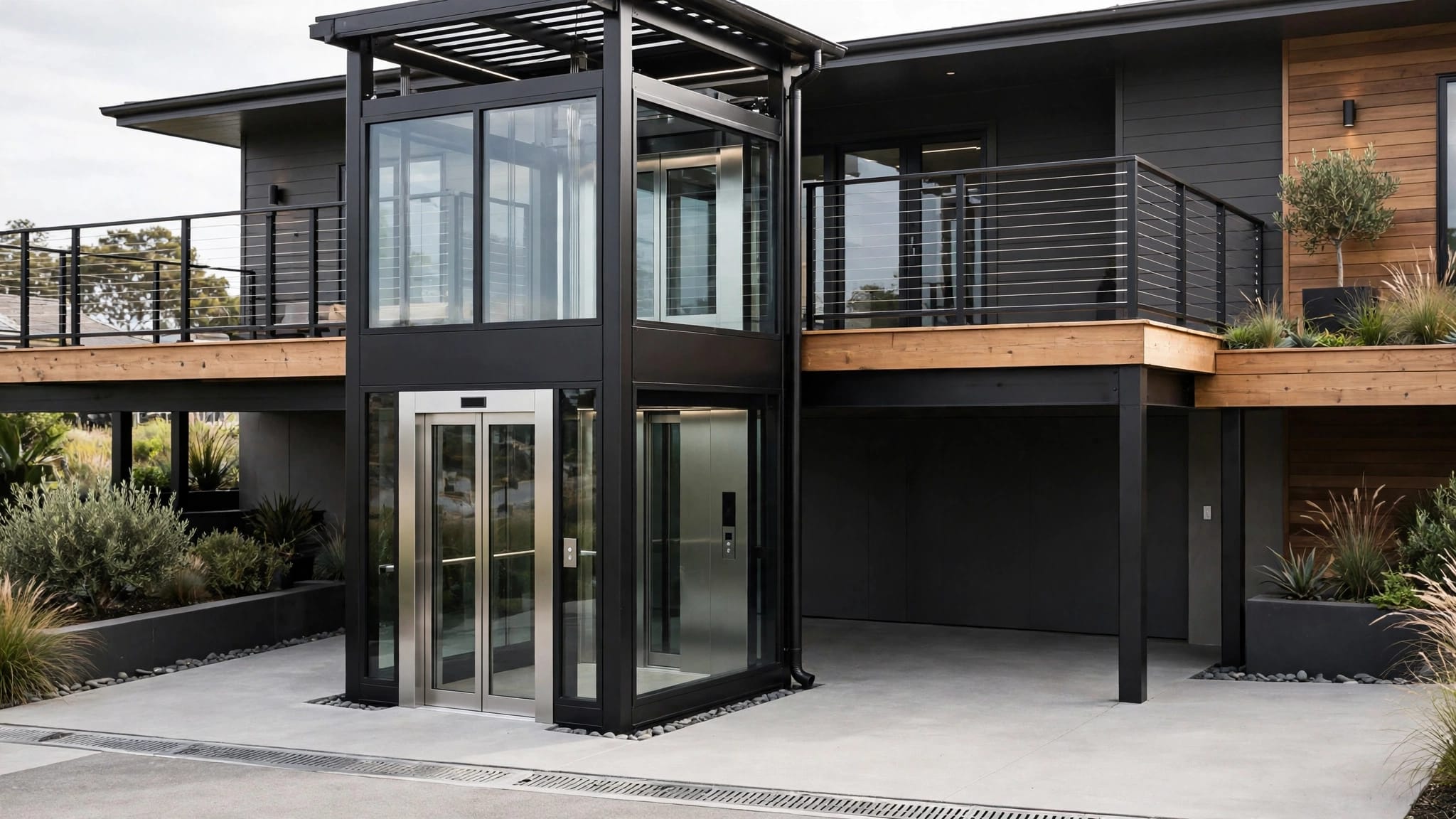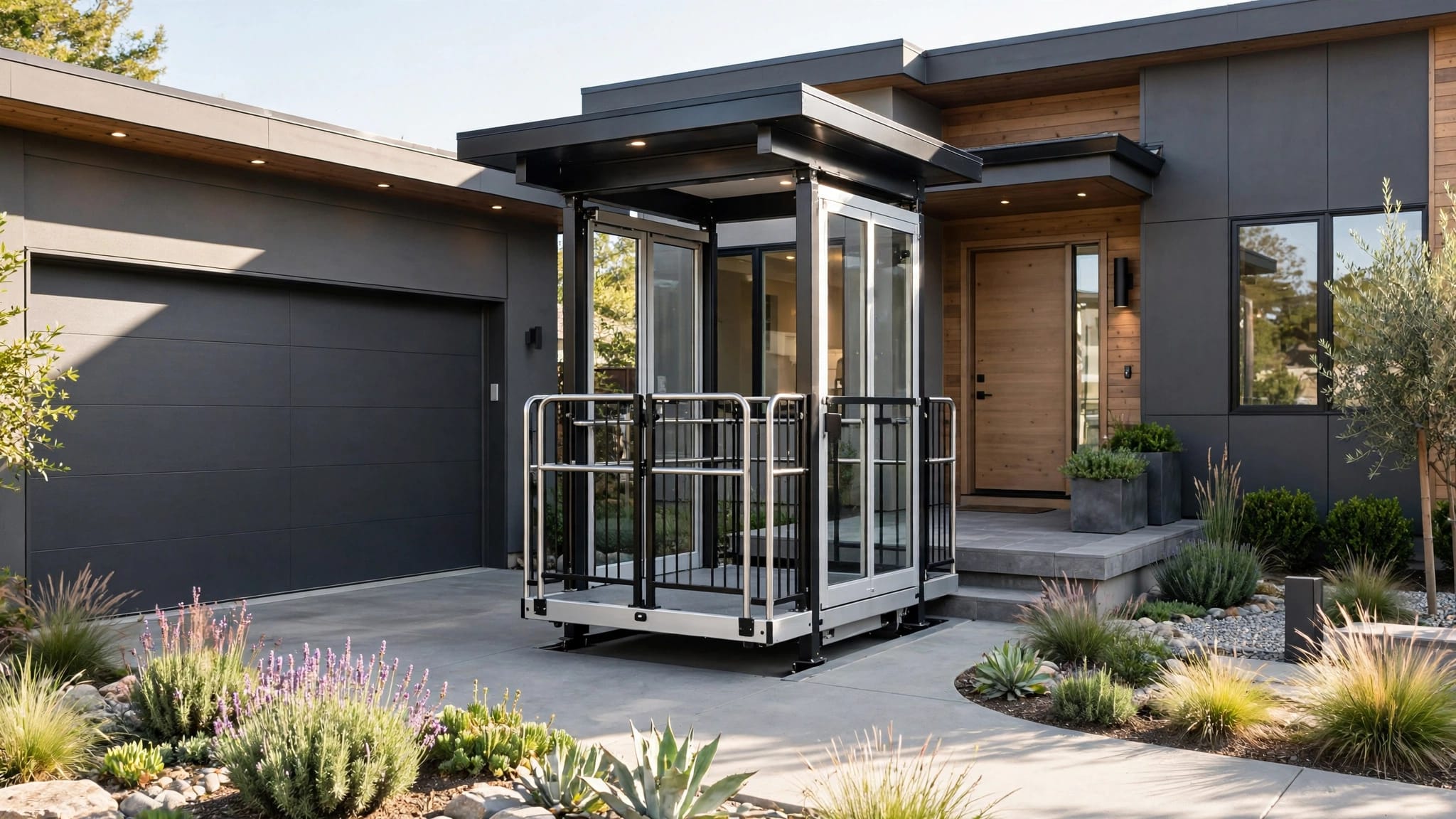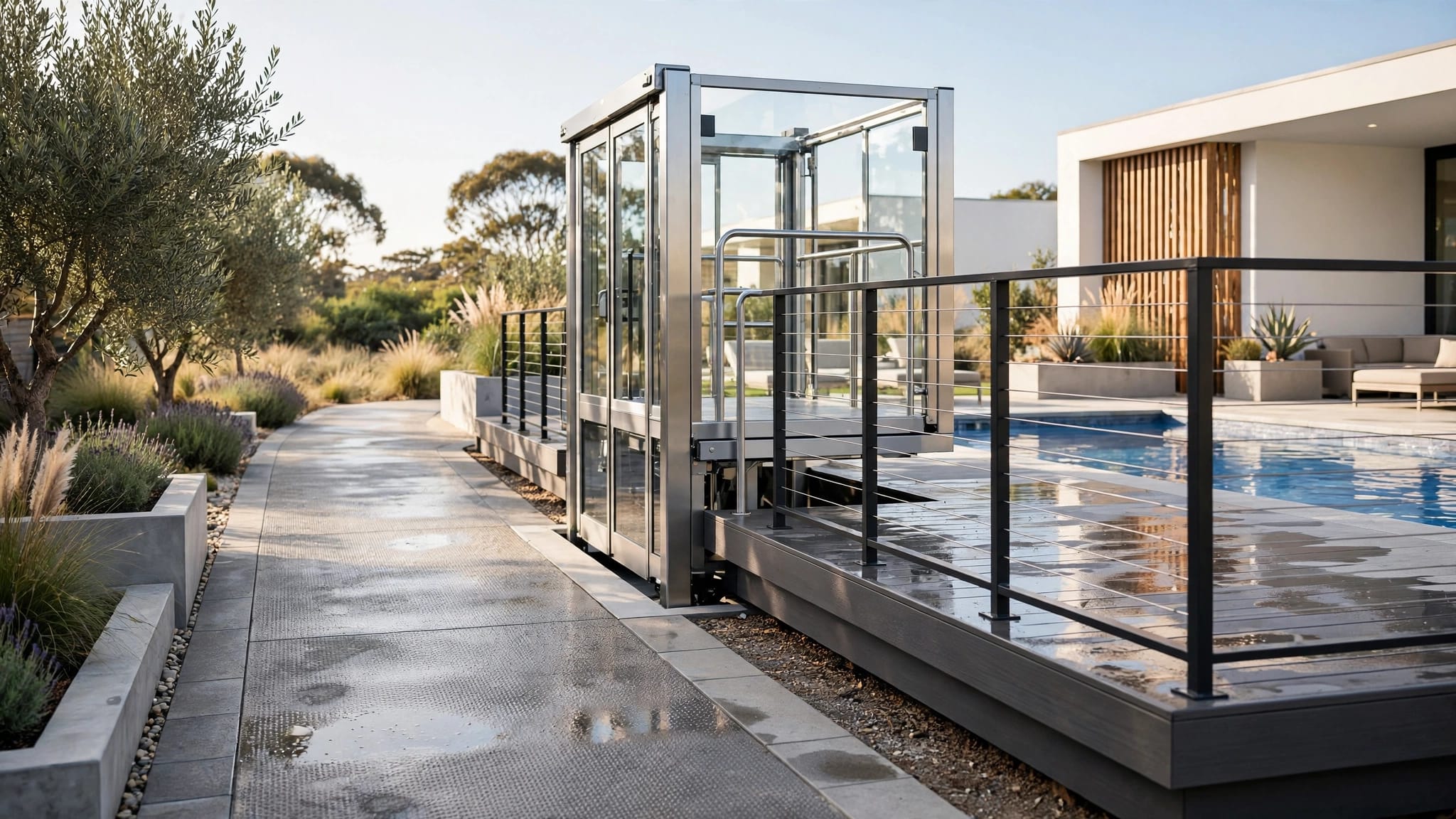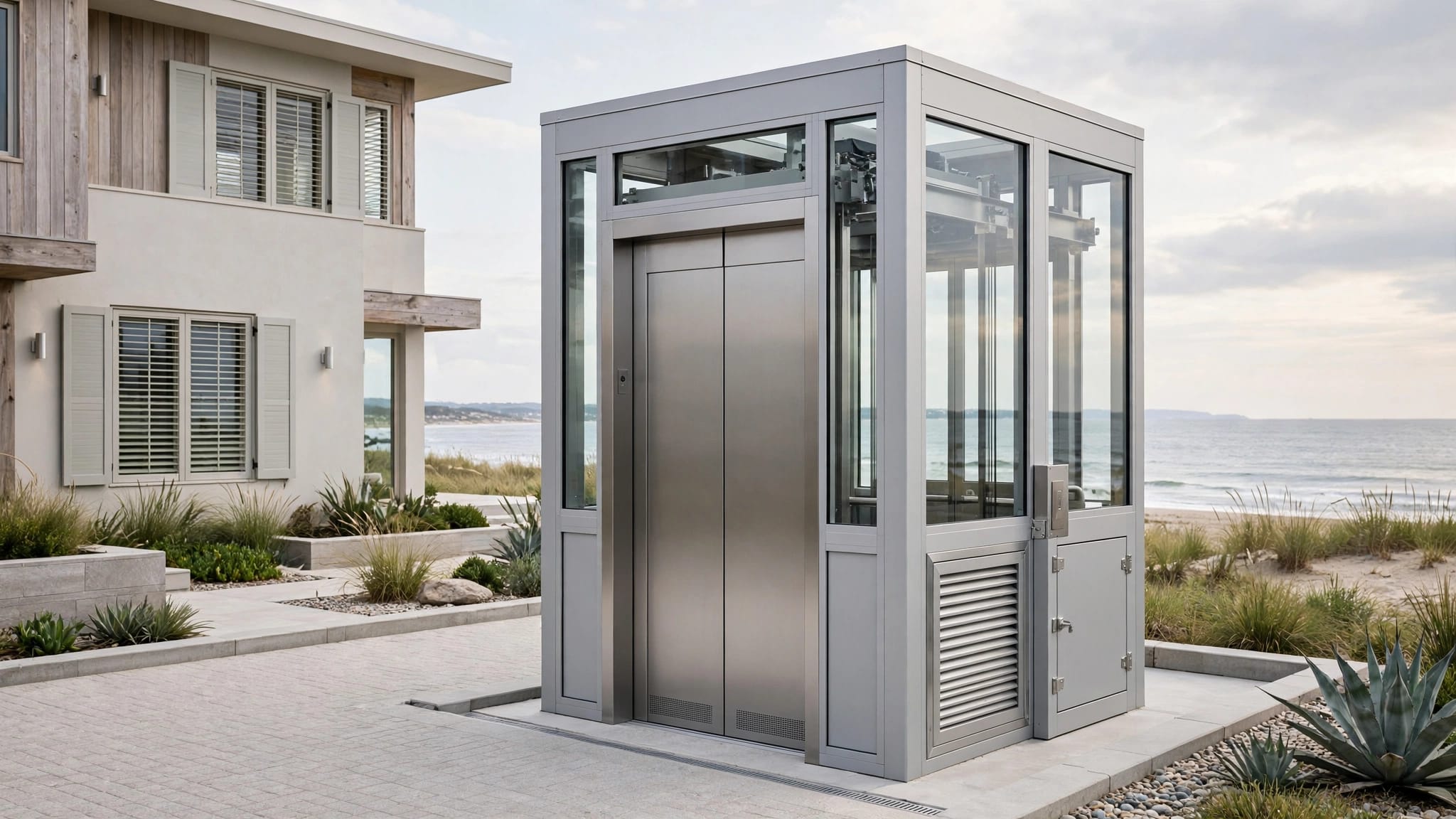
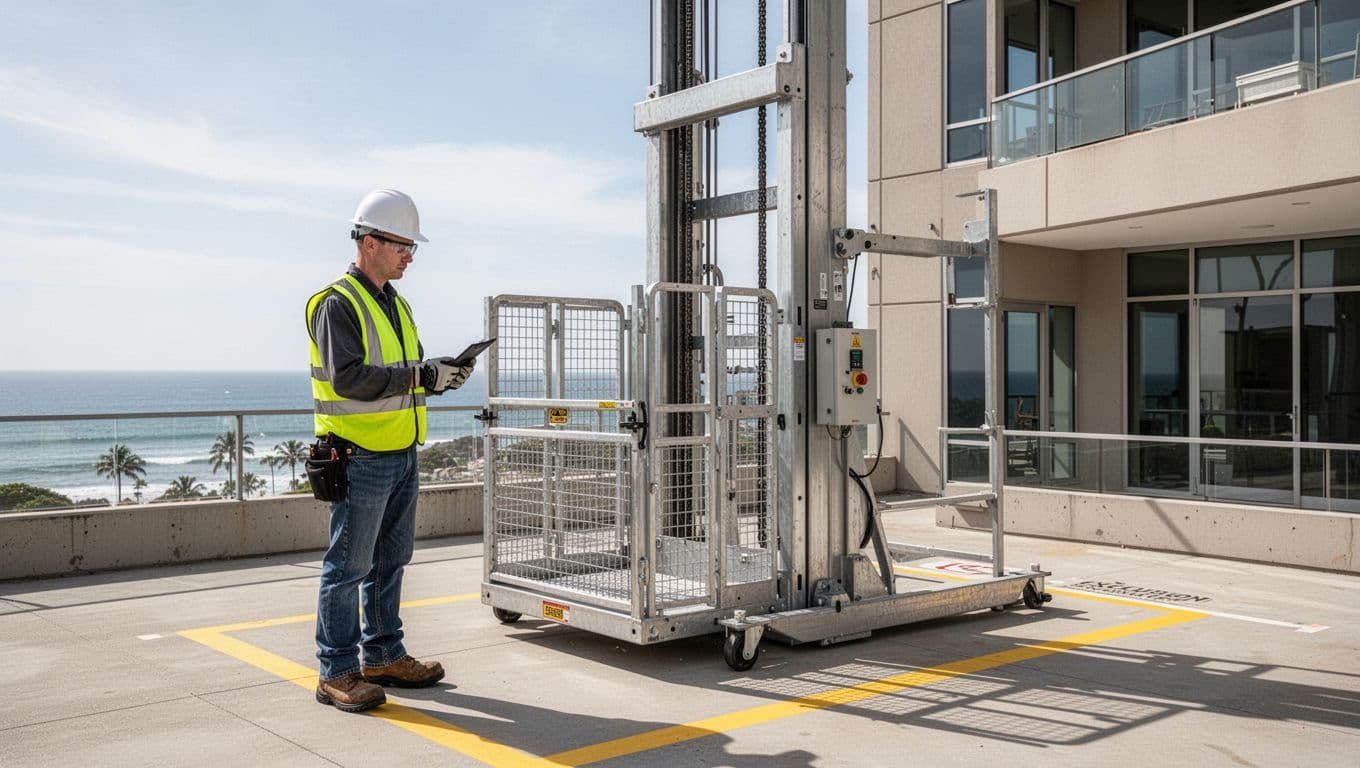
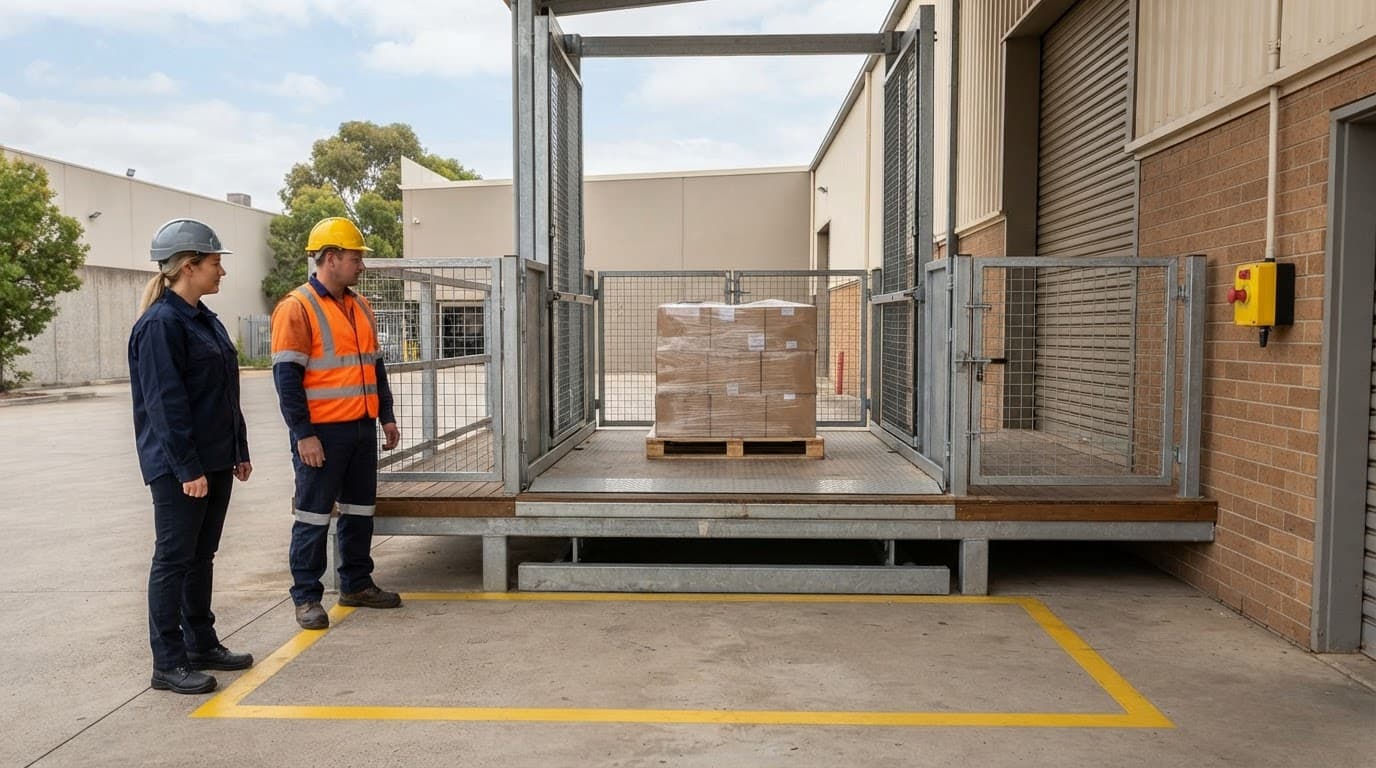

An outdoor cargo lift can save backs, reduce stair trips, and move bulky supplies safely, but only when people use it for its intended purpose. Cargo lift operator training gives operators a repeatable routine before every load moves.
Weather, uneven ground, open gates, and a poorly balanced cart can turn a routine lift cycle into an injury or equipment-damage event. Use this checklist during onboarding, refresher sessions, and jobsite walk-throughs.
Cargo Lift Operator Training Starts With the Right Equipment
Training begins with a clear answer to one question: what is this lift approved to carry? A cargo lift moves materials. It does not carry people unless the equipment is designed, approved, and permitted for passenger use.
Verify the lift's intended use before training
- Read the equipment manual with the operator. Review the model-specific capacity, platform dimensions, control sequence, inspection points, and shutdown instructions.
- Identify the lift type and approved purpose. A material lift, passenger elevator, and vertical platform lift have different safety features and operating rules.
- Confirm that no one rides on a cargo platform. Under OSHA 29 CFR 1926.552, construction material hoists require a "No Riders Allowed" notice. The limited exception is inspection or maintenance.
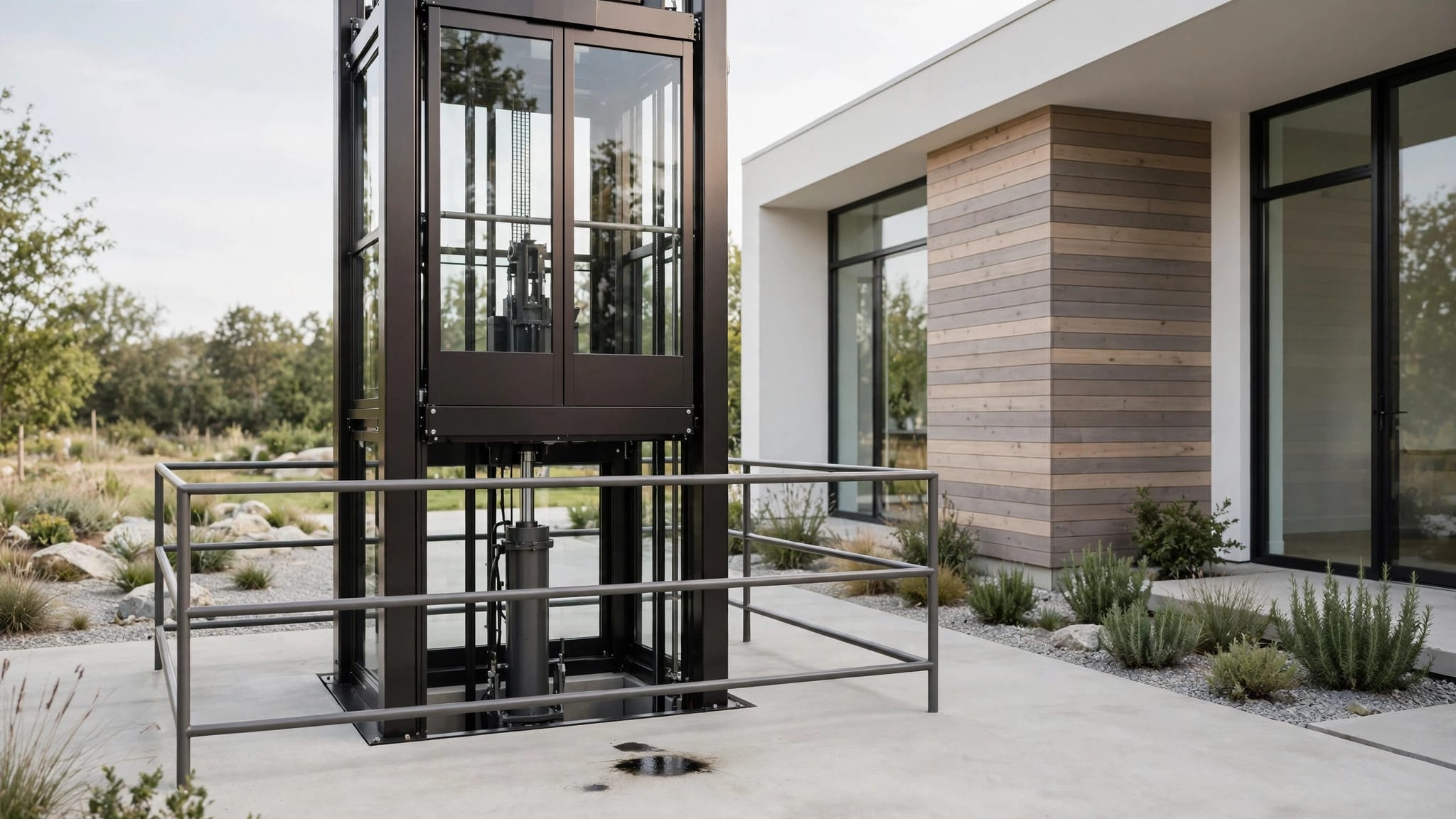
- Match the job to the equipment. If workers, residents, guests, or wheelchair users need vertical transportation, select a passenger-compliant elevator or VPL instead of a freight platform.
The distinction matters at homes as much as jobsites. Review the cargo lift versus passenger elevator differences before assigning anyone to operate exterior vertical transportation equipment.
Confirm who may operate the lift
- List authorized operators by name. Supervisors should allow only trained, evaluated people to use the lift controls.
- Train on the exact installed model. A worker may understand basic material handling but still need instruction on a different gate, controller, braking system, or load arrangement.
- Schedule refresher training after a close call, equipment change, or unsafe operation. OSHA uses similar triggers for powered industrial truck training under 29 CFR 1910.178.
- Keep the training record accessible. Record the operator's name, trainer, date, equipment identifier, observed skills, and any limits on authorization.
Inspect the Outdoor Work Area Before Each Shift
A lift can be mechanically sound while the site around it is unsafe. Start every shift with the ground, weather, landings, and travel path.
Check weather, footing, and access routes
- Inspect the ground and landing approaches. Remove loose gravel, mud, standing water, ice, hoses, tools, and other trip hazards.
- Check for drainage and slippery surfaces. Wet deck boards, algae, salt spray, and rain can reduce traction around an outdoor lift.
- Assess wind, rain, lightning, and visibility. Follow the manufacturer's weather limits. If wind affects load stability or rain obscures controls, stop work.
- Confirm adequate lighting. Operators must see gates, load edges, landing thresholds, and people near the lift path.
- Look above the platform route. Low roofs, branches, scaffold components, overhead doors, and electrical lines need clearance before operation.
OSHA calls out overhead-line electrical hazards in its powered industrial truck guidance. Treat electrical lines near any raised load as a stop-work condition until a qualified person verifies safe clearance.
Inspect gates, guarding, and lift condition
- Check that every gate, door, guardrail, and interlock closes and latches correctly. Never defeat an interlock or hold a gate open with a tool.
- Inspect cables, chains, fasteners, platform flooring, rails, and visible wiring. Look for fraying, corrosion, loose hardware, cracks, unusual wear, or damage.
- Verify that landing entrances are protected. OSHA's construction material-hoist rule requires substantial gates or bars across the full landing entrance.
- Keep the lift route clear. No one should stand beneath a raised platform or reach through a guarded opening.
- Remove the lift from service if anything fails inspection. Mark it out of service, prevent operation, and report the issue to the responsible supervisor.
A gate that looks closed but fails to latch is a fault, not a condition to watch during the next trip.
Load Within the Rated Capacity Every Time
The capacity label is the maximum safe load for that equipment and configuration. It is not a target, and it does not account for unstable, oversized, or poorly secured items.
Confirm the weight and dimensions of the load
- Read the posted rated capacity before loading. OSHA 29 CFR 1926.552 requires rated capacity to be posted on applicable hoist cars or platforms.
- Include every item on the platform. Count pallets, carts, boxes, tools, rigging, and attachments in the total load weight.
- Check the item's footprint and height. A load that fits by weight may still catch on a gate, railing, roofline, or landing edge.
- Do not stack materials above the platform's safe containment area. Loose items can shift or fall during travel.
- Use a scale, packing list, or verified manufacturer weight when needed. Guessing is not an acceptable weight-control method.
For waterfront properties, coolers, equipment, and supply carts often arrive as awkward mixed loads. Review cargo lift capacity and loading guidelines when planning frequent material moves.
Center and secure the load
- Place weight evenly on the platform. Keep the center of gravity low and near the platform's center.
- Set cart brakes and secure rolling loads. Use approved restraints when the manual or employer procedure calls for them.
- Keep long items inside the platform perimeter. Do not allow lumber, pipes, ladders, or handles to project into the lift path.
- Separate unstable loads into smaller trips. A second cycle is safer than moving a tall, shifting stack.
Test Controls and Protect the Travel Zone
Operators need more than a start button and a destination button. They must know what normal movement feels and sounds like, and when to stop.
Test safety controls before loading
- Run an empty test cycle when required by the manual or site procedure. Watch for smooth travel, proper stopping, correct platform alignment, and full gate operation.
- Locate the emergency stop and disconnect. The operator must know how to stop motion quickly without searching for the control.
- Test only the functions authorized by the manufacturer. Do not bypass safety circuits, modify switches, or test protective devices beyond written instructions.
- Listen for unusual noise. Grinding, banging, scraping, repeated tripping, or uneven travel require shutdown and inspection.
- Confirm that the platform is level at each landing. A misaligned stop creates a trip hazard and can make cart transfer unsafe.
Construction material hoists must be inspected and tested after erection, after major alteration, and at intervals of no more than three months under OSHA 29 CFR 1926.552. Keep the most recent certification record on file.
Control pinch points, overhead hazards, and bystanders
- Keep hands, feet, clothing, and tools away from gates, rails, cables, mast sections, and moving platform edges. Pinch points can close quickly during startup and stopping.
- Set an exclusion zone around the lift. Keep residents, visitors, and untrained workers away from moving equipment and open landing entrances.
- Use agreed communication signals. Choose one signal person when the operator cannot see the landing, then confirm start, stop, hold, and emergency-stop signals before work begins.
- Stop the lift if communication breaks down. A missed signal should never be guessed.
- Watch the overhead path during every cycle. The load, platform, and gate travel area all need clear space.
Shut Down Faults and Report Every Incident
A lift problem rarely improves after another cycle. Operators need permission and clear instructions to stop work without delay.
Take unsafe equipment out of service
- Press stop and secure the platform if it moves unexpectedly, stops unevenly, or makes abnormal noise. Keep people clear of the lift.
- Use the disconnect or lockout procedure assigned for the task. Only authorized employees should perform lockout or maintenance work.
- Attach an out-of-service tag when the lift fails inspection. The tag should identify the problem, date, and person reporting it.
- Notify the supervisor and service contact. Describe the exact condition, including load status, platform location, controls used, and whether anyone was exposed.
- Do not return the lift to service until an authorized person clears it. A reset button does not correct a mechanical or electrical fault.
Document incidents and near misses
- Report injuries, property damage, load shifts, gate failures, uncontrolled movement, and close calls promptly. Details fade quickly after an event.
- Record the conditions present. Include weather, surface conditions, load type, approximate weight, time, operator, and witnesses.
- Preserve the equipment condition when safe to do so. Do not alter controls, settings, or damaged components before the supervisor documents the event.
- Use the report to update training. A near miss may reveal a gap in communication, site layout, load handling, or supervision.
Trainer Sign-Off for Cargo Lift Operator Training
A trainer should observe the operator completing the routine, not only listening to an explanation. The operator must demonstrate safe decisions when conditions change.
Skills the trainer should observe
- The operator identifies the lift's approved use and states that riders are prohibited.
- The operator completes a pre-use inspection and recognizes a condition that requires shutdown.
- The operator checks rated capacity, balances a sample load, and secures a rolling item.
- The operator closes and verifies gates, uses controls correctly, and maintains a clear exclusion zone.
- The operator identifies pinch points, overhead hazards, emergency stop controls, and the reporting process.
Sign-off record
Operator name: ______________________________
Lift model or equipment ID: ______________________________
Training date: ______________________________
Trainer name and title: ______________________________
Observed practical evaluation completed: Yes / No
Operator signature: ______________________________
Trainer signature: ______________________________
This checklist supplements, but does not replace, qualified instruction, the equipment manual, employer procedures, local requirements, and applicable safety regulations. For a new installation, confirm that gates, controls, landing clearances, and intended use match the site assessment for exterior lifts.
A Safe Lift Cycle Starts Before the Button Is Pressed
Good cargo lift operator training makes safe choices routine: inspect the site, verify the equipment, control the load, protect the travel zone, and stop when something is wrong.
The same discipline protects people, materials, and the lift itself. No load is urgent enough to bypass a gate, exceed capacity, or operate equipment with a known fault.
Recent Posts