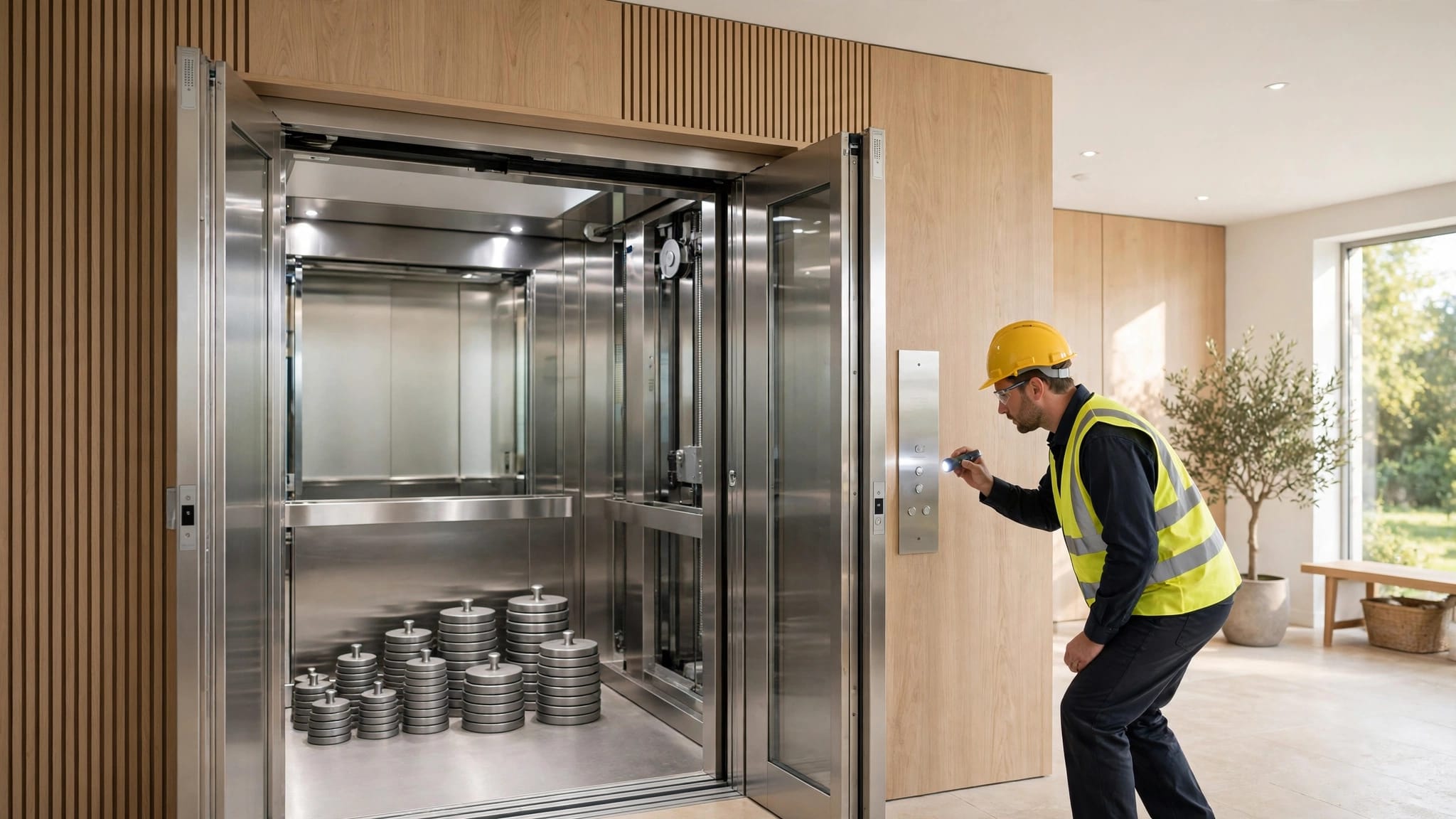
An outdoor lift can stop because of a power failure, control fault, or weather-related problem. When that happens, exterior elevator emergency phones give occupants a direct way to contact help without relying on a personal cell phone.
Emergency phones and alarm systems work together, but they don't perform the same job. One creates two-way communication, while the other alerts people nearby or sends a fault signal. Understanding the difference helps property owners choose suitable equipment and maintain it properly.
How exterior elevator emergency phones work
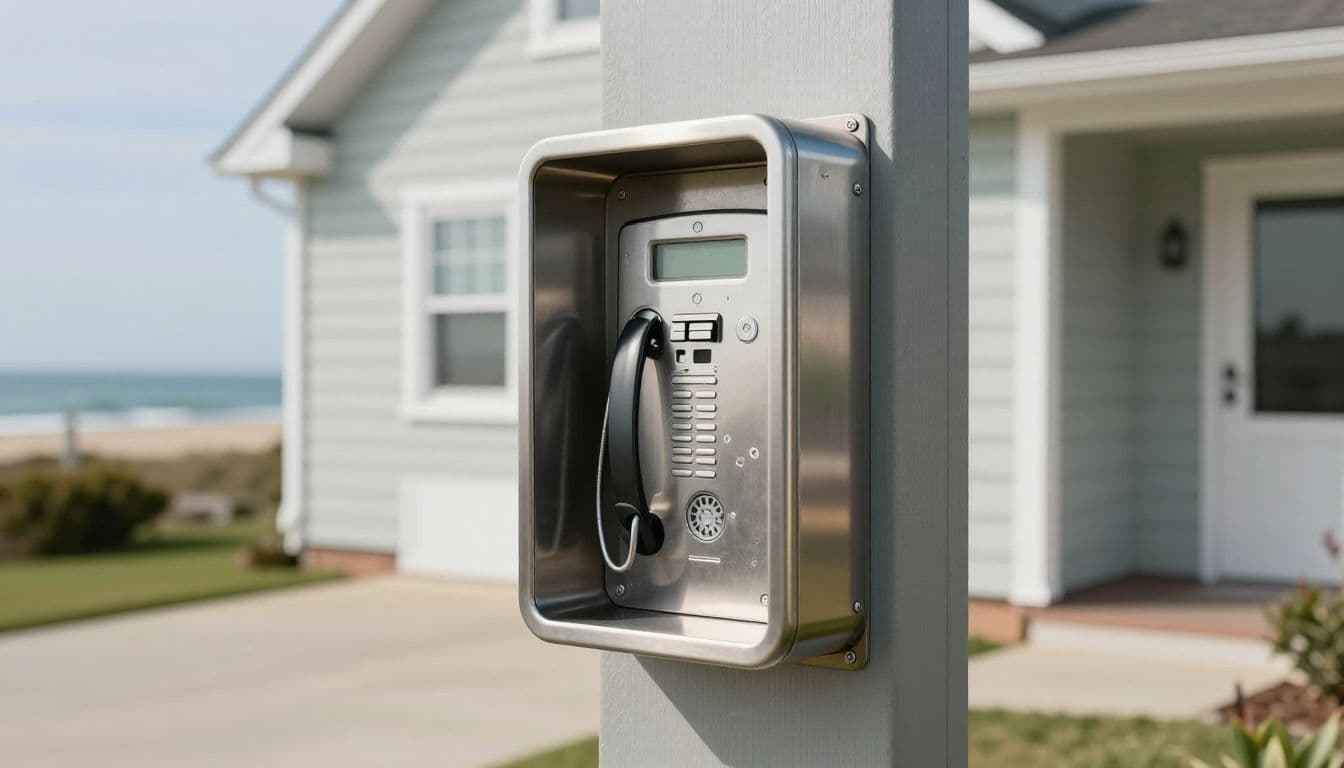
An elevator emergency phone is a hands-free communication device. When someone presses its call button, the unit connects with a programmed contact, such as a monitoring center, building staff member, maintenance office, or emergency service.
The device usually includes a call button, microphone, speaker, and status indicator. Some systems use a dedicated telephone line. Others use cellular or network-based communication. The installer should identify the connection method and explain what happens if the primary power or communication service fails.
A caller needs to reach a person who can respond. The phone should also transmit enough location information for that person to understand which lift needs attention. A useful call procedure identifies the property address, lift location, landing or level, and any access details.
Don't assume that pressing the button automatically contacts 911. Some systems dial a monitoring center or a list of programmed contacts instead. The owner should know exactly who receives the call and how that person gets help to the lift.
Exterior elevator emergency phones must remain reachable and easy to operate. The button should have clear tactile feedback, and the speaker should produce understandable audio in wind, rain, or background noise. If the phone includes a visual status light, that light should be visible to the person using the device.
The communication unit also needs backup power when the lift design and local requirements call for it. A lift may stop moving during an outage, but occupants still need a dependable way to report their situation. Ask how long the phone, alarm, and monitoring connection remain active when normal power is unavailable.
Emergency phones and alarm systems do different jobs
An emergency phone lets a person speak with a responder. An alarm or notification component alerts people who may be nearby, signals a fault, or sends information to a remote system. These functions overlap during an incident, but one cannot replace the other.
| Component | Main function | Limitation |
|---|---|---|
| Emergency phone | Provides two-way voice communication | It may not alert people standing near the lift |
| Audible alarm or bell | Warns nearby occupants that help may be needed | It doesn't let the trapped person explain the problem |
| Visual indicator or strobe | Provides a visible warning in noisy or low-visibility areas | It doesn't provide a conversation |
| Remote fault signal | Reports selected conditions to a monitoring point | It may not show whether someone needs immediate assistance |
An alarm can activate when someone presses an alarm button, when a safety control detects a fault, or when the lift's control system sends a signal. The exact triggers depend on the equipment and its programming. Some alarms reset at the lift, while others require a qualified technician or authorized responder.
An emergency stop button is another separate component. It stops or prevents movement under certain conditions, but it doesn't call anyone. Likewise, a safety brake controls unwanted movement, but it doesn't provide communication. Outdoor elevator safety brakes are one part of a larger safety system that includes controls, gates, structural components, and emergency provisions.
A well-planned installation uses each component for its intended purpose. The phone handles conversation, the alarm attracts attention, and the lift safety controls manage motion. The final arrangement must match the lift type, occupancy, site conditions, and requirements set by the local authority having jurisdiction.
Why outdoor conditions matter
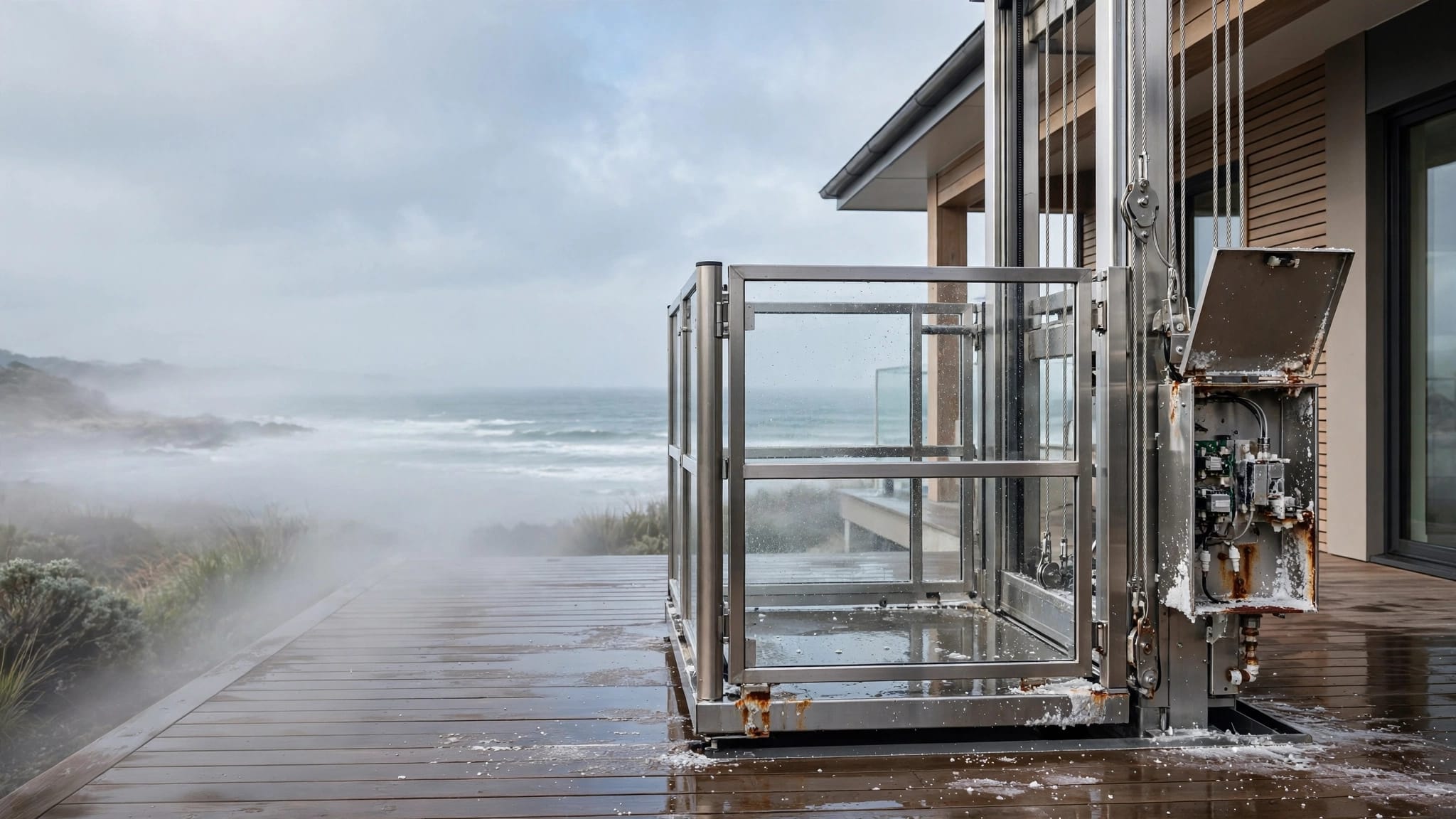
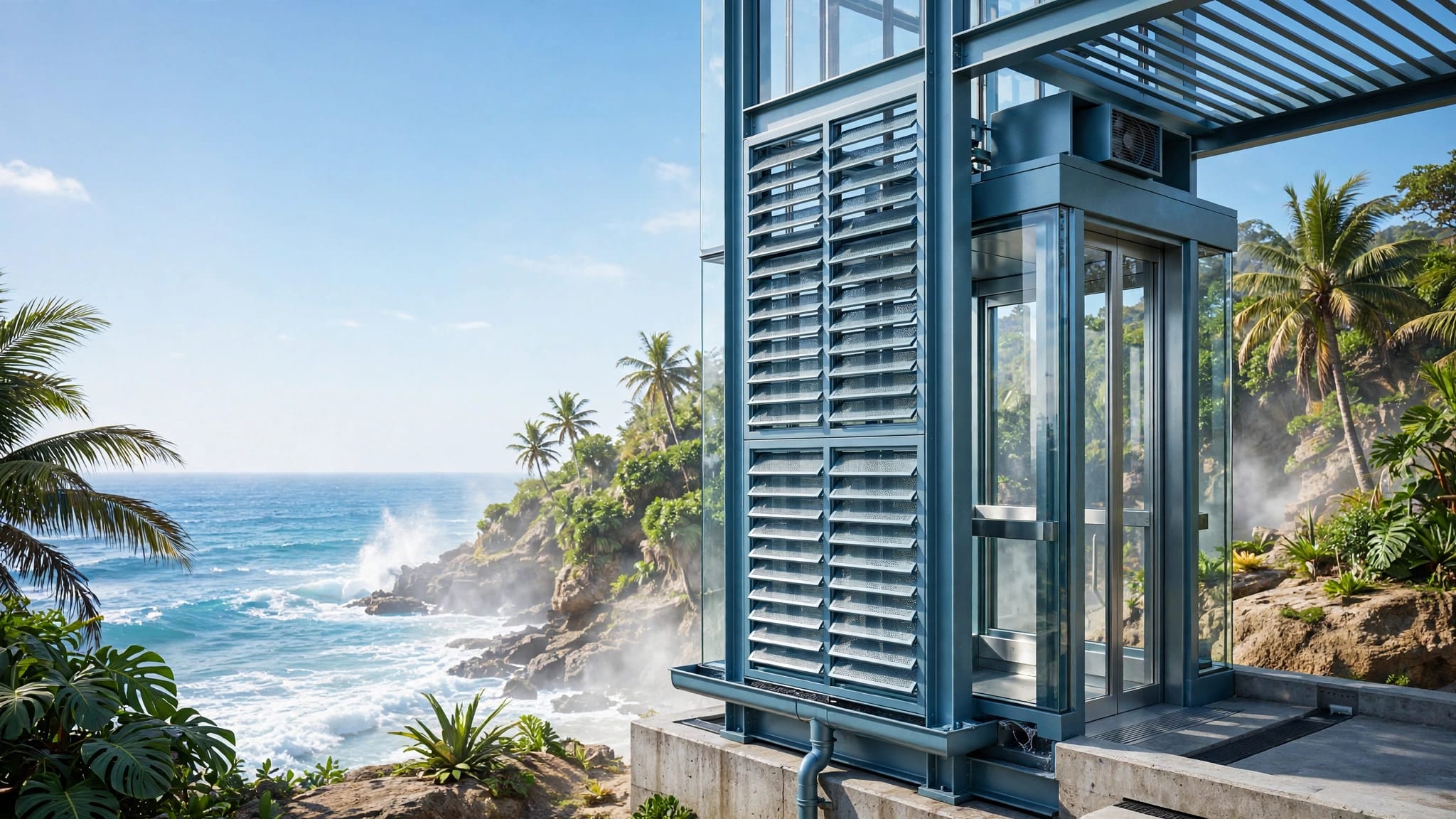
An exterior elevator faces conditions that an indoor unit may avoid. Rain can enter through small gaps, salt air can corrode metal, and direct sunlight can age plastic and cable jackets. Wind-driven water, insects, humidity, and temperature changes also affect exposed equipment.
Choose a phone enclosure rated for its installation environment. The equipment should have suitable gaskets, sealed controls, protected cable entries, and corrosion-resistant hardware. Coastal properties may need marine-grade materials or other finishes specified for salt exposure.
A weather-resistant enclosure is only one part of the installation. The mounting surface should prevent standing water, and conduit connections should direct moisture away from the equipment. The phone should sit where users can reach it without stepping into an unsafe position or moving through a blocked landing area.
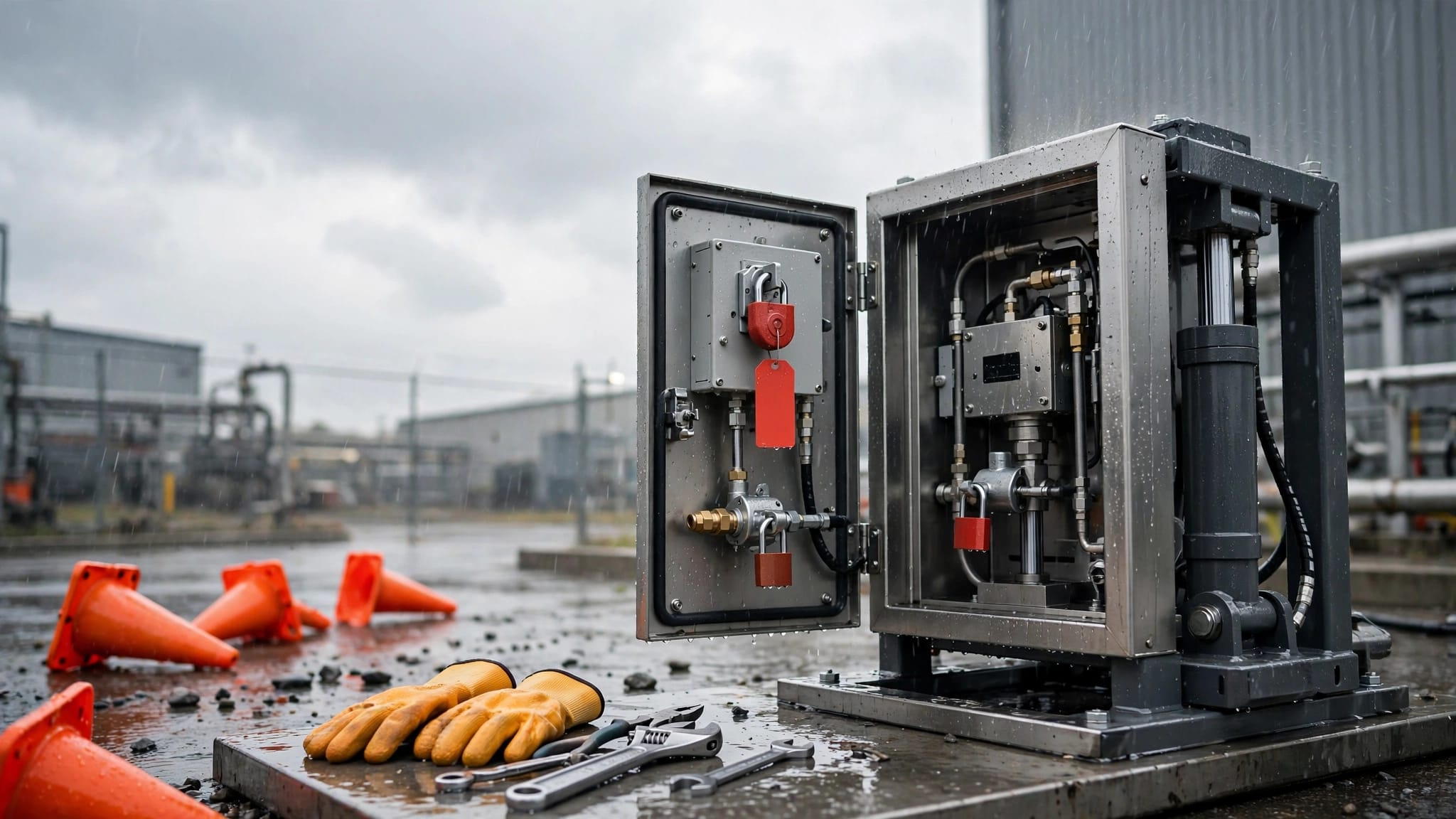
Outdoor equipment also needs protection during cleaning and storms. Don't direct a pressure washer at the phone, alarm, control cabinet, or electrical connections. After a major storm, inspect for cracked covers, loose hardware, corrosion, water entry, and damaged conduit before returning the lift to normal use.
The equipment's environmental rating should match its actual exposure. A component that works well under a covered porch may not suit an open coastal landing. Your installer can confirm whether the phone, alarm, wiring, and enclosure belong in the selected location.
Choosing a setup for passenger and cargo lifts
Start with the lift's approved purpose. A passenger elevator is designed to carry people and needs emergency communication and protective features suited to occupied travel. A cargo lift may move tools, supplies, groceries, or equipment, but a material lift isn't automatically approved for passengers.
The same distinction applies to vertical platform lifts. A VPL may need an emergency stop, alarm, communication device, platform controls, and landing protection that match its design. Capacity alone doesn't determine whether a lift can transport people.
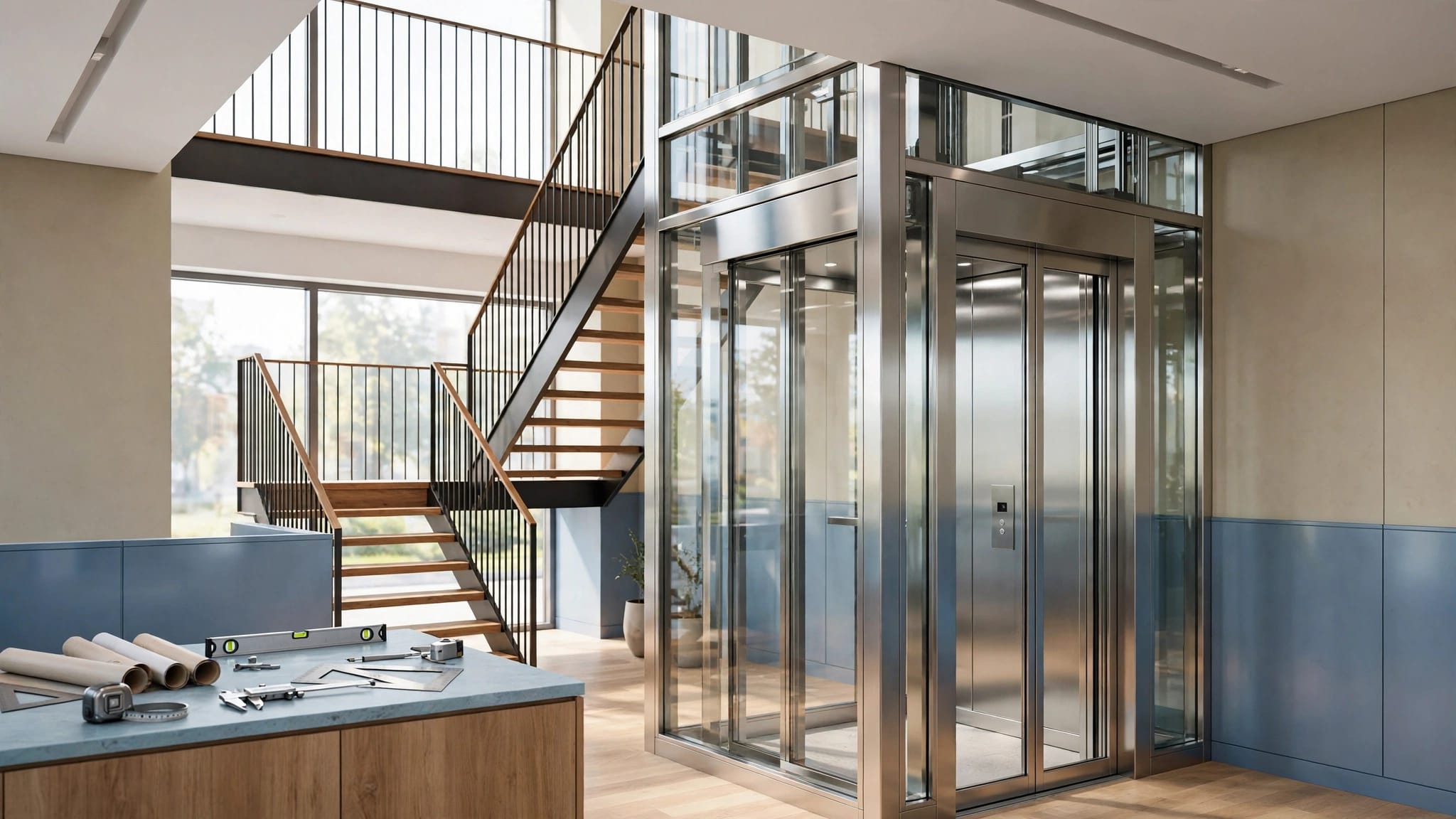
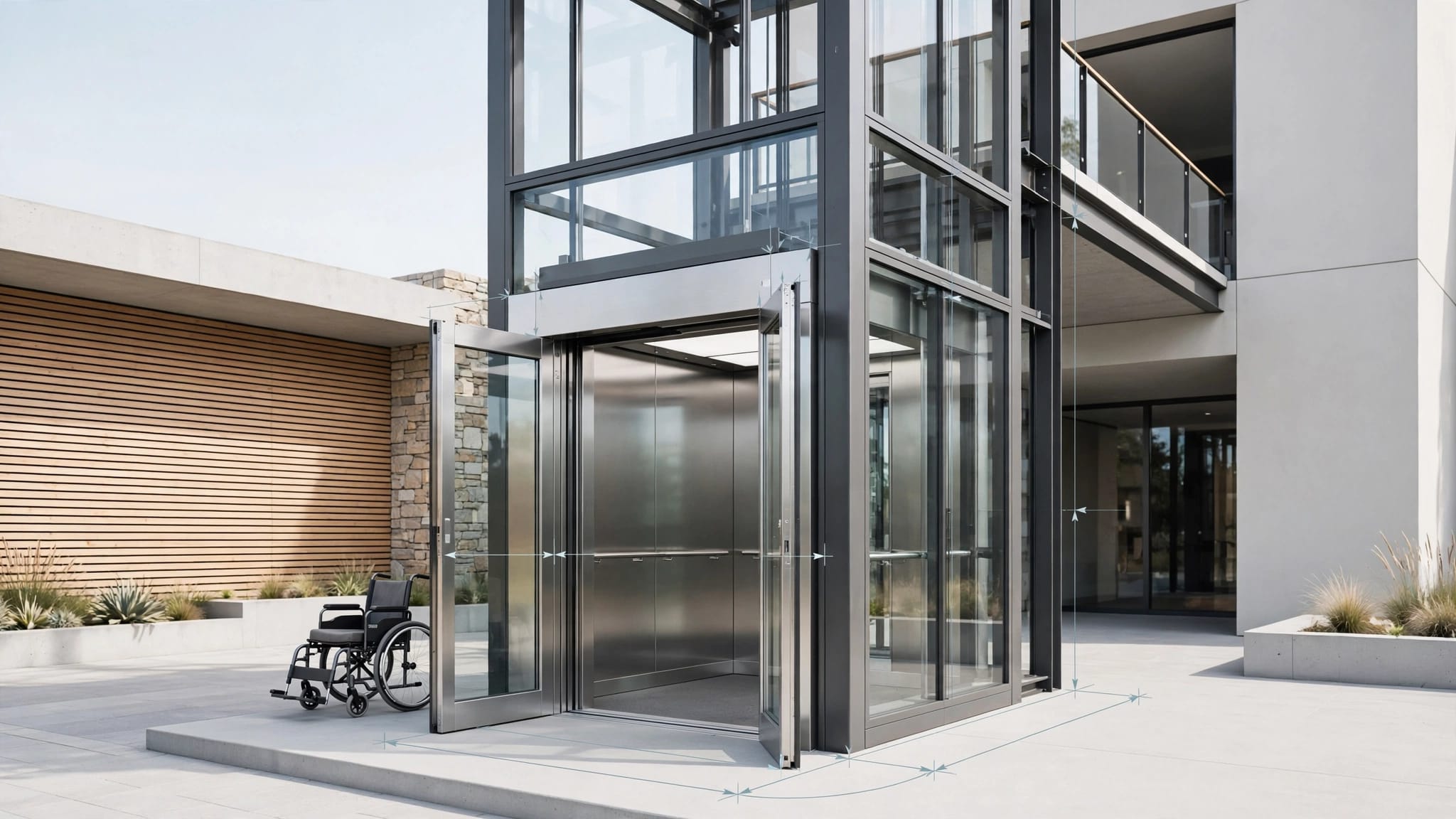
If you're comparing outdoor passenger elevator systems, ask how the emergency phone fits into the complete system. The phone location, landing gates, gate interlocks, controls, braking system, and backup power should work as one planned installation.
Before purchasing, ask the lift manufacturer or installer these questions:
- Where can a user reach the emergency phone from inside the car or on the platform?
- Does the system use a landline, cellular connection, or network service?
- Who receives the call, and how does the system identify the lift's location?
- Which alarms are audible, visible, or sent to a remote monitoring point?
- What equipment remains active during a power outage?
- What weather and corrosion protection does the enclosure provide?
- How should staff test the system without creating a false emergency response?
The phone should also suit the way the property operates. A vacation home may need a monitoring service because no one stays on-site. A commercial property may route calls to a staffed office, security desk, or after-hours response team. Whatever the arrangement, someone must know how to answer and act on the call.
Inspection and maintenance for outdoor lift communication systems
Follow the manufacturer's maintenance schedule and the requirements of the local inspection authority. Outdoor equipment needs more than an occasional visual check because moisture and corrosion can develop behind covers or around cable entries.
At each scheduled inspection, a qualified person should review the phone, alarm, and related controls. A practical inspection includes these steps:
- Check the enclosure, button, speaker opening, indicator, mounting hardware, and conduit for damage or corrosion.
- Notify the monitoring center or designated contact before placing a test call.
- Confirm that the phone connects to the correct contact and that both sides can hear clearly.
- Verify that the responder receives the correct property and lift location.
- Test audible and visual alarms according to the manufacturer's procedure.
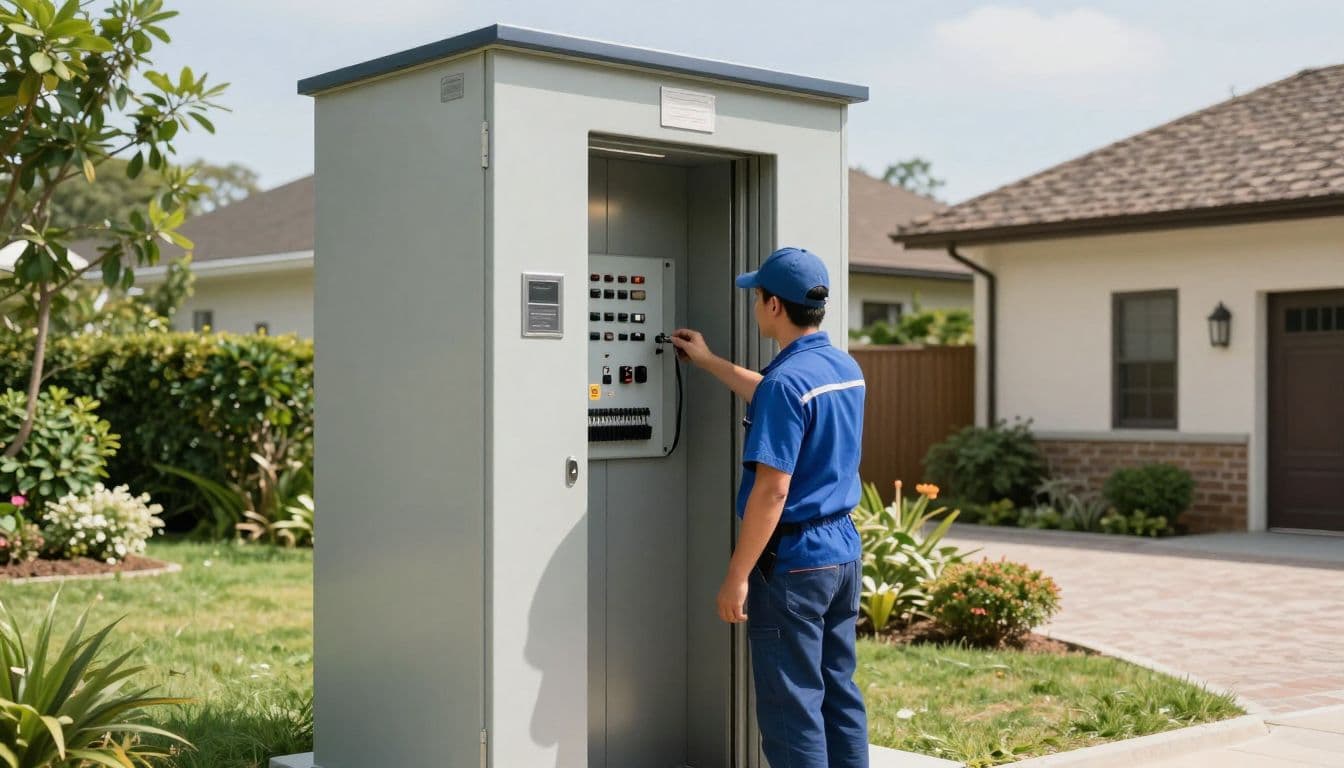
- Check backup power and inspect the control cabinet for moisture, loose connections, or fault indications.
- Record the date, test result, reported problem, and corrective work.
Testing should take place under controlled conditions. Tell the monitoring party when the test starts and ends, and don't repeatedly press emergency buttons without coordination. A false alarm can delay attention to a real event.
Property staff can perform basic visual checks, but electrical repairs, control adjustments, communication failures, and water-damaged equipment need qualified service. Never bypass a gate interlock, safety control, alarm circuit, or emergency phone connection to keep a lift operating.
After a hurricane, tropical storm, flood, or extended outage, inspect the system before use. Salt deposits, water intrusion, and power surges can affect equipment even when the lift appears clean and operational. Keep inspection records with the lift's service documents so future technicians can identify repeated problems.
Conclusion
Exterior elevator emergency phones provide the communication link occupants need when an outdoor lift stops operating. Alarm bells, strobes, remote fault signals, brakes, gates, and control systems handle different safety tasks, so the complete setup matters more than any single device.
For a coastal or exposed property, select equipment with suitable weather and corrosion protection. Then test the phone, alarms, and backup power on the schedule required by the manufacturer and local authority. A working lift is useful, but a lift with working emergency communication gives occupants and responders a safer path when normal operation ends.
Recent Posts