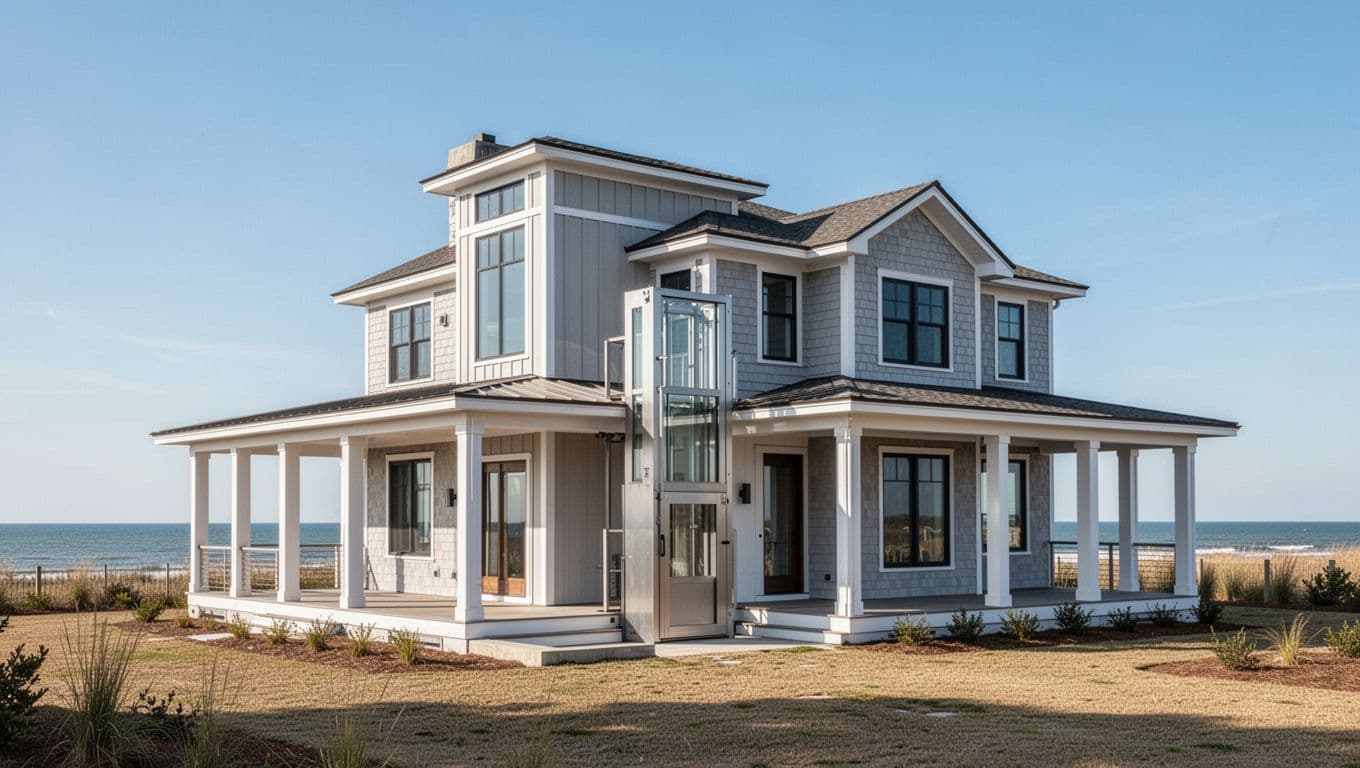
An outdoor lift can make an elevated home safer and easier to use, but exposed equipment needs thoughtful weather protection. The choice between a full exterior lift enclosure and a roof-style weather cover affects daily access, maintenance, storm preparation, appearance, and project cost.
A cover may work well beneath a protected porch in a mild climate. A full enclosure may be better for a coastal home exposed to wind-driven rain, salt air, and intense sunlight. The right decision depends on your local climate, lift model, site conditions, and applicable building codes.
Exterior lift enclosure or weather cover: what changes?
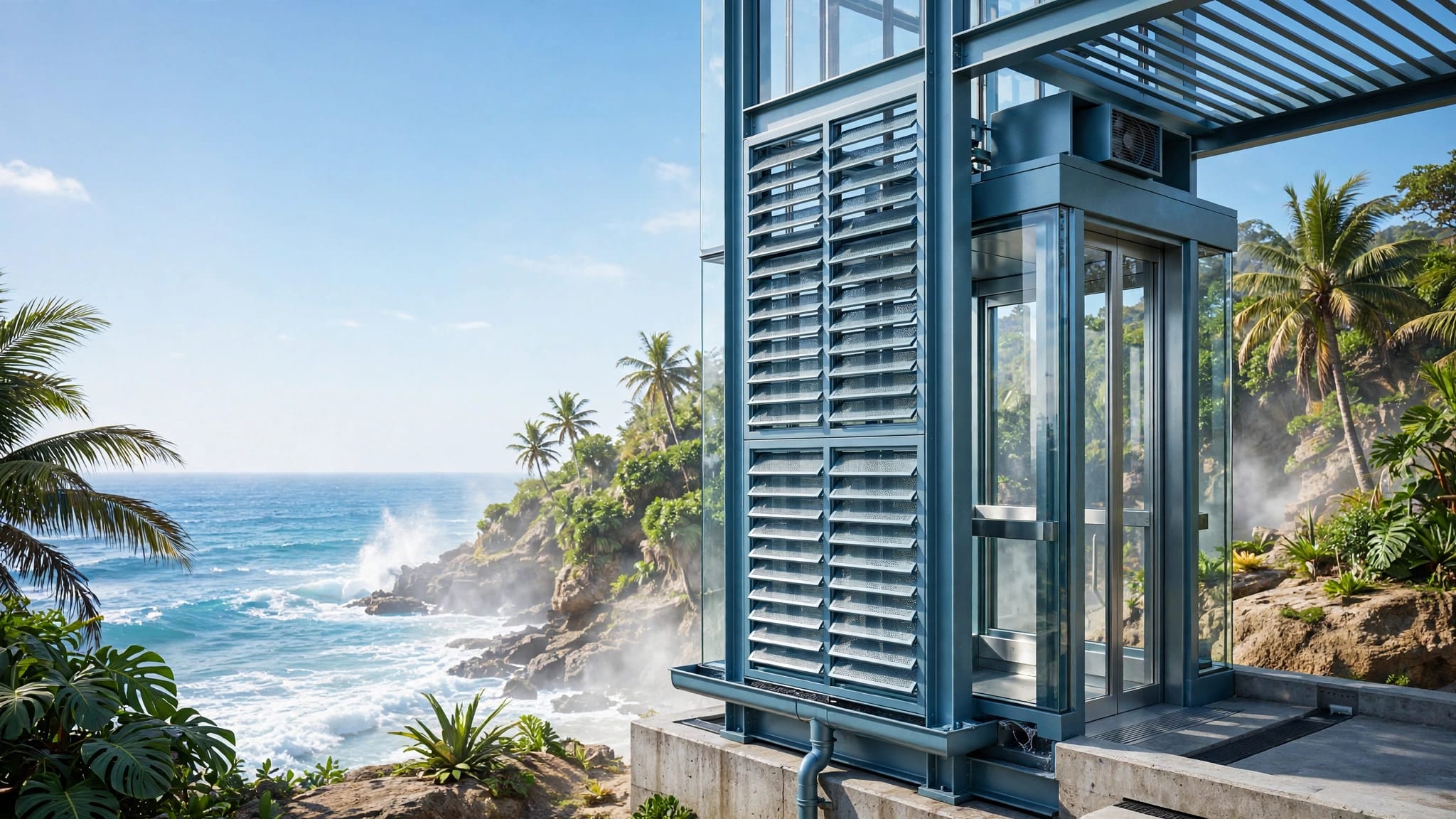
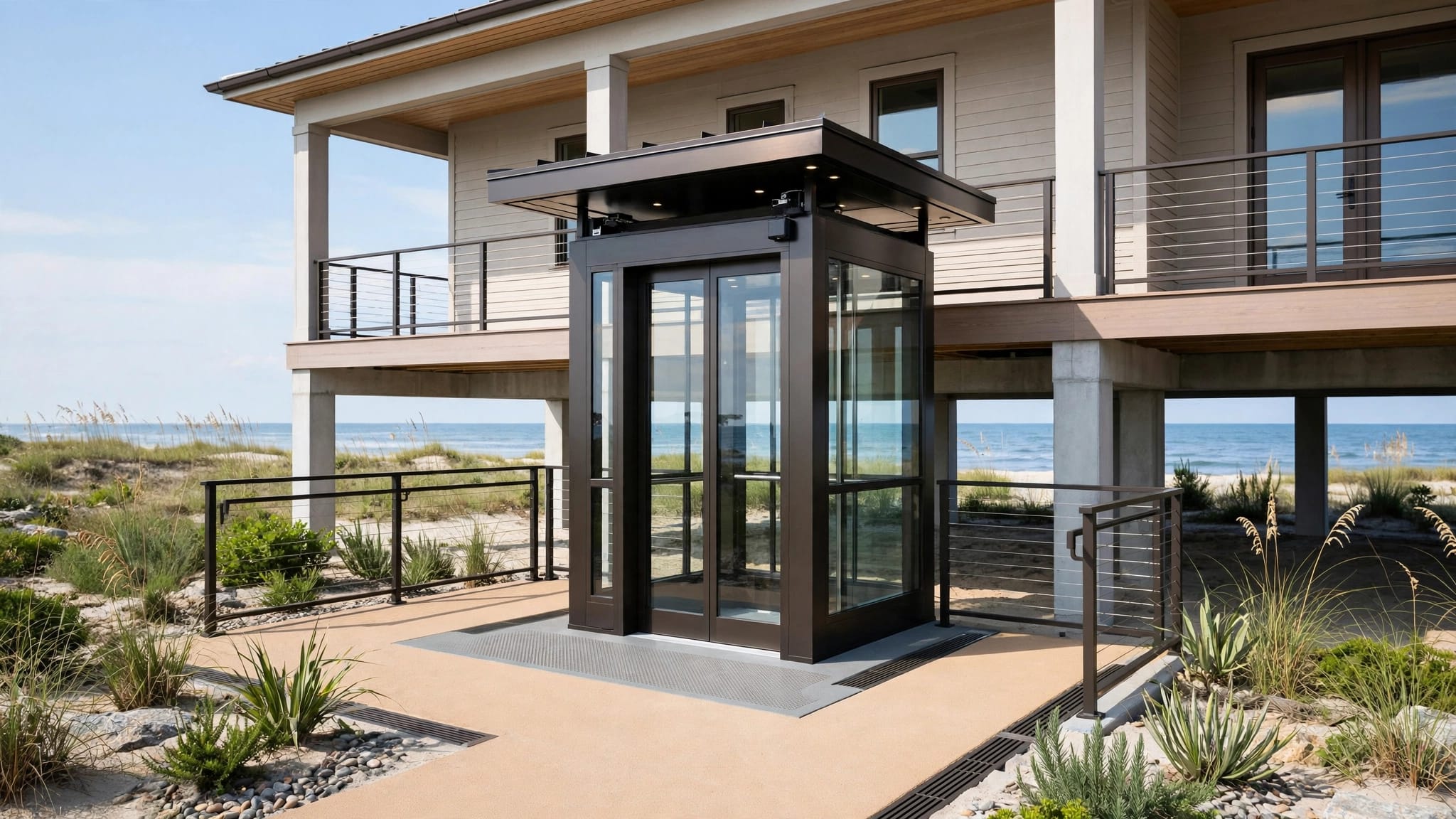
A full enclosure surrounds the lift with a roof and walls or panels. Depending on the equipment, it may include enclosed landings, doors, access gates, ventilation, lighting, and protected controls. The enclosure must work with the lift's frame, travel path, safety systems, and maintenance access.
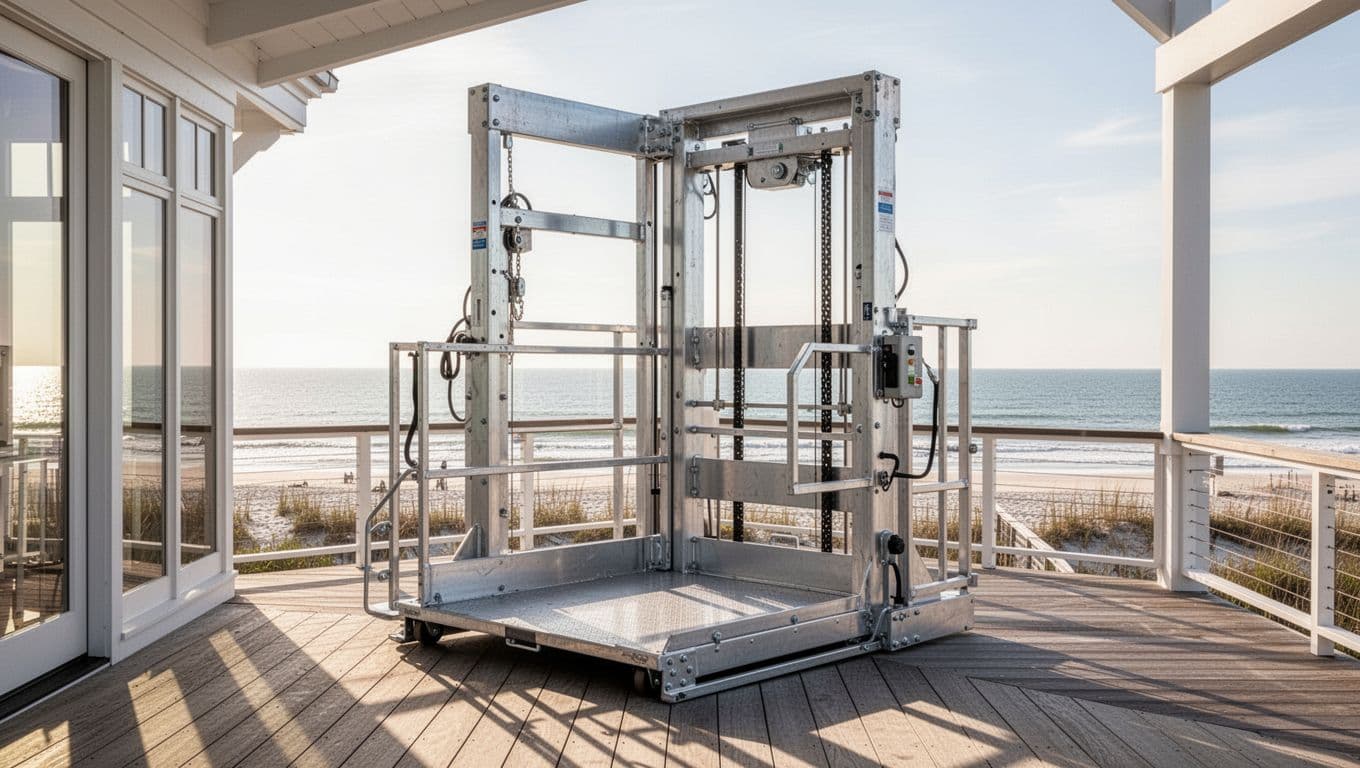
A weather cover usually provides overhead protection. It may be a roof, canopy, or small shelter that limits direct rain and sun while leaving much of the lift open. Some designs include partial side panels, but they don't provide the same protection as a sealed or substantially enclosed shaft.
Neither choice automatically makes an outdoor lift suitable for every location. A poorly designed enclosure can trap moisture, block drainage, or interfere with service work. An undersized cover can direct rainwater toward the platform, controls, or drive equipment.
| Consideration | Full enclosure | Weather cover |
|---|---|---|
| Rain protection | Strong protection against direct and wind-driven rain when properly designed | Helps with overhead rain but offers limited side protection |
| Salt and sunlight | Reduces exposure to salt spray and ultraviolet light | Leaves much of the lift exposed |
| Airflow | Requires planned ventilation and drainage | Open design allows more natural airflow |
| Maintenance access | May require doors or removable panels | Usually provides easier visual and service access |
| Space and appearance | Takes more room and creates a larger visual structure | Uses less space and has a lighter appearance |
| Project cost | Often higher because of additional structure and finish work | Usually lower, depending on the support structure |
The main tradeoff is clear: a full enclosure offers more protection, while a weather cover preserves openness and often reduces construction. The better option is the one that matches the equipment and the conditions around it.
When a full enclosure makes sense
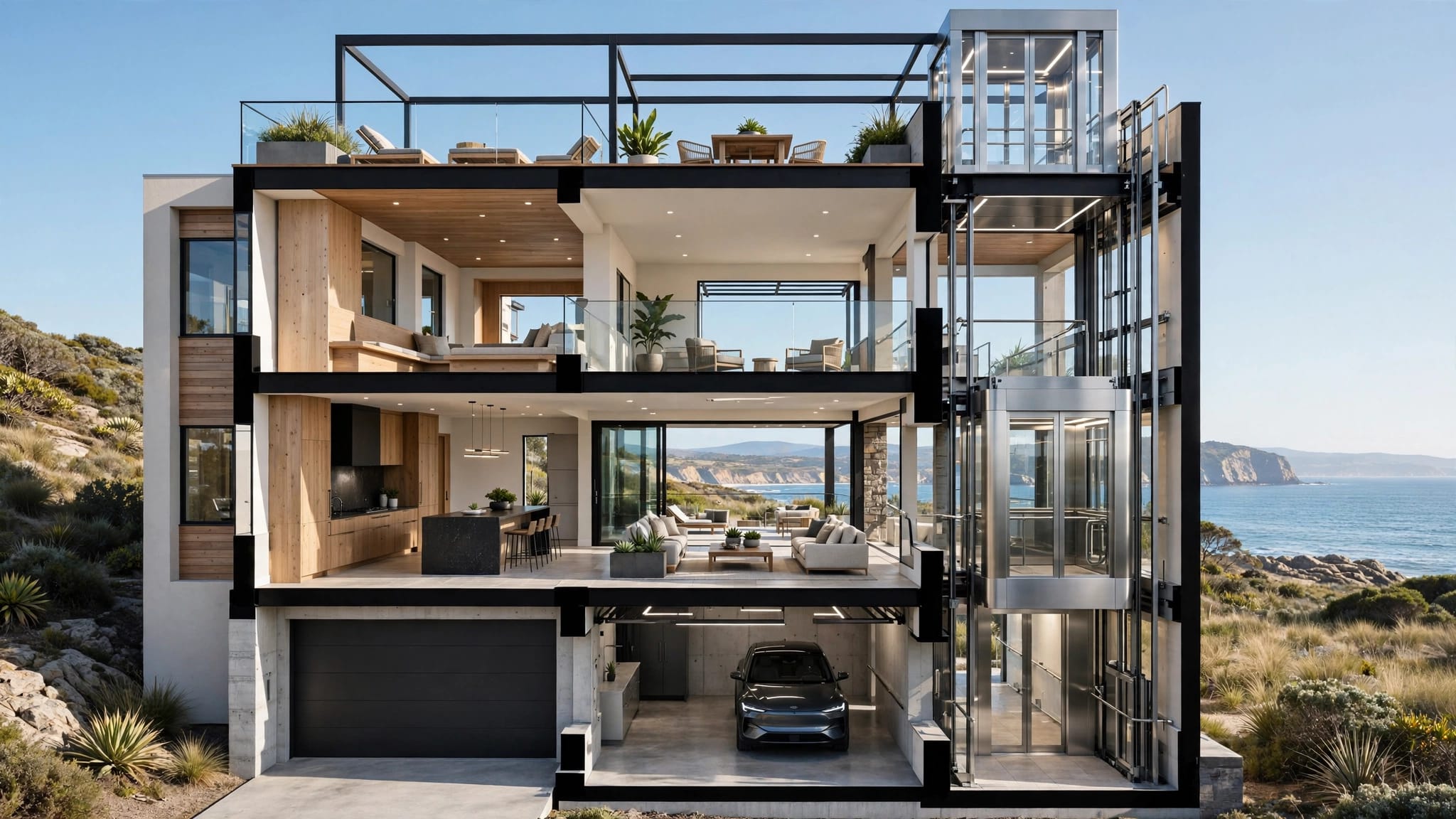
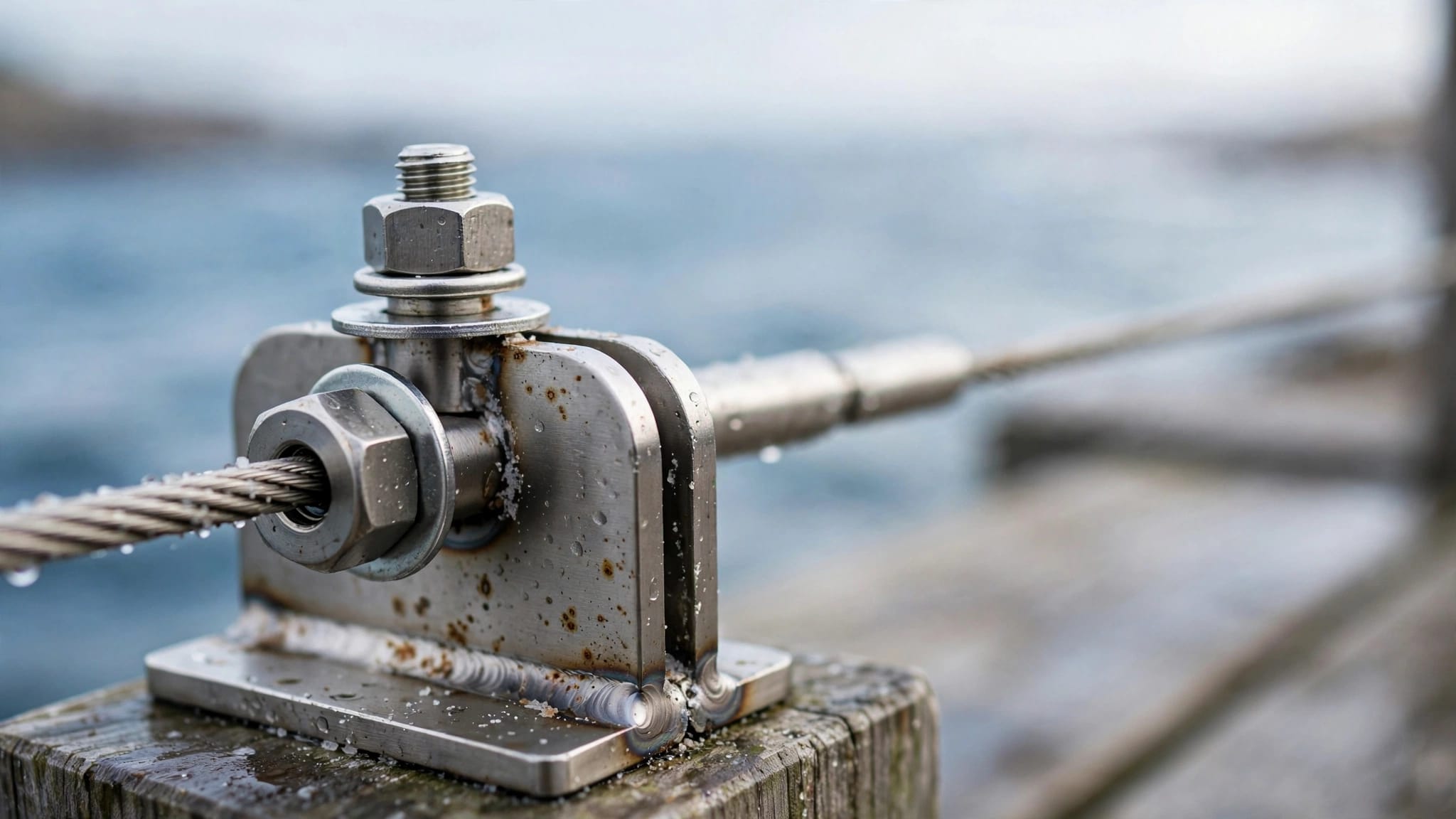
A full exterior lift enclosure deserves serious consideration when the lift sits in an exposed location. Coastal homes face salt air, high humidity, wind-driven rain, and strong sunlight. Those conditions affect fasteners, wiring, controls, gates, platform finishes, and structural connections over time.
An enclosed shaft can reduce the amount of rain and spray reaching those components. It can also make the lift landing more comfortable during bad weather. For a wheelchair user or passenger, a protected approach can matter as much as protecting the machinery. Wet flooring, blowing rain, and standing water create access problems before the lift even starts moving.
A full enclosure may also suit homes that need regular year-round use. If the lift carries people, groceries, luggage, or tools between multiple levels, limiting weather exposure can support a more comfortable routine. However, the enclosure must follow the lift manufacturer's requirements. A custom room built around the equipment isn't automatically a compliant elevator shaft or platform-lift enclosure.
Consider a full enclosure when:
- The lift is exposed to strong wind, frequent rain, or salt spray.
- The equipment sits far from a roof, porch, or other existing shelter.
- You need a protected landing for wheelchair or passenger access.
- The lift operates throughout the year rather than only during occasional outdoor tasks.
- The site has security, privacy, or debris concerns that an open platform can't address.
A qualified lift professional can confirm whether the enclosure needs ventilation, drainage, access doors, impact protection, or special materials for the local environment.
When a weather cover is enough
A weather cover can be a practical choice for an outdoor cargo lift beneath an existing roof or elevated deck. The structure may already block much of the sun and rain, leaving a smaller canopy to protect the platform, landing, controls, or upper drive area.
This option often works best when the lift has good natural shelter and the local climate produces limited wind-driven rain. An open design also makes it easier to inspect the platform, load cargo, and reach components during routine service. Air moves freely around the equipment, which can help wet surfaces dry after rain.
However, a roof alone doesn't stop salt air, blowing rain, airborne sand, or storm debris. It also doesn't protect equipment from floodwater. The cover must have enough size and height to keep runoff away from the lift. A gutter or upper roof that discharges directly onto the machinery can create more trouble than the original exposure.
A weather cover may fit your project when:
- The lift sits beneath a deep porch, balcony, or roof.
- The primary use involves cargo rather than passenger travel.
- The manufacturer permits an open installation with added overhead protection.
- The site has good drainage and limited exposure to wind-driven rain.
- You prefer easier visual access and a smaller structure.
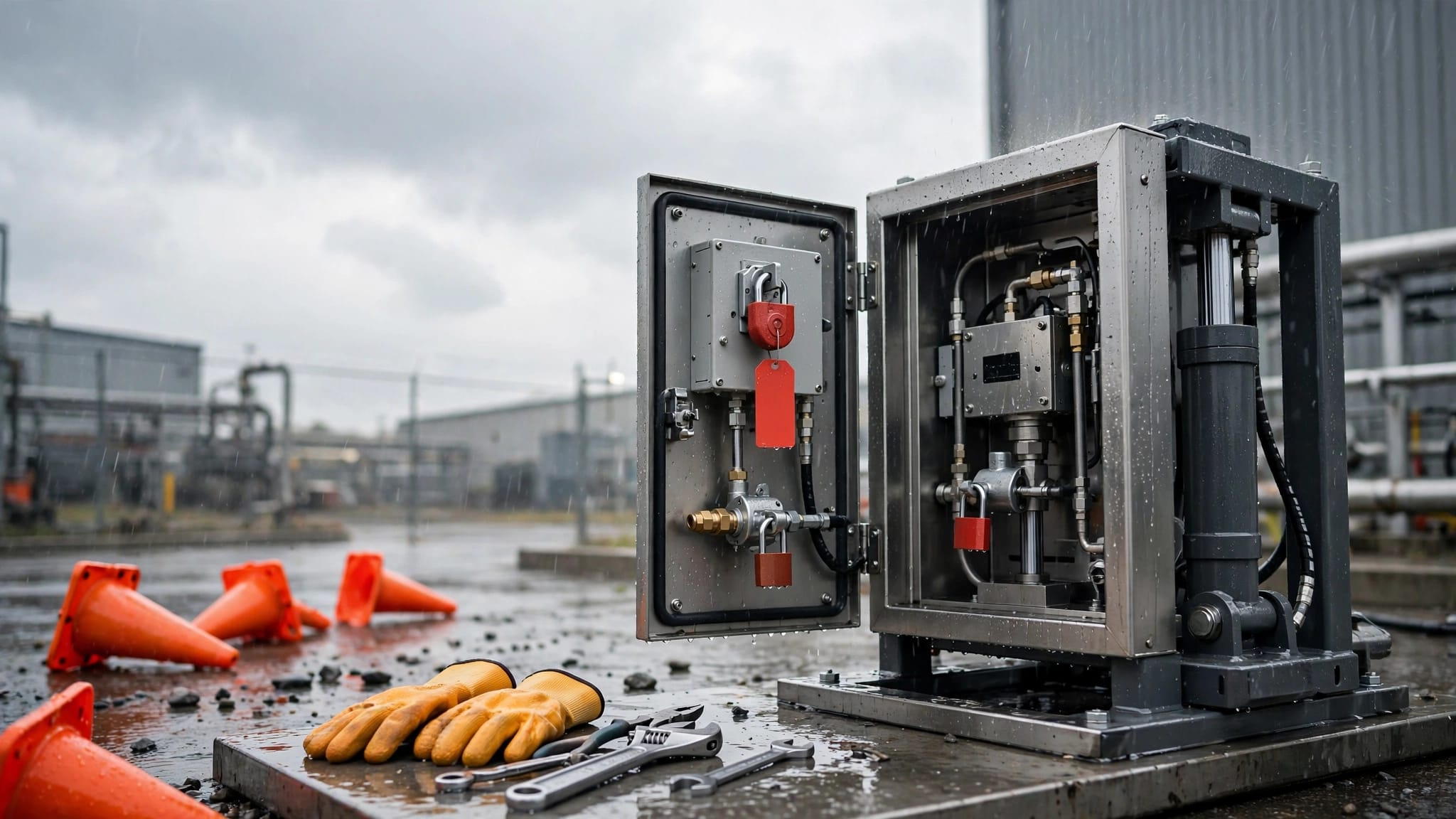
A cover shouldn't be treated as a substitute for storm procedures. Before severe weather, follow the manufacturer's instructions for lowering, securing, disconnecting, or shutting down the lift. After flooding, impact, wind damage, or electrical trouble, arrange an inspection before operating it again. Guidance on waterfront cargo lift safety can help you identify exposure risks around coastal installations.
How to choose the right lift protection
Start with climate and site exposure
Look beyond your home's average rainfall. Wind direction, storm intensity, salt exposure, shade, drainage, and the lift's position all affect the decision.
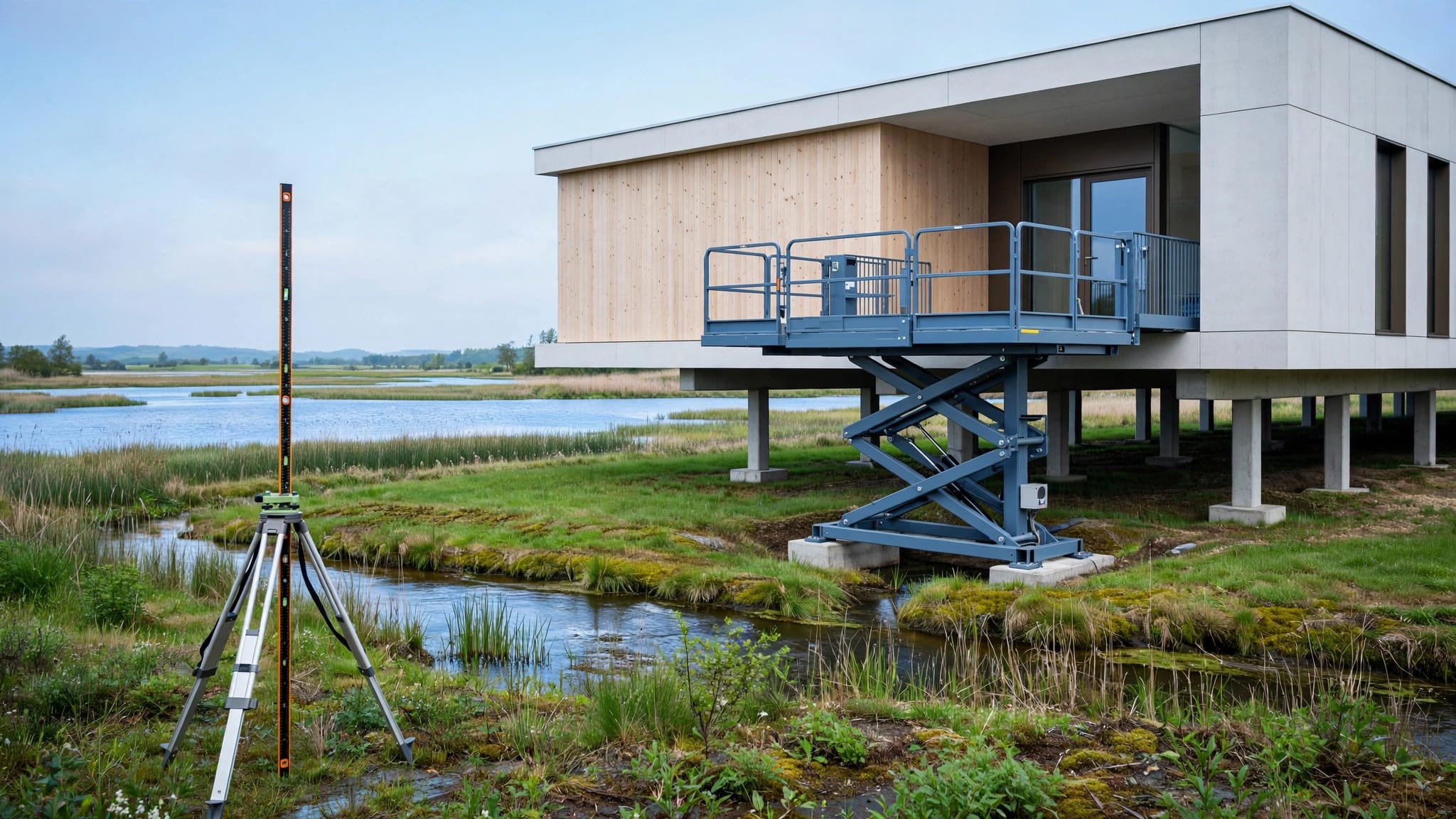
A lift beside open water or an exposed beach-facing wall receives more spray than one under a sheltered inland porch. Upper decks and roofs can also create concentrated runoff. Meanwhile, a low landing may face splashback, mud, or floodwater even when the lift machinery is covered.
Walk the site during heavy rain if possible. Notice where water falls, where it collects, and which direction wind pushes rain. That information gives the installer useful details that a simple measurement may miss.
Match protection to the lift type
Cargo lifts, vertical platform lifts, and passenger-compliant elevators have different operating and safety requirements. A cargo lift may move boxed supplies, tools, groceries, or luggage on an open platform. A vertical platform lift may need protected access for a wheelchair user. Passenger equipment may have additional requirements for doors, controls, guarding, and landings.
The lift's rated capacity doesn't change because you add a cover. For example, a model rated for 750 or 1,000 pounds still requires the same approved structure, controls, and safety components after weather protection is installed. The shelter must also leave clearance for the platform, cables, gates, braking systems, and service work.
Ask the manufacturer for written installation requirements before choosing materials or hiring a general contractor. The professional who designs the enclosure should know the lift's travel path and required clearances.
Confirm codes, drainage, and storm requirements
Local rules can affect the enclosure, foundation, electrical work, wind resistance, flood elevation, and landing design. Requirements vary by location, especially in coastal and flood-prone areas.
A hurricane-rated house doesn't automatically make an attached lift structure hurricane-rated. Likewise, placing a lift above an existing driveway doesn't settle floodplain questions. The local building department or floodplain administrator may have rules for equipment elevation and foundation design.
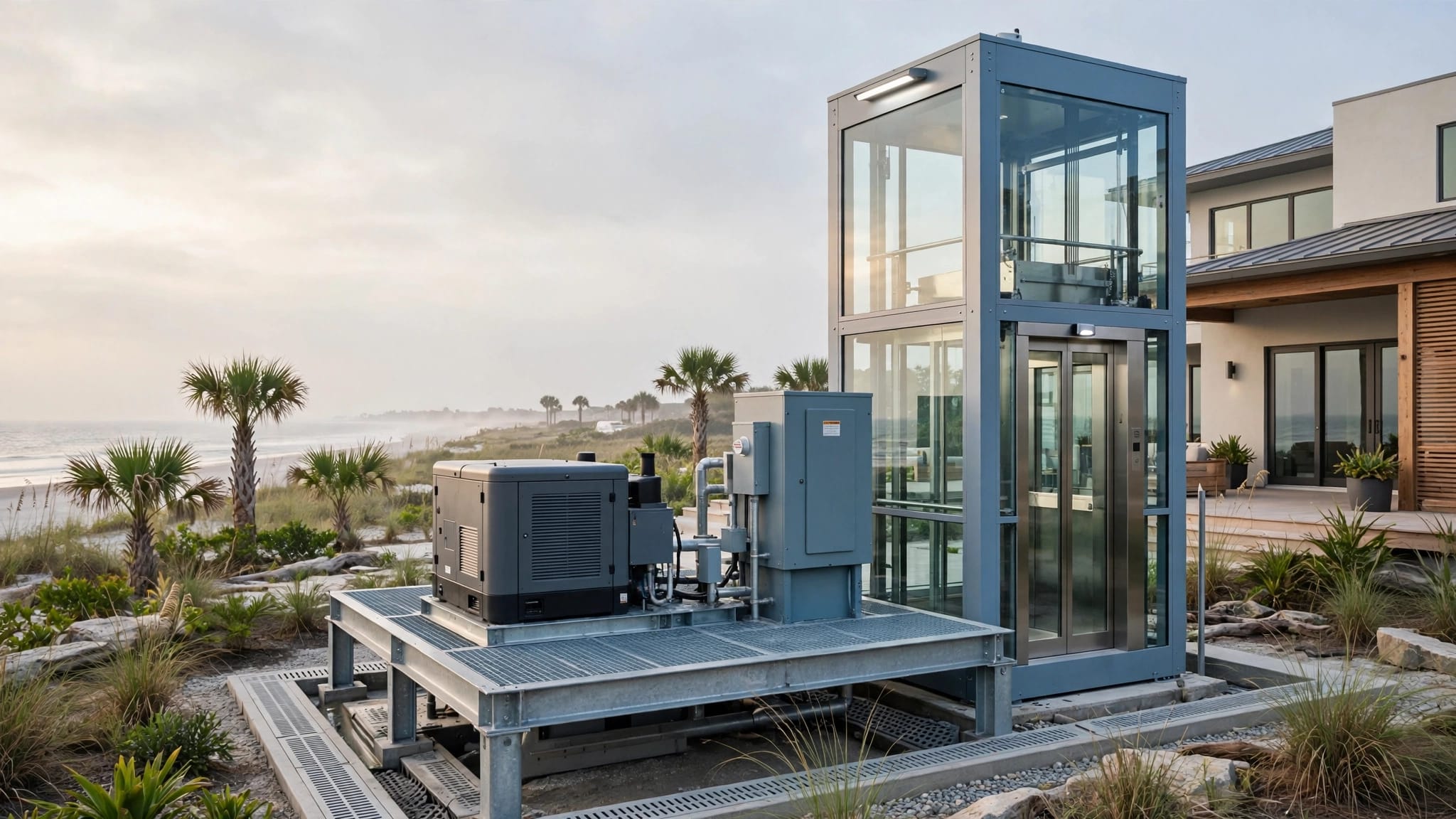
Drainage deserves equal attention. The enclosure should keep water away from electrical components without creating a closed, humid space. Roof edges, gutters, vents, doors, and floor surfaces need a coordinated design. Exterior lift enclosure plans should also account for inspection access after a storm.
Plan the project before installation
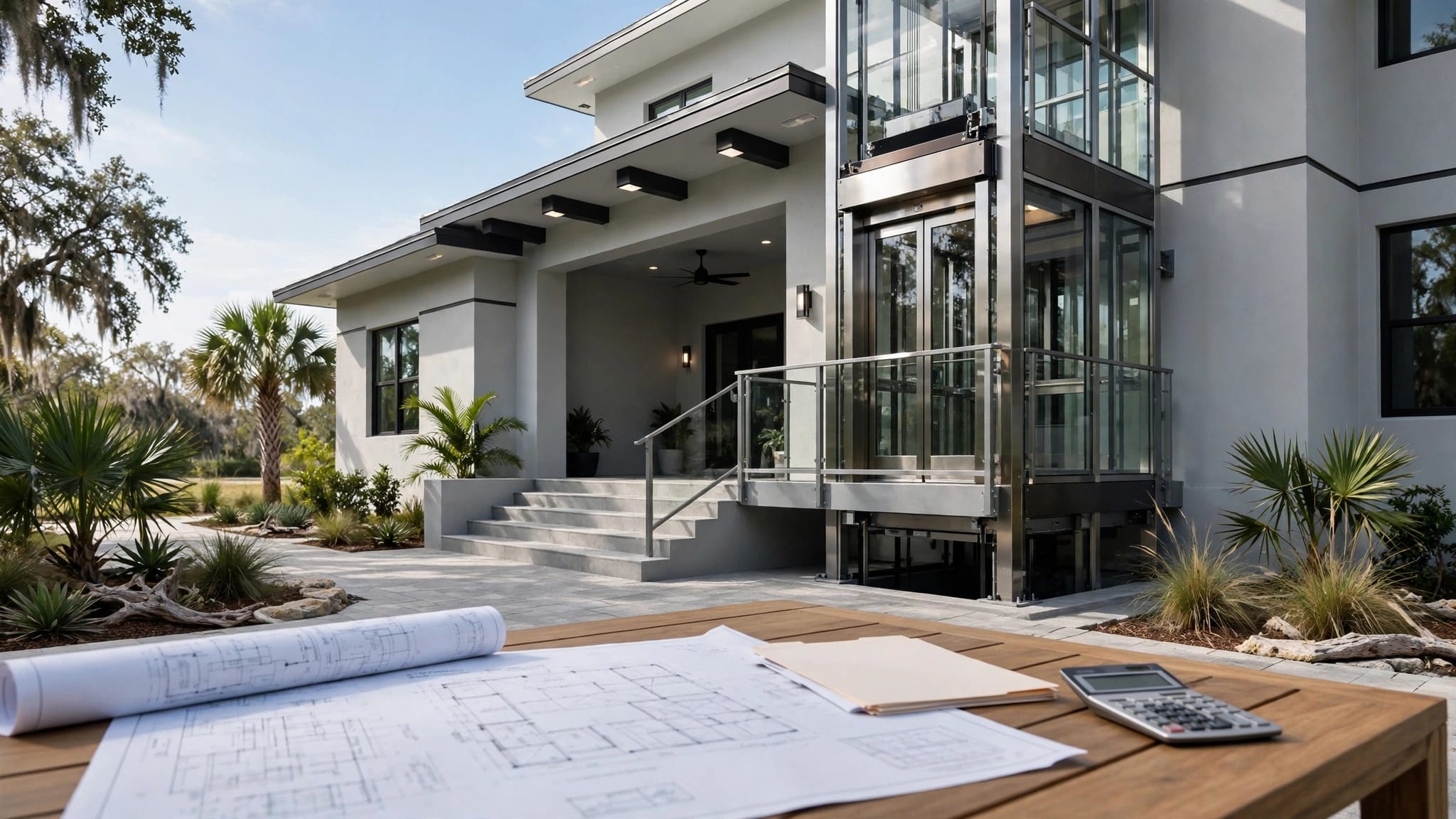
The easiest time to plan a full enclosure or weather cover is before construction begins. The lift location affects framing, foundation work, electrical routing, landing heights, roof support, and access around the platform. Retrofitting protection later can require more structural changes and may reduce available service space.
During the planning conversation, ask for a written scope that identifies:
- The lift model, rated capacity, travel height, and intended use.
- The enclosure or cover materials, roof design, ventilation, and drainage.
- Required clearances around the platform, gates, controls, and drive equipment.
- Wind, flood, electrical, and permit requirements for the property.
- Routine maintenance access and the procedure for severe weather.
- Which party handles structural engineering, permits, and final inspections.
Marine-grade materials may suit coastal properties, but material selection alone doesn't solve every exposure problem. Fasteners, wiring, seals, finishes, connections, and drainage must work together. A local contractor may understand the building shell, while the lift manufacturer or qualified lift professional understands the equipment.
For a new beach or elevated home, review planning beach house exterior lifts before the structure is finalized. Early coordination can prevent a cover from blocking a landing, roof runoff from reaching the lift, or a foundation from ending up at the wrong elevation.
Conclusion
A full enclosure gives an outdoor lift stronger protection from wind-driven rain, salt spray, sunlight, and debris. A weather cover can be the better fit when an existing roof already shelters the equipment and open access matters more.
The strongest choice comes from matching protection to the lift type, local climate, site drainage, manufacturer requirements, and local codes. Before construction begins, have a qualified lift professional review the property and recommend a site-specific exterior lift enclosure or cover that protects the equipment without limiting safe operation or maintenance.
Recent Posts