
What an Elevator Controller Does During a Normal Trip

Share this article

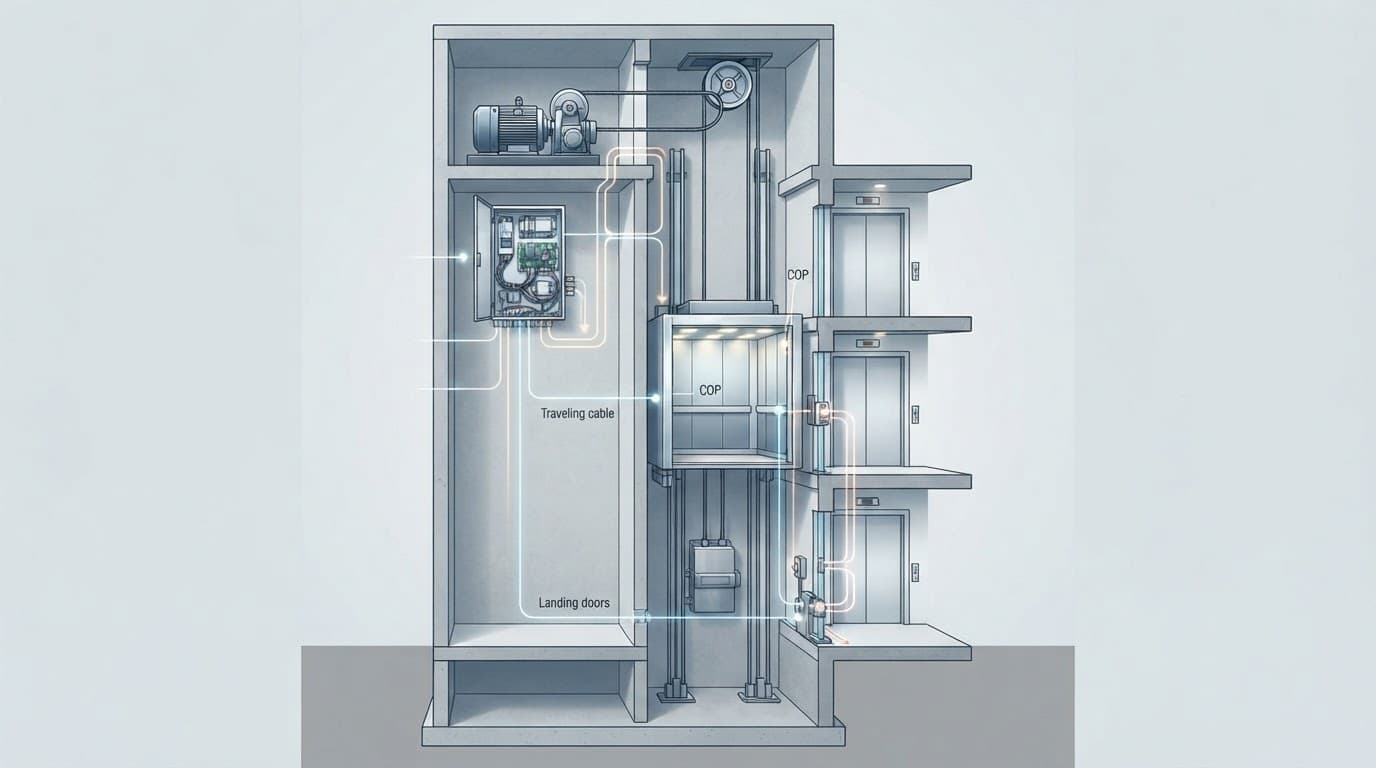
An elevator controller receives travel requests, checks operating conditions, and coordinates the equipment that moves and stops the car. During a normal trip, it also responds to signals from doors, landing devices, and other components.

The controller depends on separate safety devices to protect passengers and property. Understanding those relationships can help you recognize normal operation and spot a change that needs attention.

What the elevator controller coordinates

The controller is the decision-making part of the lift's electrical system. It receives information, follows the equipment's operating logic, and sends commands to components responsible for movement and door operation.

The exact arrangement varies by lift. A passenger elevator may have a car operating panel and landing buttons, while a cargo lift may have a different control station. Some equipment has automatic doors; other systems use manual landing doors or gates.

Inputs tell the controller what's happening

Inputs include the commands people give the lift and signals from the equipment. A floor selection is an input. So is a signal indicating that a landing door's lock has engaged.

Position devices also provide information about the car's location. Depending on the design, the controller can use that feedback to manage travel and identify a landing.

Outputs direct other components

An output is a command sent to another part of the system. For example, the controller can signal the drive system to move the car or direct powered doors to operate.

The controller doesn't physically carry the load. Motors, brakes, structural supports, and other mechanical parts each have their own jobs. The controller coordinates their operation according to the lift's design.

How a trip request reaches the controller

A trip request can come from a landing station or a control inside the car. In a passenger elevator, a landing button asks for service at that level. A floor button inside the car identifies the rider's destination.

The controller registers those requests and determines how to respond. In a building with multiple calls, it may manage more than one request. The order depends on the system's programming and operating conditions.

Landing calls and car selections

Landing controls bring the car to a place where someone can enter. Once inside, the rider selects the destination using the car controls. A control panel may also include an alarm or communication button.

On a simple lift serving two levels, the available controls may be more limited than those in a multistory building. Either way, pressing a button is a request, not a command that overrides a safety condition.

Different controls can send the same kind of request

Some lifts use fixed, wired control stations. Others may have wireless or remote controls intended for their approved use. These devices communicate with the lift's control system rather than replacing it.

Our guide to outdoor elevator control options explains how wired, wireless, and remote controls differ. The right arrangement depends on the equipment and where people need to operate it.

Why doors and interlocks matter before travel

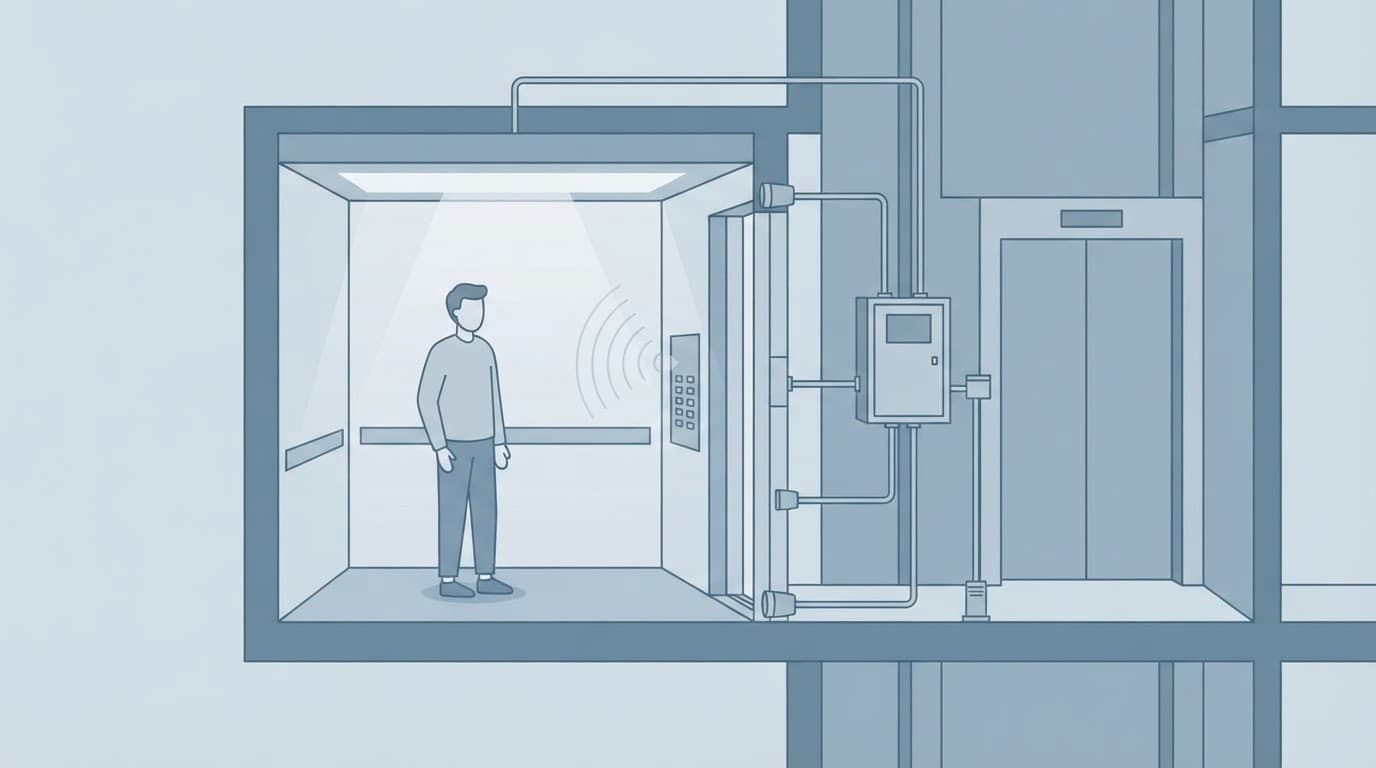
A controller needs the required safety conditions to be satisfied before normal travel can take place. Landing doors and gates are a major part of that process because they protect openings where someone could otherwise reach a shaft or moving lift.

An interlock has a mechanical locking function and an electrical contact. The lock helps secure the landing door; the contact indicates that the required locked condition has been reached.

A closed door isn't always a locked door

A door can appear shut while its latch remains out of alignment. In that case, the interlock may not confirm a locked condition, and the lift may refuse to move.

For equipment with landing interlocks, the required protected openings must be secured. An upper landing door that isn't latched can affect a request made at another level. The exact arrangement depends on the lift and its door design.

A door touching its frame doesn't necessarily mean the interlock has engaged. Forcing the door or defeating the lock creates a hazard.

Outdoor conditions can affect door hardware

Salt air, humidity, wind-driven rain, and sand can affect exterior door hardware over time. Corrosion or a change in alignment can make a door difficult to latch or cause inconsistent operation.

If a door requires repeated slamming, won't lock, or appears damaged, stop using the lift and arrange qualified service. Don't remove covers, adjust wiring, or apply unapproved products to the interlock.

How the controller manages movement

When the required conditions permit travel, the controller works with the drive system to move the car or platform. How that movement is produced depends on the equipment.

A traction elevator uses a motor and traction equipment to move the car. A hydraulic elevator uses a hydraulic power system. Both rely on controls to coordinate travel, but their mechanical components differ.

Starting and traveling

The controller sends commands for the requested direction and receives information about the lift's status. The drive system then supplies the motion needed for the trip.

On systems designed for automatic travel, a rider generally doesn't need to keep pressing the floor button. Other equipment uses constant-pressure controls, which require the operator to hold a control during movement.

Monitoring the trip

During travel, the control system continues to receive signals from the equipment. Position information helps it manage the trip, while safety devices remain part of the lift's protective system.

A normal trip should feel consistent with the equipment's intended operation. An unusual sound, unexpected stop, or change in movement deserves attention. It doesn't identify a particular failed part, but it gives a technician useful information.

How the car stops at a landing

The controller uses position information to determine when the car is approaching its destination. Depending on the system, it directs the drive to slow and stop the car near the landing.

Stopping and leveling are related but distinct. A car needs to stop at the correct floor, and its floor should also align with the landing for safe entry and exit.

Position feedback and leveling

Elevators can use different devices to provide position feedback. The equipment design determines how the controller recognizes a landing and manages the final portion of travel.

Good leveling matters to cargo operations, too. A platform that stops unevenly can make loading or unloading difficult. If you notice a new height difference at a landing, take the lift out of service and report it.

Braking and door release

A service brake is part of the system that holds an elevator at a landing. Once the lift is in the appropriate position and the relevant conditions are met, the door or gate can operate according to its design.

Powered doors and manually operated doors don't behave identically. In either case, the landing entrance should remain protected when the lift isn't in the correct position for access.

Safety devices work alongside the controller

The controller coordinates the trip, but it doesn't replace the lift's physical safety components. Each device has a particular role, and the combination depends on the type of equipment.

Door interlocks protect landing openings. Guide rails keep the car or platform on its intended path. Brakes control movement, while other protective devices may respond to conditions the normal control system cannot manage alone.

Brakes and travel limits

The service brake helps hold the lift during normal stops. Depending on the elevator design, separate safety gear and an overspeed governor may provide protection during certain abnormal conditions.

Limit switches identify travel limits and are separate from ordinary operating controls. They shouldn't be treated as buttons for routine stopping. Our explanation of elevator safety brakes describes how brakes fit into the wider safety system.

Emergency controls have different jobs

An emergency stop can stop or prevent operation under certain conditions. It doesn't place a call for help. An alarm attracts attention, while an emergency phone or other communication equipment provides a way to speak with a responder.

The features installed depend on the equipment and its approved use. Read more about elevator emergency phones and alarms and the separate roles they perform.

Passenger elevators and cargo lifts operate differently

The purpose of the equipment shapes its controls and safety features. A passenger elevator is designed for occupied travel. A cargo lift is generally intended to move materials between levels.

A cargo lift's ability to carry a heavy load doesn't make it suitable for riders. People should never ride one unless it is designed, approved, and labeled for passenger use.

Passenger travel

Passenger elevators have controls intended for people entering and exiting the car. Depending on the installation, the system may include enclosed travel, door interlocks, and emergency communication equipment.

A vertical platform lift is another type of equipment used for accessibility. It may use a platform rather than a conventional enclosed elevator car, with controls and barriers suited to its design.

Moving materials between floors

Cargo lifts may move groceries, tools, supplies, or other materials. Some use constant-pressure controls; others use different controls permitted for the equipment. Operators should keep the load within the lift's rated capacity and follow its loading instructions.

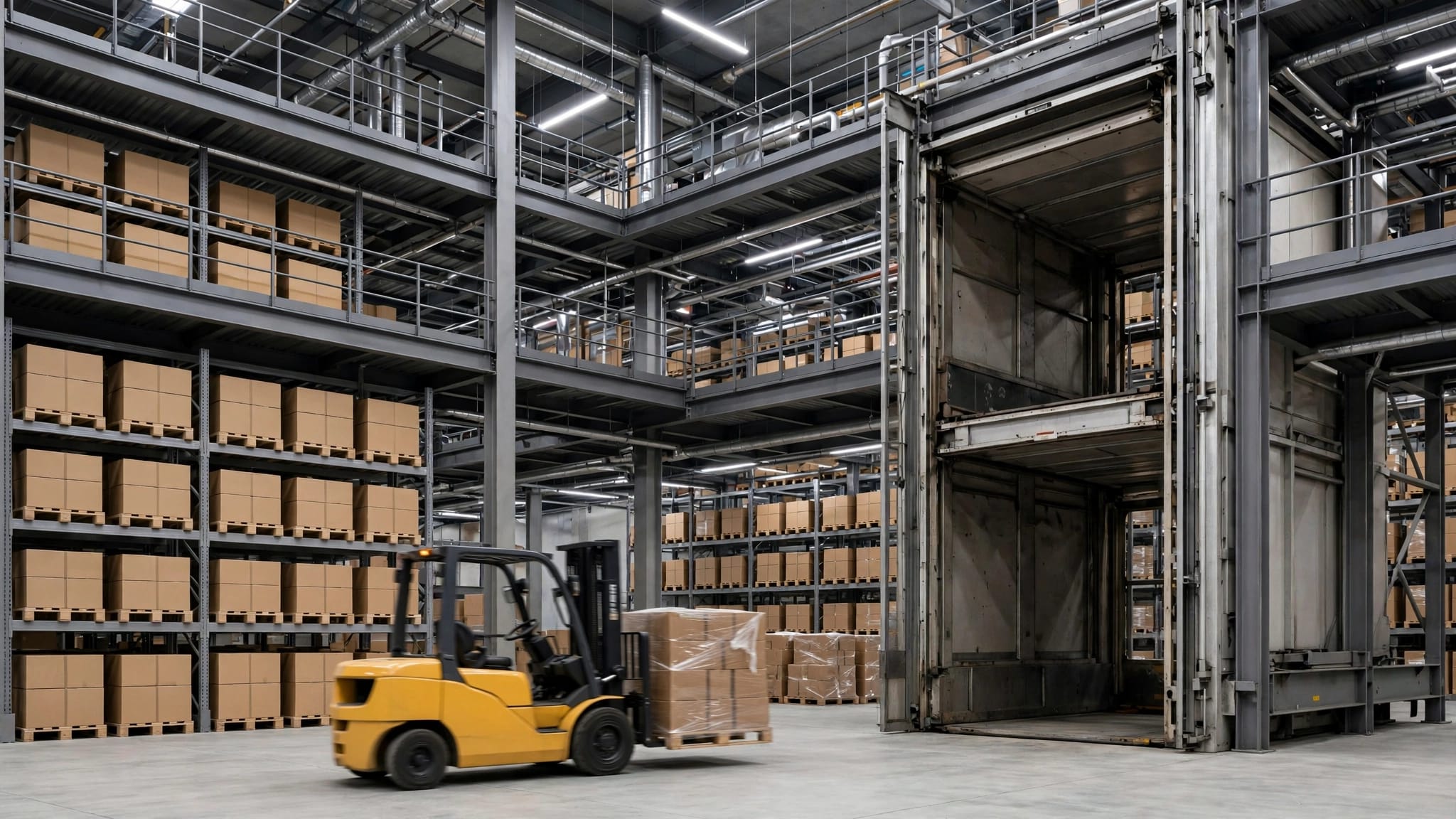
For commercial properties, outdoor freight lifts can connect loading areas with upper storage or work areas. Their controls and landing arrangements need to match material handling, not passenger travel.

What to do when normal operation changes

A controller can prevent a trip when it detects a condition that doesn't meet the lift's operating requirements. A door that hasn't latched is one possible cause. Moisture, damaged hardware, or another equipment fault may also interrupt operation.

The cause isn't always visible. A lift that starts working after several attempts may still need attention, especially if the same problem returns.

Report symptoms instead of attempting repairs

Take the lift out of service if it stops unevenly, operates unpredictably, has a damaged gate, or shows a recurring fault. Keep people away from the affected area and contact a qualified elevator professional.

Describe the landing involved and what you noticed. Weather, a recent storm, or a visible change around a door can help the technician understand the problem. Don't bypass an interlock, force a door, or open a control cabinet.

If someone is inside during a stop

Use the elevator's emergency communication equipment, if available, and contact the appropriate service provider or emergency responders. Call emergency services for an immediate medical emergency or other urgent danger.

Don't pry open doors, enter the shaft, or attempt an unapproved rescue. A car can be between landings even when an opening appears accessible. Our guide to power failures in exterior elevators covers additional considerations for passengers and cargo.

A controller coordinates the whole trip

An elevator controller connects a travel request with the equipment needed to carry it out. It responds to position and safety signals while directing movement and, where applicable, door operation.

The most useful distinction is that the controller works with separate protective components . A reliable trip depends on the doors, interlocks, brakes, drive, and other equipment working together as designed.

Recent Posts

By Veranda 'Vator • November 2, 2026
A freight lift moves goods between warehouse floors, while a forklift handles horizontal transport, stacking, and loading. For many multilevel warehouses, the practical answer is both : a forklift brings goods to a landing, and a lift carries them to another level. The right s...
By Veranda 'Vator • November 1, 2026
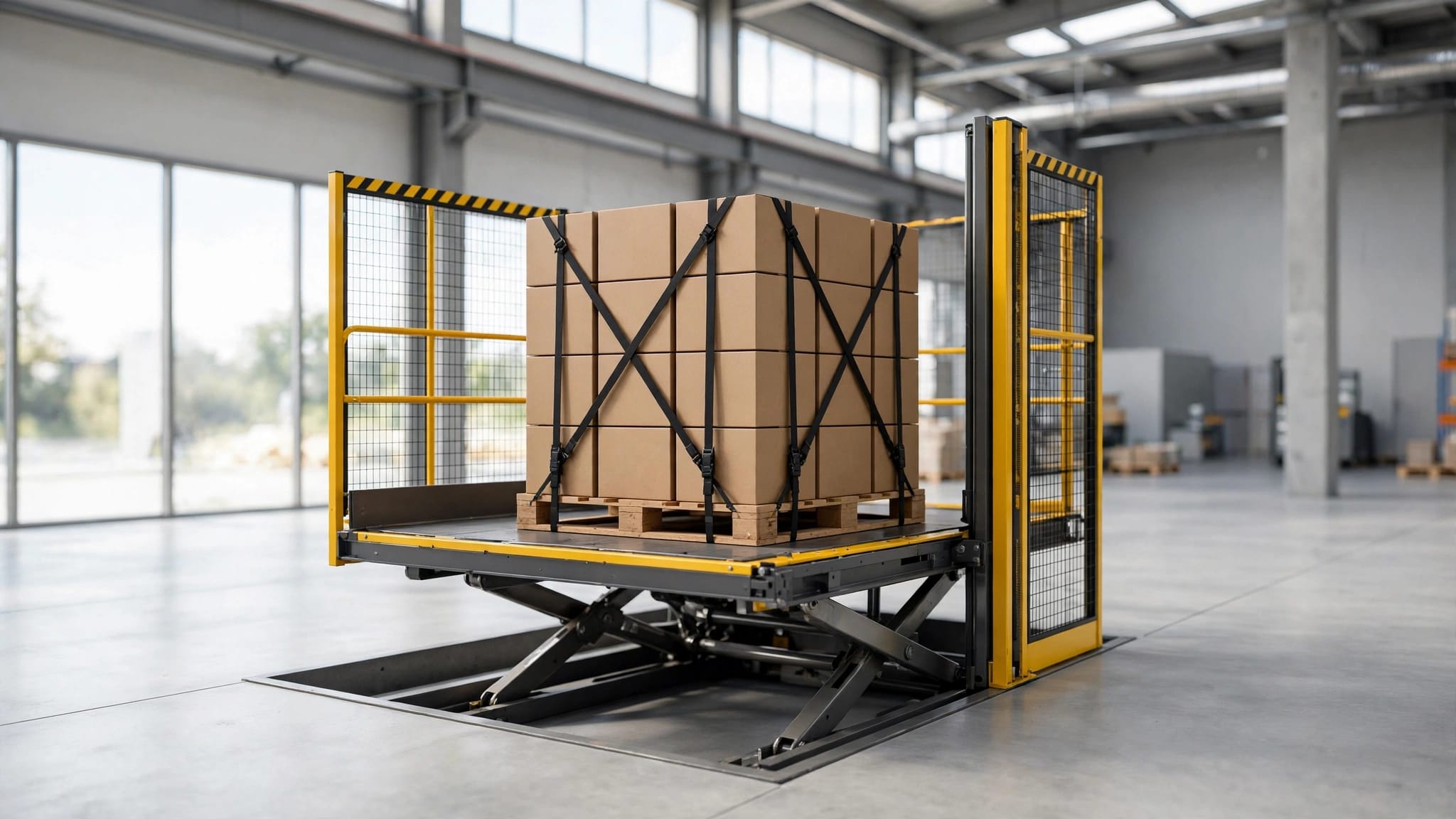
Safe cargo lift load centering means placing the load's center of gravity within the lift's permitted loading area and keeping the cargo stable throughout travel. The total weight matters, but so do the position of heavy items and the way they rest on the platform. A box can l...
By Veranda 'Vator • October 31, 2026
Routine elevator service keeps equipment maintained, while a formal elevator inspection assesses it against applicable safety requirements. Both matter, but they answer different questions and produce different records. As an owner, you need to know which work your provider pe...
By Veranda 'Vator • October 30, 2026
Yes, a cargo lift can carry a pallet jack and loaded pallet when its rated capacity, usable platform dimensions, and loading design accommodate both. The total includes the goods, pallet, pallet jack, and anything else traveling on the platform. However, weight capacity alone...
By Veranda 'Vator • October 29, 2026
Adding a stop to an existing residential elevator may be feasible when the equipment and building can accommodate the change. The answer depends on the elevator's design, available shaft space, structural conditions, controls, and applicable code requirements. An additional la...
By Veranda 'Vator • October 28, 2026
A residential elevator can fit a medical stretcher if its doorway, cabin, and approach accommodate that stretcher's actual dimensions. However, there's no single universal "standard stretcher" size, and physical fit alone doesn't establish safe patient transport. For your home...
By Veranda 'Vator • October 27, 2026
A residential elevator's speed depends on the model, and its listed travel speed doesn't tell you the complete ride time. Starting, stopping, leveling, and operating the doors all contribute to a one-floor trip. For you, the useful distinction is between time in motion and the...
By Veranda 'Vator • October 26, 2026
Yes, a residential elevator can be installed in some manufactured homes, but feasibility depends on the structure, foundation, available space, elevator type, and local requirements. Not every home can support the installation , even when there appears to be room. For a raised...

By Veranda 'Vator • October 25, 2026
Braille and tactile labels aren't automatically required on every residential elevator in the United States. Residential elevator Braille requirements depend on the building's use, the equipment classification, and the applicable federal, state, and local rules. An elevator se...

By Veranda 'Vator • October 24, 2026
An outdoor elevator can increase a home's resale value, but there's no dependable percentage you can apply to every property. Its strongest selling point is usable access , especially when stairs separate the driveway from the main living space. For homeowners, the financial q...
Show More