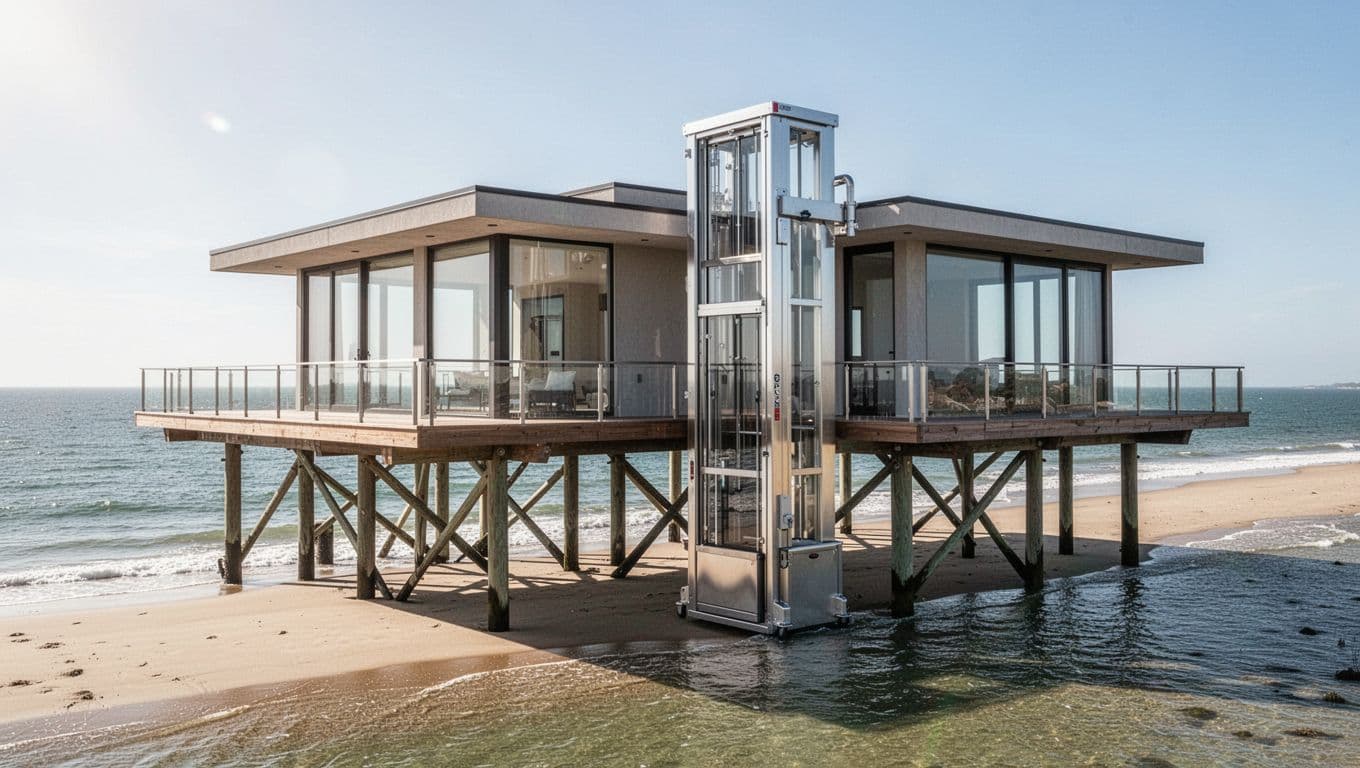
A raised beach house can offer views, airflow, and protection from storm surge, but every trip upstairs adds work. A practical outdoor elevator vs stair lift comparison starts with how you use the home, not with the equipment brochure.
A stair lift can make an existing staircase easier for a seated passenger. An outdoor elevator, vertical platform lift, or properly designed exterior lift can handle wheelchairs, mobility devices, groceries, luggage, and household supplies between multiple levels. Your property layout, coastal exposure, local code, and accessibility needs will determine which option fits.
Key Takeaways
- A stair lift is usually the simpler choice for one seated passenger using an existing staircase.
- An outdoor elevator or vertical platform lift offers better access for wheelchairs, walkers, scooters, groceries, and bulky items.
- Coastal installations need protection against salt air, wind, rain, corrosion, flooding, and power interruptions.
- Local building codes, floodplain rules, permits, and wind-load requirements affect design and installation.
- The right choice depends on the home's height, staircase layout, passenger needs, cargo needs, and long-term plans.
Why Raised Coastal Homes Need More Than Stairs
Stairs can work well when everyone in the household is mobile and the home carries little equipment between floors. Raised coastal homes often create a different daily routine. Owners move coolers, beach chairs, groceries, luggage, laundry, tools, grills, and maintenance supplies through the same stairways used by family and guests.
That traffic becomes harder after an injury or surgery. It can also limit how people use the home as they age. A person who can walk on level ground may still struggle with steep exterior stairs, wet treads, poor lighting, or several flights between a parking area and the main living floor.
The problem grows when the lowest level contains storage, an outdoor kitchen, a garage, or an entry point. Carrying a load while climbing stairs reduces visibility and balance. A wheelchair or large mobility scooter may not fit on the stairs at all.
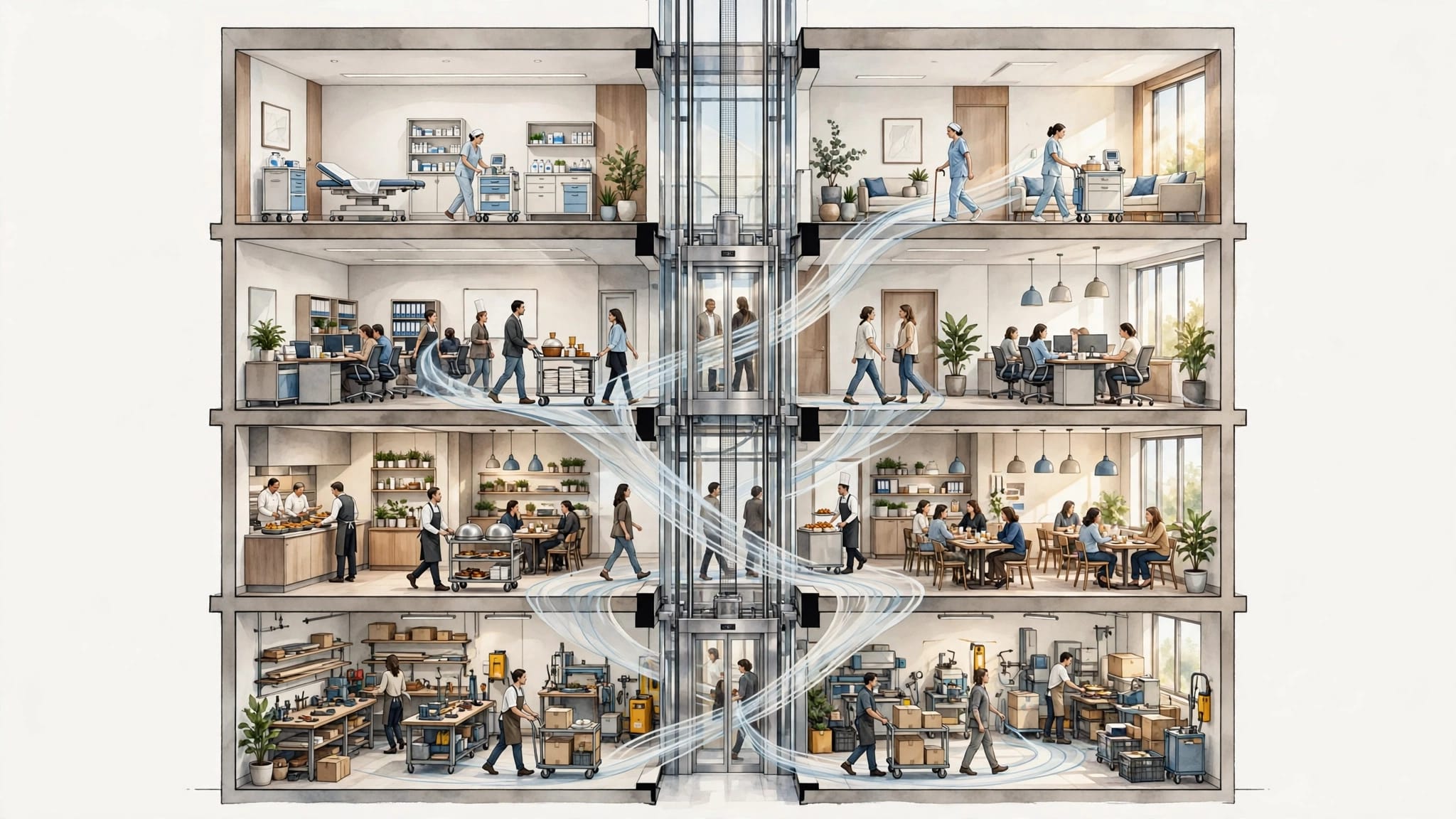
An exterior lift can connect the ground, parking, deck, and living levels without forcing every trip through the staircase. However, the lift must match the purpose. A cargo lift designed for goods isn't automatically approved for passengers. A passenger elevator or vertical platform lift requires the right design, safety features, and approvals for people.
Homeowners should also consider how often they visit. A seasonal beach house may need reliable movement of luggage and supplies during short stays. A full-time residence may place greater emphasis on wheelchair access, independent entry, and dependable use during changing weather.
Outdoor Elevator vs Stair Lift: What Each Option Does
The clearest outdoor elevator vs stair lift distinction is the path each system uses.
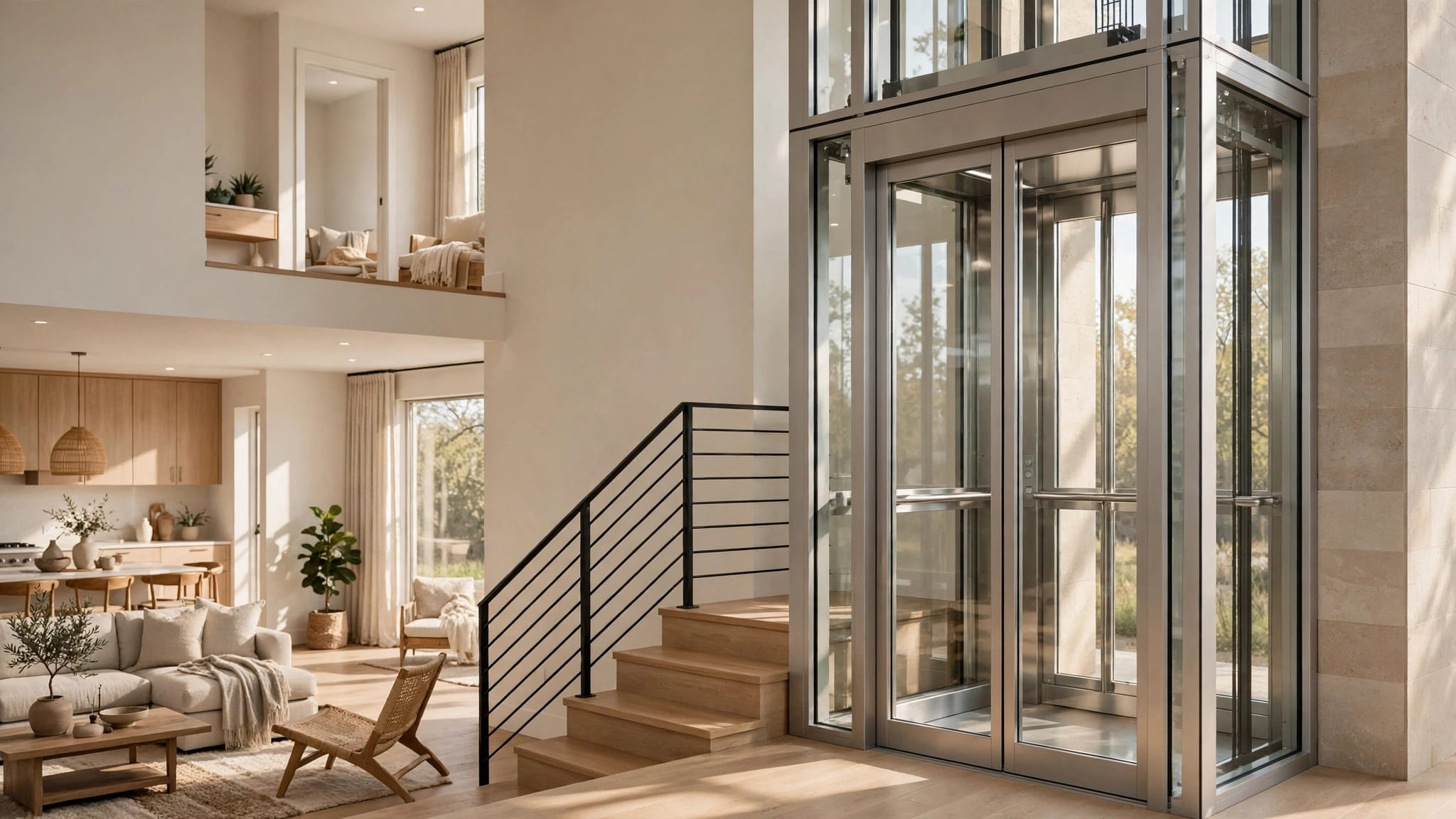
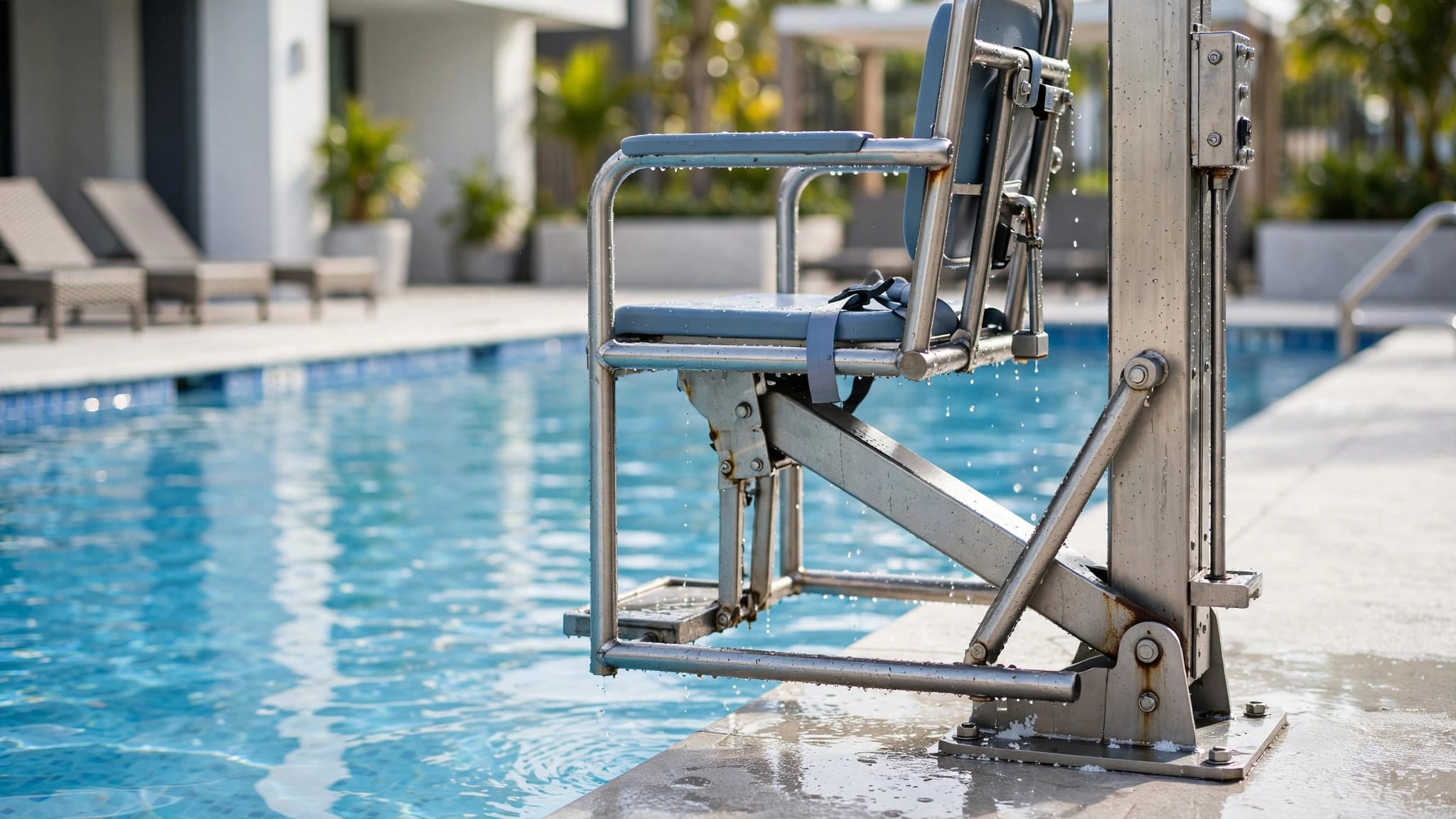
A stair lift follows the staircase. It has a rail mounted along the steps or wall, a motorized chair, a seat belt, and controls. The user transfers onto the seat, rides between landings, and transfers off at the destination. Outdoor-rated models are available, but the equipment must match the exposure and staircase conditions.
A stair lift usually works best when:
- The staircase already connects the levels you need.
- The passenger can transfer safely into a seated position.
- One person rides at a time.
- Wheelchairs, scooters, and large cargo don't need to travel with the passenger.
- The home has enough landing space for safe transfers.
Straight staircases often allow a simpler installation than curved or multi-landing stairs. A curved system may require custom rail work and careful measurements around turns, intermediate landings, and doorways. In both cases, the staircase remains the route for everyone else.
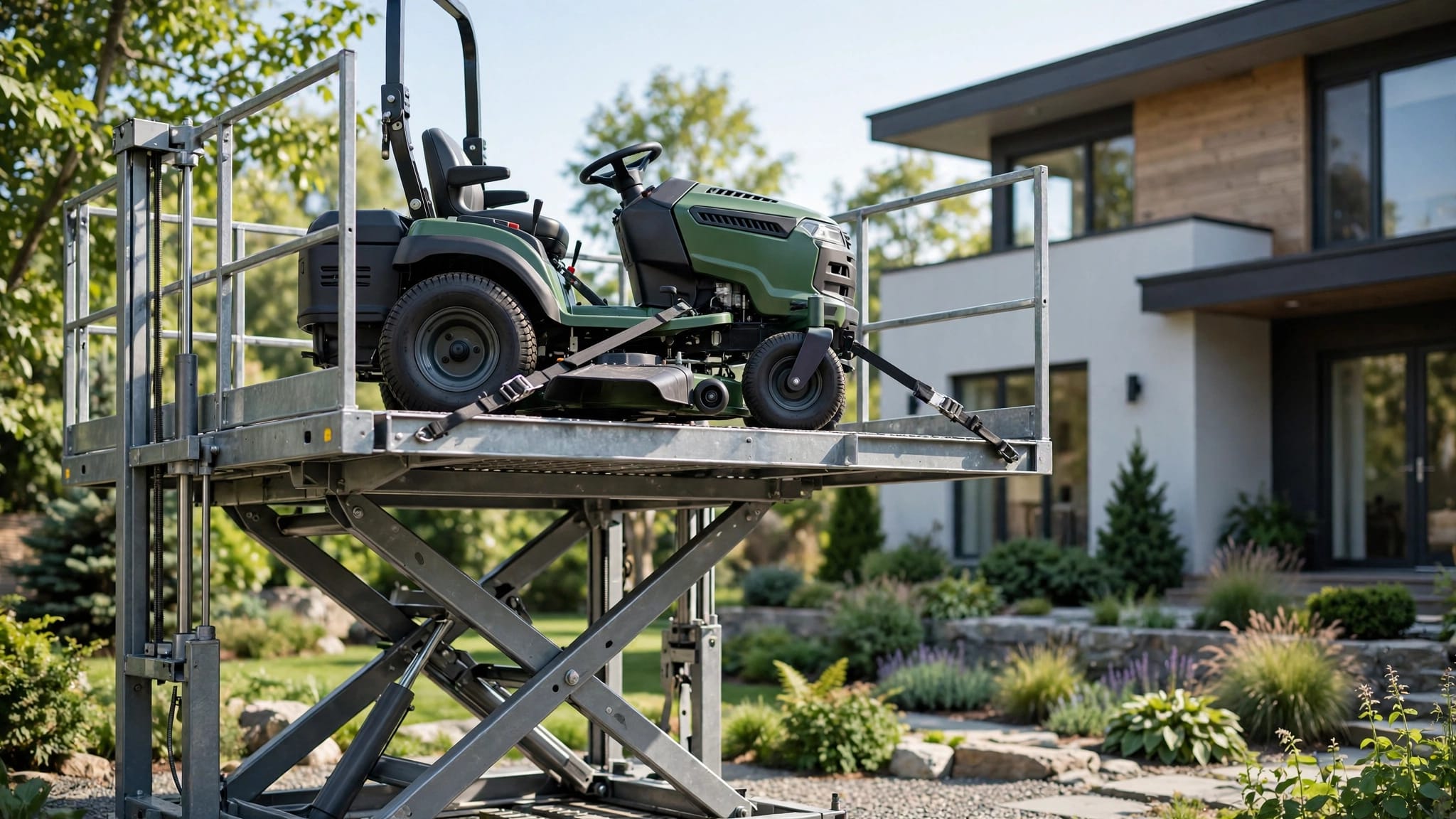
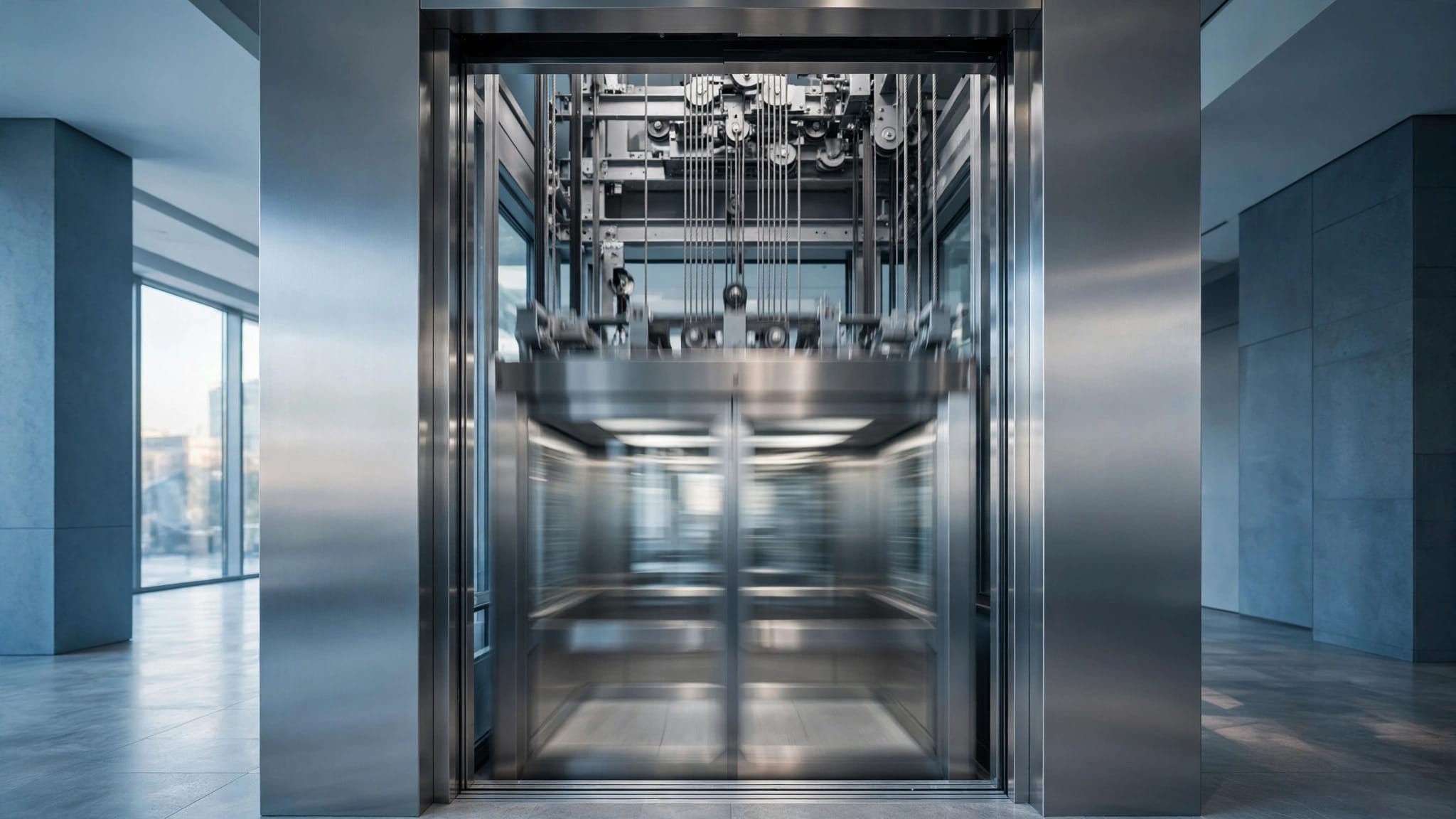
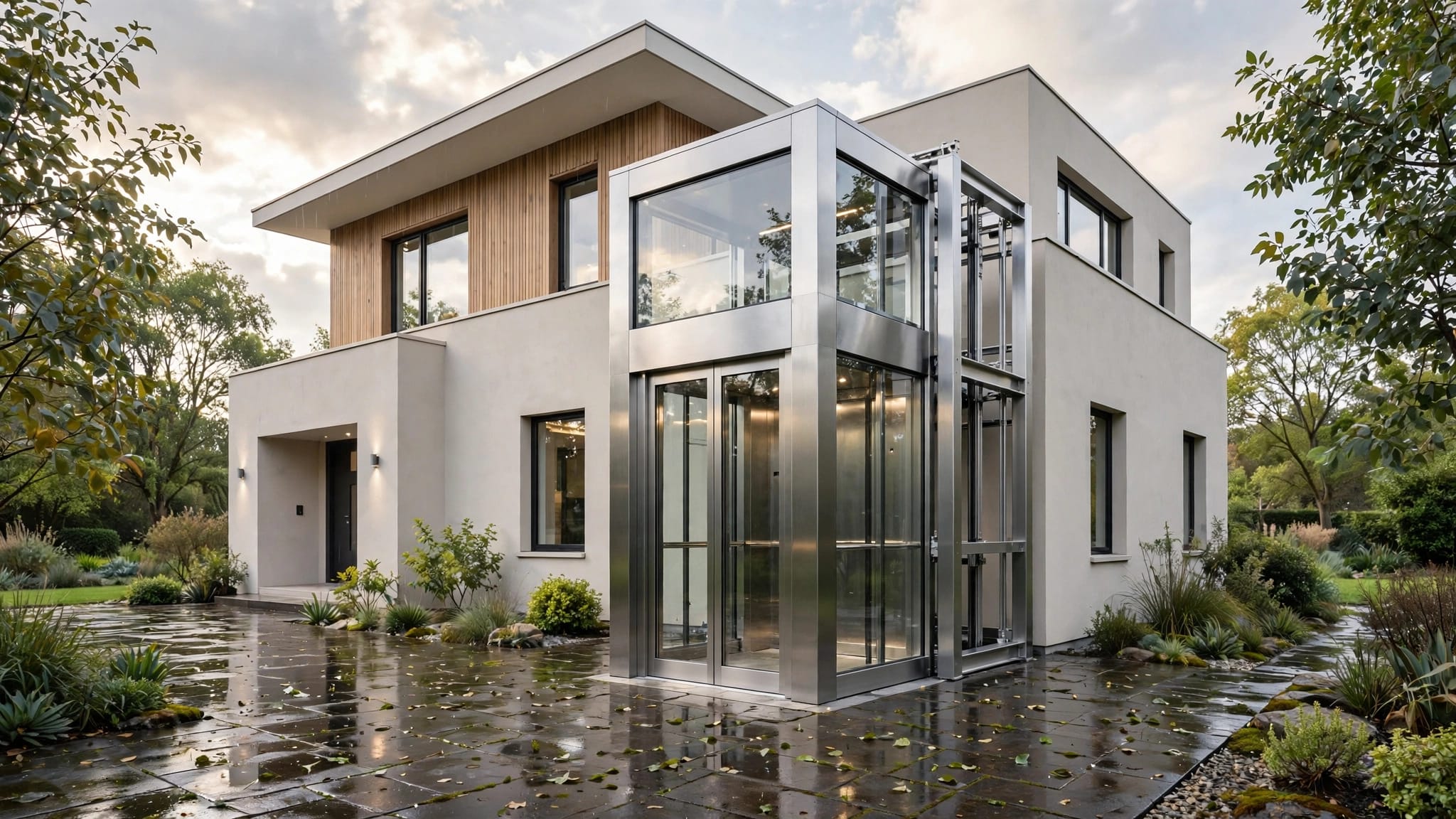
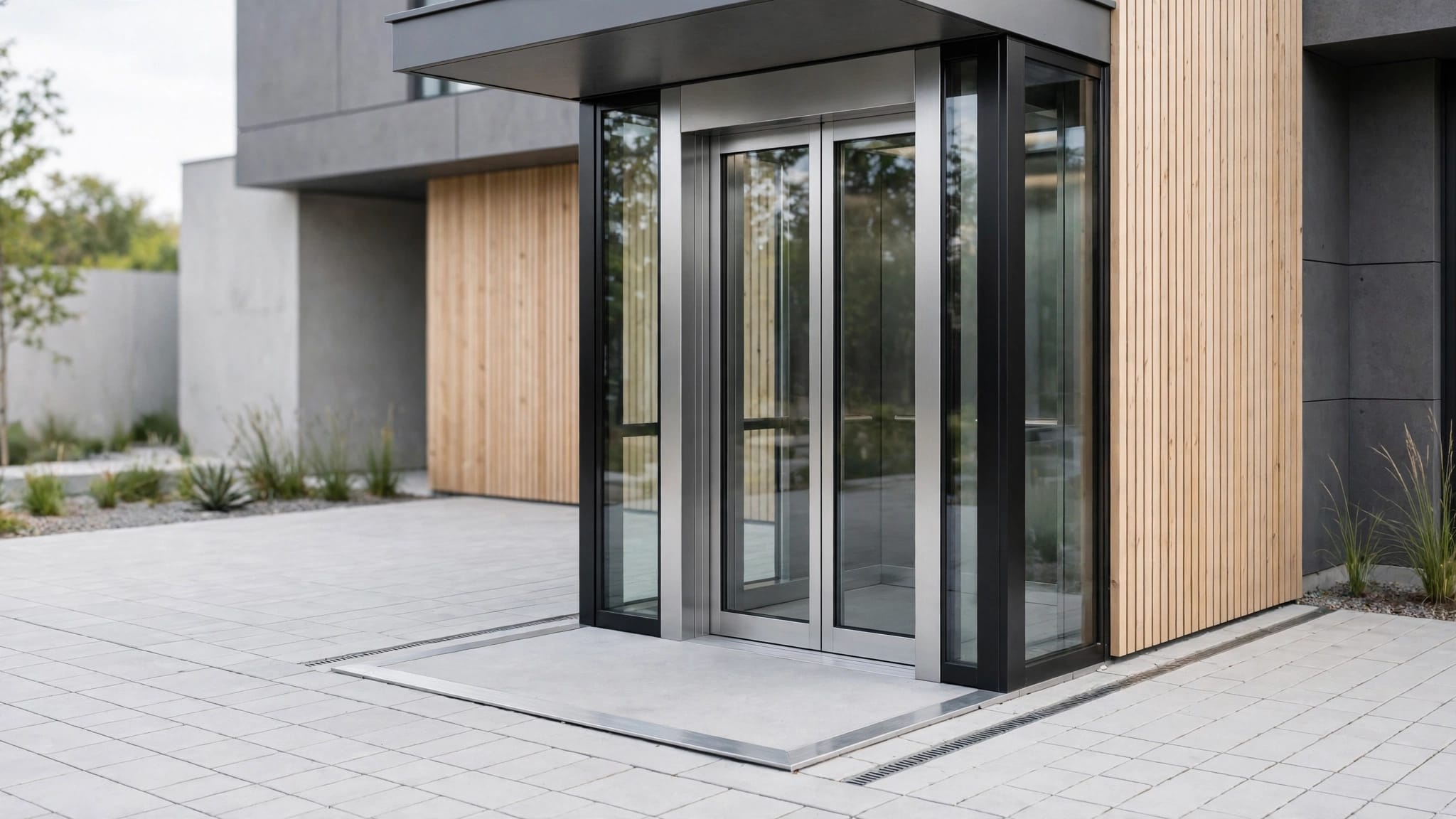
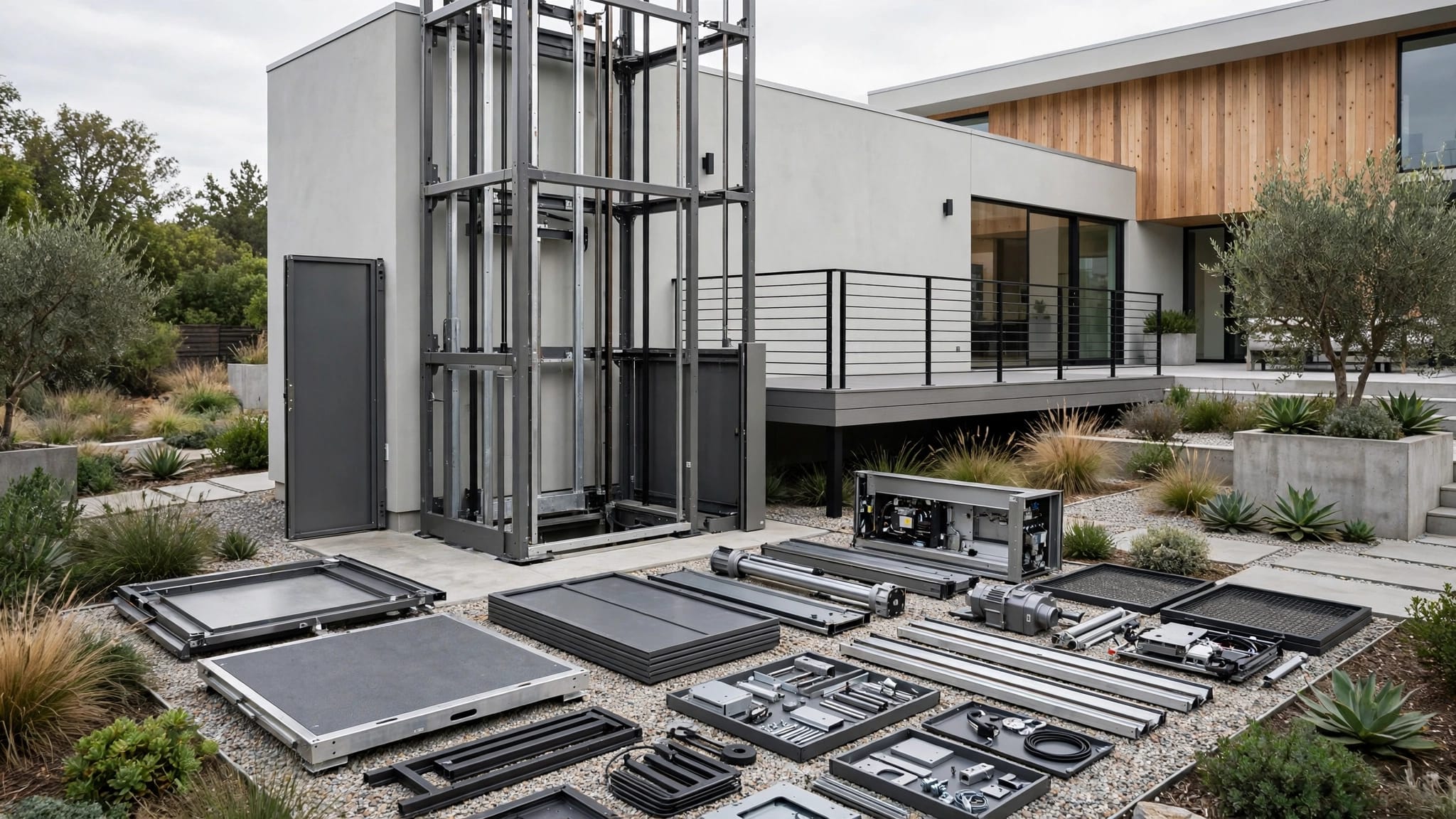
An outdoor elevator moves vertically through a dedicated shaft, tower, enclosure, or lift structure. Depending on the design, it may carry a seated passenger, standing passenger, wheelchair, mobility scooter, groceries, or household goods. A vertical platform lift can provide wheelchair access without the full enclosure and cab arrangement associated with a conventional home elevator.
The equipment must have a suitable platform, gates, controls, braking system, safety interlocks, and rated capacity. Some exterior lift systems use multiple cables and safety gates. Residential products may have rated capacities in the 750- to 1,000-pound range, but the actual limit depends on the selected model and configuration.
A cargo lift belongs in a separate category. It can move supplies and equipment, but passenger use requires a system designed and approved for that purpose. Review the difference between a cargo lift and passenger elevator before treating a goods lift as an accessibility solution.
Comparing Daily Access, Capacity, and Convenience
The best choice becomes easier when you compare the tasks each system must perform. A seated ride up the stairs is a different job from moving a wheelchair and a week of groceries to the main floor.
| Consideration | Outdoor stair lift | Outdoor elevator or VPL |
|---|---|---|
| Main route | Follows an existing staircase | Travels vertically between landings |
| Passenger position | Seated | Standing, seated, or in a wheelchair, depending on design |
| Wheelchair access | Usually requires a transfer | Often supports direct platform access |
| Mobility scooters | Usually unsuitable | May fit when platform size and capacity allow |
| Groceries and luggage | Limited to what a passenger can carry | Better suited to bulky loads when rated for them |
| Multiple levels | Requires a rail route on each staircase | Can connect planned landings and levels |
| Stair use | Keeps the stairs necessary | Can reduce reliance on stairs |
| Installation | May use existing stair geometry | Needs structural planning, landings, and lift space |
| Coastal exposure | Requires outdoor-rated components | Requires outdoor-rated structure and equipment |
| Passenger approval | Depends on model and local requirements | Depends on lift type, design, and local approval |
A stair lift takes up less floor area in many homes, although the chair and rail still affect the staircase. Fold-up seats and footrests can preserve some walking space. Narrow stairs may remain difficult for other users, especially when the lift is parked near a landing.
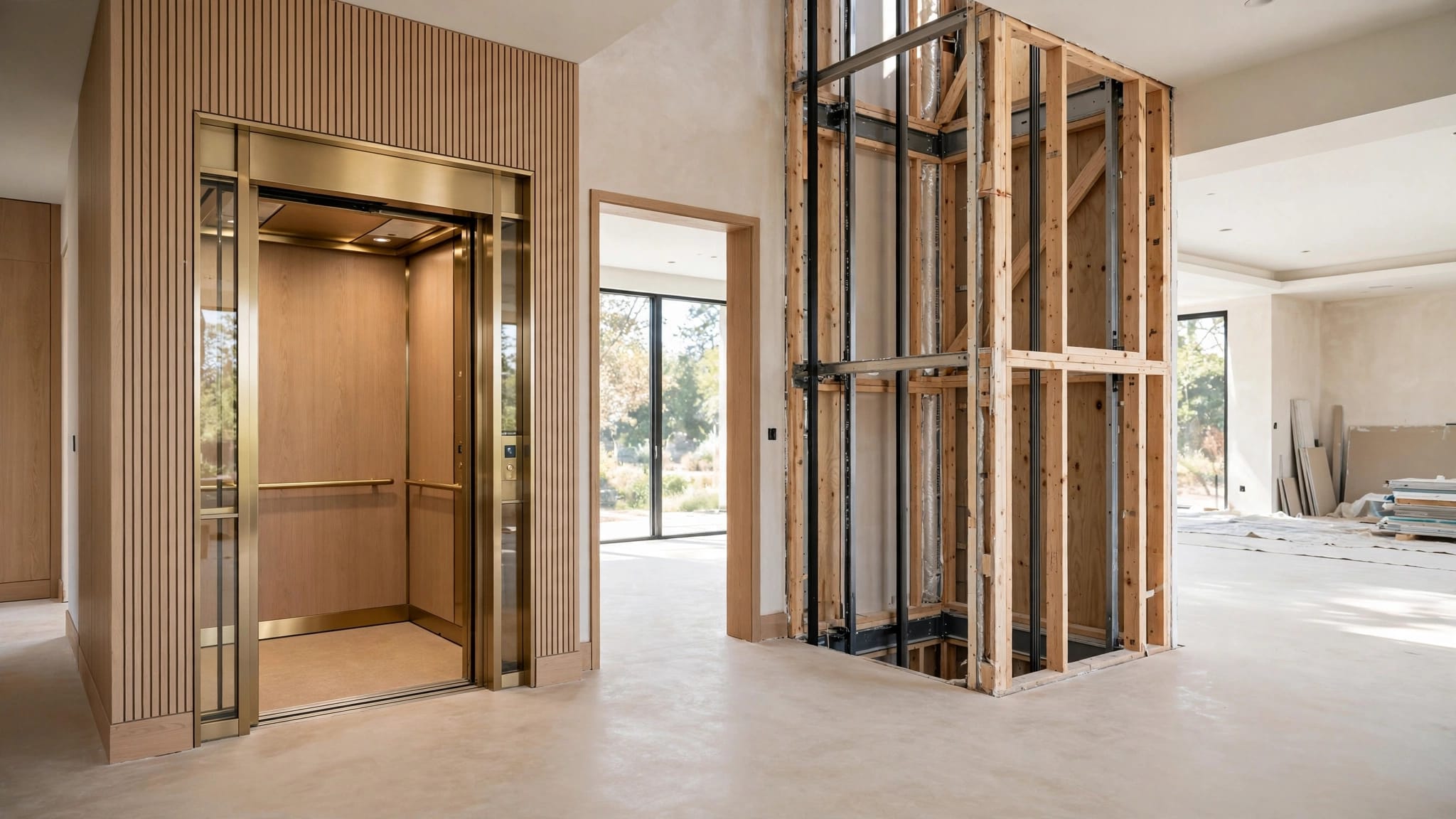
An elevator or VPL needs a clear vertical route. That route may require openings in decks, structural reinforcement, new landings, or changes to railings. The tradeoff is greater flexibility after installation. A user may enter with a wheelchair, bring a rolling cart, or carry items without balancing on steps.
The capacity question also needs care. A lift rated for people isn't automatically a cargo lift, and a cargo lift isn't automatically suitable for passengers. Match the equipment to the intended load, then account for the weight of the user, wheelchair, groceries, and any container or cart.
Coastal Conditions Change the Design Requirements
Salt air can corrode exposed metal, fasteners, electrical connections, and moving parts. Wind-driven rain can reach areas that remain dry in inland settings. Sand can collect around tracks, thresholds, pulleys, and door hardware. A coastal lift needs materials and finishes selected for its exposure, not an indoor system placed outside.
Ask how the manufacturer addresses:
- Corrosion resistance for the frame, fasteners, cables, gates, and hardware.
- Protection for motors, controls, switches, and electrical enclosures.
- Drainage around the base, platform, shaft, and landing areas.
- Wind loads at the building, tower, enclosure, and attachment points.
- Maintenance access after storms or long periods of nonuse.
- Safe shutdown, securing, or storage during severe weather.
- Operation after a power interruption.
Marine-grade construction can reduce corrosion risks, but it doesn't remove the need for inspection. Rinse salt residue when the manufacturer permits it. Keep drainage paths clear, check fasteners for corrosion, and follow the service schedule for cables, brakes, gates, and controls.
The lift's location matters just as much as its materials. A platform exposed to direct ocean spray may need a different enclosure or finish than one installed behind a screened porch. A lower landing may face standing water, storm debris, or flood exposure.
A coastal lift should be designed around the site's wind, flood, and salt exposure before anyone selects the platform size or finish.
Local rules can affect the structure and the lift itself. Floodplain requirements may limit equipment placement or require the lowest components to sit above a required elevation. Wind-load calculations may affect anchoring, tower design, enclosure panels, and connections to the home. Electrical work may need weather-resistant equipment and a permitted installation.
The authority having jurisdiction, often the local building department, decides which permits and inspections apply. A manufacturer, architect, engineer, or qualified contractor can help identify the requirements, but the local jurisdiction controls approval.
Cost Depends on the Whole Project
A stair lift and an outdoor elevator may have very different project costs, but universal price comparisons can mislead. The final scope depends on the equipment, distance, structure, site access, electrical work, permits, and coastal requirements.
For a stair lift, cost factors include the rail configuration, straight or curved layout, outdoor rating, landing changes, electrical connection, and any weather protection. A multi-level stairway may need more than one lift or a design that serves each run. The condition and width of the existing staircase can also affect installation.
An outdoor elevator or VPL may include the lift assembly, tower or shaft, platform, landing gates, structural supports, deck modifications, electrical service, drainage, enclosure, engineering, permits, and inspections. The distance between levels and the number of stops affect the design. Difficult access for construction equipment can add labor.
Coastal requirements may add material and engineering costs. So can a site in a high-wind area, a flood zone, or a location with strict architectural review. A lift installed during new construction may integrate more easily than one added to a finished beach house, although an existing home can still support an exterior solution after a proper site review.
Request a written proposal that separates:
- Equipment and rated capacity.
- Number of stops and travel height.
- Structural work and deck modifications.
- Electrical work and backup provisions.
- Engineering, permits, inspections, and site preparation.
- Enclosures, gates, weather protection, and finishes.
- Delivery, installation, commissioning, and training.
- Warranty coverage and routine service.
Compare the scope, not only the equipment price. A lower quote may exclude structural work, permit handling, corrosion-resistant upgrades, or landing modifications that another proposal includes.
Which Option Fits Your Coastal Home?
A stair lift may fit when the main issue is climbing an existing staircase. It can help a resident who walks with difficulty but can transfer to a seat. It may also suit a home where wheelchair access isn't required and the staircase connects the right entry and living levels.
Choose this route only after checking the staircase in real use. Measure its width, inspect the landings, identify door swings, and consider whether other family members can pass safely while the chair is parked or moving. Outdoor exposure also calls for a model rated for exterior conditions.
An outdoor elevator or VPL is usually a stronger fit when the home needs direct platform access. That includes wheelchair users, people who rely on walkers or scooters, and households that move large loads every day. It can also help when the main living floor is several levels above parking or the lower deck.
A vertical platform lift may fit a shorter travel distance and an open-platform application. A more enclosed passenger elevator may offer greater weather protection or a cab arrangement that suits multiple floors. A cargo lift may handle beach gear, tools, coolers, or supplies when passengers use a separate approved access system.
The most useful decision questions are practical:
- Can every intended user transfer safely to a stair-lift seat?
- Will a wheelchair or mobility scooter need to travel between levels?
- How much space do groceries, luggage, tools, or beach equipment require?
- Does the home have one staircase, several stair runs, or disconnected levels?
- Where can the lift land without blocking doors, decks, parking, or emergency paths?
- Will the system remain useful if the household's mobility needs change?
Plan for the next several years, not only today's routine. A stair lift may solve a present transfer problem, while a platform lift may provide broader access as needs change. The right answer still depends on the site and the approved equipment.
Safety, Operation, and Maintenance Matter After Installation
A lift is only useful when people can operate it safely in ordinary weather and after periods of disuse. Everyone who uses the system should know the weight limit, gate procedure, emergency controls, and storm instructions. Children and guests need clear rules about riding, loading, and keeping hands away from moving parts.
Stair lifts require attention to the rail, seat, belt, swivel mechanism, footrest sensors, controls, and outdoor cover. Keep the track clear of sand, storage items, hoses, and loose debris. A wet or slippery transfer area can create more risk than the ride itself.
Outdoor elevators and VPLs require checks of platforms, gates, interlocks, cables, pulleys, brakes, guide components, controls, and structural connections. The inspection schedule should reflect the manufacturer's requirements and the home's exposure. Properties near open water may need more frequent cleaning and corrosion checks than protected inland sites.
Power outages deserve a written plan. Ask whether the system has a battery lowering feature, manual release, emergency lighting, or another approved method for reaching a landing. Don't assume a portable generator can connect safely. Any backup power arrangement should follow the manufacturer's instructions and local electrical requirements.
Before signing off on the installation, ask the installer to demonstrate normal use, emergency stopping, gate operation, loading limits, and storm preparation. Keep manuals and service records where household members can find them. Report unusual noise, vibration, corrosion, slow travel, or gate problems before continued use.
Questions to Ask Before Choosing a Lift
A good site assessment should address the building, the user, and the environment together. Bring these questions to the manufacturer, installer, architect, engineer, or local building official:
- Is the proposed equipment approved for outdoor passenger use, cargo use, or both?
- What platform, seat, cab, or gate dimensions will the intended user need?
- What is the rated capacity after accounting for a wheelchair, scooter, cart, or cargo?
- What wind-load criteria apply at this property?
- How will floodplain rules affect the lowest landing, controls, motor, and electrical equipment?
- Which materials and finishes are suitable for salt-air exposure?
- What structural changes will the deck, stairs, roof, or foundation require?
- Which party handles engineering, permits, inspections, and coordination with the local authority?
- What happens during a power outage or an approaching storm?
- Which maintenance tasks belong to the homeowner, and which require a technician?
- How will parts and service be handled if the lift is used seasonally?
- What warranty terms apply to the structure, motor, controls, cables, and corrosion?
Ask for drawings that show every landing and approach. A lift can have adequate capacity yet remain inconvenient if a wheelchair user must make a tight turn, cross an uneven threshold, or approach through a door that opens into the platform.
Conclusion
The best outdoor elevator vs stair lift decision starts with the people and loads the home must serve. A stair lift can provide seated access along an existing staircase, while an outdoor elevator or VPL can offer a more flexible route for wheelchairs, mobility devices, groceries, luggage, and multiple levels.
Coastal exposure adds another layer. Salt air, wind, rain, flooding, power outages, and local permitting all belong in the design conversation. When the lift matches the home's structure, the user's needs, and the jurisdiction's requirements, raised living spaces become easier to use without treating the stairs as the only route upstairs.
Recent Posts