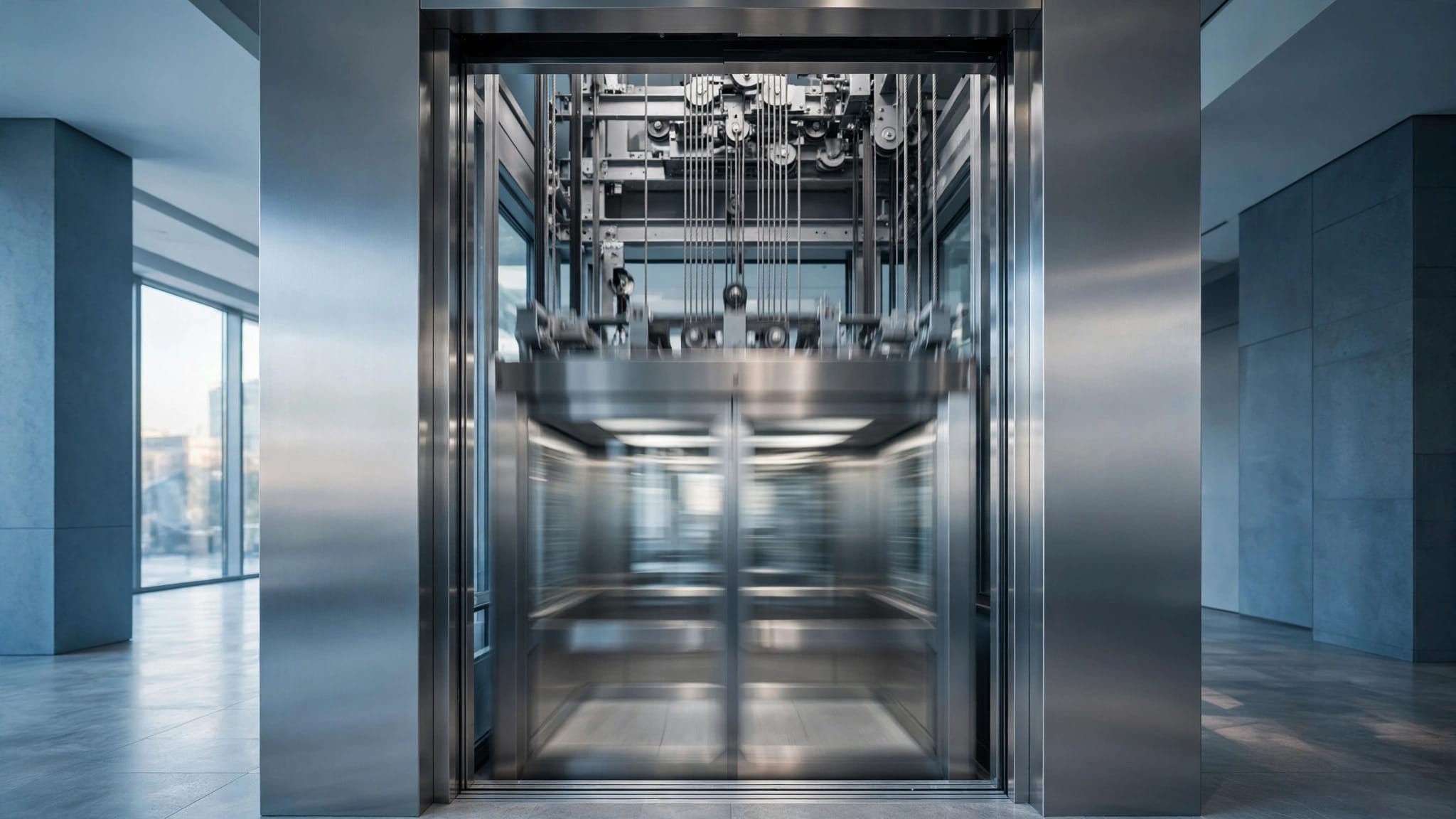
A dark landing can turn a simple elevator trip into a fall risk. Good outdoor elevator lighting helps users see thresholds, gates, controls, stairs, and changes in surface height before they step into the lift.
Exterior elevators, cargo lifts, and vertical platform lifts face more than low visibility. Rain, salt air, insects, glare, and power interruptions can affect safe use. A layered plan, correctly placed fixtures, and regular maintenance keep nighttime access practical for homes and commercial properties.
Key Takeaways
- Use several lighting layers instead of relying on one bright fixture.
- Light the landing, threshold, controls, shaft, stairs, and approach path.
- Select wet-location, corrosion-resistant fixtures rated for the local climate.
- Keep glare away from the operator's view and avoid lights that shine into nearby homes.
- Have a qualified electrician and elevator professional review installation and compliance decisions.
Why Outdoor Elevator Lighting Matters
Outdoor lifts often connect ground-level parking, a dock, a pool deck, a porch, or a raised entry. These spaces can become difficult to read after sunset, especially when the surrounding property has uneven paving, landscaping, or open edges.
Users need to identify more than the lift itself. They must see where to stand, where the platform ends, whether a gate is closed, and whether an object is blocking the landing. A narrow beam aimed at the elevator may leave the most important walking surfaces in shadow.
Lighting also supports safe operation for people carrying groceries, tools, luggage, or equipment. Cargo lift users may arrive with both hands occupied. A well-lit landing reduces the need to search for a switch or balance while handling a load. For passenger elevators and VPLs, clear visibility helps children, older adults, and wheelchair users approach the controls with greater confidence.
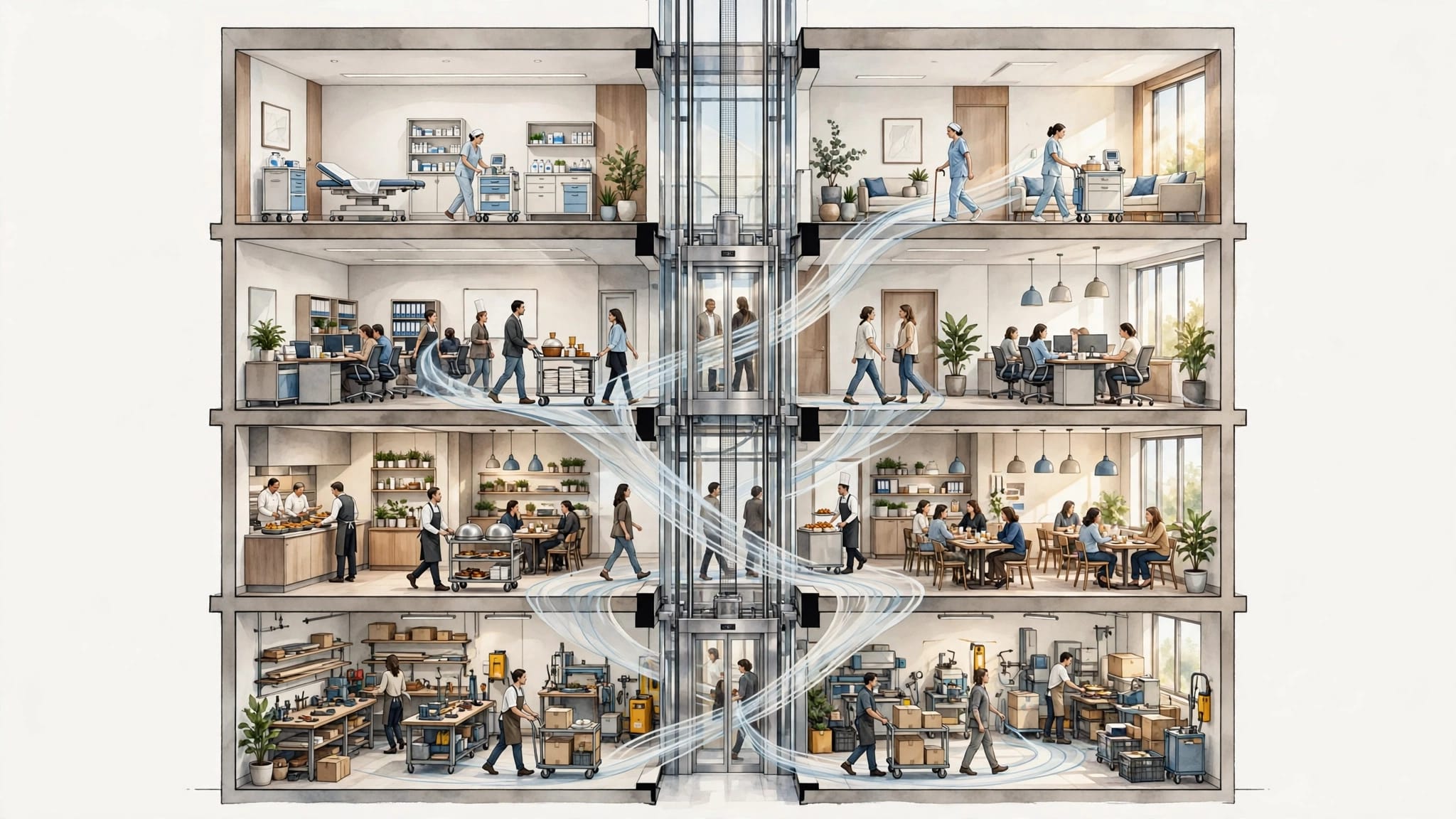
The lift's role affects the lighting plan. A cargo lift designed for goods shouldn't be treated as a passenger elevator, even if both systems serve multiple levels. Review the differences before choosing fixtures with this guide to cargo lift vs passenger elevator.
Night lighting also helps property owners spot problems sooner. A dark or flickering landing light may reveal water intrusion, loose wiring, damaged conduit, or a failing fixture. It doesn't replace an inspection, but it can make a developing issue easier to notice.
Create a Layered Outdoor Elevator Lighting Plan
A safe lighting plan uses overlapping layers. Each layer has a separate job, so one failed lamp doesn't leave the entire access route dark.
Approach lighting guides people toward the elevator. Use low-level path fixtures, wall lights, or existing porch lighting to show the route without creating a bright spot that ruins night vision. Keep fixtures outside the walking path and protect them from lawn equipment, carts, and moving vehicles.
Landing lighting should illuminate the floor, gate, and surrounding edge. Mount a shielded wall fixture near the landing or use a ceiling fixture under a porch. The light should reach the full standing area without shining directly into a user's eyes.
Threshold lighting makes the gap between the landing and platform easier to judge. Place light across the entry rather than behind the user. Avoid a fixture that creates a strong shadow at the sill, because shadows can hide a small object or change in elevation.
Control lighting helps users locate call buttons, switches, and operating controls. A small, low-glare fixture near the control station can work better than a high-output floodlight. Controls should remain readable without forcing users to stand in a harsh beam.
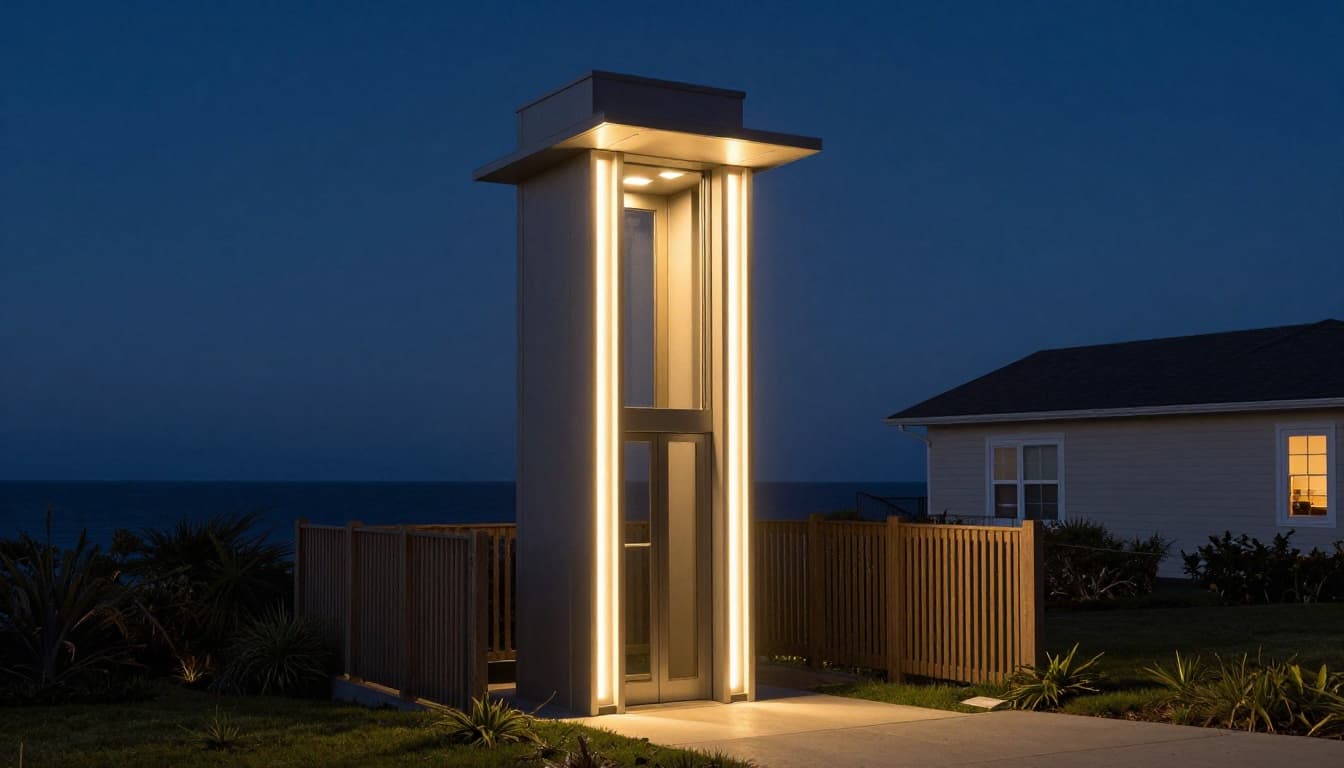
Vertical lighting outlines the lift shaft, rails, or support structure. It can help users see the elevator's position and make the equipment easier to identify from the property. Vertical fixtures should stay clear of moving components and service access areas.
Emergency and backup lighting supports access during a power interruption. The exact equipment depends on the property, lift system, and local requirements. An electrician can determine whether the lighting should connect to an emergency circuit, battery unit, generator, or another approved source.
A bright fixture at the top of a shaft can still leave the platform threshold dark. Measure visibility at the user's eye level and at the floor.
Place Fixtures Around the Landing, Shaft, and Route
Fixture placement matters as much as lumen output. Start by standing at each level after sunset. Look at the approach path, landing surface, controls, gate, and platform entrance from the user's position.
Place the main landing fixture to the side of the elevator opening, not directly behind the person entering. Side lighting reduces the user's shadow across the threshold. If a ceiling or soffit is available, use a shielded fixture that spreads light evenly across the floor.
For an open-sided lift, avoid mounting lights where the platform, gate, cable, or moving frame can strike them. The elevator professional should identify required clearances before an electrician installs conduit or junction boxes. A fixture that looks safely positioned may interfere with maintenance access or moving equipment.
Keep path lights low enough to prevent glare, but high enough to avoid damage from feet, carts, pets, and landscaping tools. Along stairs leading to a lift, illuminate the treads and landings rather than placing bright lights at eye level. Handrails, corners, and changes in direction deserve extra attention.
At upper landings, check how lighting interacts with railings and nearby walls. A fixture that casts a railing shadow across the walking surface can make the area harder to read. On coastal properties, mount hardware where wind-driven rain and salt spray have less direct exposure when the design allows.
Motion sensors can reduce energy use, but they shouldn't leave a user in darkness while the lift is moving or the gate is open. Set a long enough run time for a person using a wheelchair or carrying a heavy item. For busy commercial sites, dusk-to-dawn control or a scheduled lighting system may provide more reliable coverage.
Choose Fixtures for Weather, Glare, and Lift Type
Exterior fixtures need protection from rain, condensation, insects, and temperature changes. Select products listed for wet locations when they can receive direct weather exposure. The housing, lens, fasteners, and mounting hardware should also match the environment.
Coastal sites need special care. Salt air can corrode ordinary steel, plated hardware, and unprotected electrical connections. Corrosion-resistant materials, sealed housings, stainless fasteners, and compatible conduit fittings can extend service life. Ask the electrician and lift manufacturer which materials fit the installation rather than mixing metals without review.
LED fixtures are common because they use less energy and provide long service life. However, brightness alone doesn't create safe visibility. A high-output lamp can produce glare, deep shadows, and reflections on wet surfaces. Choose a broad, controlled distribution and aim the fixture toward the walking surface.
The right color temperature depends on the property and surrounding lighting. A warm or neutral white fixture often feels comfortable near a home, while a commercial site may need a consistent color across paths, landings, and loading areas. Uniformity matters more than choosing the bluest or brightest lamp.
The lift type also affects placement and protection needs.
| Lift type | Lighting priorities | Placement concerns |
|---|---|---|
| Cargo lift | Clear loading area, threshold, gate, and approach path | Protect fixtures from carts, boxes, and loading activity |
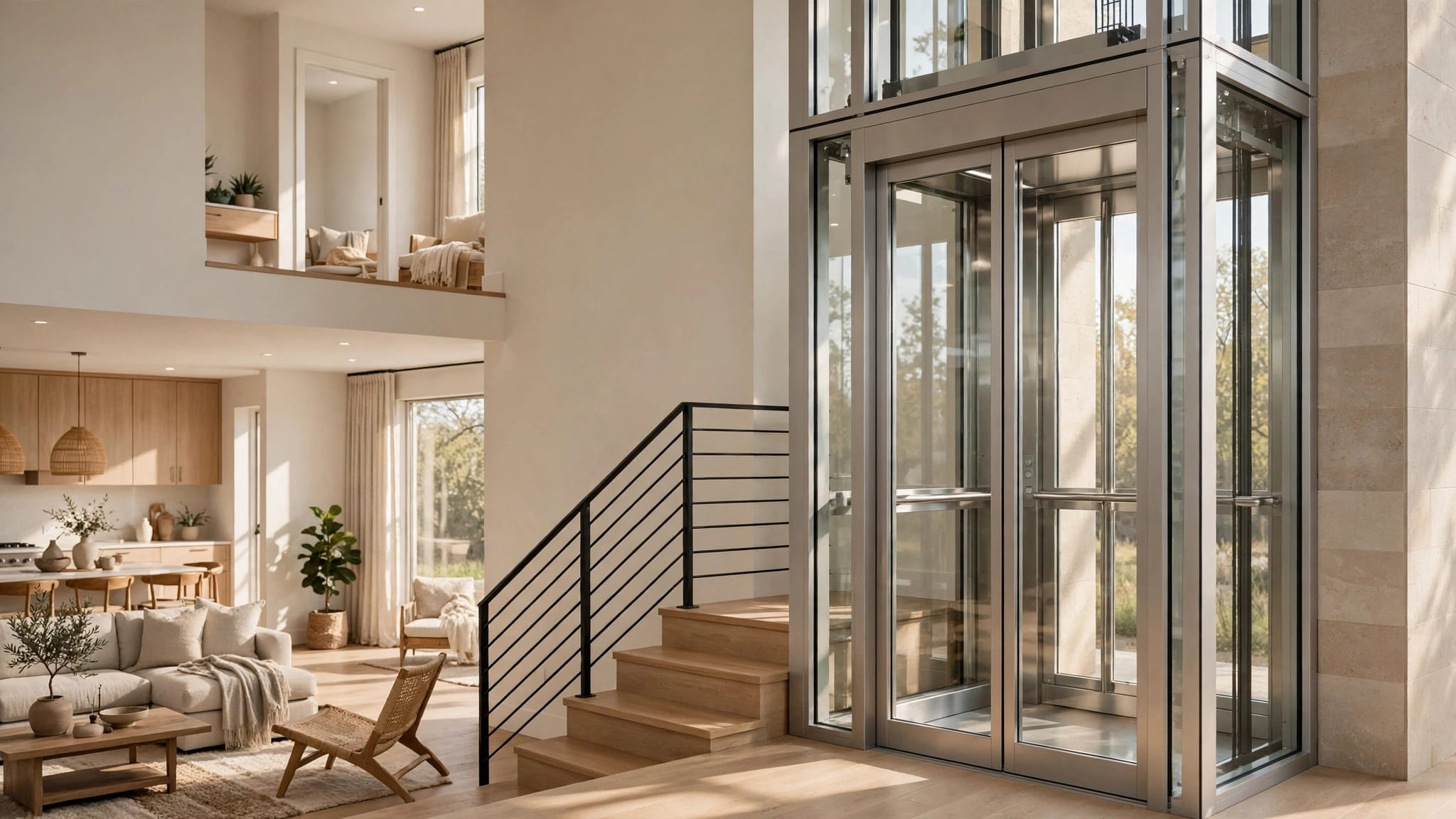
| Passenger elevator | Even landing light, controls, gate, and entry route | Avoid glare, shadows, and blocked service access |
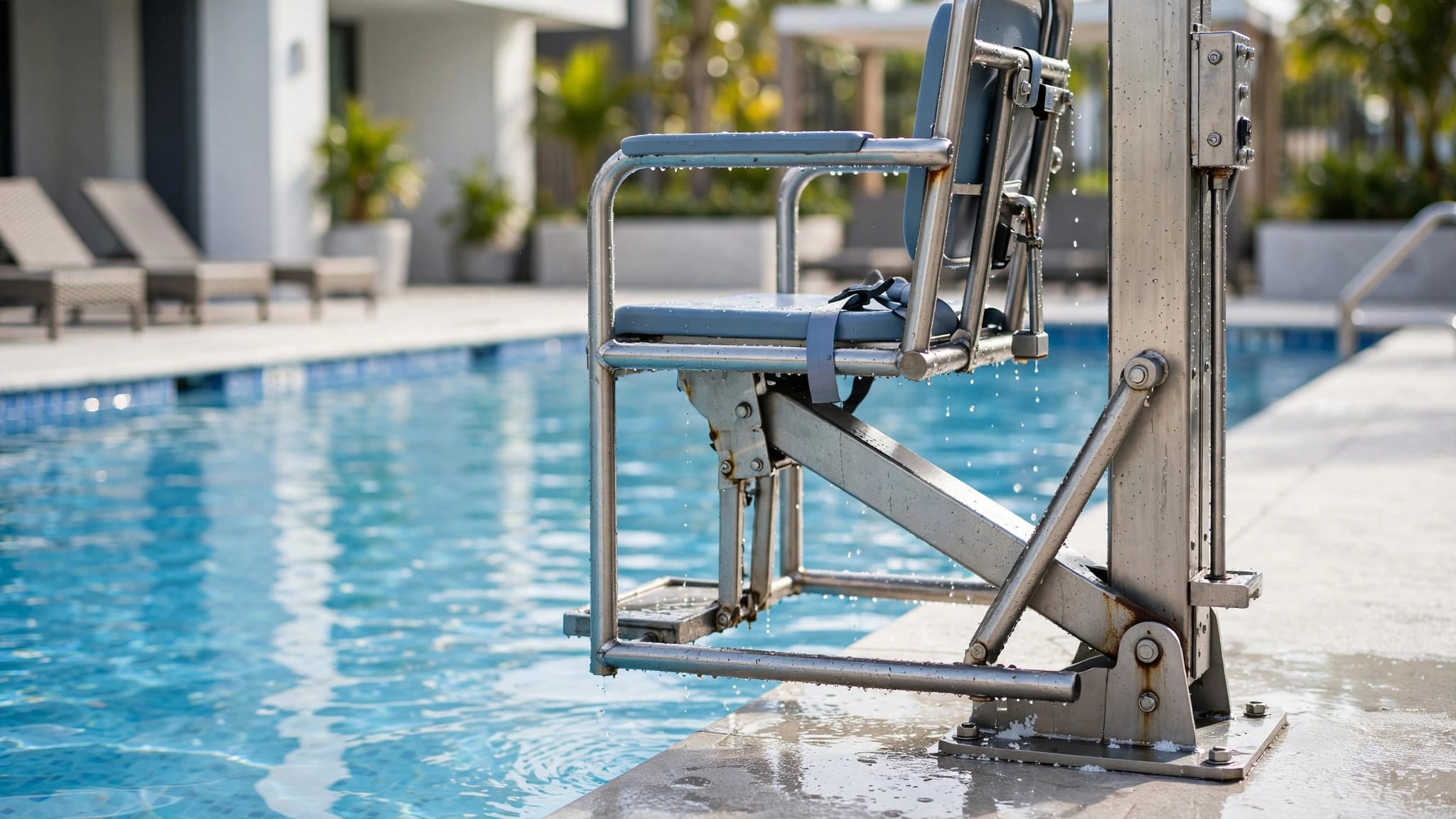
| Vertical platform lift | Platform edge, controls, stairs, and wheelchair approach | Keep the route clear and allow comfortable maneuvering |
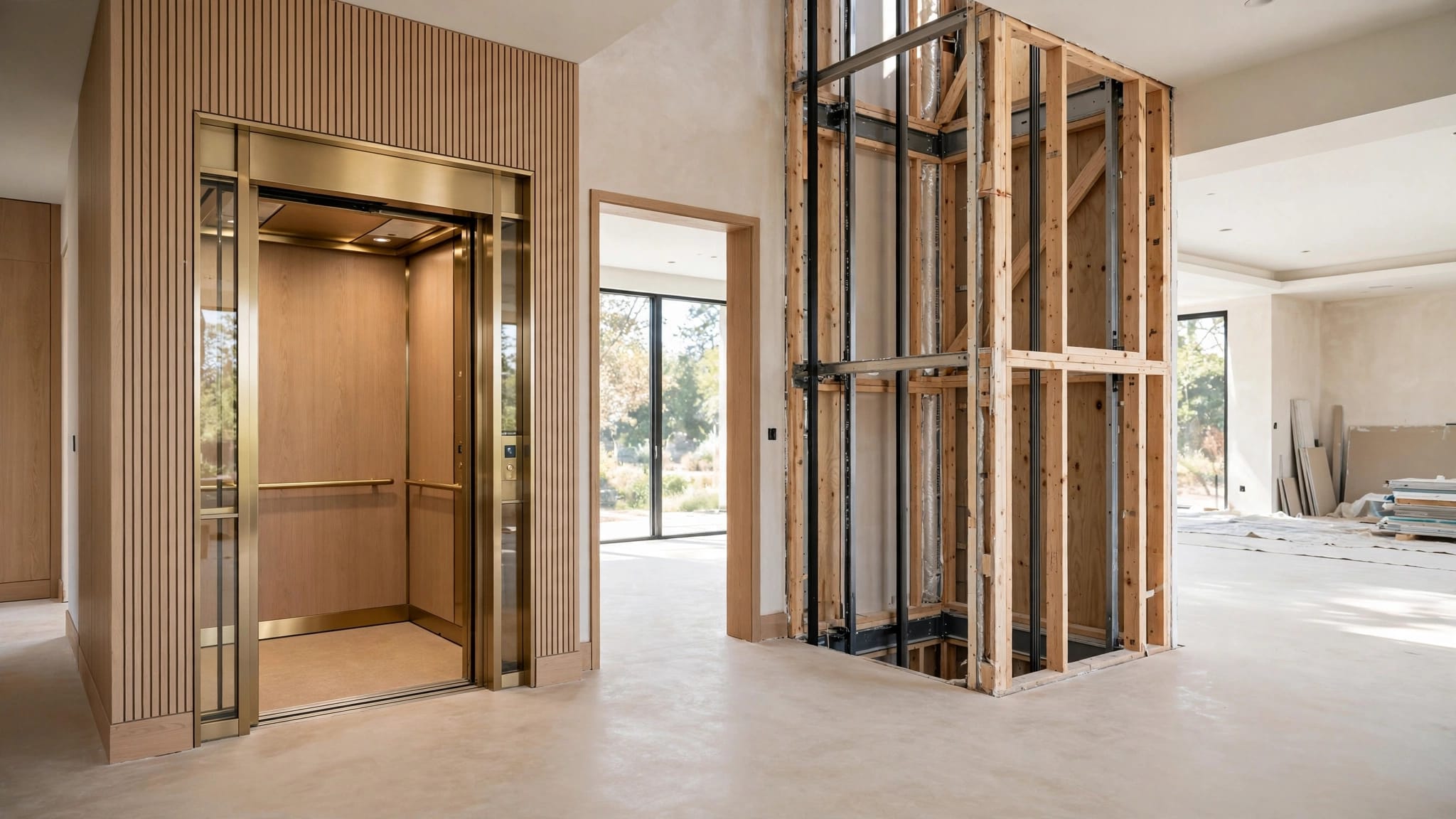
For owners retrofitting an outdoor lift, lighting should be part of the early design review. New conduit, disconnects, wall penetrations, landing changes, or concrete work may affect the project. Planning these items before installation can prevent exposed wiring and awkward fixture locations.
Coordinate Installation With Qualified Professionals
A qualified electrician should handle branch circuits, grounding, disconnects, conduit, junction boxes, weatherproof connections, and any required GFCI protection. Local electrical rules vary, especially for wet locations, accessory structures, emergency circuits, and commercial properties.
An elevator professional should review anything near the lift's moving parts, controls, gates, interlocks, shaft, rails, cables, and service areas. Lighting must not defeat a safety device or encourage users to operate the lift with a gate open. Never attach wiring or fixtures to a moving component unless the lift manufacturer specifically approves the arrangement.
Before work begins, confirm the fixture locations on an elevation drawing or site plan. Mark the path of electrical runs, the location of the disconnect, and access points for future maintenance. Ask who will replace lamps, clean lenses, test backup lighting, and respond to water damage.
A final nighttime walk-through should include the owner, electrician, and lift professional. Operate the elevator at every stop, open and close each gate, and inspect the threshold from both directions. Verify that the controls are easy to find and that no light creates dangerous glare on wet flooring.
For commercial properties, document the inspection and any changes to the lighting system. Building owners should also keep manufacturer instructions, electrical records, and lift service information together.
Maintain Outdoor Elevator Lighting Year-Round
Outdoor lighting loses performance through dirt, salt film, insects, corrosion, loose mounts, and water inside the housing. A maintenance schedule keeps small defects from becoming nighttime hazards.
Inspect fixtures at least twice a year, with an extra check after severe weather. Coastal properties may need more frequent cleaning because salt deposits accumulate quickly. Look for cracked lenses, rust, missing seals, damaged conduit, flickering LEDs, and fixtures that have shifted out of alignment.
Clean lenses with a method approved by the fixture manufacturer. Don't pressure-wash electrical housings or spray water into a junction box. If moisture appears inside a fixture, switch off the affected circuit when safe and have a qualified electrician inspect it.
Test motion sensors, photocells, timers, and backup lights. Confirm that sensors detect a person approaching from the normal route, not only someone standing directly below the fixture. Replace failed batteries according to the manufacturer's schedule.
Keep vines, branches, and stored materials away from the elevator and its lighting. Plants can block light, hold moisture against metal, or interfere with service access. After a storm, inspect the lift area for displaced fixtures, debris, damaged wiring, and standing water before returning the equipment to normal use.
Don't use lighting as a reason to bypass a fault, disable a gate, or continue operating a lift with damaged components. Report lift problems to the elevator professional and electrical problems to the electrician.
Conclusion
Safe outdoor elevator lighting begins with visibility at the places users depend on most: the approach, landing, controls, gate, and threshold. Layered fixtures provide better coverage than one floodlight, while weather-rated materials and controlled glare support reliable use outdoors.
Property owners should coordinate the lighting plan with both a qualified electrician and an elevator professional. When the equipment, wiring, clearances, and maintenance plan work together, nighttime access stays practical for passengers, wheelchair users, and people moving cargo.
Recent Posts