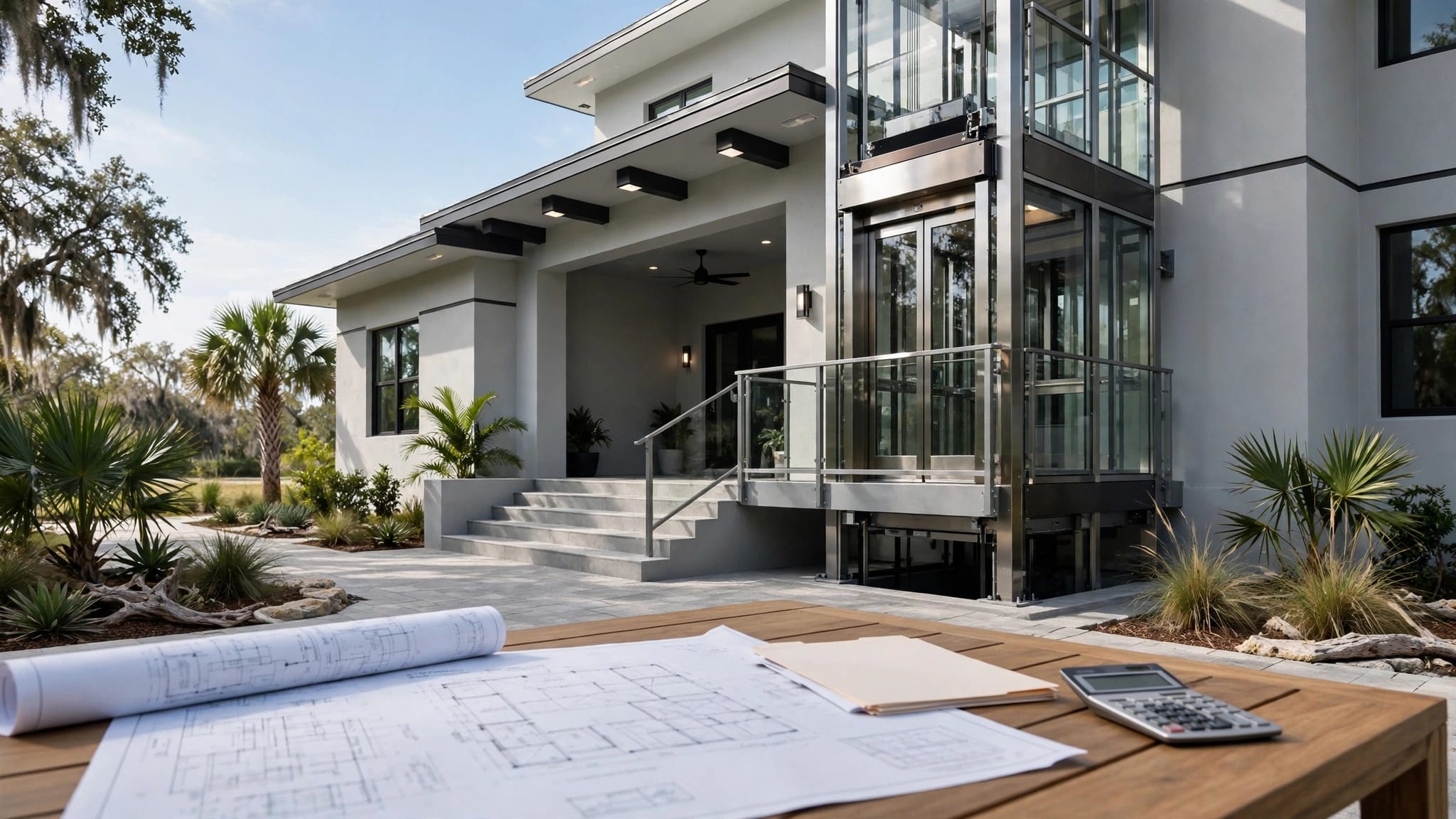
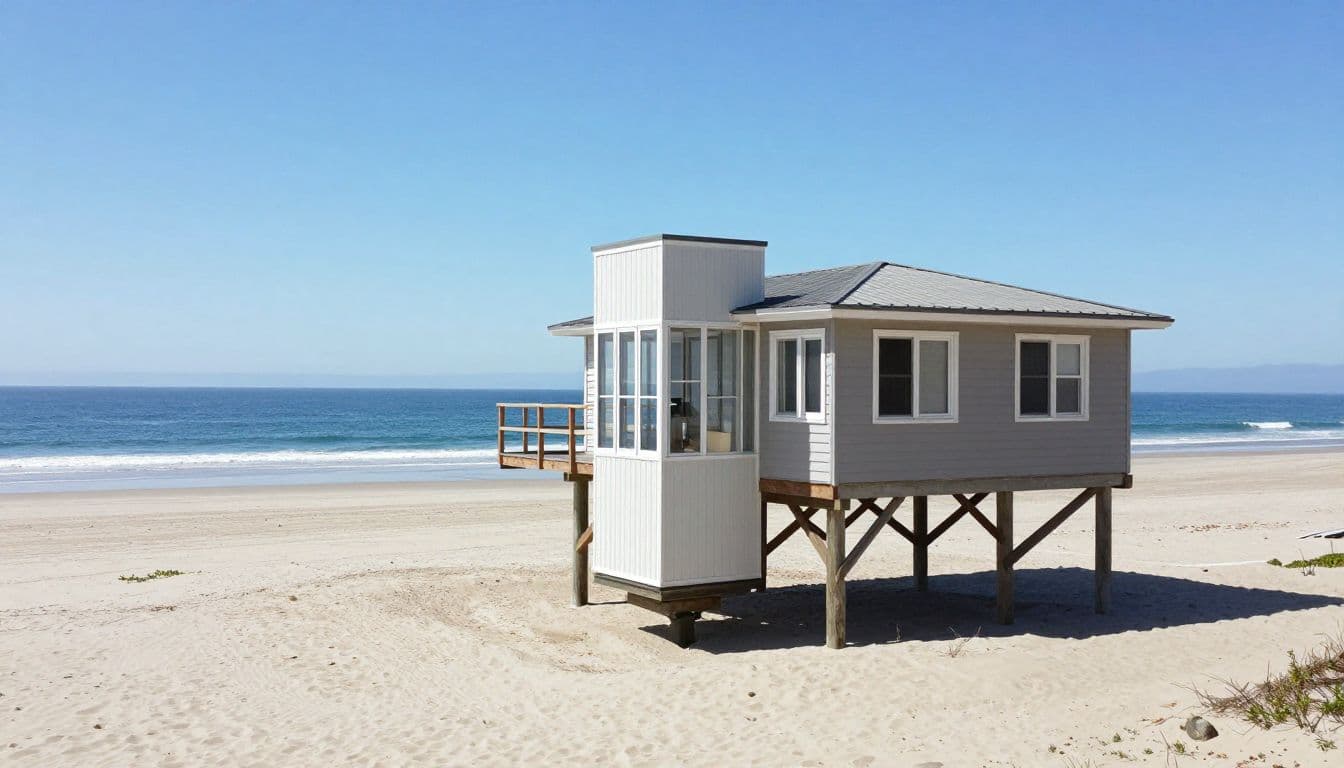
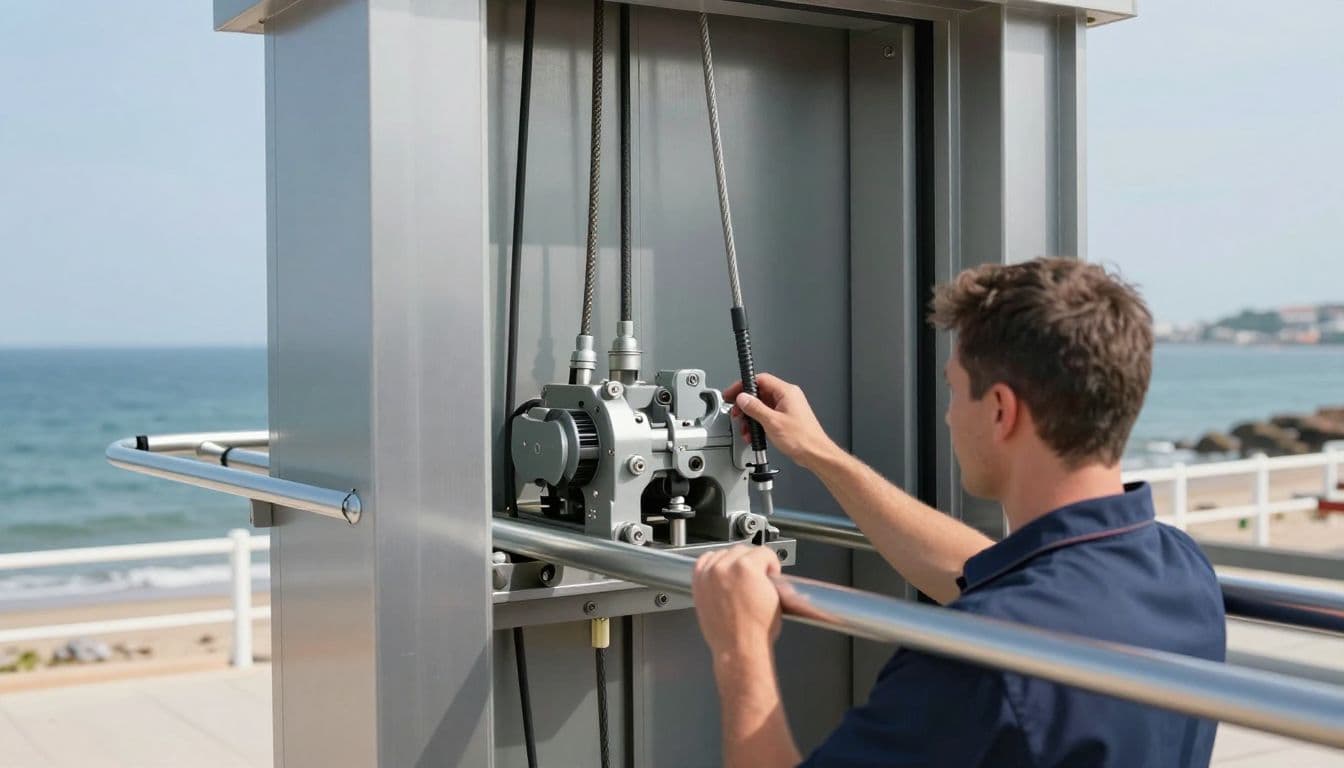

A beach house outdoor elevator can make an elevated home far easier to use. Groceries, luggage, beach chairs, tools, and mobility equipment no longer need to travel up several flights of stairs.
However, buying a home with an existing lift adds another inspection project. The equipment has faced salt air, moisture, wind, storms, and long periods without use. The existing beach house outdoor elevator may be a valuable asset, or it may need expensive repairs before it can safely serve your household.
Treat the lift as a major property system, not as a decorative feature. Start by identifying its purpose, then verify its condition, approvals, structure, insurance, and maintenance history.
What a Beach House Outdoor Elevator Should Add to the Property
An exterior lift should solve a clear access problem. In an elevated beach house, that often means moving supplies between ground level and the main living deck. The right system can reduce stair traffic and make routine tasks less tiring.
First, identify who will use it. Your priorities will differ if you need the lift for:
- Groceries, coolers, luggage, tools, and household supplies
- Wheelchair or walker access between floors
- Family members who struggle with stairs
- Regular passenger travel between living levels
- Occasional maintenance and storm-preparation work
A cargo lift may work well for supplies, but it usually isn't designed for passengers. A passenger elevator has different safety equipment and compliance requirements. A vertical platform lift, often called a VPL, may suit wheelchair access over a shorter vertical distance.
Next, study the loading points. Does the platform stop at the driveway, garage, ground-level storage area, porch, and upper deck? Can you roll a cart onto it without crossing a narrow walkway? Are the doors and gates positioned for practical use?
A lift that stops at the wrong side of the house may look impressive during a showing but offer little daily value. The platform should connect naturally with the places where you unload vehicles, store beach gear, and enter the home.
Also consider the home's rental or guest use. A lift that carries supplies may help housekeeping, but guests still need safe and convenient access. If passengers may ride, confirm that the equipment was designed and approved for that purpose. Never assume the word "elevator" in a listing describes the actual classification.
Review the Lift's History Before Making an Offer
Ask the seller for every available record before you rely on the lift's value. Useful documents include the model and serial number, installation date, owner's manual, service invoices, inspection reports, warranty paperwork, permit records, and information about previous repairs.
The seller should also explain how often the lift operates. A system used every day may show wear in cables, rollers, gates, controls, and landing equipment. A lift used only a few times each year may have a different problem, such as seized components, battery failure, water intrusion, or neglected lubrication.
Ask direct questions:
- Who installed the lift, and who has serviced it?
- Has any part been replaced because of salt corrosion or storm damage?
- Has water ever entered the control box, motor area, or shaft enclosure?
- Was the lift operating during the most recent storm season?
- Has the platform ever stopped between landings?
- Are replacement parts and service available for this model?
- Does the warranty transfer to the buyer?
- Is the lift included in the sale, with all remotes, keys, controls, and manuals?
A clean-looking platform doesn't prove that the machinery is healthy. Outdoor equipment can develop corrosion inside cable fittings, electrical connections, fasteners, and enclosed controls. Missing records don't automatically make the purchase impossible, but they increase uncertainty.
Put the equipment details in writing before closing. The purchase agreement should clearly identify the lift and its included components. A local real estate attorney can advise on the wording, especially if the system has a separate service contract, lease, lien, or warranty.
Have a Qualified Professional Inspect the Mechanical Condition
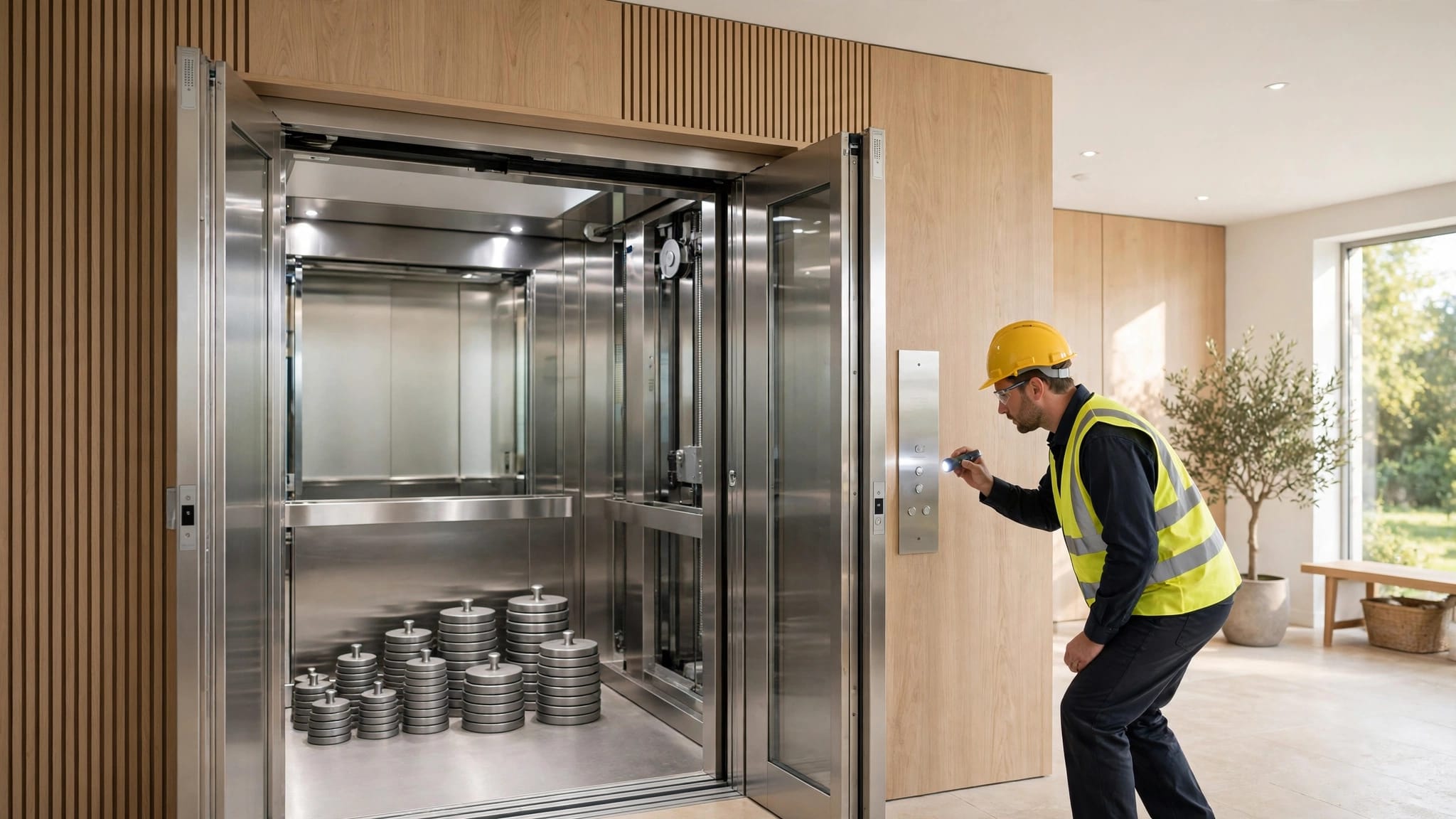
A standard home inspection may identify obvious corrosion or damaged platforms, but it may not cover the lift's mechanical and safety systems in enough detail. Hire an elevator professional or lift technician who has experience with the specific type of equipment and coastal installations.
The inspection should match the lift's design. Depending on the model, the technician may examine rails, cables, pulleys, chains, bearings, guides, brackets, platform structure, gates, interlocks, brakes, limit switches, controls, and emergency systems.
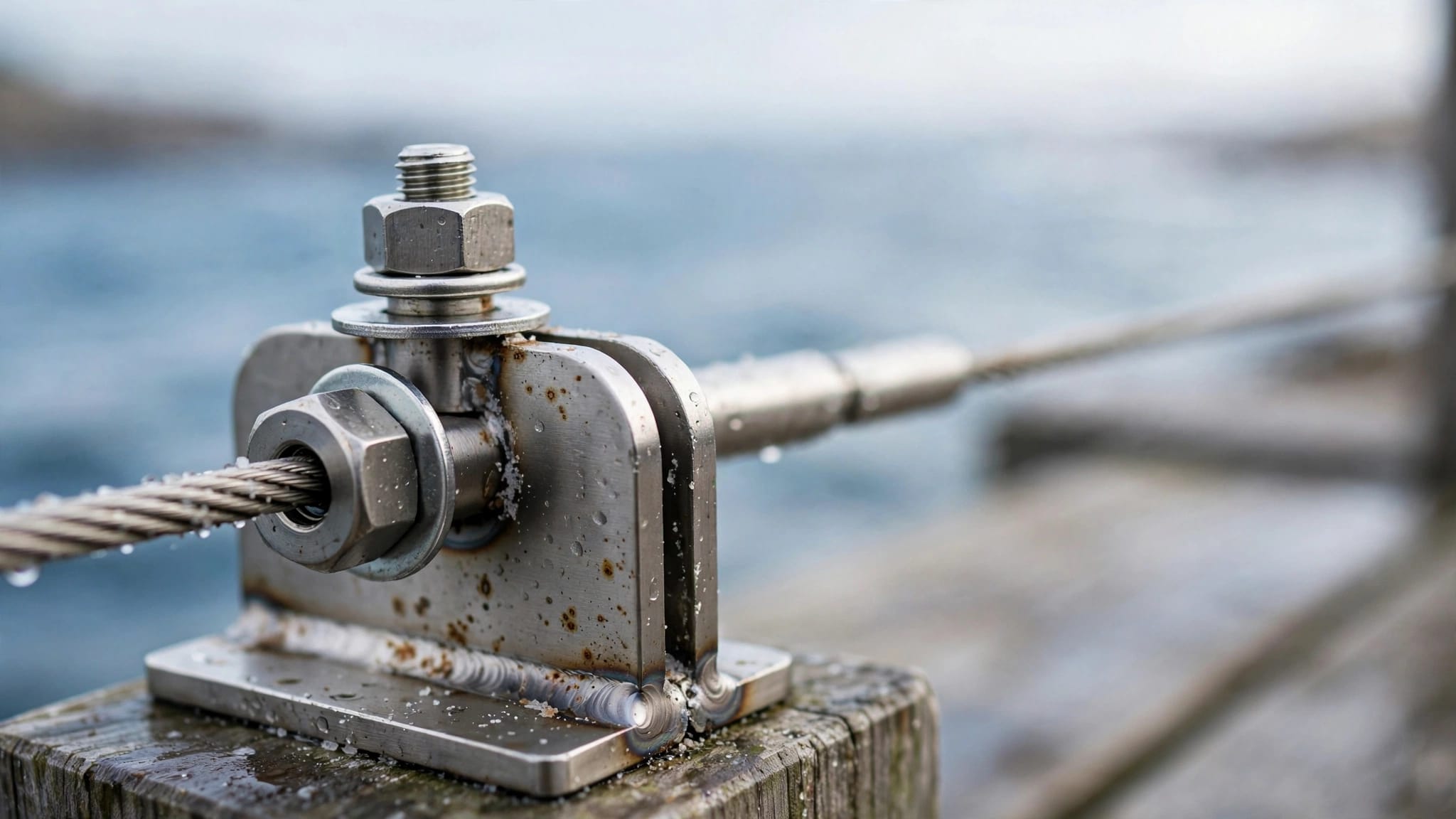
Pay close attention to corrosion in areas that carry load or control movement. Surface discoloration on a non-structural cover is different from rust or pitting on a mounting bracket, cable, rail, or fastener. A coastal technician should document the location, depth, and likely effect of any corrosion rather than calling it cosmetic.
The professional should also look for:
- Frayed, kinked, flattened, or corroded cables
- Loose or damaged mounting hardware
- Misaligned rails or uneven platform travel
- Cracked welds, damaged guards, and deteriorated decking
- Gates that fail to close, latch, or interlock correctly
- Water inside electrical enclosures or control components
- Faulty limit switches, emergency stops, or braking systems
- Unusual vibration, scraping, jerking, or noise during operation
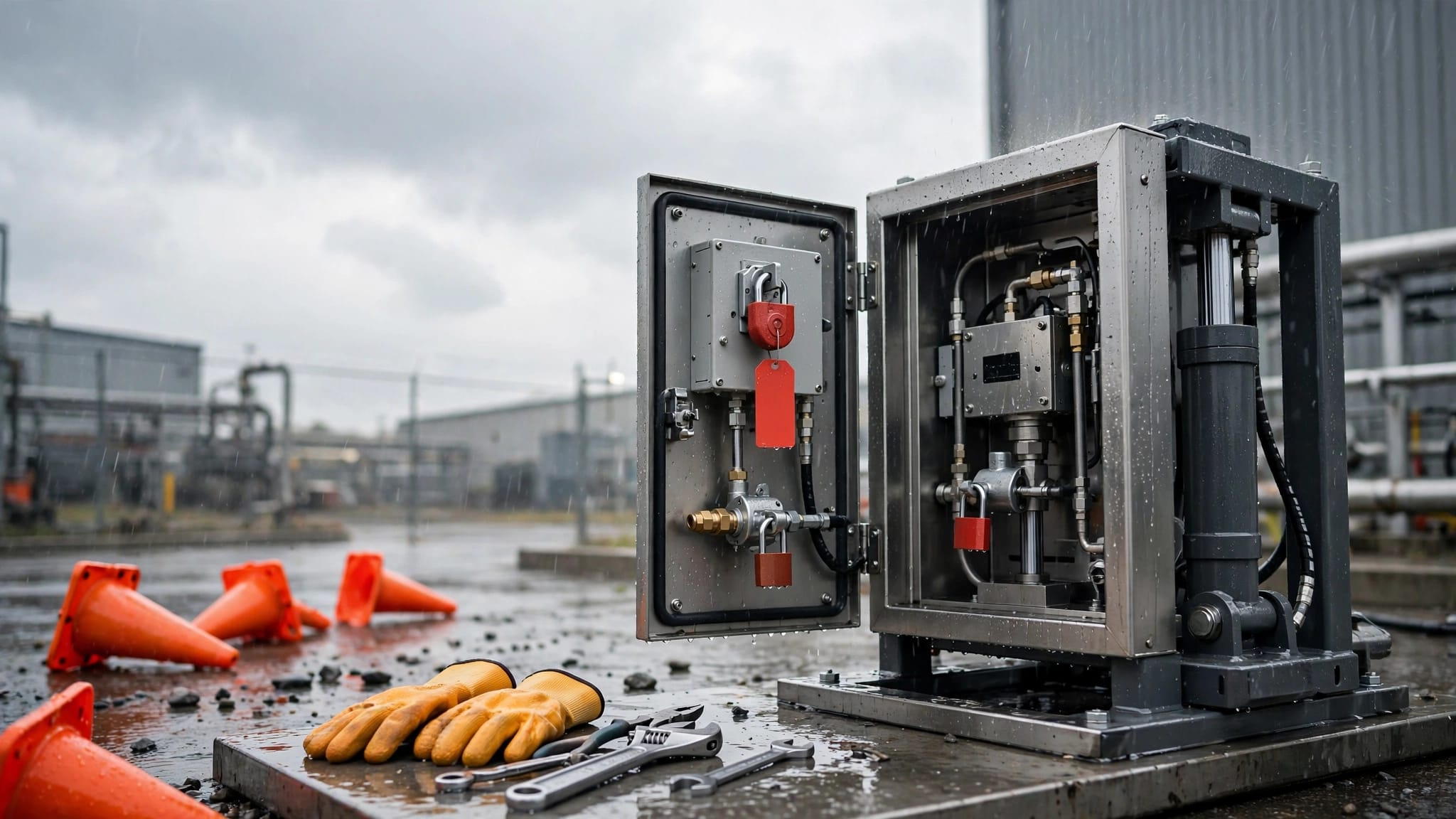
A controlled operational test matters as much as a visual review. The inspector should operate the lift according to the manufacturer's procedure, test each landing, and check the safety devices. Load testing should follow the equipment's instructions and should not be improvised by a buyer or seller.
Don't ride a cargo lift during a showing. If the equipment isn't clearly passenger-rated, keep people off the platform while it operates. The inspection report should state what the technician tested, what the technician couldn't test, and which repairs require immediate attention.
Separate Cargo Capacity From Passenger Compliance
The existing beach house outdoor elevator may carry heavy items without being suitable for people. This distinction affects safety, insurance, daily convenience, and the cost of future work.
Cargo lifts are useful when the main job is moving coolers, groceries, luggage, beach furniture, laundry, tools, or building supplies. Some exterior residential systems advertise capacities between 750 and 1,000 pounds, but the stated capacity applies only to the specific model and installation. The platform, attachment points, controls, and loading method all matter.
A cargo lift shouldn't carry passengers unless the manufacturer and qualified local professionals confirm that it was designed and approved for passenger use. A person standing on a freight platform can face risks that don't apply to an unattended load.
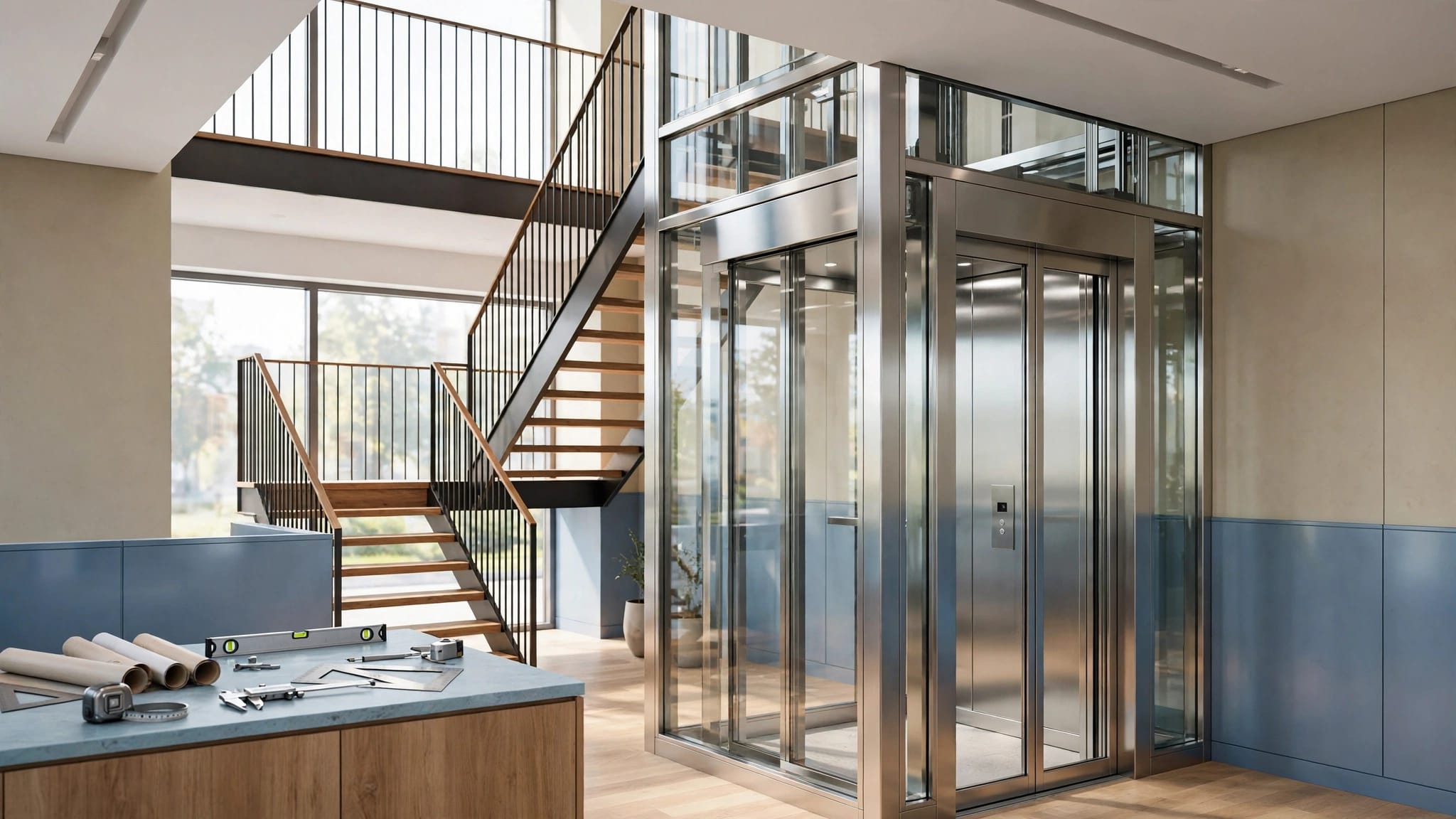
Passenger elevators include a different set of design and safety considerations. The cab, doors, controls, gates, emergency systems, and building interface must match the applicable requirements. A VPL can be a practical choice for wheelchair access, but its permitted travel, platform arrangement, and safety features also need local review.
| Lift type | Common purpose | Question for the buyer |
|---|---|---|
| Cargo lift | Moving supplies and household items | Is it clearly marked and documented for goods only? |
| Passenger elevator | Carrying people between floors | Does the equipment have passenger documentation and current service support? |
| Vertical platform lift | Wheelchair and mobility access | Does the platform reach each required landing safely? |
Read cargo lift and passenger elevator differences before deciding how much value the existing system adds. The correct choice depends on the people, loads, travel distance, and access points involved.
A lift's weight rating also doesn't tell you how much will fit on the platform. Measure the platform floor, gate opening, landing width, and overhead clearance. A 1,000-pound rating won't help if a full-size cooler or wheelchair can't enter safely.
Check the House, Deck, and Lift Structure Together
An exterior elevator transfers loads into the home, deck, foundation, pilings, or an independent tower. A lift technician can inspect the equipment, but a licensed structural professional should evaluate the supporting structure when the installation affects decks, beams, columns, pilings, or wall attachments.
Look for movement at the lift tower and landings. Settlement, deck deflection, loose fasteners, and shifting supports can affect alignment. Coastal homes also face wind exposure, vibration, flood-related damage, and repeated wetting. A lift that operated correctly several years ago may need adjustment after the building or support structure moved.
Ask the structural professional to review:
- The lift's attachment points and load paths
- Deck framing around each landing
- Piling, column, and foundation conditions
- Bracing and resistance to local wind forces
- Clearances between the platform and house
- Openings cut into decks, walls, or guardrails
- Drainage around the motor, shaft, and lower landing
- Signs of settlement, impact, rot, or previous storm repairs
The landing design matters for daily safety. Gates, guardrails, handrails, stairs, ramps, and walkways should work together. A platform may reach the correct floor but still create a fall hazard if the landing gap, gate arrangement, or transition surface is poor.
Don't make structural changes based on a seller's suggestion or a generic online diagram. The building's height, flood zone, wind exposure, materials, and local requirements all affect the proper solution. Have the right local professionals inspect the home and explain what needs approval.
Confirm Permits, Inspections, and Local Requirements
A lift installation can involve several review areas. The equipment itself may fall under elevator or accessibility requirements, while the tower, deck, foundation, electrical work, and storm-related construction may fall under building rules.
Requirements vary by location and by equipment type. A passenger elevator, cargo lift, and VPL may follow different standards or review paths. In Florida, for example, a coastal home's lift may involve state elevator requirements, local building review, electrical review, flood-zone considerations, and structural review. The exact obligations depend on the property and the installation.
Review local requirements for beach home elevators as background, then confirm the current requirements with the authority having jurisdiction. A qualified local elevator contractor, building official, structural engineer, and electrician can tell you which records apply.
Request copies of any available:
- Building and electrical permits
- Elevator or lift inspection records
- Final approvals or certificates
- Approved plans and engineering documents
- Manufacturer installation instructions
- Records of unpermitted alterations or repairs
If records are missing, ask the local authority how to address that gap before closing. You may need a new inspection, updated plans, corrective work, or documentation from a licensed professional. Don't treat an old permit number as proof that the current installation meets today's requirements.
Insurance questions belong in the same review. Ask your insurer whether the lift, tower, controls, and attached structures are covered. Windstorm and flood policies can have separate terms, exclusions, deductibles, and claim requirements. A home insurer may also request proof of inspection or maintenance.
Plan for Salt Air, Moisture, Wind, and Storm Exposure
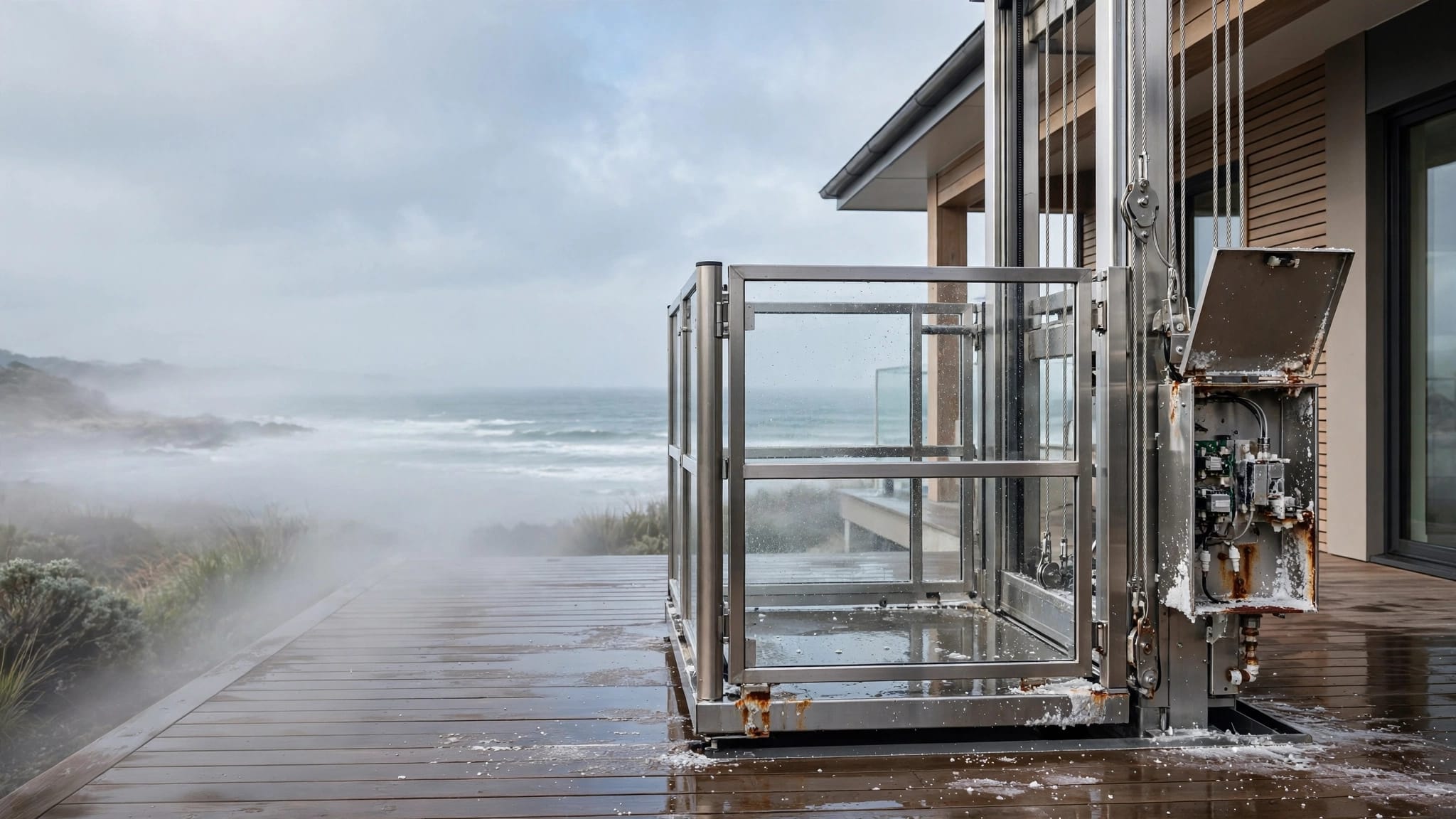
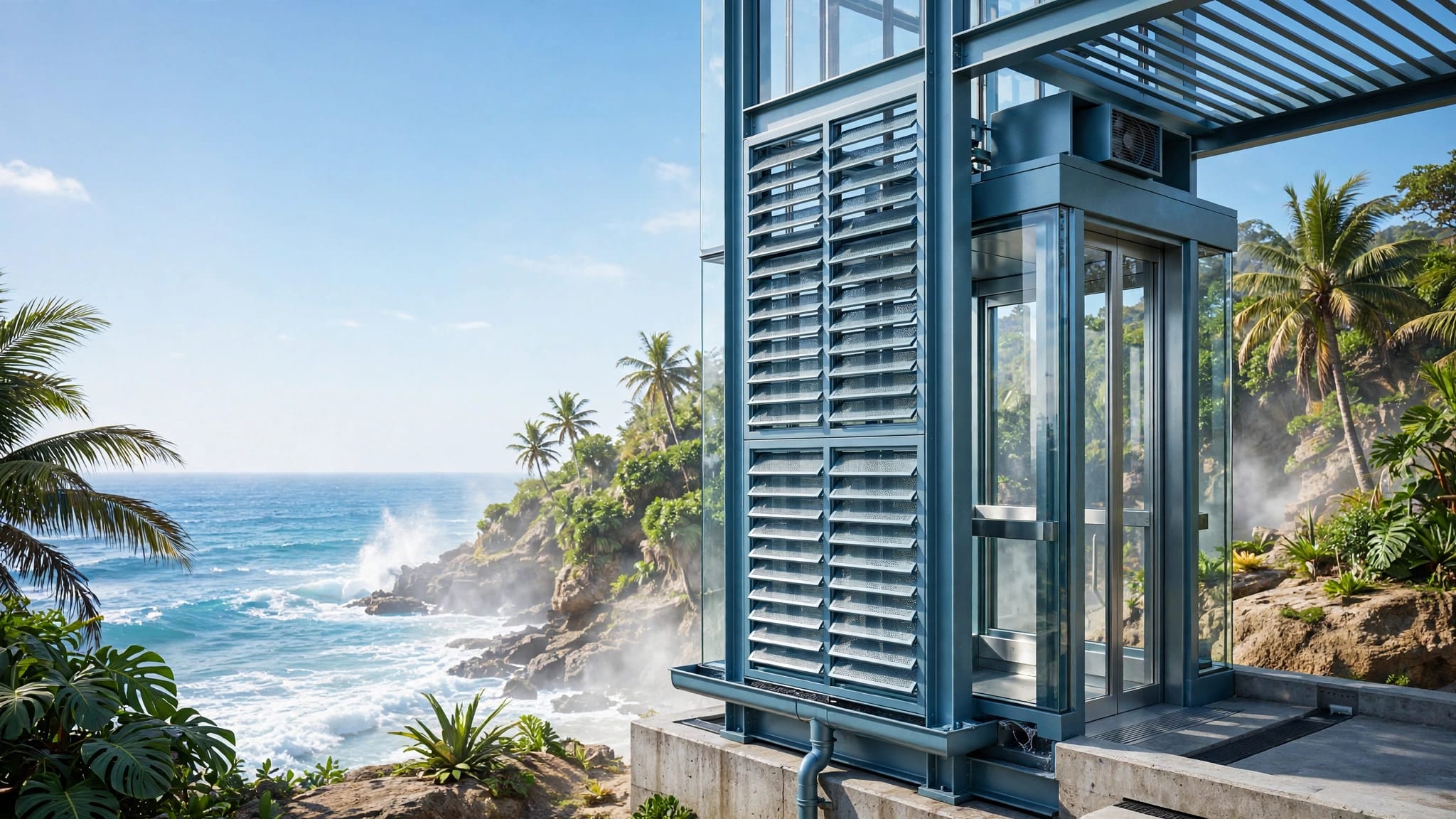
Coastal service is harder on outdoor elevator equipment than sheltered inland service. Salt deposits attract moisture and speed corrosion. Humidity affects electrical components. Wind can drive spray into enclosures and move debris into tracks or gates.
Marine-grade materials can improve performance, but they don't make a lift maintenance-free. Ask the manufacturer which materials, coatings, fasteners, cables, seals, and enclosures protect the system. The technician should also explain how the current installation handles drainage and rinsing without forcing water into electrical components.
Storm preparation needs a written procedure. Ask what to do before high winds, whether the platform should be parked at a particular landing, how gates should be secured, and whether the system needs a protective cover or tie-down. Follow the manufacturer's instructions rather than creating a home-made storm routine.
Power outages deserve attention in an elevated home. Find out how the lift behaves when power stops, whether it has an emergency lowering system, and which parts require backup power. A generator may not support the lift without proper electrical planning. A qualified electrician should assess compatibility, disconnects, grounding, and controls.
Never use the lift during conditions that the manufacturer prohibits. Lightning, high winds, flooding, standing water, and debris can create risks that aren't visible from inside the house. Ask who will inspect the equipment after a storm and what signs require immediate shutdown.
Salt-air corrosion is a safety concern when it affects cables, brackets, fasteners, controls, or other load-bearing and operating parts. A fresh coat of paint doesn't replace a technical inspection.
Calculate Ownership Costs Before You Value the Feature
An existing lift can save you the cost and disruption of a new installation, but the system may also carry near-term expenses. Ask for written estimates instead of assigning value from the lift's appearance.
Your budget should account for inspection fees, corrective work, corrosion treatment, replacement parts, structural repairs, electrical repairs, permit work, storm preparation, and regular service. If the manufacturer no longer supports the model, ask a qualified service company whether compatible parts are available and whether the company will maintain the equipment.
Maintenance costs depend on the lift type, usage, location, materials, and service requirements. Coastal exposure can increase the need for cleaning, corrosion checks, lubrication, electrical testing, and post-storm review. The maintenance plan should name the tasks, service interval, responsible company, and records you should retain.
Insurance can change the calculation. Ask whether the lift affects premiums, coverage conditions, liability concerns, or inspection requirements. Get answers in writing from your insurer, because coverage differs between policies and coastal regions.
Use this short review before deciding what the feature is worth:
| Cost area | Information to request | Why it matters |
|---|---|---|
| Immediate repairs | Itemized technician estimate | Shows the cost of making the system serviceable |
| Structural work | Written engineering or contractor scope | Identifies repairs outside the lift machinery |
| Electrical work | Evaluation by a qualified electrician | Confirms the power supply and controls are appropriate |
| Ongoing service | Maintenance agreement or service quote | Establishes recurring ownership costs |
| Insurance | Written coverage terms and exclusions | Clarifies storm, flood, and liability exposure |
| Replacement planning | Manufacturer support and parts availability | Shows the risk if major components fail |
If the price depends on the lift being fully operational, make the sale contingent on inspection results and acceptable repair terms. A seller credit may help with a known repair, but it doesn't remove the need to correct an unsafe condition.
Build a Due Diligence Plan Before Closing
The inspection should happen early enough to give you time to make decisions. Waiting until the final days can leave you choosing between accepting unknown risk and delaying the transaction.
Use an orderly process:
- Define the required use. Decide whether you need cargo transport, passenger service, wheelchair access, or a combination of functions.
- Collect the records. Request the model, serial number, manuals, permits, service history, warranties, and storm-repair documents.
- Hire the right inspectors. Use a home inspector for the property, a lift professional for the equipment, a structural professional for supports, and an electrician for the power system when needed.
- Test the system properly. Have the qualified lift professional inspect travel, landings, gates, controls, safety devices, and any permitted load tests.
- Verify local requirements. Ask the building department, elevator authority, and other relevant local officials how the existing installation should be documented.
- Get repair and service quotes. Separate immediate safety work from optional upgrades and cosmetic improvements.
- Confirm insurance terms. Give the insurer accurate information about the lift type, location, age, and storm exposure.
- Write the handoff into the purchase. Identify the equipment, manuals, remotes, keys, maintenance records, warranties, and any agreed repairs.
Ask for a demonstration after repairs and before closing. The person providing the demonstration should explain normal operation, loading limits, gate use, emergency procedures, cleaning, storm preparation, and shutdown steps.
If you plan to rent the home, add guest instructions and a written rule about who may use the lift. A cargo platform should have clear warnings against passenger use. A passenger system still needs operating limits and regular service.
When the seller can't provide records, the safest response is more investigation, not a larger assumption. Price uncertainty into the offer only after you understand the likely cost of inspection, repair, documentation, and ongoing care.
Conclusion
A beach house with an existing exterior lift can make elevated living more practical, but the equipment deserves the same attention as the roof, foundation, electrical system, and seawall. Confirm whether it carries people or goods, inspect its machinery, review its supports, verify local requirements, and plan for salt air and storm exposure.
The right purchase decision depends on documented condition , not the lift's appearance or the listing description. With qualified local inspections and clear repair terms, you can decide whether the system is a useful part of the home or a cost that needs to be addressed before closing.
Recent Posts