Elevator Door Interlocks for Coastal Homes: A Clear Safety Guide

Share this article

A landing door that looks closed can still create a serious hazard if it has not locked correctly. Elevator door interlocks are the safety devices that check this condition before an outdoor lift can travel.

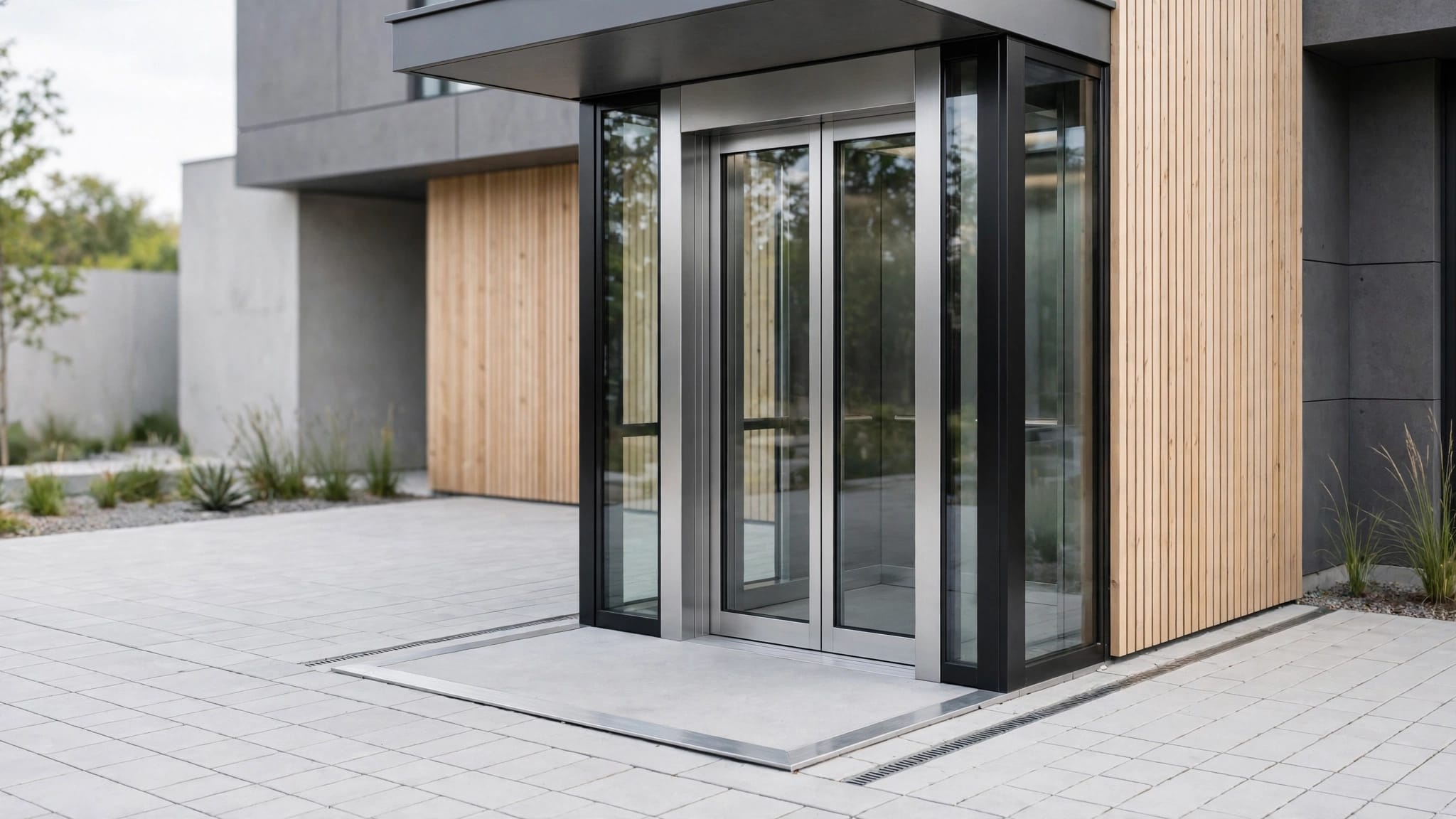
For coastal homeowners, that safety function deserves extra attention. Salt air, wind-driven rain, humidity, and sand can affect door hardware over time, especially on an exterior passenger elevator or platform lift.

Knowing what the interlock does helps you spot trouble early and respond safely.

What Elevator Door Interlocks Do

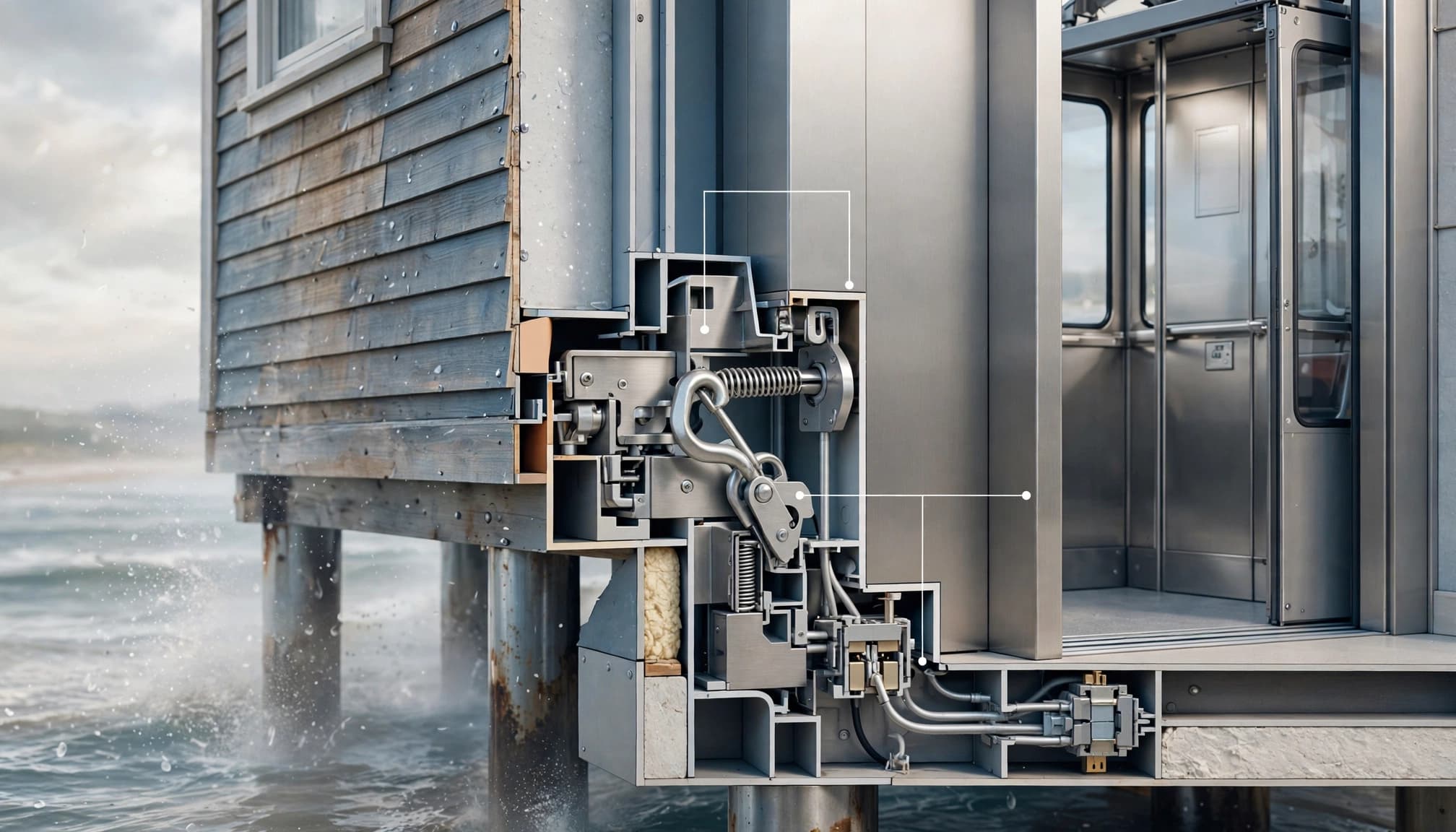
An interlock is mounted at a landing door or gate. It has two jobs that work together: it helps hold the landing door closed, and it confirms that the door is properly locked before the lift can operate.

When the door is open, unlatched, or out of alignment, the interlock keeps the safety circuit open. The lift should not move until the door reaches its fully closed and locked position.

This protects people at every landing. A person should never be able to open a landing door and face an empty shaft or moving platform area.

A lock and a safety contact work as a pair

The mechanical part of the interlock secures the door. Meanwhile, an electrical contact reports whether that locked condition has been reached.

Both functions matter. A door that merely touches the frame is not necessarily locked. Likewise, a switch should not signal a safe condition before the locking hardware has fully engaged.

The lift should operate only after the landing door is closed and mechanically locked, not simply pushed into place.

Interlock designs differ by elevator model. Some systems use swing doors, while others use gates or other approved landing barriers. The manufacturer's documentation explains the components used on your equipment.

Interlocks protect each landing, not only the door you use

A multistory exterior elevator may have a landing door at each level. Every protected opening needs to work correctly before normal operation can continue.

For example, calling the car from an upper deck should not release a lower landing's protection. The safety circuit checks the required door and gate conditions as part of the operating sequence.

That is why a recurring door issue should never be treated as a minor annoyance. An interlock fault can stop the lift because the safety system is doing its job.

How a Normal Door-Closing Sequence Works

Homeowners do not need to troubleshoot the internal mechanism. Still, it helps to recognize the normal sequence so changes are easier to describe to a service professional.

First, the landing door closes against the frame. Next, its latch and lock components engage. Only then should the electrical portion of the interlock confirm the locked state and allow travel.

What normal operation feels like

A properly adjusted door generally closes smoothly and latches without repeated slamming, lifting, or pulling. The handle and latch should feel consistent, and the elevator should respond normally after the door is secured.

Outdoor conditions can make a door feel different on a humid day. However, a persistent change needs attention. A door that requires force, catches on the frame, or only works after several attempts may have an alignment, hardware, or interlock issue.

Why door alignment matters

The lock bolt must meet its receiving point correctly. A sagging door, loose hinge hardware, debris at the threshold, or movement in surrounding materials can prevent proper engagement.

Coastal properties often face repeated wind loads and moisture exposure. Over time, those conditions can affect fasteners, seals, frames, and moving hardware. A technician can assess the full door system instead of focusing on one visible part.

Warning Signs That Need Professional Service

A lift that will not run may have several possible causes. The interlock is one common reason, particularly when the problem occurs right after closing a landing door.

Pay attention to the pattern. Does the lift fail at one floor but work at another? Does the door need to be lifted before it latches? Are there new noises around the latch area?

Common signs of an interlock or door problem

Call for qualified service if you notice any of these conditions:

  • The elevator refuses to move after a landing door appears closed.
  • A door or gate will not latch consistently, or it opens without normal release action.
  • The lift works intermittently after repeated attempts to close a door.
  • You see corrosion, moisture staining, loose hardware, or damage around the interlock housing.
  • The equipment displays a recurring fault indication or behaves differently at one landing.

Avoid testing the problem by repeatedly operating controls. Repeated attempts can hide the pattern that a technician needs to diagnose.

A new delay or unusual sound does not prove that the interlock has failed. Yet it is a good reason to take the condition seriously before it becomes a lockout or safety concern.

Never Bypass, Jumper, Force, or Defeat an Interlock

An interlock is a critical safety device , not a convenience switch. Homeowners must never bypass, jumper, tape, wedge, force, or otherwise defeat it.

Trying to make the lift run with an interlock disabled can allow travel when a landing door is unsecured. That creates a fall and crushing hazard for anyone near the opening.

A stuck door is a service issue, not a DIY repair

It can be tempting to spray a product into a sticky latch, bend a part back into position, or adjust an electrical connection. Those actions can damage approved components or mask the real defect.

Do not apply unapproved lubricants or cleaners to the interlock. Do not remove covers, alter wiring, or replace switches yourself. Moisture and electricity create added risk around exterior equipment.

If a door will not lock or the lift will not operate as expected, stop using the unit. Keep people away from the affected landing and contact a qualified elevator professional or the manufacturer-approved service provider.

In 2026, the U.S. Consumer Product Safety Commission announced a recall involving certain SUNS International residential elevator interlock switches because a switch could stick in a retracted position and leave an exterior door unlocked. It is a useful reminder to act promptly on manufacturer notices and service bulletins for your model.

Coastal Air Makes Interlock Care More Important

Salt particles settle on metal surfaces and mix with moisture. This can affect latching hardware, electrical terminals, protective finishes, and the door's moving parts long before heavy rust becomes obvious.

Humidity also creates condensation risks. Wind can carry salt spray into joints and housings, while sand and debris may collect around thresholds and door edges.

Watch the exposed areas around each landing

During ordinary visual checks, look at the outside of the door and surrounding hardware. Note flaking finish, orange staining, standing water, damaged seals, or debris that blocks the door's full closure.

Keep the landing area clean and dry according to the manufacturer's directions. Do not scrape, soak, or treat the interlock assembly with household chemicals. A service professional should decide whether corrosion requires adjustment, cleaning, component replacement, or another repair.

For broader exterior care, this outdoor lift maintenance checklist for coastal Florida homes covers practical checks around weather exposure, drainage, gates, and visible hardware.

Drainage helps protect doors and controls

Water should not pool at a landing, threshold, platform, or equipment base. Standing water can carry grit into moving areas and increase moisture exposure near electrical equipment.

Check that nearby downspouts, deck drains, and landscaping do not direct water toward the lift. After a storm, inspect the exterior for debris and visible damage before returning the equipment to normal use.

A coastal lift's materials matter, but no finish removes the need for inspection. Learn more about salt-air corrosion on exterior elevators when planning long-term care near a beach, bay, canal, or open waterfront.

Maintenance Should Follow the Lift's Documentation

Inspection intervals, required components, and local obligations vary by elevator model and jurisdiction. A passenger-compliant outdoor elevator, a cargo lift, and a vertical platform lift may have different door, gate, control, and service requirements.

The best maintenance plan starts with the manufacturer's documentation. It identifies the approved care procedures, operating limits, inspection schedule, and service contacts for the installed equipment.

What homeowners can report during a service visit

Clear observations help a technician diagnose an intermittent problem. Write down which landing is affected, when the problem started, weather conditions, and whether the door latches normally.

Also mention recent storms, flooding, power interruptions, or construction near the lift. A shifted deck board, damaged weather seal, or drainage change may help explain a door alignment concern.

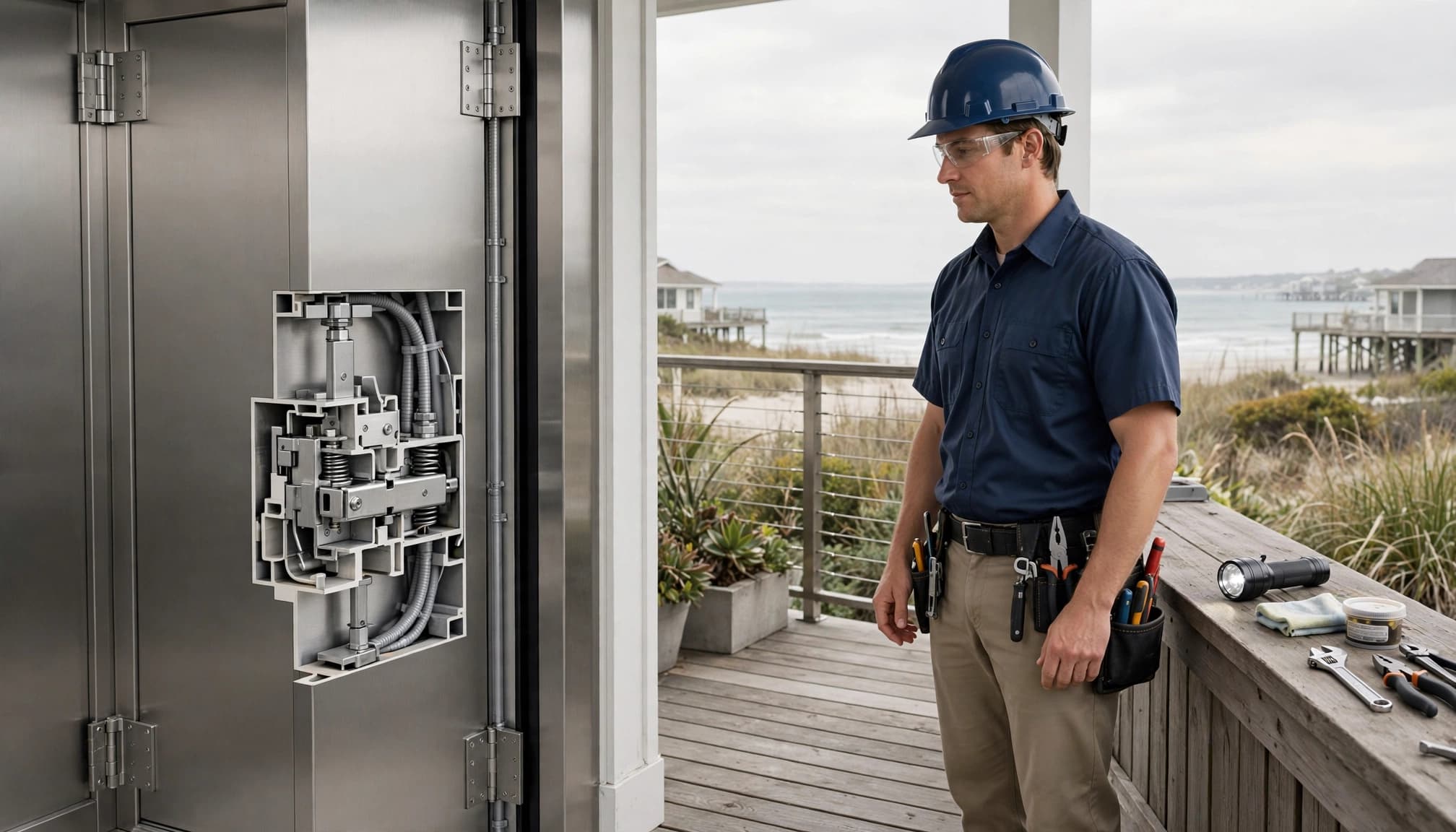
Do not open interlock housings to look for a cause. A trained professional can inspect the latch movement, alignment, safety contacts, wiring condition, and related door hardware safely.

Use the right lift for the intended job

Door interlocks protect access points, but they do not change a lift's approved purpose. Passenger elevators transport people when designed, approved, and maintained for that use. Cargo lifts move materials and should not carry riders unless the manufacturer states otherwise.

If you are choosing equipment for an elevated property, review the differences between passenger elevators and cargo lifts before installation. The selected system, landing arrangement, and safety components must match how the property will use it.

When to Shut Down an Outdoor Elevator

Take the lift out of service if a landing door will not close and lock, an interlock appears damaged, or the elevator behaves unpredictably. Do the same after a storm if water, debris, impact damage, or corrosion may have affected the door system.

Keep the area clear until a qualified elevator professional evaluates the equipment. Do not rely on a temporary workaround, even if the lift seems to resume normal operation.

Ask the service provider practical questions

A useful service conversation focuses on the condition of the whole landing system. Ask whether the door alignment is correct, whether the lock engages fully, and whether moisture or corrosion has affected related parts.

You can also ask which routine exterior checks the manufacturer allows homeowners to perform. That gives you a safe boundary between basic observation and work that belongs to a trained technician.

Local permitting, inspection, and code obligations can differ by city, county, state, product type, and installation details. Follow the requirements that apply where your home is located.

A Safe Door Is Part of a Safe Ride

Elevator door interlocks do one quiet but essential job: they prevent travel unless the landing door is closed and locked. For a coastal home, regular attention to door operation, corrosion, drainage, and weather exposure helps preserve that protection.

Small changes in how a door latches deserve prompt attention. Never defeat an interlock , and do not treat an elevator lockout as a reason to attempt a repair yourself.

A qualified elevator professional can identify the cause and return the equipment to service using the correct procedures and approved components.

Recent Posts

By Veranda 'Vator September 2, 2026
Usually, no. An ordinary outdoor elevator should not be treated as an emergency exit. During a fire or other emergency, use the protected exit route named in the building's approved emergency plan. Questions about outdoor elevators emergency exits often come up when a lift pro...
By Veranda 'Vator September 1, 2026
An outdoor elevator can make an elevated home far easier to use, yet a stalled car or damaged gate can turn into an urgent situation. Elevator rescue planning gives your household, property manager, contractor, and local responders a clear path before anyone is trapped. The pl...
By Veranda 'Vator August 31, 2026
An outdoor lift can make a raised home easier to use every day, but the tower layout affects far more than curb appeal. Outdoor lift towers need the right location, support, drainage, power, and access at every stop. A freestanding tower and a house-attached tower can both pro...
By Veranda 'Vator August 30, 2026
A coastal lift site has to handle more than a change in elevation. It must also stand up to salt spray, wind-driven rain, shifting sand, and occasional floodwater. For homeowners adding pitless platform lifts , the best results start with the site, not the equipment order. A p...
By Veranda 'Vator August 29, 2026
An elevator can remove the challenge of stairs, but only if people can reach it safely in the first place. The path from a driveway, parking area, or patio to an accessible outdoor elevator deserves the same early attention as the lift itself. For homeowners, builders, and des...
By Veranda 'Vator August 28, 2026
A coastal lift can face more electrical stress in one storm season than an indoor unit sees in years. Outdoor elevator electrical requirements must account for salt spray, wind-driven rain, standing water, humidity, flood exposure, and the exact lift installed. A dependable in...
By Veranda 'Vator August 27, 2026
An outdoor elevator can make an elevated beach home easier to live in, but it also changes the home's exterior. Florida HOA elevator approval often turns on details that feel small at first, such as where the tower sits, how visible it is, and where rainwater will go. A strong...
By Veranda 'Vator August 26, 2026
An outdoor lift can appear to work normally until corrosion, water intrusion, or a worn safety component causes a shutdown. A timely outdoor lift modernization review helps property owners protect people, equipment, and access before small issues become larger repairs. Older c...
By Veranda 'Vator August 25, 2026
A reused door code can give a former guest access long after checkout. With an outdoor lift, that mistake can affect both property security and a person's ability to move safely between levels. Outdoor lift access control needs a clear policy before the first reservation arriv...
By Veranda 'Vator August 24, 2026
An outdoor lift can make a raised beach house far easier to enjoy, but it can also create serious risk when guests mistake a cargo platform for a passenger elevator. Clear outdoor elevator safety rules protect guests, staff, and equipment before the first suitcase reaches the...
Show More