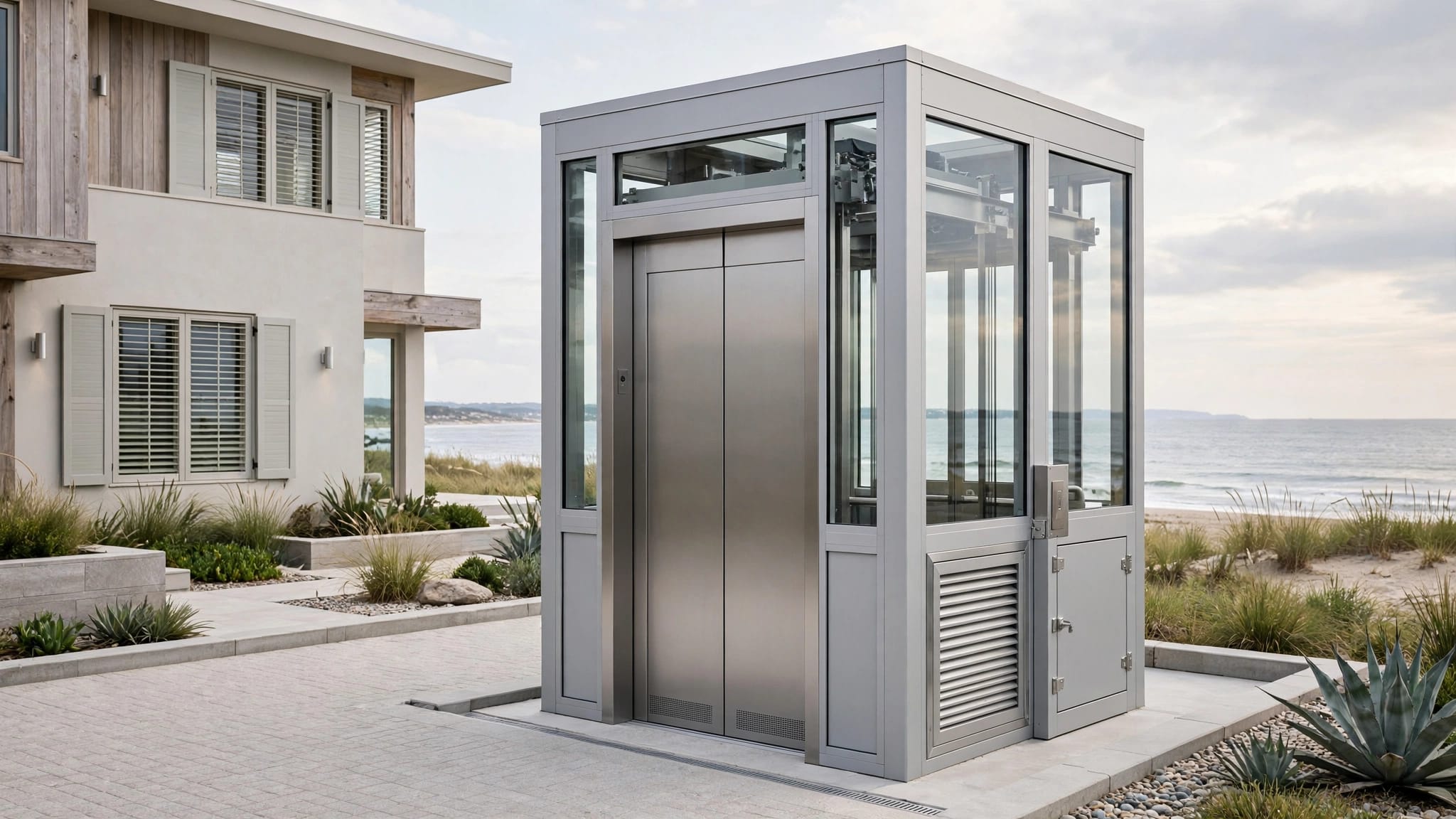
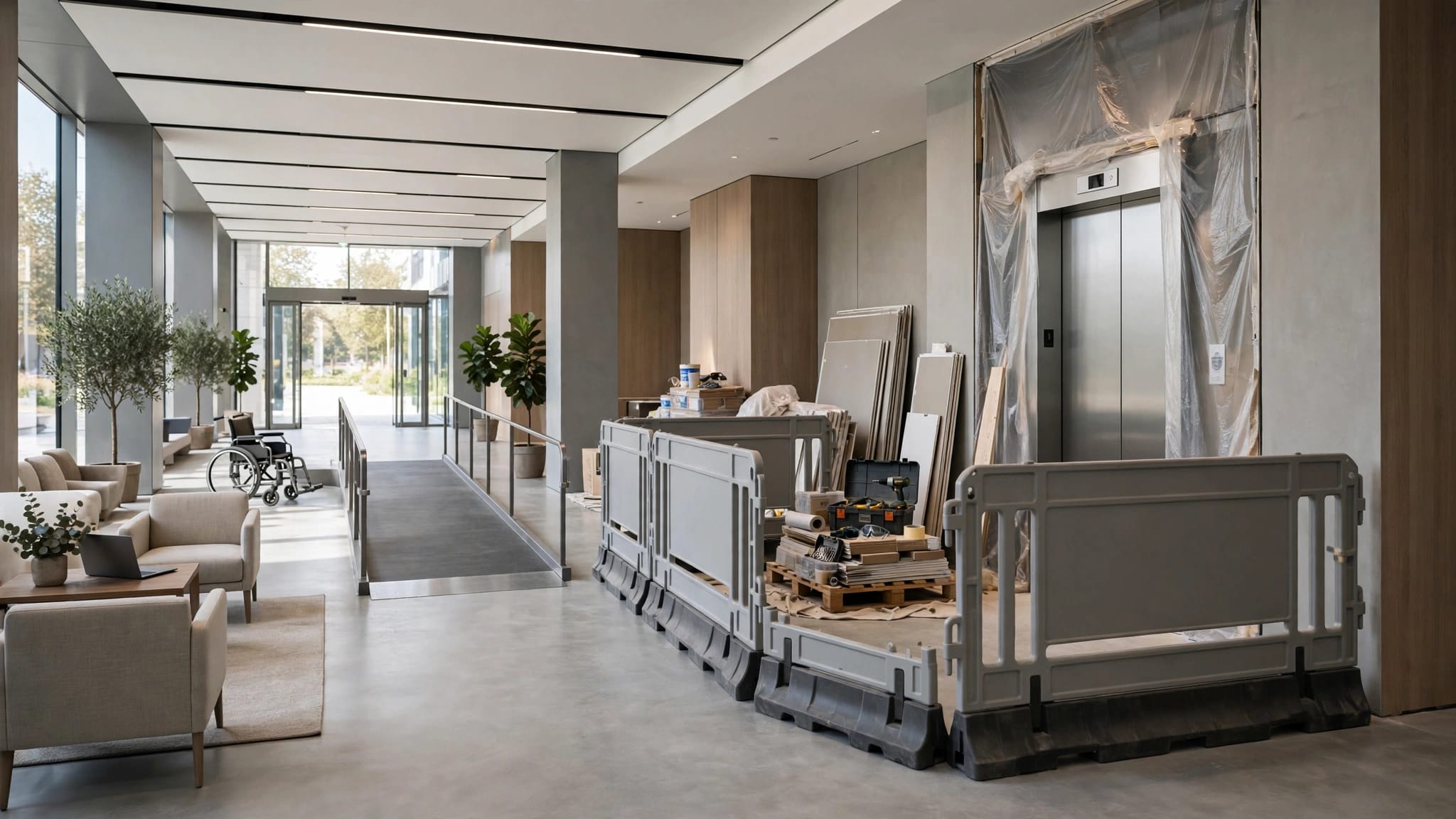
A lift installed beside a beach house can face different approval questions than one serving a restaurant entrance. For lift approval, intended use matters alongside location, building type, equipment design, and the people who will operate or ride it.
You need to establish whether the lift will carry household members, customers, wheelchair users, or materials before choosing equipment. Start by defining that use, then confirm the approval route with the relevant authority and qualified lift or building professionals.
How Intended Use Shapes Lift Approval
"Private" and "public-facing" describe how a property operates, but they aren't complete equipment classifications. A privately owned hotel still receives paying guests. Meanwhile, a single-family home may need separate equipment for moving groceries and transporting residents.
Reviewers need to understand both what the building is used for and what the lift will do. Those details can affect accessibility review, landing protection, emergency features, inspection requirements, and the applicable equipment standard.
Building Ownership Doesn't Define the Equipment Category
A private-residence elevator is a particular equipment category, not simply any elevator on privately owned land. A business owner shouldn't assume that a residential model is suitable for customer access.
Likewise, restricting a lift to employees doesn't automatically remove building or elevator safety requirements. Its location, approved purpose, and users still need review.
Identify the Authority Before Ordering
The authority having jurisdiction, often called the AHJ, may include a building department, elevator authority, fire official, or several agencies.
Ask which office decides equipment classification and which approvals run separately. In the United States, local building review and state or municipal elevator oversight can overlap. Confirm the adopted code edition too, because requirements can differ between jurisdictions.
Match the Lift Category to Its Intended Users
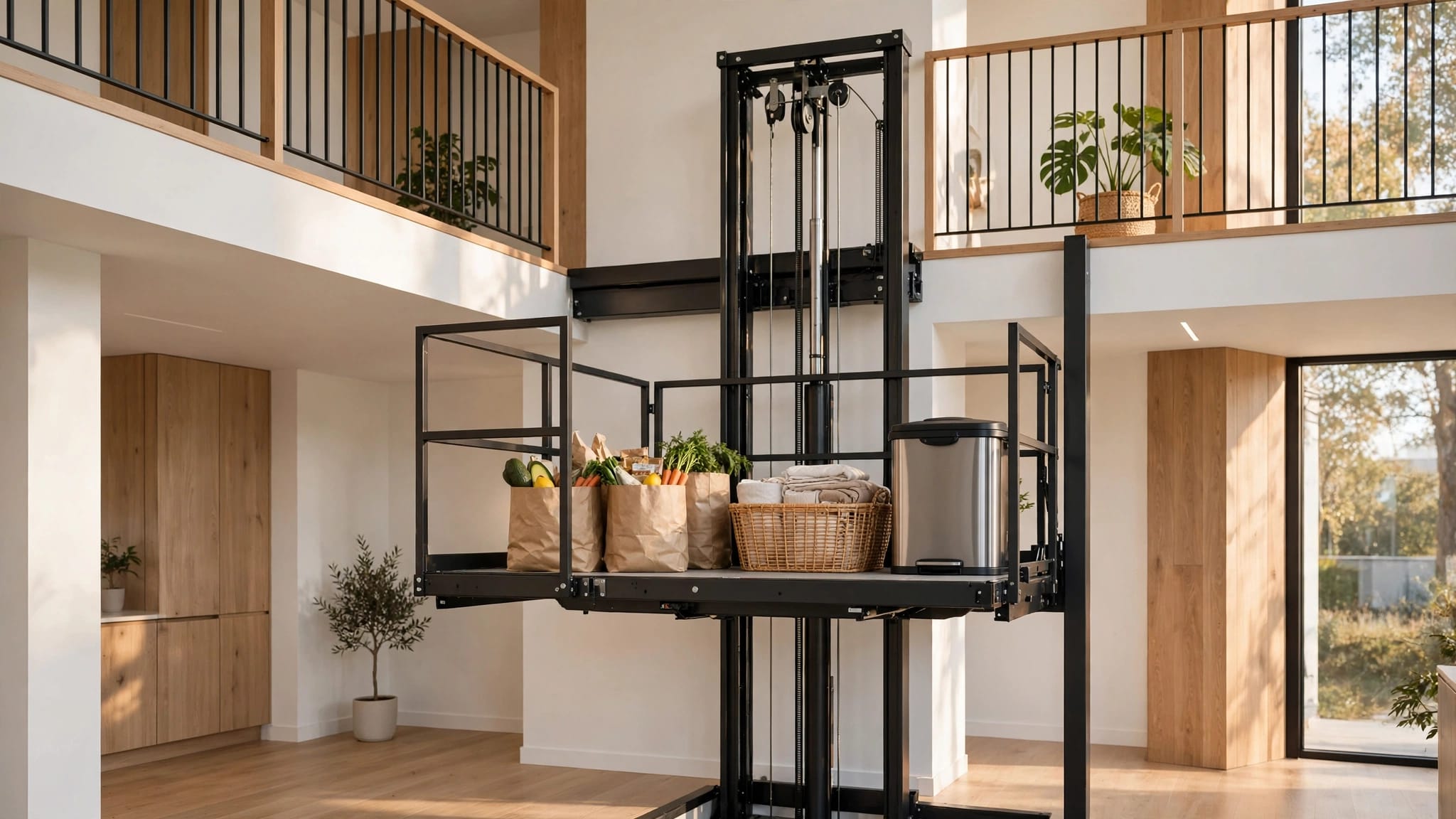
Equipment selection should begin with the load and users, rather than the platform's appearance. Cargo lifts, passenger elevators, and vertical platform lifts can look similar while having different approved purposes.
These categories provide a starting point for discussions with your installer and reviewer.
| Equipment category | Intended use | Approval question to resolve |
|---|---|---|
| Cargo or material lift | Goods, tools, luggage, and supplies | Which material-lift classification and local review apply? |
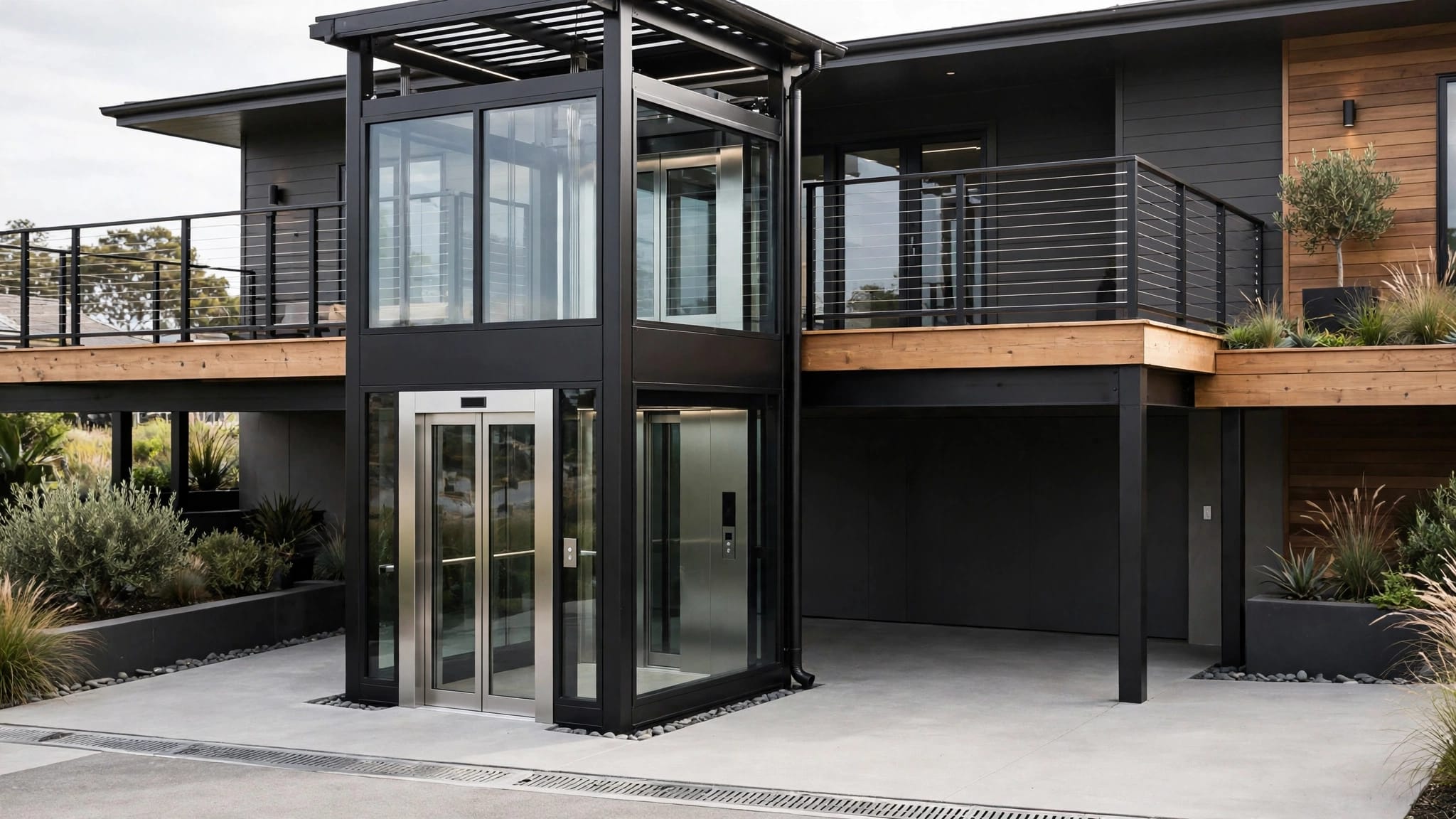
| Passenger elevator | People, plus goods where permitted | Is the model and configuration approved for this building and use? |
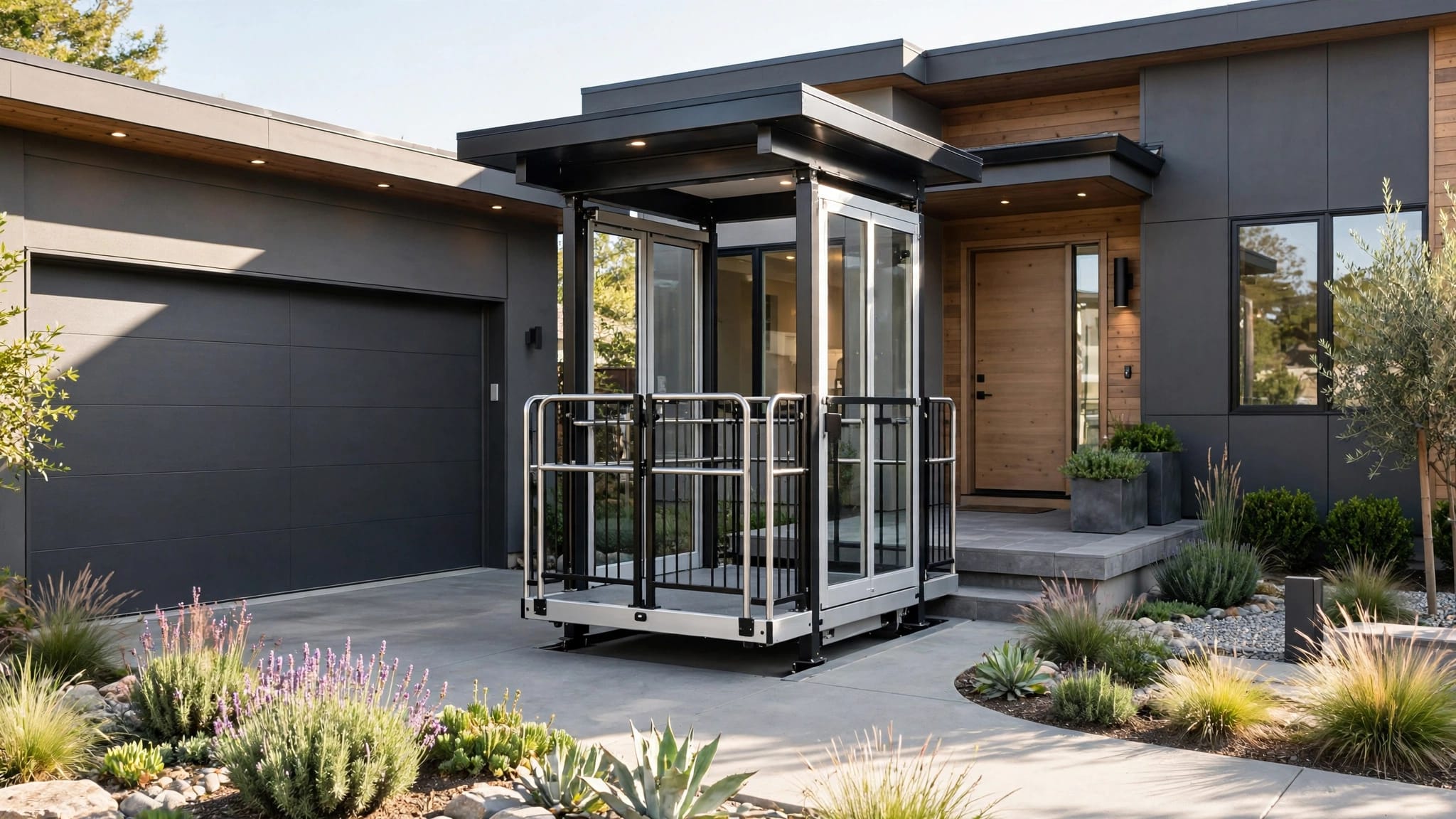
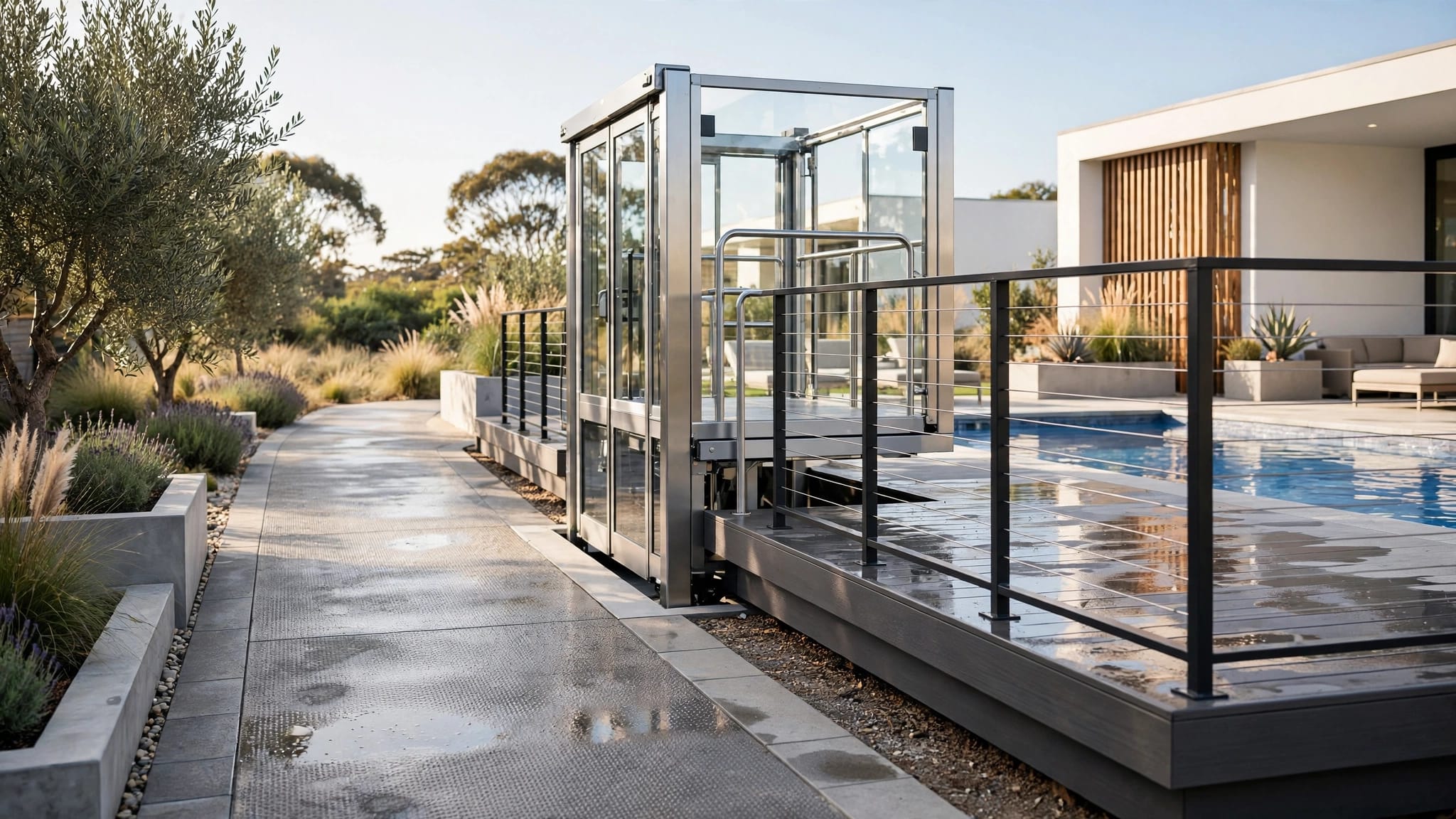
| Vertical platform lift (VPL) | Wheelchair access within its approved application | Is a platform lift permitted at this location, with suitable travel and landings? |
Platform size and load capacity don't establish passenger suitability. A materials-only lift mustn't carry residents, employees, or guests, even when it appears large enough.
Elevator authorities commonly reference ASME A17.1/CSA B44 for passenger elevators. Many platform-lift applications follow ASME A18.1. However, the applicable provisions and adopted editions depend on the installation and jurisdiction.
A VPL may suit a limited-rise accessibility route, while a passenger elevator may better fit regular movement between floors. Neither choice should rest on travel distance alone.
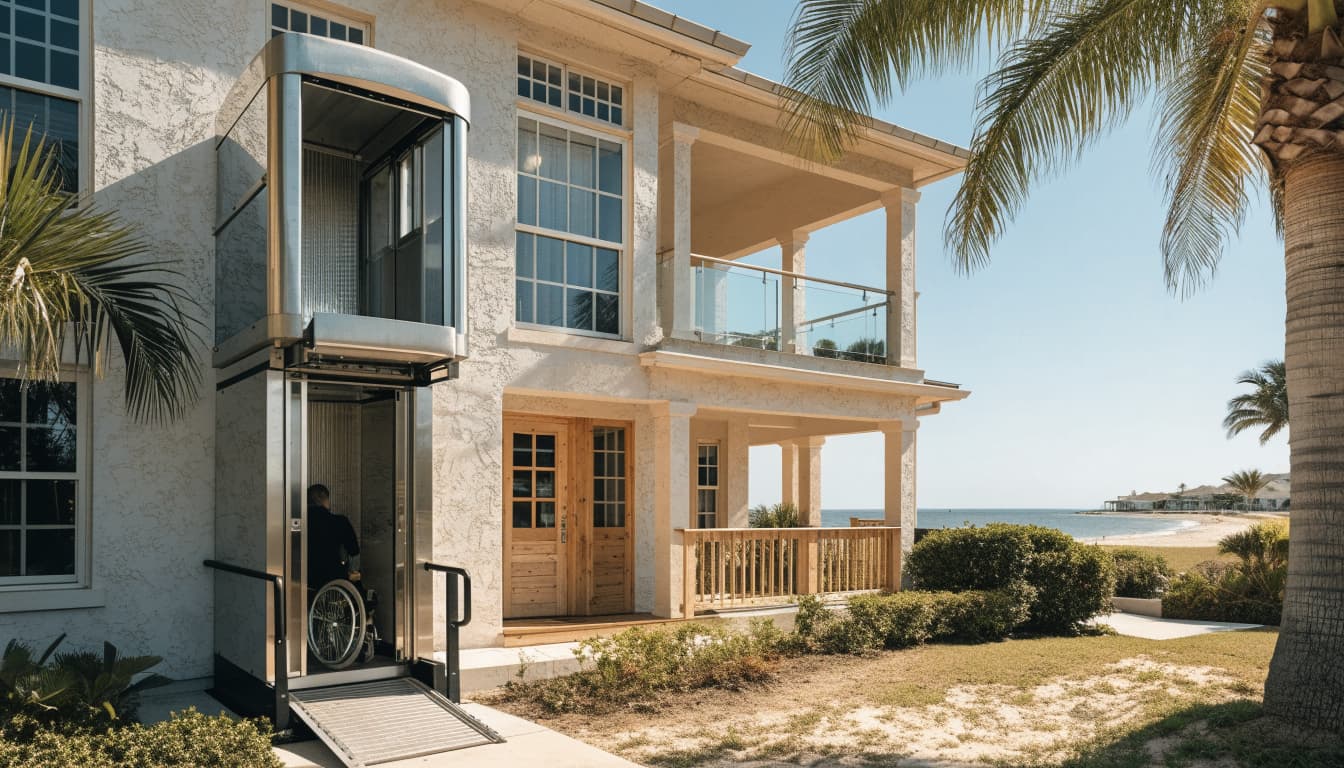
For an existing raised house, planning an outdoor lift retrofit also means checking wheelchair dimensions, controls, landing access, and support structures before selecting a model.
Private Homes Still Need Site-Specific Review
A lift used only by a household can have a different approval path from equipment serving the public. That distinction doesn't automatically remove permits, engineered design, or inspections.
Local Permits Cover More Than the Lift
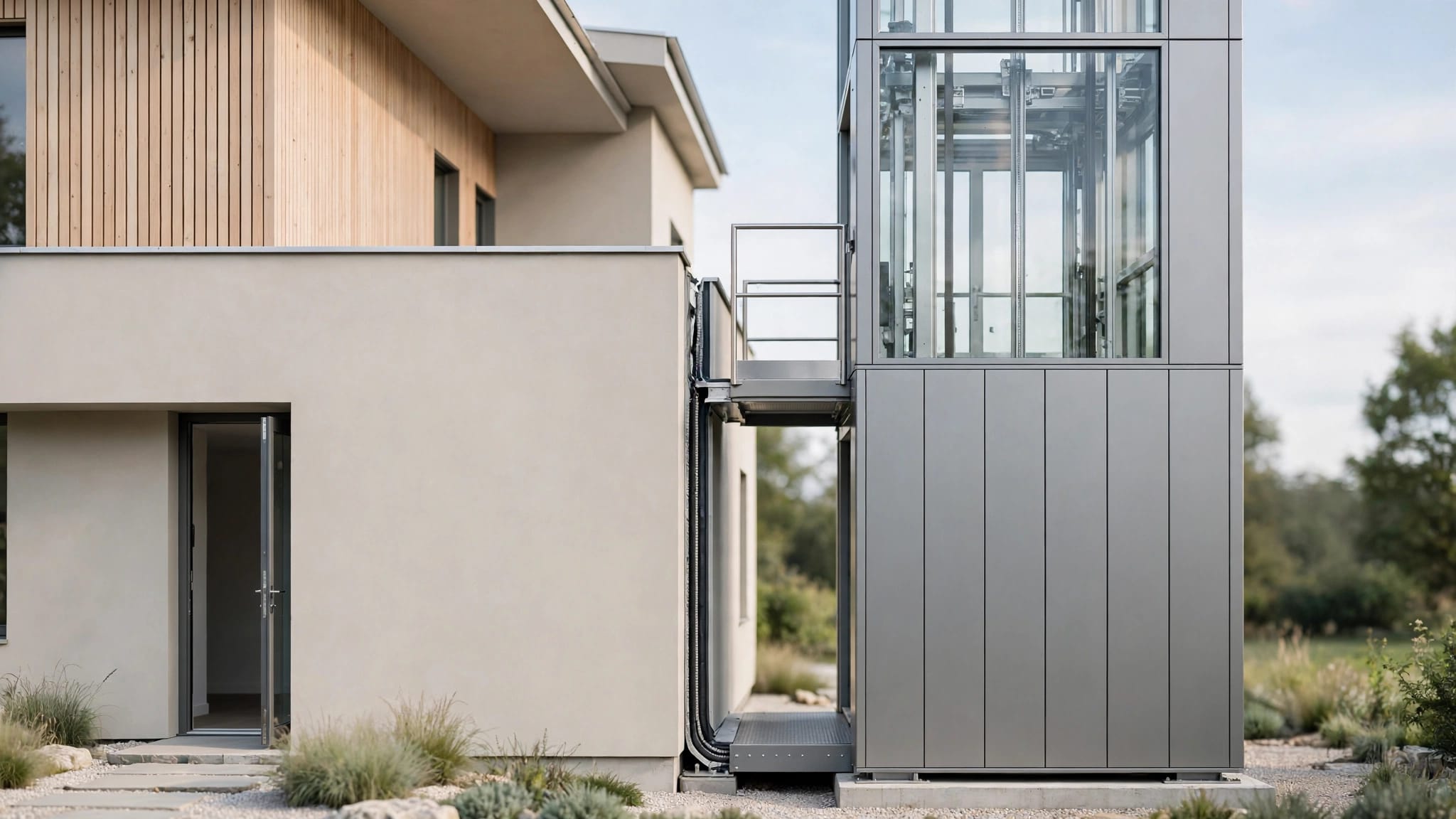
An exterior installation affects the property as well as the machinery. Review may include the foundation, tower attachment, electrical supply, landing gates, guards, and access clearances.
At coastal properties, professionals should also assess wind exposure, flood conditions, drainage, and corrosion risk. Weather-resistant construction doesn't replace structural calculations or site approval.
An existing porch or balcony also needs attention. Its ability to support ordinary foot traffic doesn't establish that it can accept lift connections or equipment loads. Measure finished landing heights and confirm the supporting structure before final drawings.
HOA Approval Is a Separate Decision
Where an HOA has architectural review authority, it may examine tower height, finishes, visibility, neighboring windows, and effects on shared paths. That review is separate from government permitting.
A submission should show dimensions, property lines, elevations, and the proposed finish alongside the home's existing materials. Catalog photographs rarely answer placement questions.
For Florida coastal homeowners, HOA review for beach-home elevators also benefits from clear treatment of privacy and equipment noise. Screening must leave safe access, maintenance space, drainage, and ventilation intact. Board approval doesn't establish code compliance.
Public-Facing Properties Need a Wider Review
Restaurants, shops, inns, and shared facilities bring different users and operating patterns. Customers may encounter the lift without training, while staff need procedures for loading, access control, and shutdowns.
Accessibility Requires an Approved Route
For U.S. projects subject to the Americans with Disabilities Act, equipment compliance is only part of accessibility. The approach, doors, thresholds, controls, and landing space also matter.
The 2010 ADA Standards address platform lifts in Section 410. Section 410.1 references ASME A18.1 and requires unassisted entry and exit. However, ADA scoping provisions limit where platform lifts can substitute for other accessible-route solutions.
That means an ASME A18.1-compliant product doesn't automatically satisfy the needs of every commercial building. Review commercial platform-lift accessibility requirements with your designer and local authority before treating a VPL as the answer.
Service Lifts Need Clear Separation
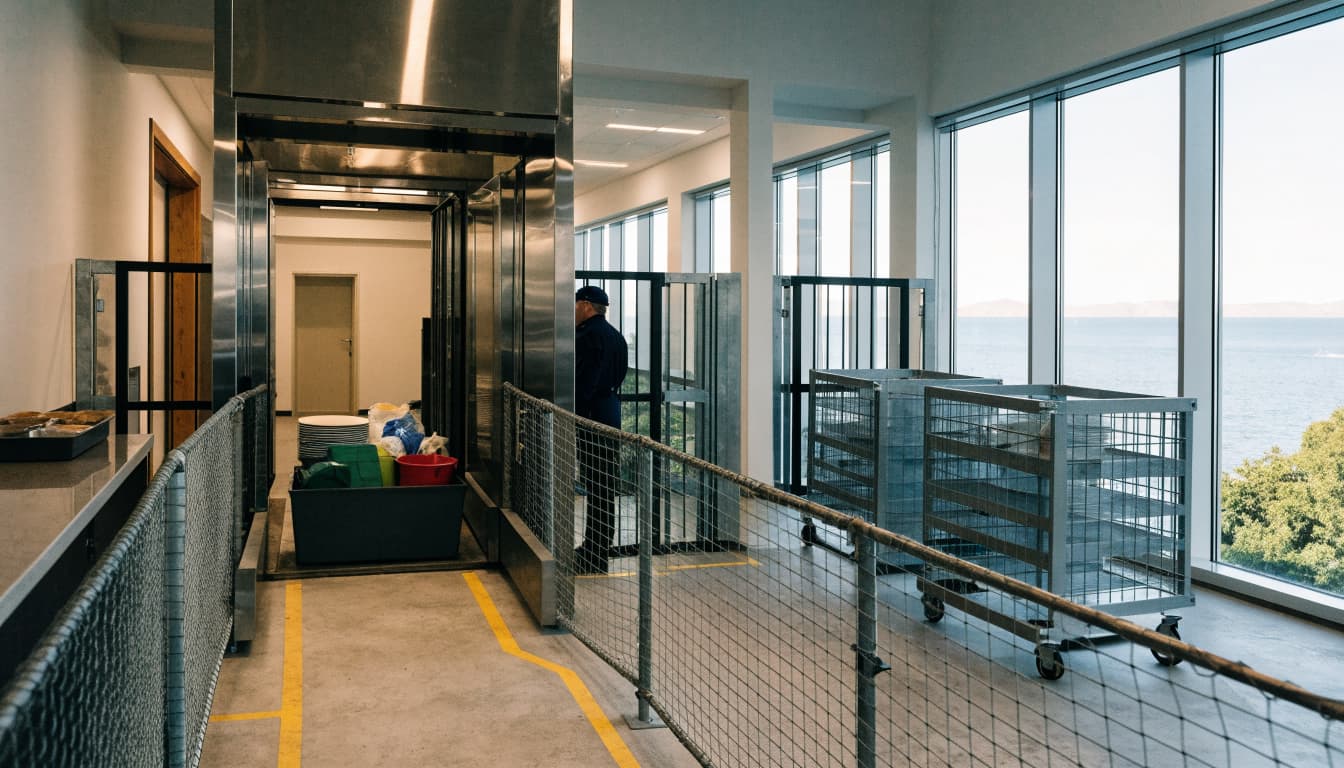
A restaurant or hotel may need a cargo lift for supplies and a separate passenger solution for accessible travel. Unless equipment is designed and approved for both functions, keep those uses separate.
Guarding, landing protection, and access controls should match the approved installation. A restricted service area doesn't make it acceptable for workers to ride materials-only equipment.
Frequent daily operation also affects equipment selection and maintenance planning. Tell the lift provider how often the system will run and what it will carry. Rated capacity alone doesn't answer whether the operating pattern suits the model.
Rentals and Mixed-Use Properties Need Clear Classification
A home used exclusively by its owners presents a different situation from an inn, shared residential facility, or property containing a business. Short-term rental use can also raise classification and operating questions.
However, renting a home doesn't automatically establish one universal elevator or accessibility requirement. The relevant authorities must assess the property's actual arrangement and applicable rules.
Describe the use accurately, including whether guests rent the entire house or individual rooms. Explain whether landings serve only one household or connect shared areas. If the lift also serves staff, customers, or a home-based business, include that information.
Ask for written clarification when the answer affects equipment eligibility or the permit route. Don't rely on an installation at a neighboring property as proof that yours will qualify.
Access management also needs attention. Managing lift access for rental guests involves permissions, operating instructions, and emergency contacts appropriate to the installed equipment.
A key switch can restrict access, but it doesn't change a lift's approved category or authorize passenger use on materials-only equipment.
Build an Approval Package Around the Actual Installation
A product brochure describes equipment. An approval package must connect that equipment to a specific building, site, and use.
Choose a permit coordinator early so the owner, contractor, designer, lift provider, and reviewing agencies receive consistent information.
Show the Equipment and Site Together
Identify the manufacturer, model, classification, intended users, rated load, and proposed operating purpose. Then supply model-specific drawings and installation requirements.
The package may need the following information:
- Show the lift location, travel path, landing elevations, gates, guards, and clearances.
- Include foundation, anchorage, attachment details, and structural load information.
- Document electrical supply requirements, equipment locations, and disconnect arrangements.
- Explain accessible approaches, weather exposure, drainage, and emergency access where relevant.
For cargo equipment, state the material-only purpose clearly. The paperwork shouldn't imply that workers or passengers may ride.
Early coordination of exterior lift construction helps align equipment drawings with structural, electrical, zoning, and floodplain submissions.
Confirm the Review and Inspection Sequence
Many projects proceed through classification, plan review, permits, construction, acceptance testing, and closeout. The responsible agencies and exact sequence vary.
In Florida, installations covered by the Department of Business and Professional Regulation's elevator safety program require the applicable state process. A registered elevator company handles covered new installations. Confirm state permit requirements before covered elevator work begins.
State elevator approval doesn't replace local construction approvals. Ask who schedules each inspection, what must be complete, and which documents close the permit. If the layout or equipment changes, obtain direction before departing from approved plans.
Keep Approved Use and Daily Operation Aligned
Approval isn't the end of the owner's responsibilities. At handover, check that the installed model and configuration match the approved documents.
Confirm the rated-load plate, operating restrictions, service contact, and emergency instructions. For passenger equipment, occupants and managers should understand whom to call after a shutdown. Residential elevator rescue planning should follow the installed system's features and the service provider's instructions.
Maintenance and recurring inspections depend on the equipment and applicable rules. Follow the manufacturer's schedule, and confirm any continuing obligations with the responsible authority.
Changes in property use deserve another review. Converting a private home into guest accommodation, adding shared users, or changing a cargo installation to passenger service may affect the original approval basis. Equipment modifications may also require review.
Discuss those changes with qualified professionals before expanding use. Keep approved drawings, inspection reports, service records, and change documentation available. They help future owners and technicians understand what the system was approved to do.
Approve the Use You Actually Need
The strongest lift approval application describes the users and loads accurately, then matches equipment to the property. Private ownership, a large platform, or an accessibility claim cannot replace that work.
Before buying, confirm the equipment classification and approval route with the relevant authorities and qualified lift or building professionals. Then keep the installation and everyday operation consistent with that approved purpose.
A clear distinction between moving materials and carrying people supports both a better submission and safer long-term use.
Recent Posts