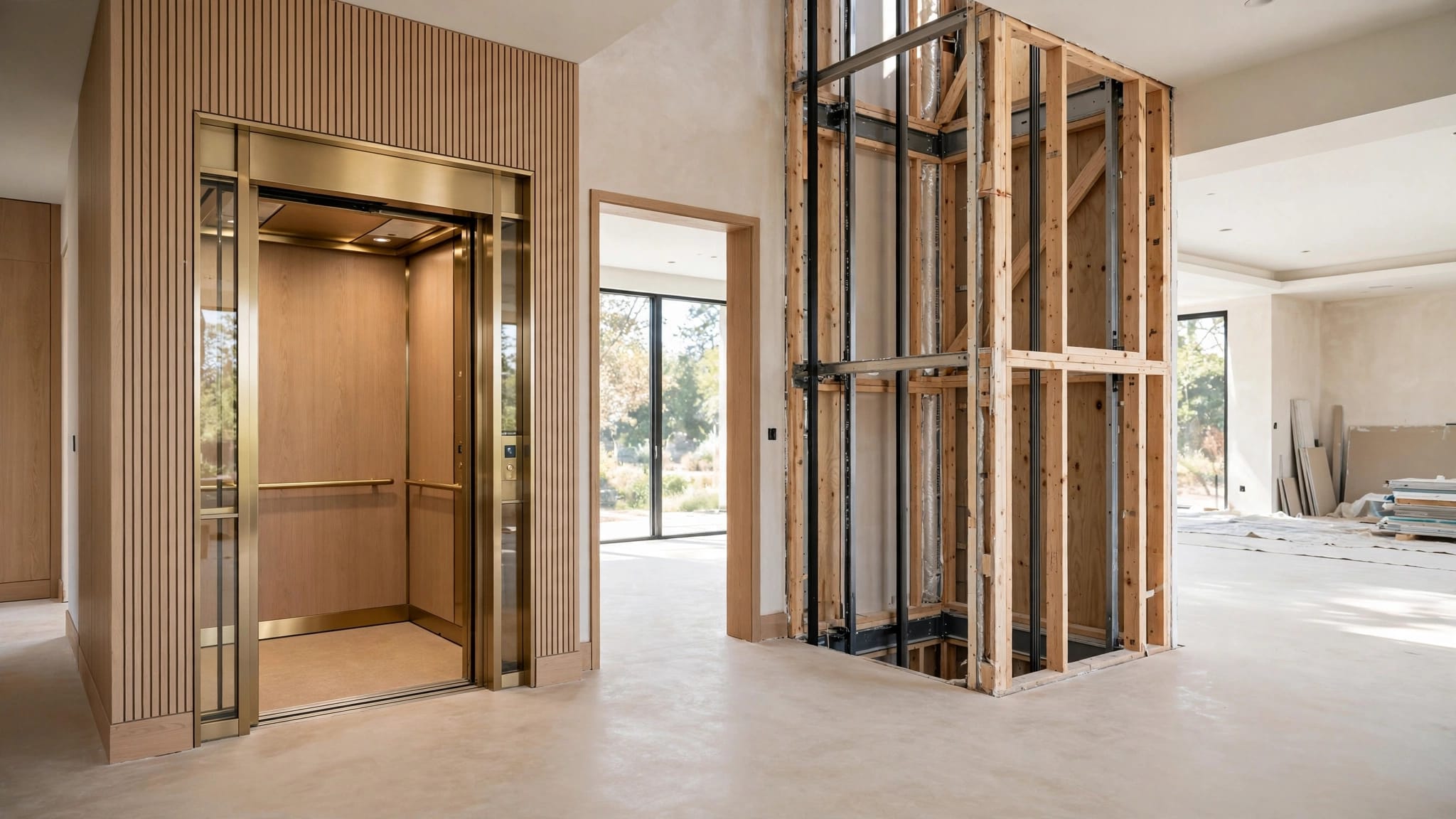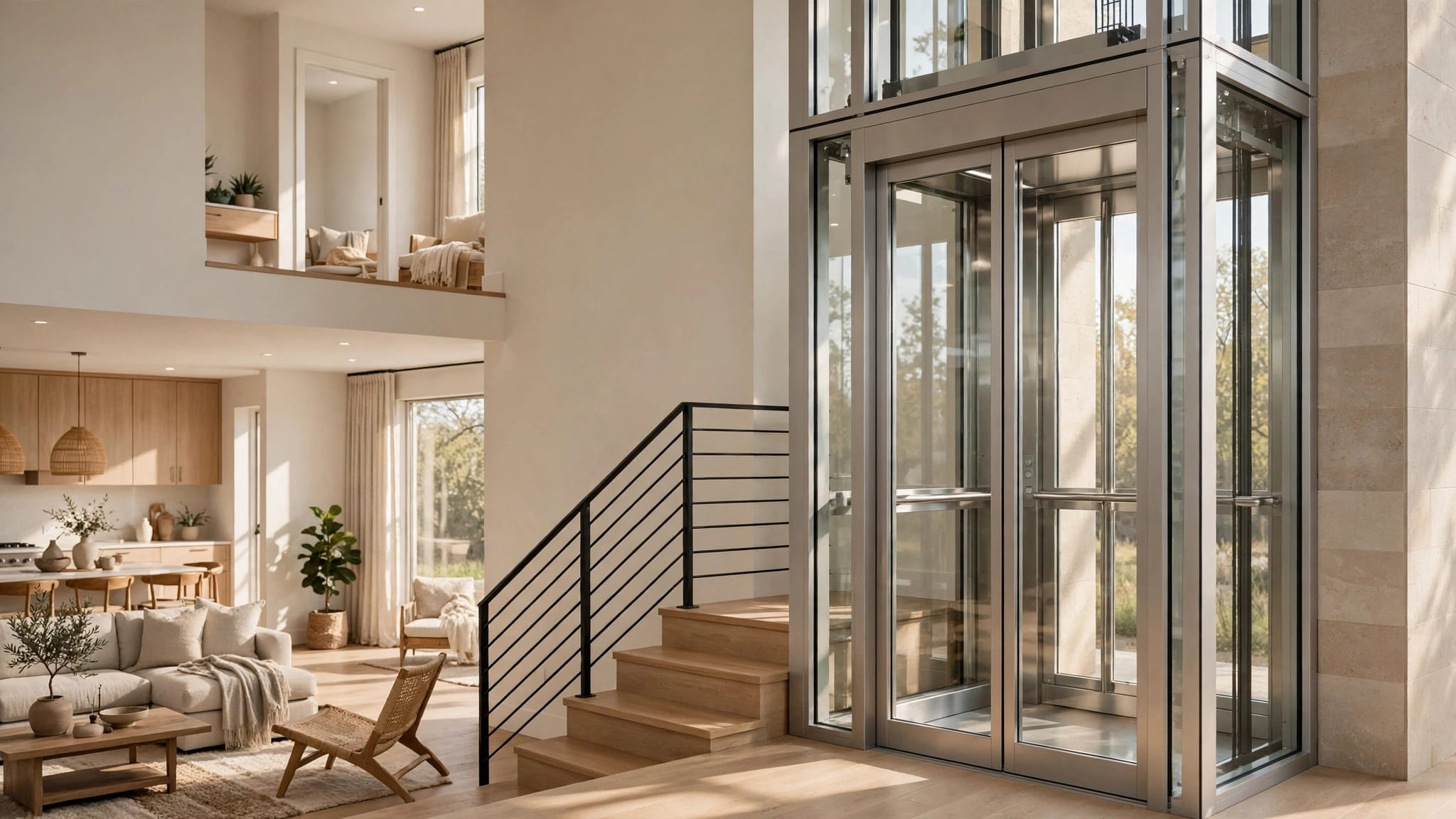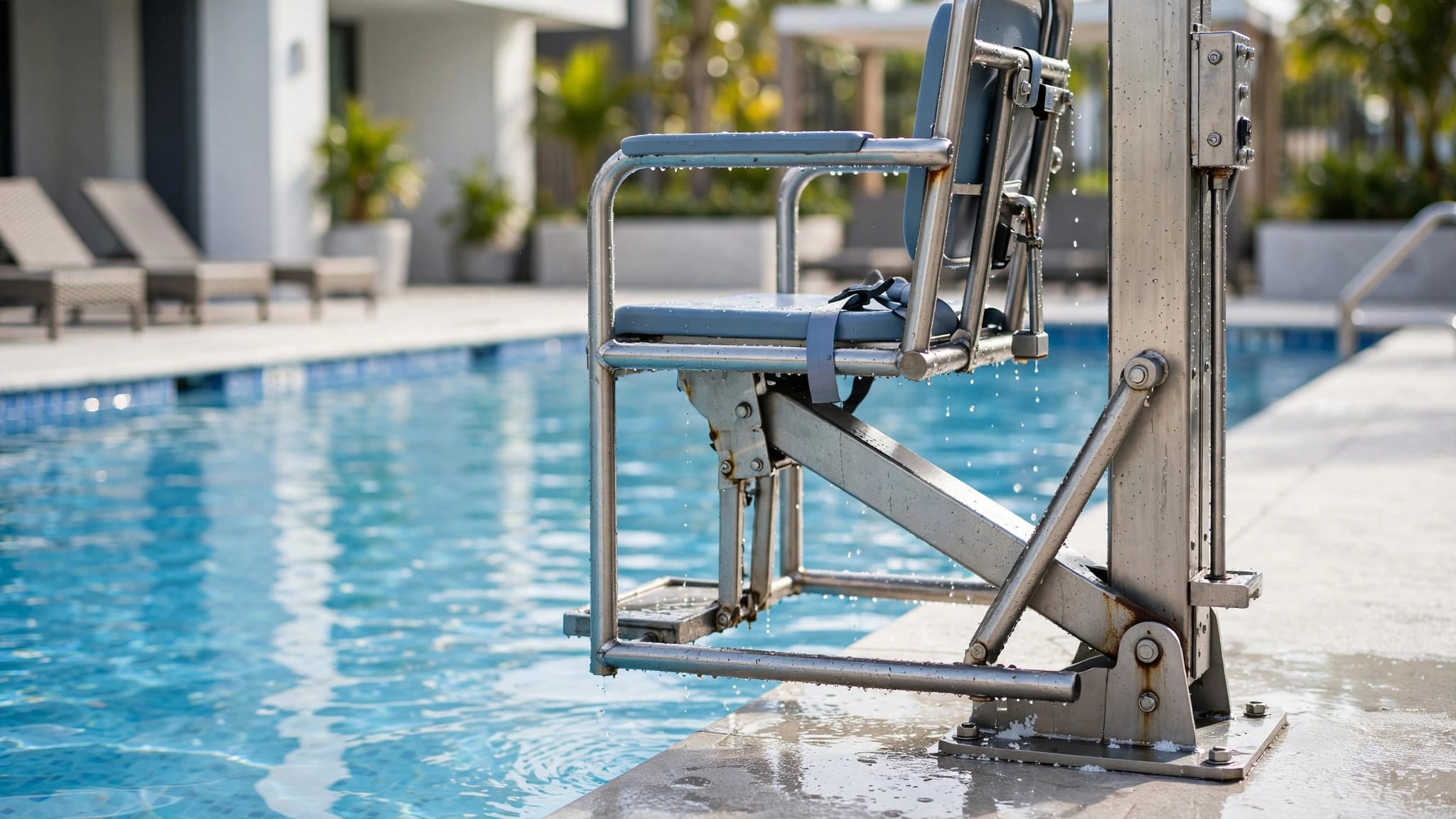
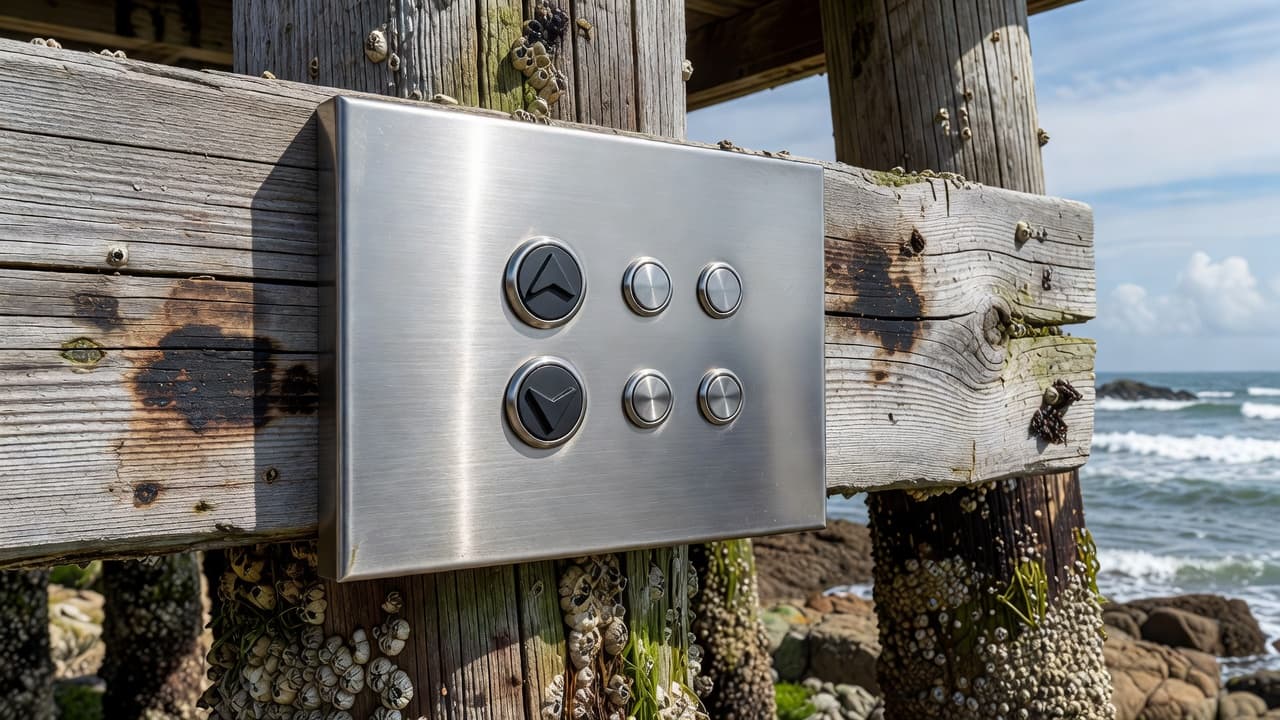

An outdoor lift may move people, groceries, tools, or cargo, but every trip depends on the control system. Choosing the right outdoor elevator controls affects convenience, weather resistance, accessibility, and safe operation.
A wall station might suit home elevators beside a residential entrance, while a radio remote can help an operator position a cargo lift at a dock or elevated building. The right elevator control system depends on the lift type, travel points, visibility, local code, and manufacturer instructions.
Key Takeaways
- Wired stations, wireless remotes, and combined systems each suit different outdoor lift layouts.
- A remote control must never replace limit switches, brakes, gates, emergency devices, required safety devices, or required supervision.
- Control placement should protect users from moving equipment, water, traffic, and accidental activation.
- Passenger elevators, cargo lifts, and vertical platform lifts have different control and accessibility requirements.
- Local authorities and the lift manufacturer must approve the final installation details.
How outdoor elevator controls work
An outdoor elevator control system tells the lift when to start, stop, travel up or down, and respond to a safety condition, working directly with the main elevator controller and drive system. Depending on the equipment, the setup may include a control station, limit switches, door or gate interlocks, safety devices, brakes, and overload protection.
A control station usually has clearly marked travel buttons alongside an emergency stop button. Some systems require the operator to hold a button during movement. This type of constant-pressure operation can help the operator stop the lift as soon as the platform reaches the intended position. Other systems may use maintained buttons or automatic floor controls, but the permitted configuration depends on the equipment and applicable rules.
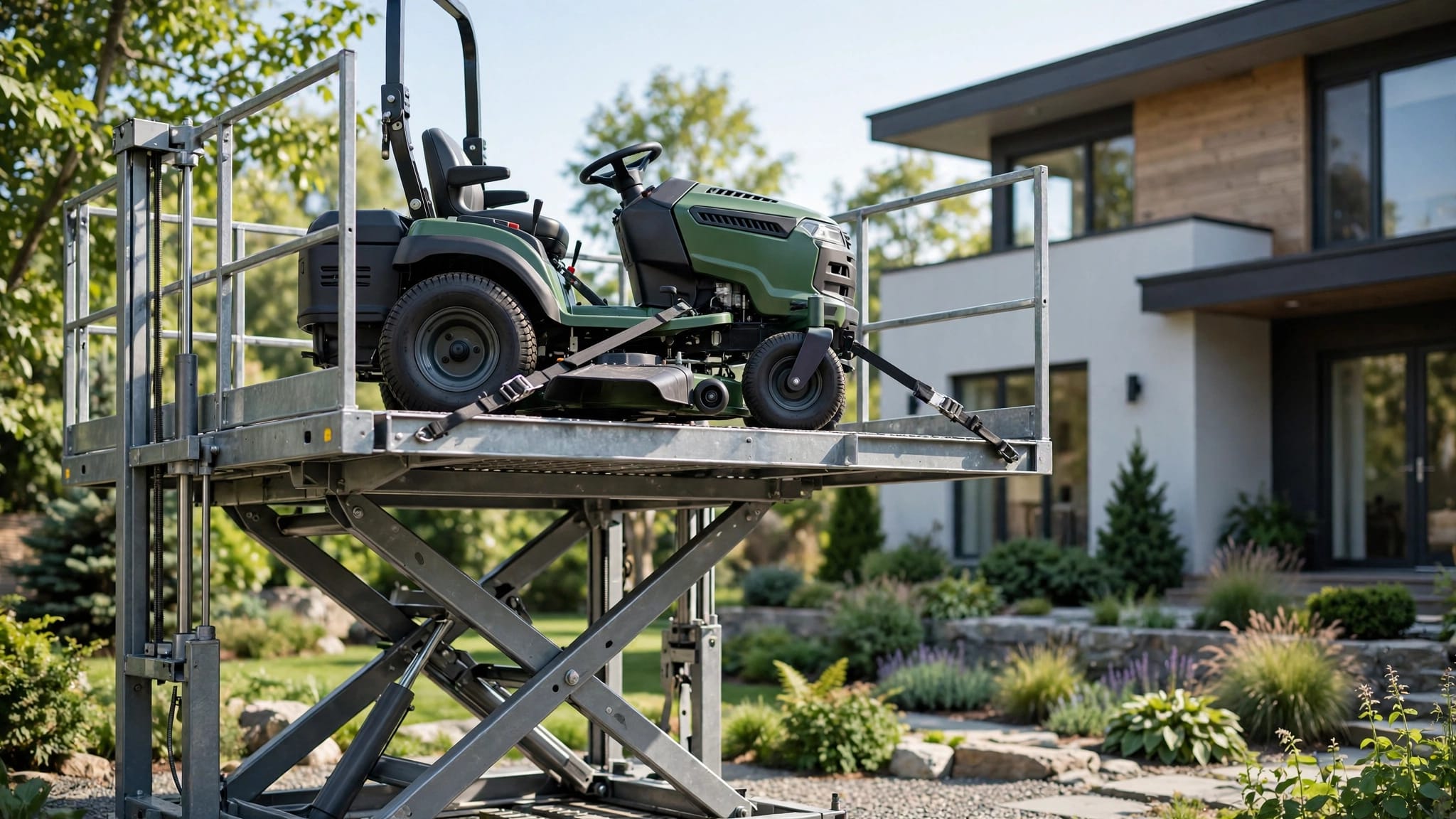
Limit switches are separate safety devices that identify the upper and lower travel points. They should not be treated as ordinary operating buttons. For example, a cargo lift specification may list a radio remote along with separate limit switches mounted at the upper and lower locations. That arrangement shows why the remote and the lift's travel controls perform different jobs.
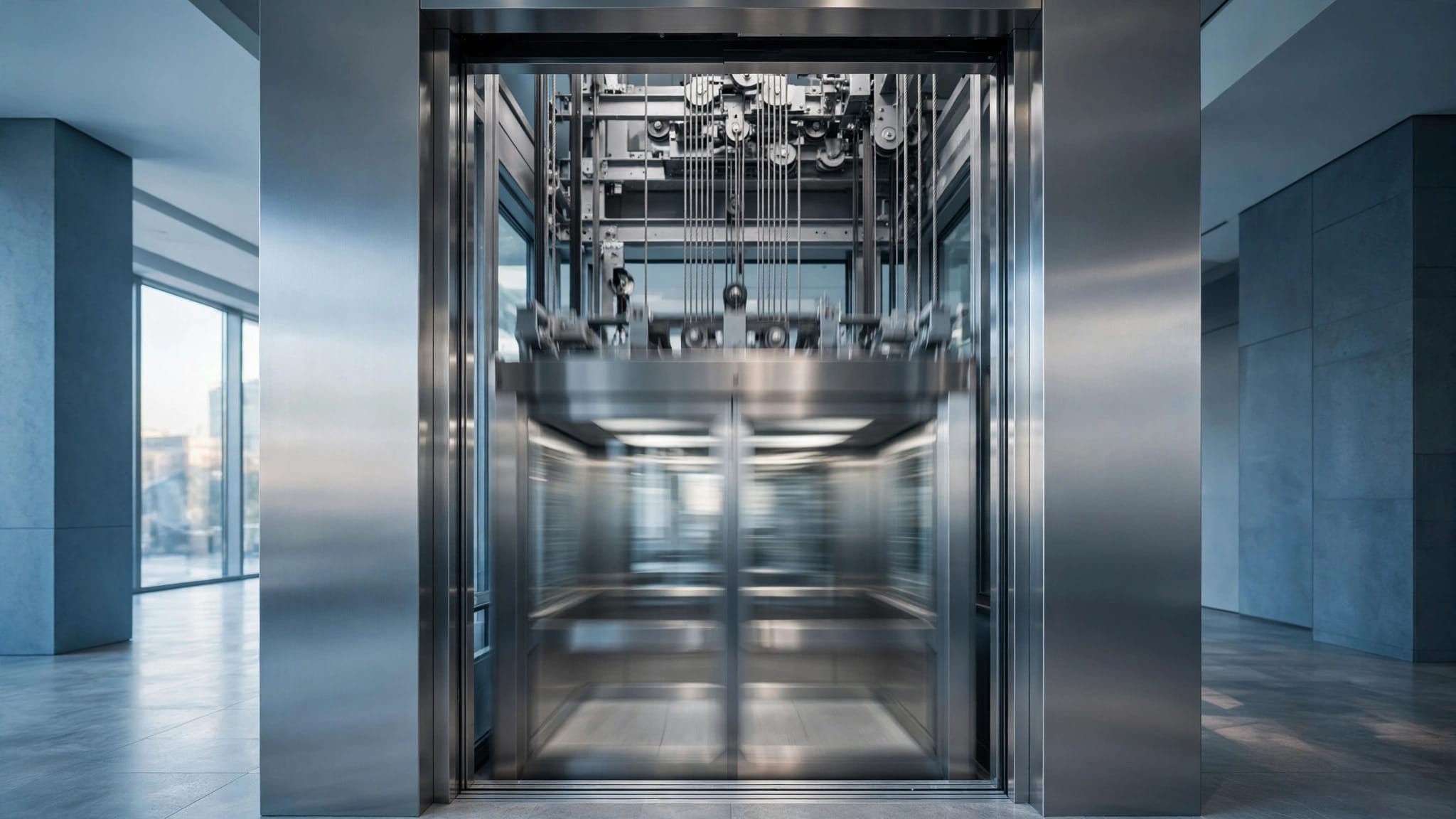
A well-designed control system also prevents movement when elevator doors are open or the door control system has not engaged. Braking systems, multiple cables, guarded controls, and platform alignment features may add protection, depending on the model. Review the actual specifications rather than assuming every outdoor lift includes the same components.
The control system doesn't change what the lift is approved to carry. A cargo lift is generally intended for materials, while a passenger elevator is designed and permitted for people. A vertical platform lift has its own accessibility and operating requirements. The controls must match that classification.
Wired, wireless, and remote control options
Traditional control panels and the main car operating panel often connect to the lift through a protected electrical cable, offering a fixed operating position beside a landing or gate. Wired controls are practical when the operator needs a familiar location and the building layout makes cable routing straightforward.
A wireless or radio remote sends an operating signal to a receiver connected to the lift control system. The operator may be able to stand near the loading area, watch the platform, and control travel without walking to a wall station. This setup can incorporate remote monitoring features and helps at waterfront properties, detached storage areas, loading points, and multi-story homes.
Many installations combine both methods to build a reliable elevator control system. A fixed station can provide a dependable primary control point, while a remote handles day-to-day positioning. The system may also include separate controls at more than one stop, combined with access control measures to prevent unauthorized activation. However, adding a remote doesn't remove the need for fixed safety devices or approved operating procedures.
| Control option | Useful when | Main planning concern |
|---|---|---|
| Wired station | The operator uses a fixed landing or entrance | Cable protection, weather sealing, and mounting height |
| Radio remote | The operator needs to control the lift near a loading area | Signal reliability, secure storage, and clear visibility |
| Multiple stations | The lift has several regular stops | Interlocks, control logic, and code-compliant locations |
| Combined wired and remote system | The property needs flexible daily operation | Preventing unauthorized or unsafe activation |
Remote controls also require practical safeguards. The operator should have a clear view of the platform, gate, landing, and travel path unless the approved system provides another method of safe monitoring. A signal that reaches the receiver doesn't prove that the area is clear.
Keep remotes protected from salt spray, rain, impact, and unauthorized use. A lost remote can create an operational problem, especially at a commercial property. Ask the installer how to disable a missing device and how to add or replace remotes.
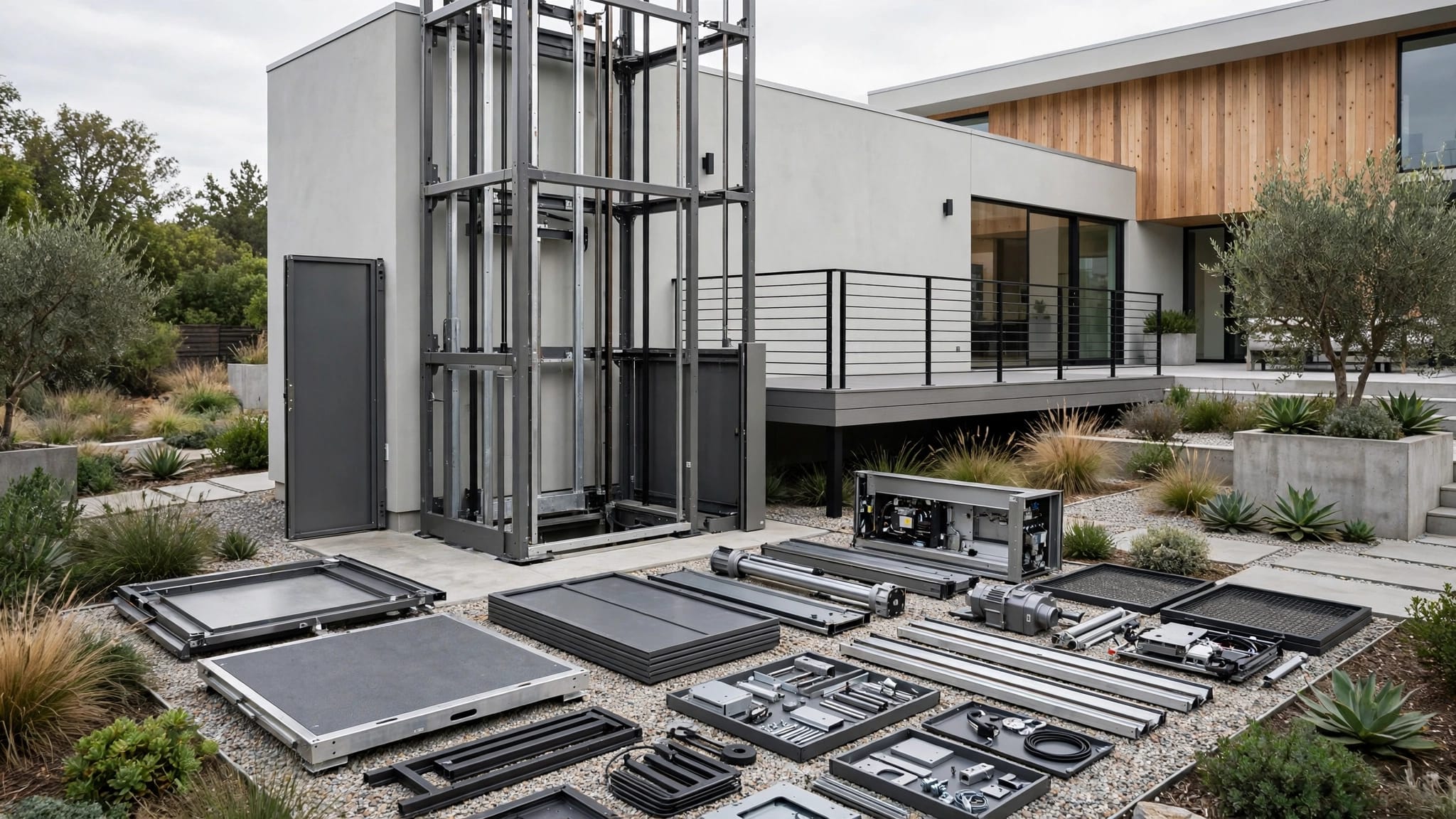
For equipment selection, review remote controlled cargo lifts alongside the lift's capacity, travel distance, motor, track, gates, and safety equipment. The remote is one part of the system, not the feature that determines whether the lift fits the property.
Where to place controls on an outdoor lift
Control placement affects safety as much as the control type. A station should be reachable by the intended operator without requiring contact with cables, pulleys, moving platforms, or pinch points. It should also sit where the operator can see the platform and landing area during movement.
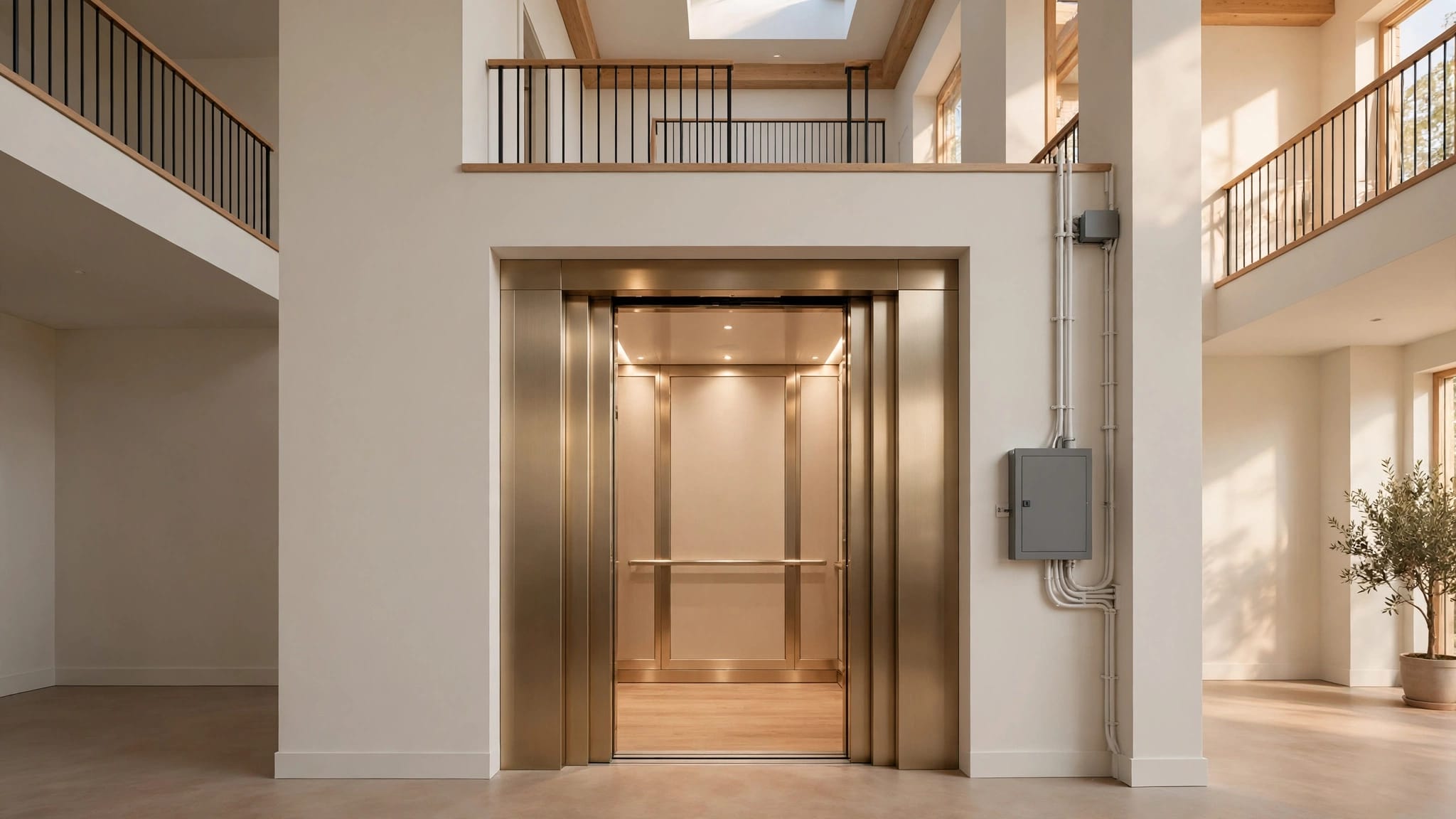
For home elevators, that may mean placing a station near the ground-level entrance or beside an upper landing. For commercial elevators at a marina, warehouse, or elevated property, the best location may be near a loading zone. The final position must account for gates, traffic, stairs, lighting, drainage, and the path people use to approach the lift.
Outdoor exposure adds another layer of planning. Salt air, direct sun, standing water, wind-driven rain, and temperature changes can damage unsuitable housings and switches. Marine-grade materials, sealed enclosures with safety protection, corrosion-resistant fasteners, and protected conduit can help, but the installation still needs regular inspection.
Avoid placing a control where a person must reach through a gate or stand under suspended cargo. Keep cords and remote storage points away from wet surfaces and vehicle paths. At night, provide enough lighting to identify the platform position, gate condition, and elevator buttons without relying on guesswork.
Accessibility requirements may affect button height, approach space, reach range, signage, and operating force. A wheelchair-accessible vertical platform lift may need controls at appropriate locations for a user seated on the platform. Passenger elevator controls have different requirements than cargo lift controls. The authority having jurisdiction, accessibility professional, and manufacturer should resolve those details before installation.
A remote can improve access to the control point, but it doesn't automatically make a lift accessible or code-compliant.
Choosing, installing, and maintaining the system
Start with the lift's approved use. If the equipment carries people, select a passenger elevator or another system specifically approved for that purpose. If it supplies commercial elevators or moves cargo between an elevated home and the ground, a heavy-duty model may fit better. When wheelchair access is the goal, compare the requirements for a vertical platform lift with the available space and travel height.
Next, list the normal operating points. Count the landings where users will enter or unload, then identify who will operate the lift. A homeowner may prefer a simple fixed station. A property manager may need controlled access, more than one station, or a remote that stays with trained staff.
Review these details with the manufacturer or qualified installer:
- Rated load and whether the lift carries people, cargo, or both
- Number of stops and the location of each control
- Required gate, door, and interlock arrangement
- Upper and lower limits, emergency stop devices, and an emergency alarm
- Weather exposure, corrosion protection, and an emergency power supply
- Remote range, receiver location, battery type, and replacement process
- Required inspections, routine elevator maintenance, and shutdown procedures
Local building, electrical, elevator, accessibility, and safety rules can apply at the same property. Requirements vary by jurisdiction and by equipment category. The installer should identify the permits, inspections, and approvals needed before work begins. Manufacturer instructions also control details such as wiring, grounding, enclosure ratings, control mounting, and how the drive system integrates with the elevator controller.
After installation, train every regular operator. Training should cover the rated capacity, gate operation, normal controls, remote use, emergency stop procedure, power-loss response, and conditions that require the lift to be removed from service. An unusual noise, uneven travel, damaged cable, failed gate, or unreliable control system requires prompt attention.
Keep operating controls clean and test the overall elevator control system according to the service instructions. Inspect exposed wiring, housings, fasteners, gates, cables, control modules, and limit devices for corrosion or damage. Coastal properties may need more frequent checks because salt and moisture can shorten the life of exposed components.
For waterfront facilities, cargo lift safety and controls deserve special attention because loading activity, wet surfaces, and changing weather can affect daily operation. A written shutdown plan also helps staff respond to storms, power outages, or equipment damage.
Which option fits your property?
A fixed wired station is often the clearest choice when users operate the lift from the same landing each time. It offers a known location and doesn't depend on a handheld remote battery. However, the cable route and enclosure need proper outdoor protection.
A radio remote may be useful when the operator needs to move around a loading area or control a cargo platform from a better viewing position. It works best when the receiver, signal range, remote storage, and operating procedure have been planned together.
A combined control system can provide flexibility, but it may also add more points to inspect and manage. Every station within the elevator control system must follow the same safety logic. One control shouldn't allow movement when another required gate, interlock, or set of elevator doors is open.
The lift category remains the deciding factor when designing a control system for your property. Read about the differences between cargo lifts and passenger elevators before selecting controls for home elevators or elevated residences. The choice affects enclosure design, permitted users, accessibility, inspections, and the level of supervision required.
Frequently Asked Questions
Can a wireless remote replace a fixed wall station entirely?
No, wireless remotes should generally supplement rather than replace the primary safety and operational framework of an outdoor lift. Fixed stations provide a dependable, hardwired control point that is unaffected by battery failures or local signal interference.
What weather protections do outdoor elevator controls need?
Outdoor controls require marine-grade materials, sealed housings, corrosion-resistant fasteners, and protected conduits to withstand rain, salt spray, and temperature changes. Regular inspections are still necessary to catch any environmental wear before it affects safety or performance.
Are the control requirements the same for passenger elevators and cargo lifts?
No, passenger elevators, cargo lifts, and vertical platform lifts have distinct regulatory and accessibility standards. The control placement, button height, and operating mechanism must precisely match the lift's approved classification and intended use.
Conclusion
Outdoor elevator controls should match the lift's approved use, operating locations, weather exposure, and local requirements. Wired stations provide fixed control points, while radio remotes can improve positioning and convenience when the operator maintains a clear view.
A safe installation keeps both options within a larger elevator control system that includes gates, limits, brakes, interlocks, emergency devices, and proper safety protection. Choose your outdoor elevator controls with the lift manufacturer and qualified installer, then maintain every component as carefully as the platform itself.
Recent Posts