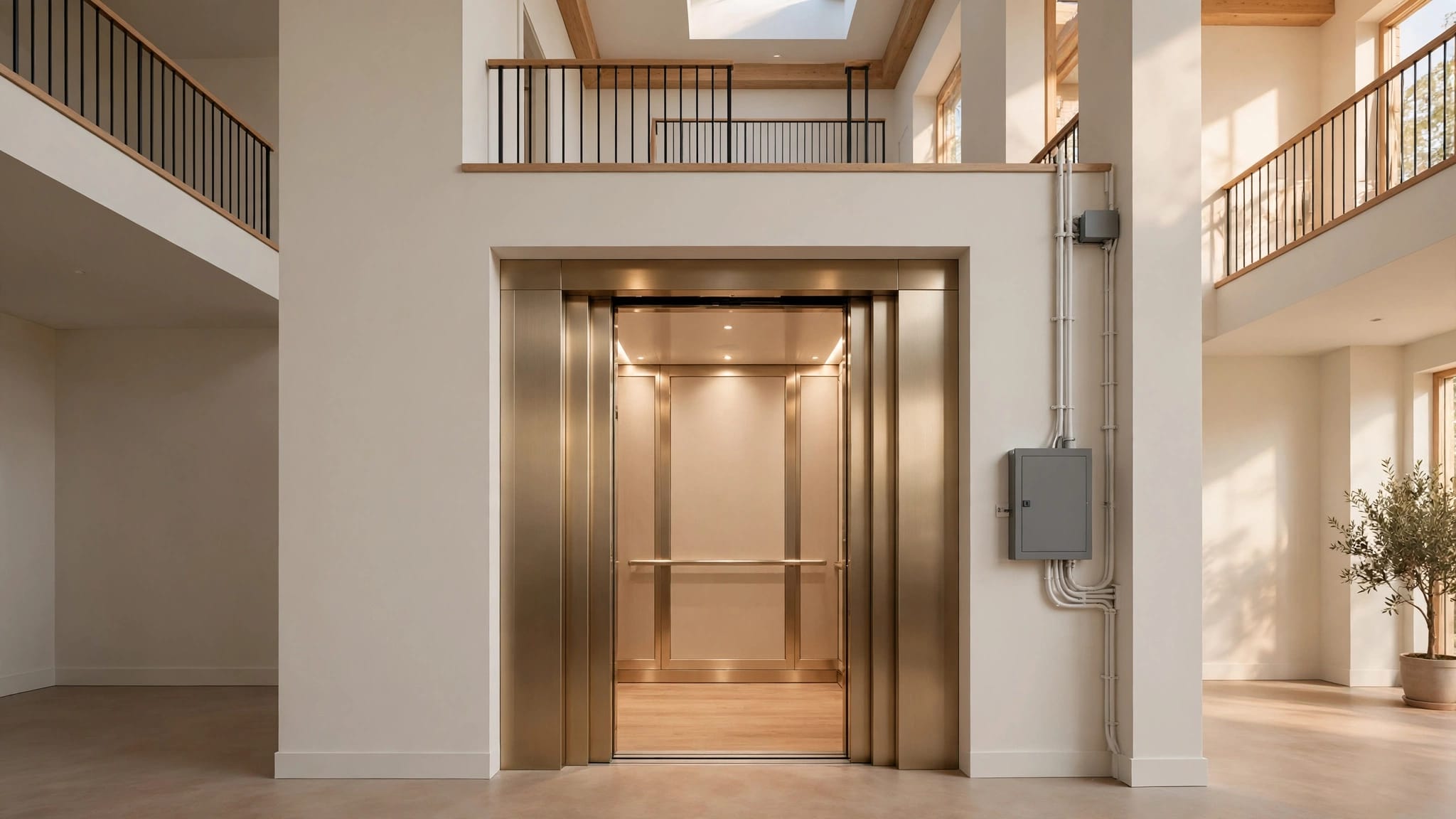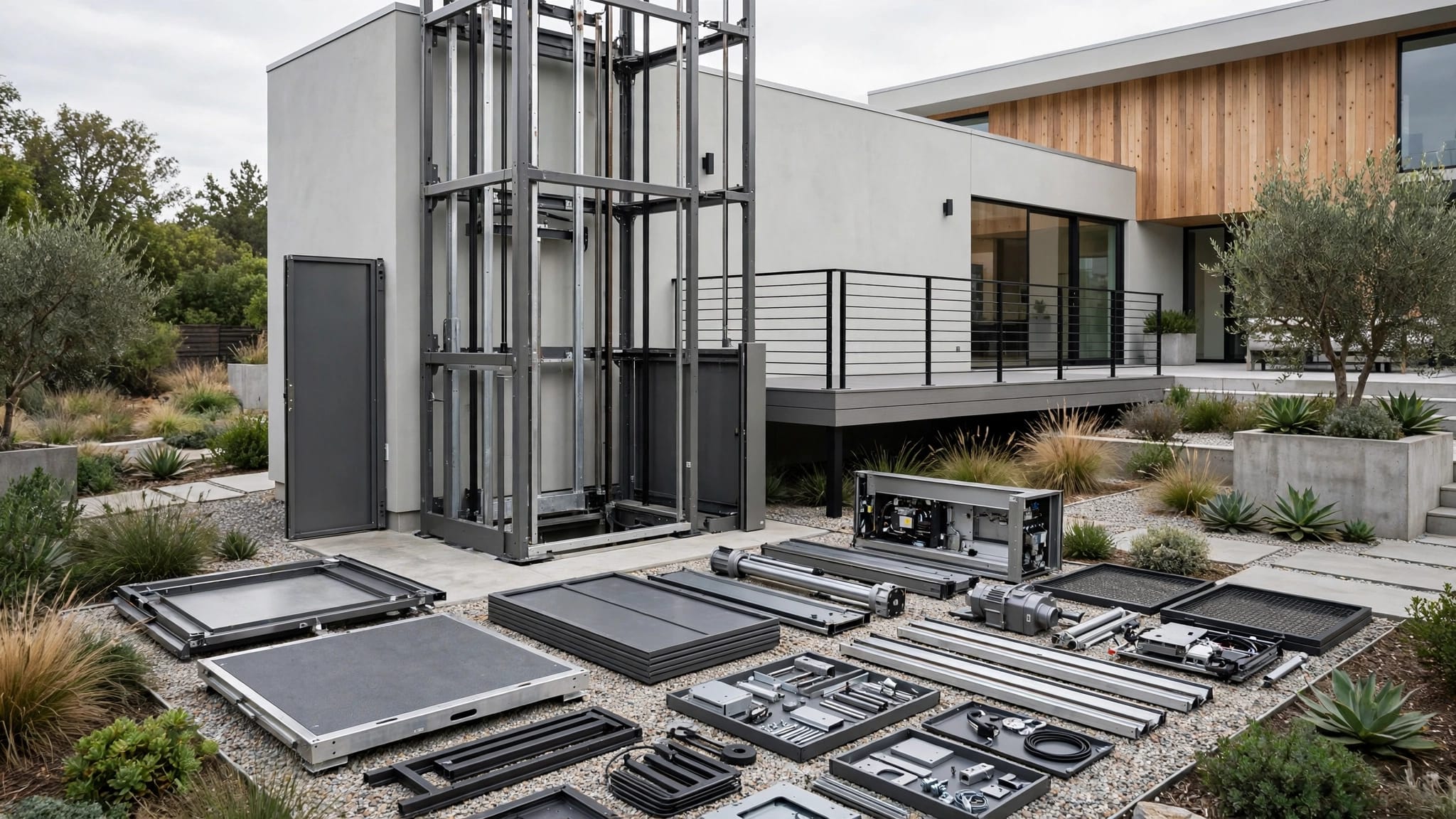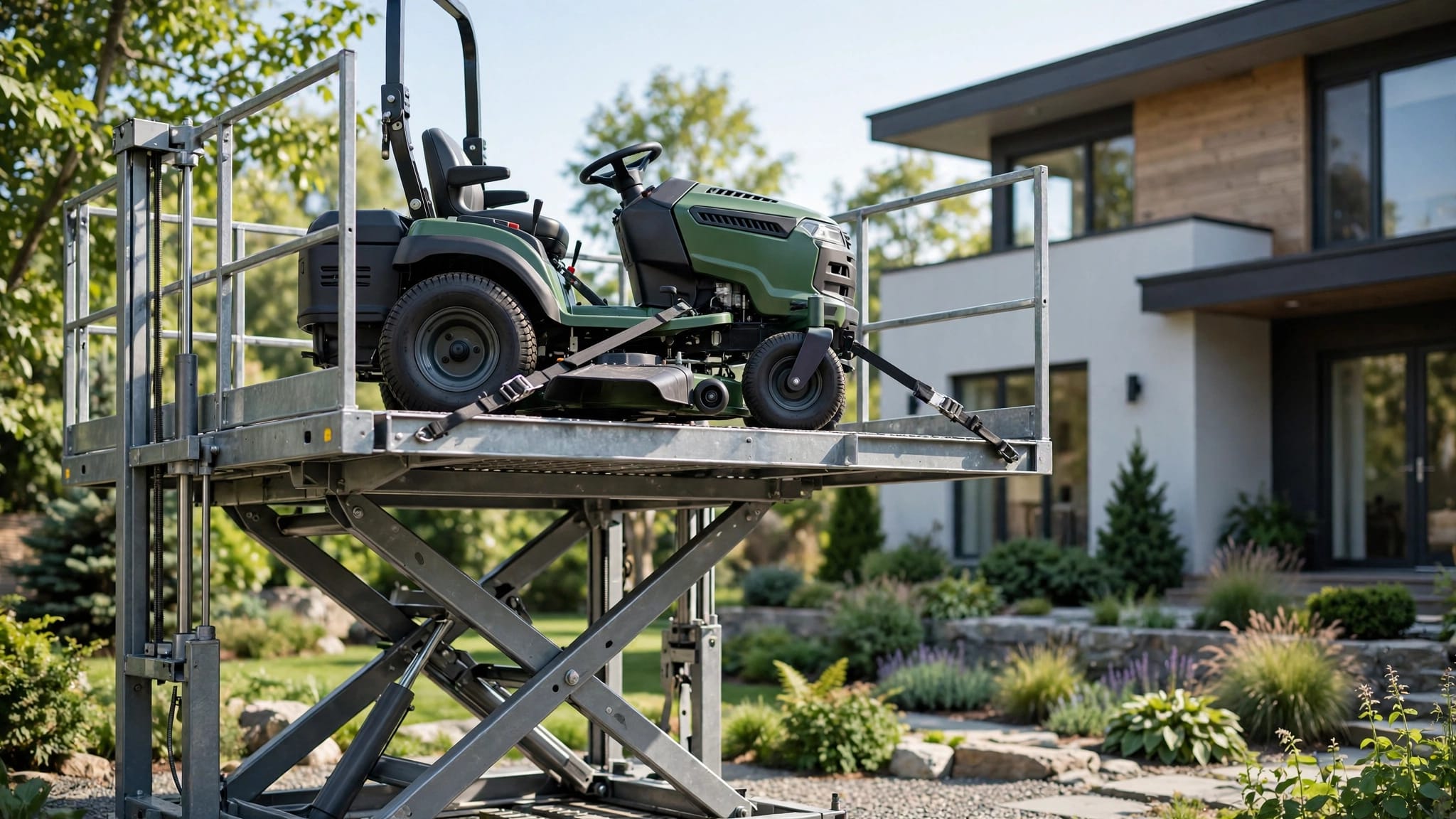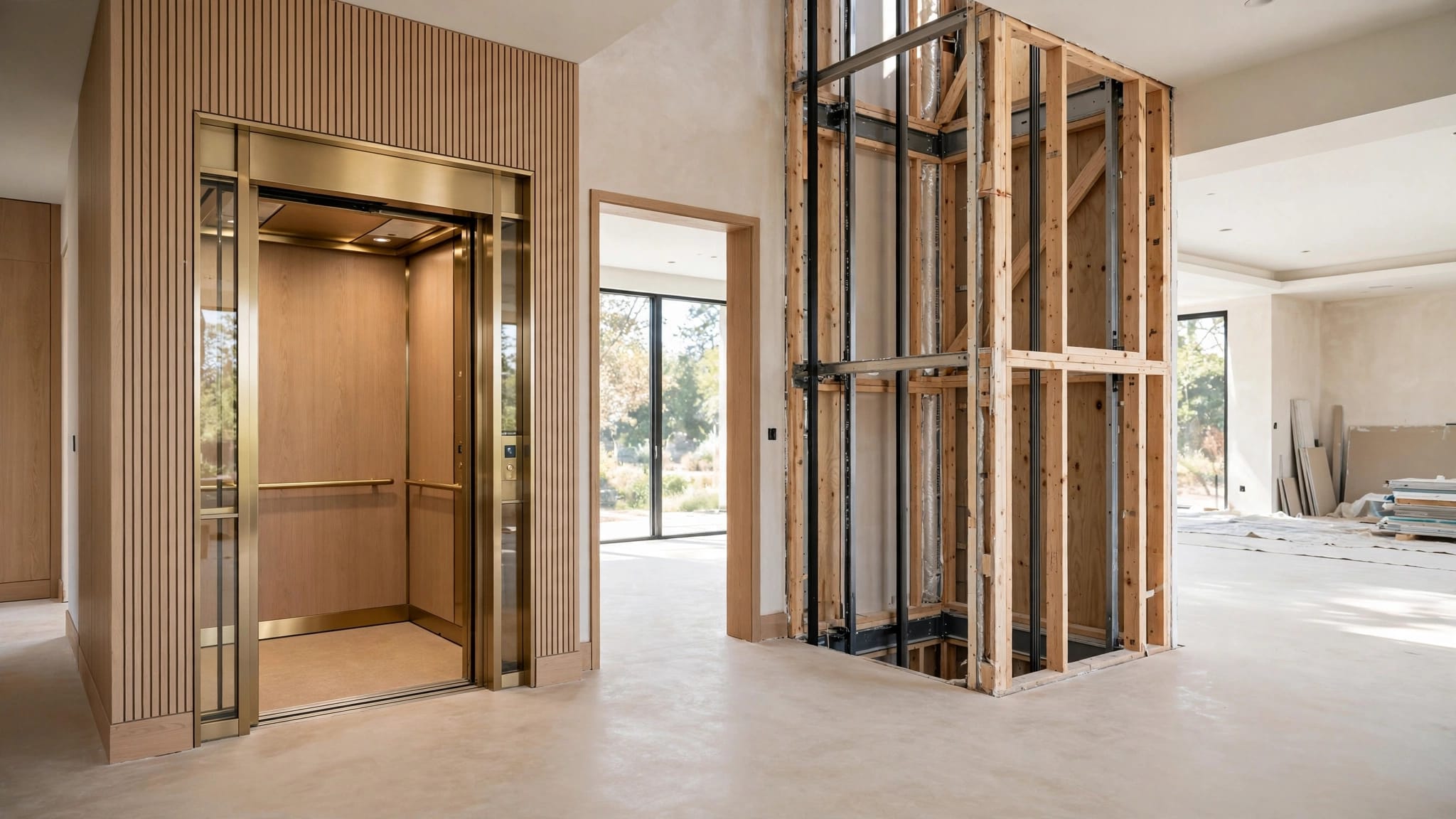
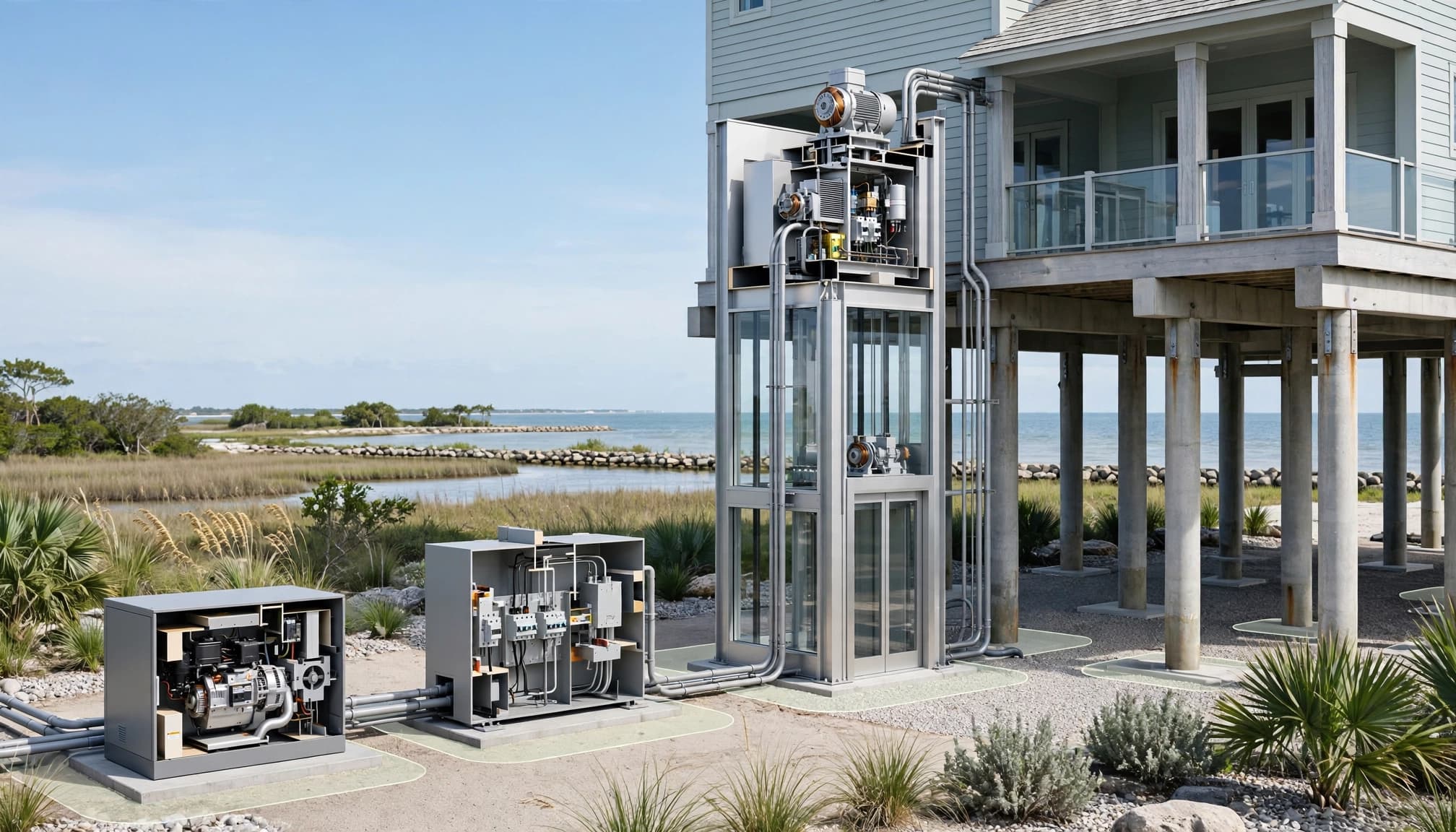

A generator can carry a home's lights and refrigerator yet still struggle when an outdoor elevator starts. Elevator generator sizing depends on the lift's motor-starting demand, controller behavior, transfer equipment, and every other load that comes online during an outage.
For coastal homes, salt air, flood exposure, wind, and drainage also shape where the equipment can safely go. Start with the lift's technical data and the property's load study before comparing generator equipment.
Key Takeaways
- The elevator motor's rated running load is only part of the calculation. A generator must also handle the motor's starting, or inrush, current without causing a voltage dip that trips the controller.
- Collect the lift manufacturer's motor and controller information first. Voltage, phase, full-load amperes, locked-rotor amperes, starting method, and auxiliary loads all affect the result.
- Standby and prime power ratings describe different operating conditions. The project's electrical design determines which rating applies.
- A whole-home generator may need load management if the elevator, air conditioning, pumps, cooking equipment, and other large loads could start together.
- In coastal and flood-prone areas, generator elevation, anchoring, corrosion protection, drainage, exhaust clearance, and service access require early coordination.
- Local codes, utility requirements, the elevator manufacturer's data, and a licensed professional's load study control the final generator selection.
Why Elevator Generator Sizing Starts With Motor Inrush
A lift's motor draws far more current when it starts than when it runs at normal speed. If a generator only matches the rated running load, the initial surge can pull voltage down enough to interrupt controls, prevent motion, or create a fault.
Running amperage does not show the full demand
Elevator nameplates may list horsepower or kilowatts, voltage, phase, and full-load amperes. Those figures describe normal operation, but they don't fully describe starting behavior.
Across-the-line motor starting is often estimated at about five to seven times full-load current. That range is only a general motor reference, not a rule for every elevator. A drive, soft-start system, or other controller can change the demand substantially.
The elevator manufacturer should provide the motor's locked-rotor amperes or approved starting data. For an outdoor passenger elevator, cargo lift, or vertical platform lift, also confirm the product's approved use before planning backup power. A cargo lift that is not rated for passengers must never carry people.
Controller and auxiliary loads matter too
The motor isn't the only electrical load. The controller, brake, door or gate circuits, car lighting, ventilation, communication equipment, alarms, sump pumps, and machine-space cooling may all draw power.
Battery-backed lowering or rescue equipment needs its own review. A battery may move the car to a landing and release passengers after an outage, but it does not automatically provide normal travel. Battery age, charging, fault conditions, and controller compatibility all matter.
Use an outdoor elevator site survey checklist to document the lift type, landing heights, electrical route, expected use, and site conditions before the electrical design begins.
A Simple Elevator Generator Sizing Framework
A licensed electrician or electrical engineer should complete the final calculation. Still, a clear framework helps homeowners and builders ask for the right information.
Gather data before doing the math
- Record the elevator motor's voltage, phase, horsepower or kW, full-load amperes, locked-rotor amperes, and starting method from current manufacturer documents.
- List every load expected on generator power, including the elevator controller, lighting, pumps, refrigeration, HVAC, well equipment, and selected receptacle circuits.
- Identify which loads can run together and which can start in sequence. This step prevents a large motor start from overlapping with an air-conditioner compressor or pump.
- Confirm generator voltage, frequency, power factor assumptions, transfer-switch rating, conductor length, and the controller's acceptable voltage and frequency range.
For a three-phase running motor load, the basic calculation is:
Running kVA = voltage x amps x 1.732 / 1,000
For a single-phase load, use voltage x amps / 1,000. This gives a running-load reference, not a finished generator size.
Use examples as a question list, not a final answer
Consider a 240-volt, single-phase lift motor with a full-load current of 24 amps. Its basic running demand is about 5.76 kVA. If the manufacturer confirms a six-times starting-current condition, the starting current would be about 144 amps, or roughly 34.56 kVA at the motor terminals.
| Load condition | Illustrative input | Calculated reference |
|---|---|---|
| Motor running | 240 V x 24 A | 5.76 kVA |
| Motor starting | 240 V x 144 A | 34.56 kVA |
That example does not select a generator. The final design must account for the controller, starting method, generator alternator response, cable voltage drop, and other connected loads.
A generator's ability to accept a motor start matters as much as its continuous kW rating.
Standby Power, Prime Power, and Whole-Home Loads
Generator ratings describe how a unit may operate. They are not interchangeable labels.
Match the rating to the intended duty
Standby power applies to backup operation during a utility outage. Prime power applies to applications with longer or more variable operating periods, usually where utility power is unavailable or unreliable for extended periods.
A coastal residence with utility service usually uses a standby-power design. However, the generator manufacturer, electrical designer, and local authority must confirm the correct rating and operating limits. Extended post-storm outages can place more demand on a system than a short outage.
Plan automatic transfer operation
An automatic transfer switch, or ATS, senses a utility failure, signals the generator to start, and transfers selected circuits after the source stabilizes. When utility power returns, it transfers the load back and allows the generator to cool down.
The electrical plan must state whether the elevator sits on the backed-up panel. Many systems power selected emergency circuits, not the entire house. If the lift is included, the ATS and generator need enough capacity for the elevator's starting event and the home's planned concurrent loads.
NEC Article 220 load calculations and NEC Article 702 guidance for optional standby systems help shape this work. Load-shedding controls may temporarily hold back air conditioning, pool equipment, or another large load while the elevator starts.
Coastal Placement Changes the Electrical Plan
A generator location that looks convenient on a site sketch may fail when flood elevation, exhaust clearance, wind anchoring, and service access enter the conversation.
Raise equipment above flood exposure
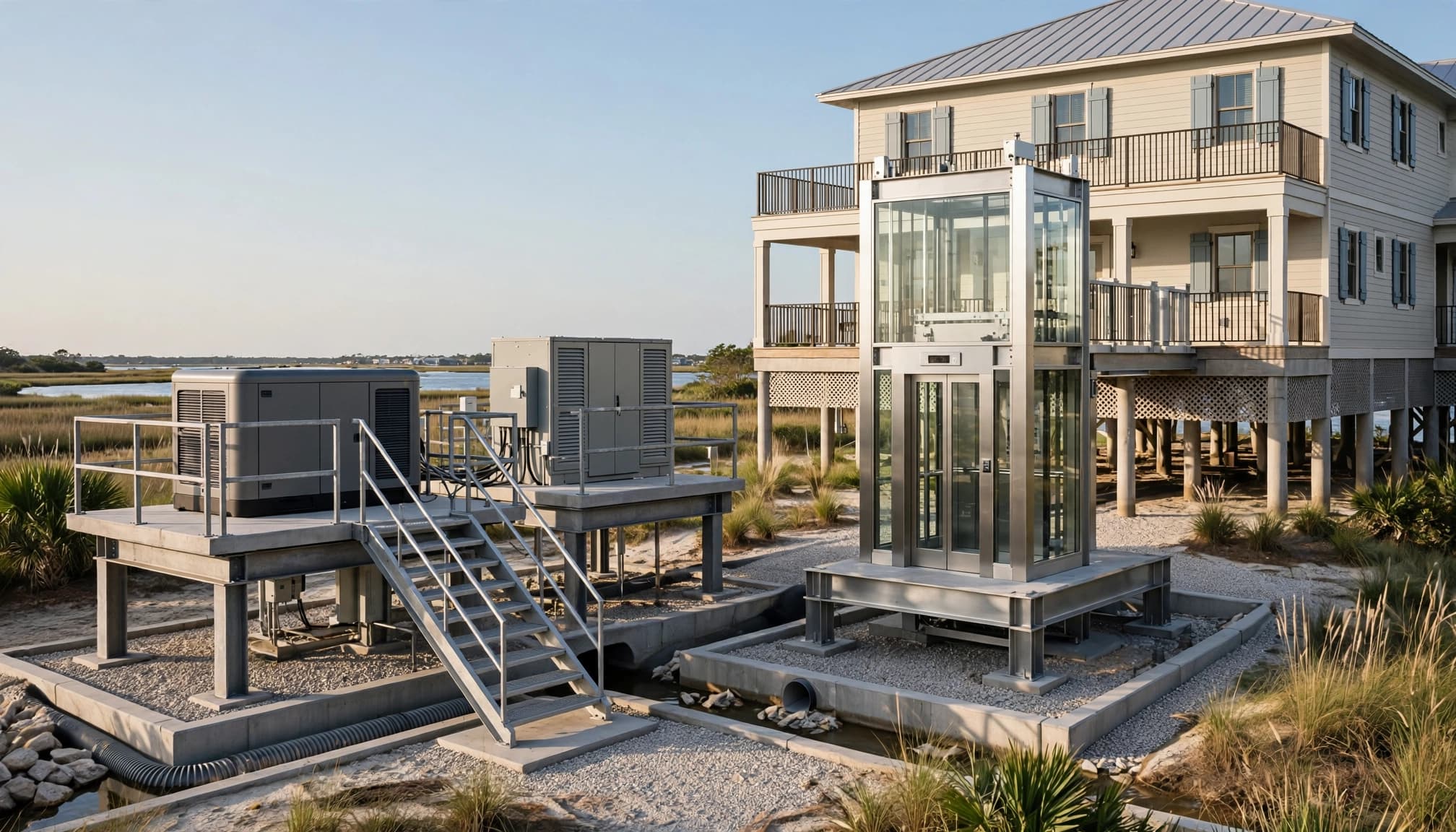
In applicable flood-hazard areas, Florida Building Code flood provisions require generator installation to follow ASCE 24. The required elevation depends on the property's flood designation and the local authority having jurisdiction.
For example, City of Naples guidance has called for plans to show generator location and elevation, with BFE plus one foot in Special Flood Hazard Areas. That local requirement does not apply everywhere. The permit authority sets the project standard.
A raised, engineered platform may protect equipment from floodwater, but it must also handle wind forces and provide safe access for service. Keep the generator clear of areas where sand, roof runoff, or standing water can collect.
Protect against water and salt exposure
Salt spray and humid air speed up corrosion at enclosures, terminals, fasteners, disconnects, and conduit fittings. Outdoor-rated equipment, corrosion-resistant hardware, proper seals, and regular inspections help limit damage.
Generator exhaust and service clearances must follow the manufacturer's instructions and local code. Naples guidance, for instance, references five feet from openings and combustible materials unless a one-hour fire-rated barrier applies. Confirm the local rule rather than copying a distance from another jurisdiction.
Drainage also affects safety around the lift and generator. Exterior elevator drainage planning can help prevent runoff from reaching access paths, platforms, electrical equipment, or lift foundations.
Test the System as One Connected Setup
A generator test that only starts the engine does not show how the elevator will behave during an actual outage. The lift, transfer equipment, electrical loads, and safety devices need coordinated testing.
Test transfer and lift response
A qualified technician should test the planned outage sequence under controlled conditions. The test should verify generator start, ATS transfer, controller restart, elevator operation, battery-rescue behavior if provided, and return to utility power.
Avoid placing passengers in the elevator during commissioning tests. A technician should confirm normal operation, fault response, and safe landing behavior based on the lift manufacturer's procedures.
Testing intervals differ by equipment classification, jurisdiction, and manufacturer instructions. NFPA 110 testing schedules may apply to certain emergency power systems, but they are not a universal residential elevator requirement.
Maintain records in a coastal environment
Keep a service record for generator exercise, battery replacement, fuel checks, transfer testing, corrosion findings, controller faults, and elevator maintenance. This history helps technicians spot patterns before an outage exposes them.
After storms, inspect for standing water, debris, damaged conduit, loose hardware, salt buildup, and blocked airflow. Follow the manufacturer's cleaning instructions, because improper washing can force water into electrical components.
A coastal outdoor lift maintenance checklist helps coordinate routine lift care with generator service and site inspections.
FAQ
Does every outdoor elevator need generator backup?
No. Whether backup power is required depends on the lift type, building use, local code, permit conditions, and the owner's needs. Some homes use a battery-lowering feature for passenger release, while others include selected generator-backed circuits.
Can generator size be based on elevator horsepower?
Horsepower is a starting point, not a selection method. The final calculation needs motor-starting data, voltage, phase, controller details, auxiliary loads, conductor length, and expected whole-home demand.
Can a whole-home generator power an outdoor elevator?
It may, if the electrical design includes the elevator and the generator can carry its starting demand with other planned loads. An electrician may use load management to control which major loads start together.
Choose Power Based on the Whole System
A dependable outdoor elevator backup plan begins with the motor's starting demand, not its running load alone. The generator, controller, ATS, house loads, wiring, flood elevation, drainage, and maintenance plan must work together.
For coastal homes, a licensed load study and manufacturer-approved lift data turn a broad generator idea into a safe, site-ready electrical design.
Recent Posts