Outdoor Lift Inspection: How Often Is Professional Service Needed?

Share this article

A lift can appear to work normally while moisture, wear, or a weakening safety component develops out of sight. That is why an outdoor lift inspection should follow a written plan, not a guess based on how often the equipment runs.

There isn't one inspection interval that fits every cargo lift, passenger elevator, or vertical platform lift. Your equipment manual, local regulations, site exposure, and qualified service provider set the right schedule.

Start With the Required Outdoor Lift Inspection Schedule

The lift's owner's manual is the first document to review. It identifies approved maintenance tasks, inspection intervals, cleaning methods, load limits, and conditions that require shutdown.

Next, check with the authority having jurisdiction, often called the AHJ. State, county, and municipal rules can set formal inspection and test requirements that differ by lift type and installation location.

For example, Florida Administrative Code 61C-5.013(b) requires annual Category 1 periodic safety tests for elevators covered by the state's program. However, annual testing is only one part of a complete maintenance plan. Other tests can fall on longer cycles, and local rules may add requirements.

Lift type changes the inspection requirements

Passenger elevators commonly fall under ASME A17.1, the Safety Code for Elevators and Escalators. Vertical platform lifts, including many wheelchair lifts, often follow ASME A18.1 instead. These standards cover different equipment and shouldn't be treated as interchangeable.

Cargo lifts also require their own review. A platform designed for tools, groceries, luggage, or building materials isn't automatically approved to carry people. The cargo lift and passenger elevator differences affect the applicable code path, safety features, and service needs.

Operator Checks, Servicing, and Formal Inspections Are Different

A sound inspection plan has several layers. Each one catches a different kind of problem.

Frequent operator checks catch visible problems

Before use, an owner, property manager, or trained operator can look for obvious hazards. Check that landing gates close and latch, the platform is clear, controls appear intact, and no water or debris blocks travel areas.

Listen for unfamiliar scraping, rattling, or grinding. Also watch for damaged covers, loose hardware, cable wear, standing water, or corrosion around rails and fasteners.

Stop using the lift and call for service if you find exposed wiring, a failed gate latch, a damaged interlock, bent structure, severe pitting, or water inside an electrical enclosure. Don't bypass a safety switch or force the lift to move.

Scheduled service keeps parts within specification

Preventive maintenance is work completed by a qualified lift technician. It may include approved lubrication, adjustment, cleaning, cable or chain assessment, brake checks, electrical review, and testing of gates, limit switches, and safety circuits.

The service interval depends on use and exposure. A sheltered residential lift used a few times each week won't face the same demands as a heavily used commercial unit or a cargo lift beside open water.

A lift that travels during a quick test has not passed a full safety review. Movement alone doesn't confirm that brakes, interlocks, electrical grounding, and emergency systems will perform correctly.

What a Professional Outdoor Lift Inspection Should Cover

A formal professional inspection evaluates safety and code-related conditions that routine checks can't confirm. Depending on the equipment and local rules, it may include periodic inspections, Category 1 tests, and longer-cycle Category 3 or Category 5 tests.

Safety systems need more than a visual look

A qualified inspector or service provider may examine cables, sheaves, brakes, rails, anchors, landing equipment, gate interlocks, limit switches, controls, and emergency communication equipment.

They also look for misalignment, worn moving components, loose connections, and conditions hidden behind covers or inside control equipment. The right person has training and tools for the particular make and model.

For outdoor lifts, the review should include weather protection, drainage, seals, conduit entries, and corrosion-prone areas. A visual owner check is useful, but it can't measure cable condition or verify an electrical safety circuit.

Outdoor Conditions Can Shorten the Service Interval

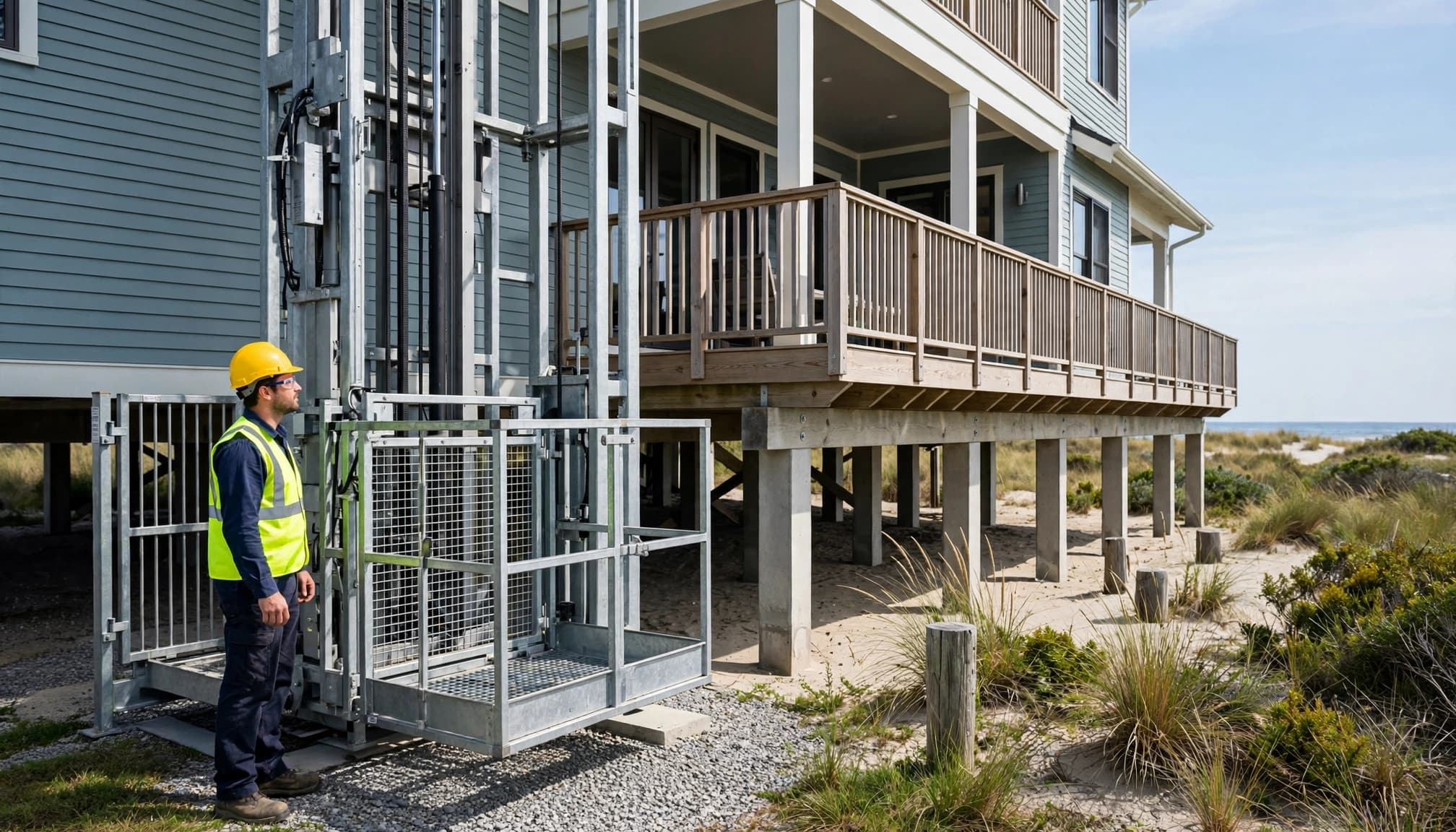
Coastal weather can speed up deterioration. Salt residue remains after water dries, then attracts moisture during humid conditions. Wind-driven rain and sand can reach gates, controls, cable systems, and fasteners.

Heat and ultraviolet exposure can also age gaskets, protective boots, finishes, and cable jackets. Marine-grade materials help resist harsh conditions, but they don't make a lift maintenance-free.

Schedule an extra review after unusual events

Arrange a qualified assessment after flooding, storm damage, a lightning or power event, impact damage, or a repeated fault code. Keep the lift out of service if water entered electrical areas or debris damaged the gates, rails, platform, or controls.

For Florida properties, Florida outdoor elevator code rules can affect the equipment choice and local approval process. Coastal owners can also use this outdoor lift maintenance checklist to organize cleaning, drainage checks, and visible corrosion reviews between professional visits.

Keep Inspection and Repair Records Together

Store the owner's manual, permits, service agreement, inspection reports, repair invoices, and technician contact information in one property file. A clear record helps the next technician understand recurring symptoms and past repairs.

For each outdoor lift inspection or service call, record the date, technician's name, company, findings, parts replaced, and recommended follow-up. Add photos after storms, power interruptions, or visible damage.

Documentation can also matter for warranty claims and insurance questions. Many policies separate sudden covered damage from ordinary wear, corrosion, inadequate upkeep, or flood-related loss.

A Safe Schedule Fits the Lift and Its Location

Professional inspections should follow the manual, the AHJ's rules, and the advice of a qualified lift provider. Formal tests, routine servicing, and frequent operator checks work together to protect people and equipment.

The strongest plan accounts for lift type, passenger or cargo use, weather exposure, and service history. With consistent outdoor lift inspection records , you can spot problems early and keep the equipment ready for safe daily use.

Recent Posts

By Veranda 'Vator September 6, 2026
A coastal lift can face more force from a hurricane gust than its size suggests. Outdoor elevator wind load design protects the tower, guide system, doors, anchors, and the structure that supports them. For a Florida beach home, raised residence, warehouse, or rental property,...
By Veranda 'Vator September 5, 2026
A lift can change how a property works every day, but the value depends on much more than the equipment itself. The lift installer you choose affects safety, access, project timing, and the service you receive years after the system goes into use. For homeowners and property m...
By Veranda 'Vator September 4, 2026
A lift quote can feel dense because it combines equipment details, site work, safety items, and local approval requirements. Knowing the home lift terms on the page helps you compare proposals without guessing what is included. Use this glossary to match each term to your plan...
By Veranda 'Vator September 3, 2026
A landing door that looks closed can still create a serious hazard if it has not locked correctly. Elevator door interlocks are the safety devices that check this condition before an outdoor lift can travel. For coastal homeowners, that safety function deserves extra attention...
By Veranda 'Vator September 2, 2026
Usually, no. An ordinary outdoor elevator should not be treated as an emergency exit. During a fire or other emergency, use the protected exit route named in the building's approved emergency plan. Questions about outdoor elevators emergency exits often come up when a lift pro...
By Veranda 'Vator September 1, 2026
An outdoor elevator can make an elevated home far easier to use, yet a stalled car or damaged gate can turn into an urgent situation. Elevator rescue planning gives your household, property manager, contractor, and local responders a clear path before anyone is trapped. The pl...
By Veranda 'Vator August 31, 2026
An outdoor lift can make a raised home easier to use every day, but the tower layout affects far more than curb appeal. Outdoor lift towers need the right location, support, drainage, power, and access at every stop. A freestanding tower and a house-attached tower can both pro...
By Veranda 'Vator August 30, 2026
A coastal lift site has to handle more than a change in elevation. It must also stand up to salt spray, wind-driven rain, shifting sand, and occasional floodwater. For homeowners adding pitless platform lifts , the best results start with the site, not the equipment order. A p...
By Veranda 'Vator August 29, 2026
An elevator can remove the challenge of stairs, but only if people can reach it safely in the first place. The path from a driveway, parking area, or patio to an accessible outdoor elevator deserves the same early attention as the lift itself. For homeowners, builders, and des...
By Veranda 'Vator August 28, 2026
A coastal lift can face more electrical stress in one storm season than an indoor unit sees in years. Outdoor elevator electrical requirements must account for salt spray, wind-driven rain, standing water, humidity, flood exposure, and the exact lift installed. A dependable in...
Show More