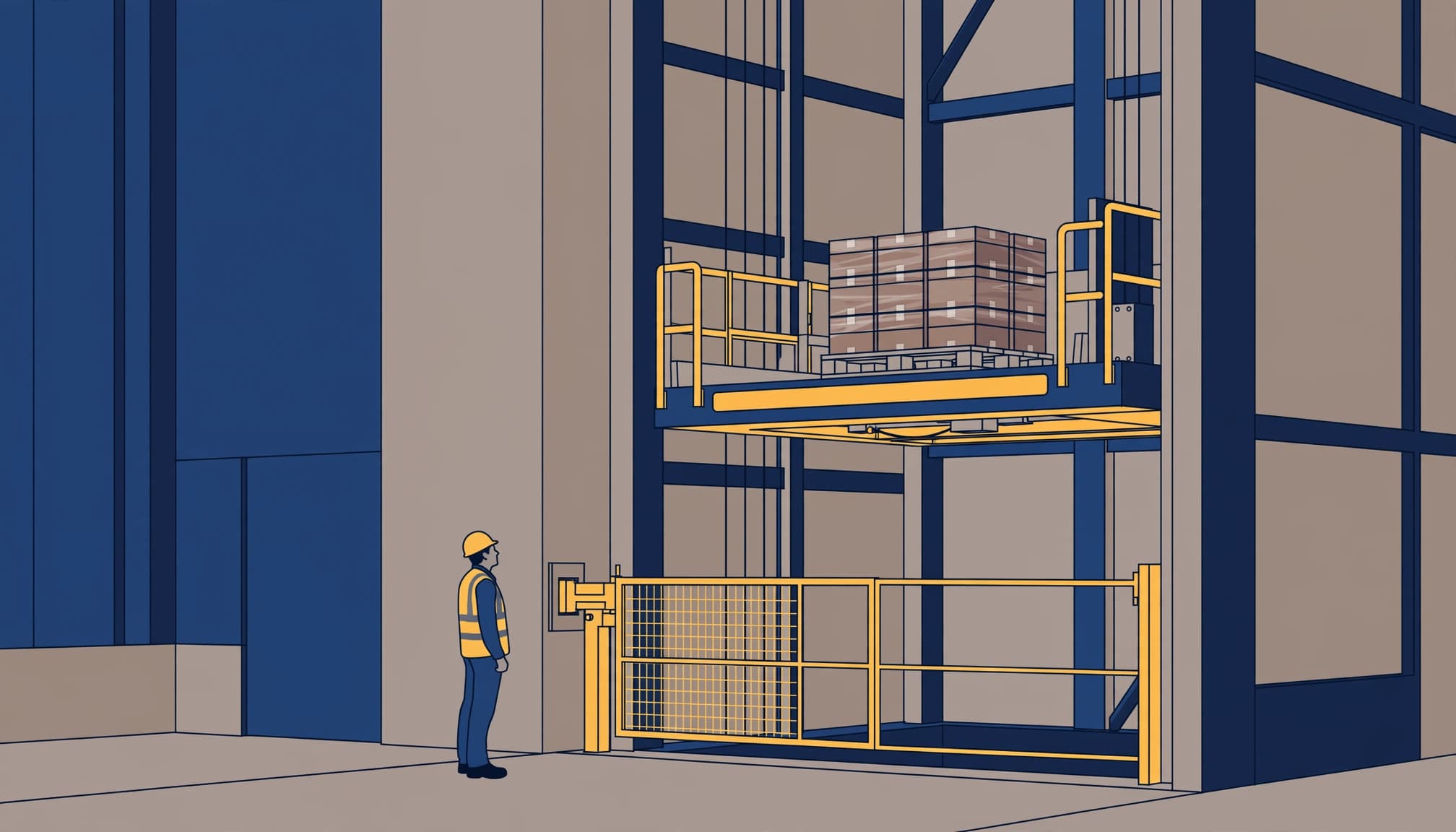
Workers shouldn't ride a cargo lift that is rated for materials only. A platform may have enough room and weight capacity for a person, but that doesn't mean it has the protections or approval required for occupied travel.
For cargo lift safety , the deciding factor is the equipment's intended use, not the length of the trip. Knowing how to identify that use helps you choose the right way to move both supplies and people between levels.
What a material-only rating means
A material-only lift is intended to move goods without a person riding on the platform. It might carry boxes, tools, groceries, furniture, or other items between a ground-level loading area and an upper landing.
The operator loads the platform, leaves the travel area, and operates the lift according to its instructions. Someone at the destination unloads it after the platform has stopped and the landing is safe to access.
A lift designed and approved for personnel transport has a different purpose. Its design and installation must address occupied travel, including the applicable requirements for access, controls, guarding, and emergency provisions.
The distinction matters at elevated homes as well as workplaces. Our guide to cargo lifts and passenger elevators compares how the two serve different needs.
Cargo lifts, freight elevators, and personnel lifts
The word "freight" can describe different kinds of equipment. A material-only platform and a classified freight elevator aren't automatically interchangeable.
| Equipment | Intended use | Who may ride? |
|---|---|---|
| Material-only cargo lift or hoist | Moving goods without routine occupied travel | No routine riders |
| Freight elevator | Primarily moving freight | The operator and people needed for loading or unloading may ride under its classification |
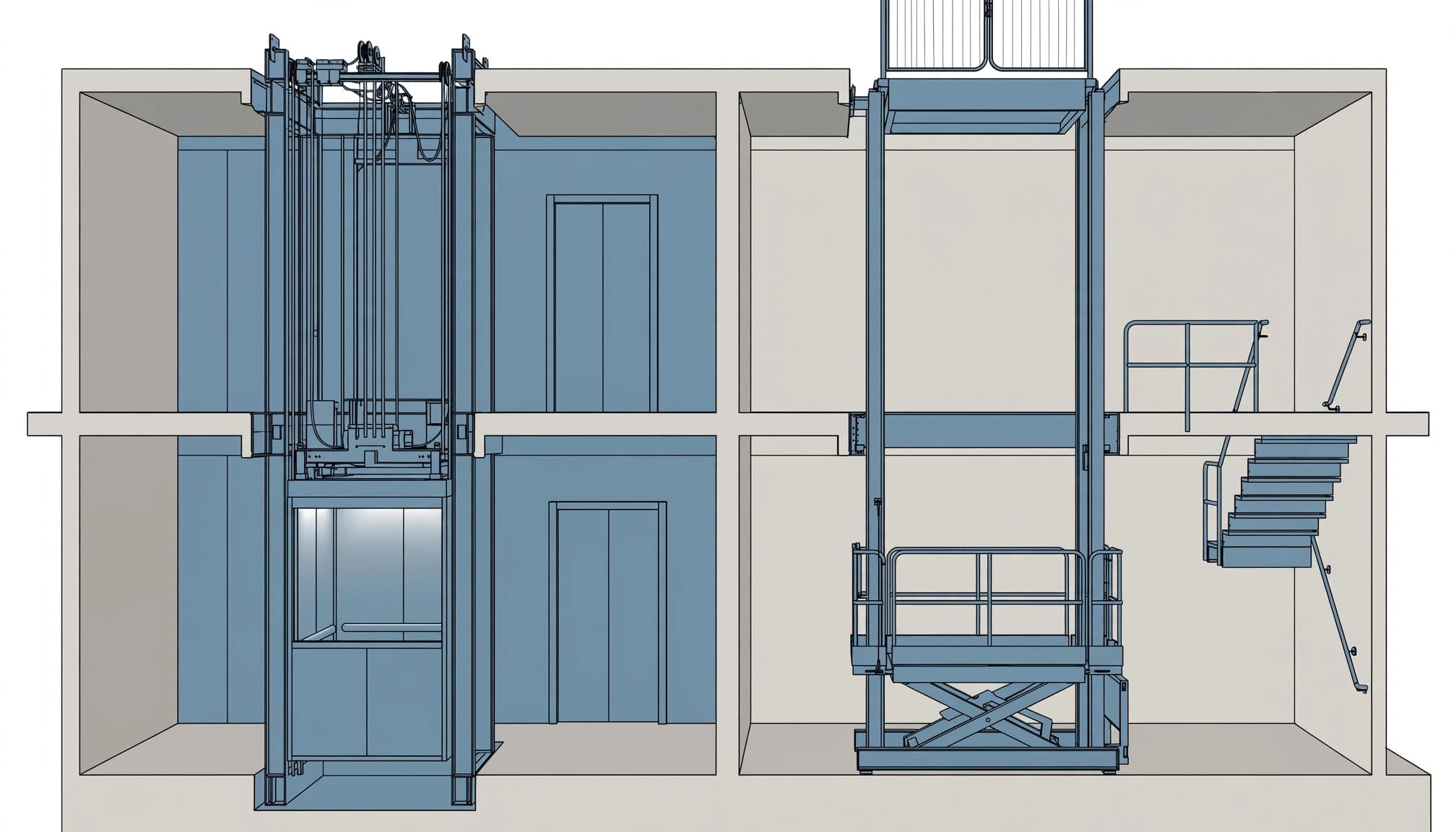
| Passenger elevator | Moving people between levels | Passengers, within the equipment's approved limits |
| Personnel hoist | Moving workers on a construction site | Workers, within the hoist's approved limits |
| Vertical platform lift | Providing access for people with disabilities | Users and any attendants permitted by the equipment's design |
The U.S. Access Board explains that a freight elevator doesn't provide the ADA-required accessible route between floors. A passenger elevator that also carries freight must meet the applicable accessibility requirements.
A label such as "cargo lift" alone doesn't settle the question. The installed equipment's classification and approved use determine whether anyone may ride.
What OSHA says about construction material hoists
OSHA's construction rule gives a clear answer for material hoists covered by 29 CFR 1926.552. The car frame or crosshead must display "No Riders Allowed," and people may ride only for inspection or maintenance.
That limited exception isn't permission to use the hoist as a shortcut between floors. It doesn't cover routine trips to accompany or steady a load.
The same regulation requires material hoists to be inspected and tested after assembly and erection, before use, and after a major alteration. It also requires inspections and tests at intervals no longer than three months. Passing an inspection doesn't change a material hoist into a personnel hoist.
Construction personnel hoists are a separate category under the rule. Their requirements apply to equipment intended to transport employees.
Why riding a material-only lift is risky
A person on a moving platform faces hazards that a box of supplies doesn't. Even a short trip can expose a rider to a fall, an obstruction, or unexpected movement.
Falls and contact with the structure
A material platform may have openings, gates, clearances, or guarding suited to an unattended load rather than an occupied ride. A person can lose balance or come into contact with the landing edge, shaft, or nearby structure during travel.
Reaching out to steady a shifting load creates another hazard. Hands, clothing, or equipment can become caught between moving and stationary parts.
Stops and emergencies
Passenger equipment must address the needs of people inside during normal operation and emergencies. A material-only lift may not provide the same type of passenger controls, communication, or protection against access to the travel path.
If a loaded cargo lift stops between levels, keep people clear. Don't climb onto the platform or enter the shaft to retrieve the load. Our guide to exterior elevator power outages explains why the response depends on the equipment.
How to identify a lift's intended use
Start with the specific equipment installed at the property. A lift's appearance, age, or platform size can't establish whether people are allowed to ride.
Read the markings and instructions
The equipment label and operating manual should identify the model, rated load, and intended use. Look for material-only language, passenger restrictions, and any posted "No Riders Allowed" notice.
Keep the manual available to operators and supervisors. If the instructions are missing or the intended use is unclear, don't assign workers to ride. Take the question to a qualified lift professional rather than relying on past practice.
The lift's approved drawings, installation records, and service documents can also help identify the configuration in use. A lift may have been altered or repaired, so the records need to match the equipment on site.
Distinguish capacity from permission
A weight rating describes a load limit. It doesn't grant permission to carry passengers, even when a person's weight falls well below that limit.
Likewise, a gate, enclosed platform, or stable-looking ride doesn't establish a passenger rating. The full equipment classification and applicable approval determine the allowed use.
A worker stepping aboard to hold a cart is still a rider, even if the cart is the main load.
Read the load rating as well as the platform size
Once you've established that a lift is for materials, plan each load within its stated limits. The total includes the goods and everything traveling with them, such as a pallet, cart, container, or padding.
Capacity is only one part of the fit. The platform floor, gate opening, landing, and overhead clearance must accommodate the item without creating an unstable load or blocking the lift's path.
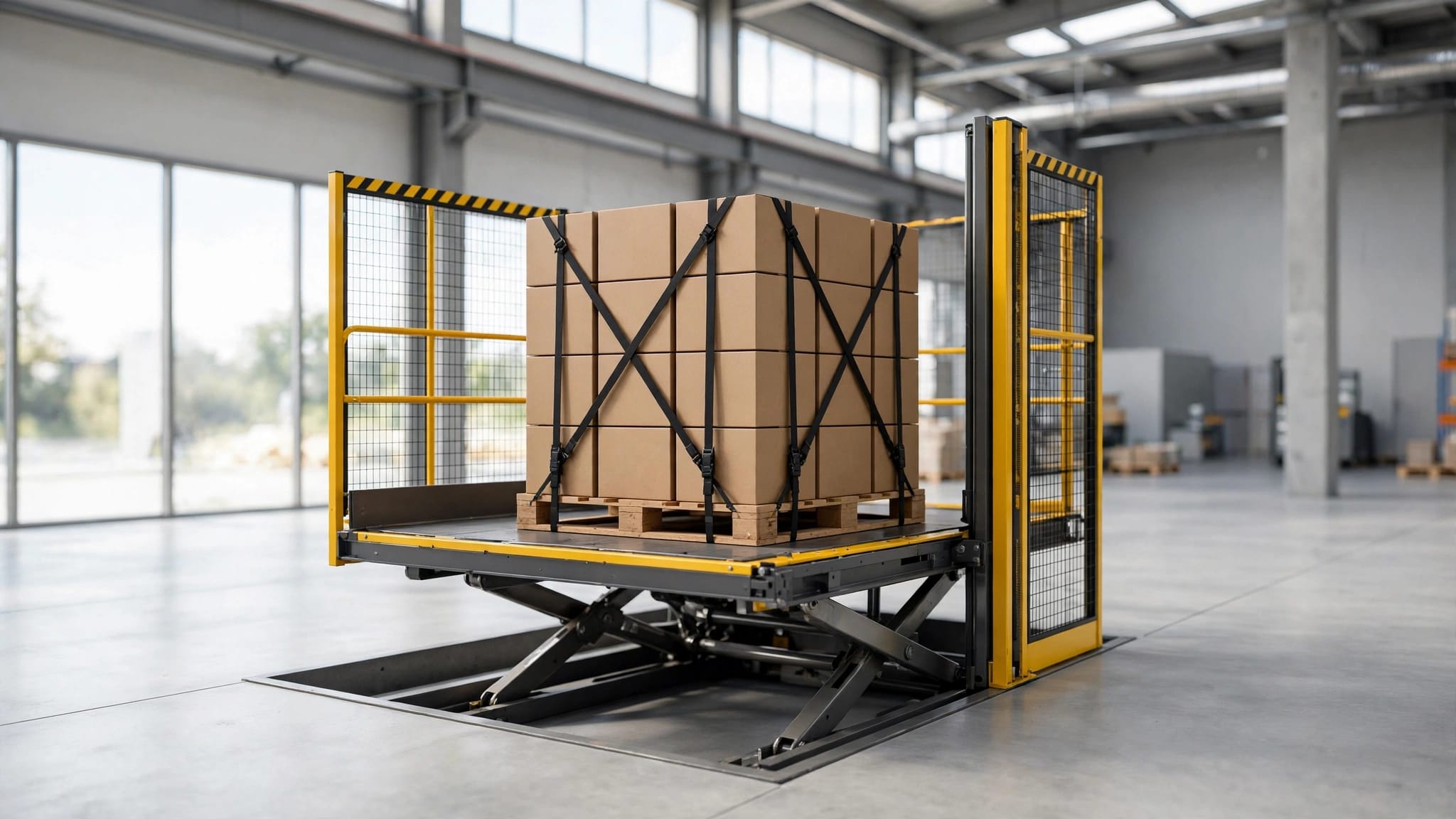
Keep the weight balanced and the load inside the platform. If a cart can roll, set its brakes. Use restraints where the equipment instructions or site procedures require them, and attach them only at approved points.
For bulky or awkward items, smaller trips may be safer than a tall stack. Our guidance on commercial cargo lifts for loading areas covers planning around the goods and landing access.
Operating a material-only lift safely
Designate operators and train them on the installed model. Someone familiar with one lift may still need instruction on another unit's gates, controls, loading method, and shutdown procedure.
Before a trip, the operator should close and latch the required gates, keep the travel path clear, and make sure everyone is away from the platform and landing edges. Nobody should stand beneath a raised platform or reach into its path.
Don't bypass a gate interlock or use a makeshift restraint in place of a required gate. If the operator can't see a landing, the site needs a communication procedure that lets the operator stop when the path isn't clear.
Remove the lift from service if a gate won't latch, the platform moves unevenly, or a cable shows damage. A qualified technician should address the fault before normal operation resumes.
Our operator training checklist covers model-specific instruction and practices for outdoor equipment.
Practical alternatives for moving people
If workers or building occupants need to travel between levels, plan a route intended for them. The right choice depends on who needs access, how often they travel, and the building's layout.
Passenger elevators and personnel hoists
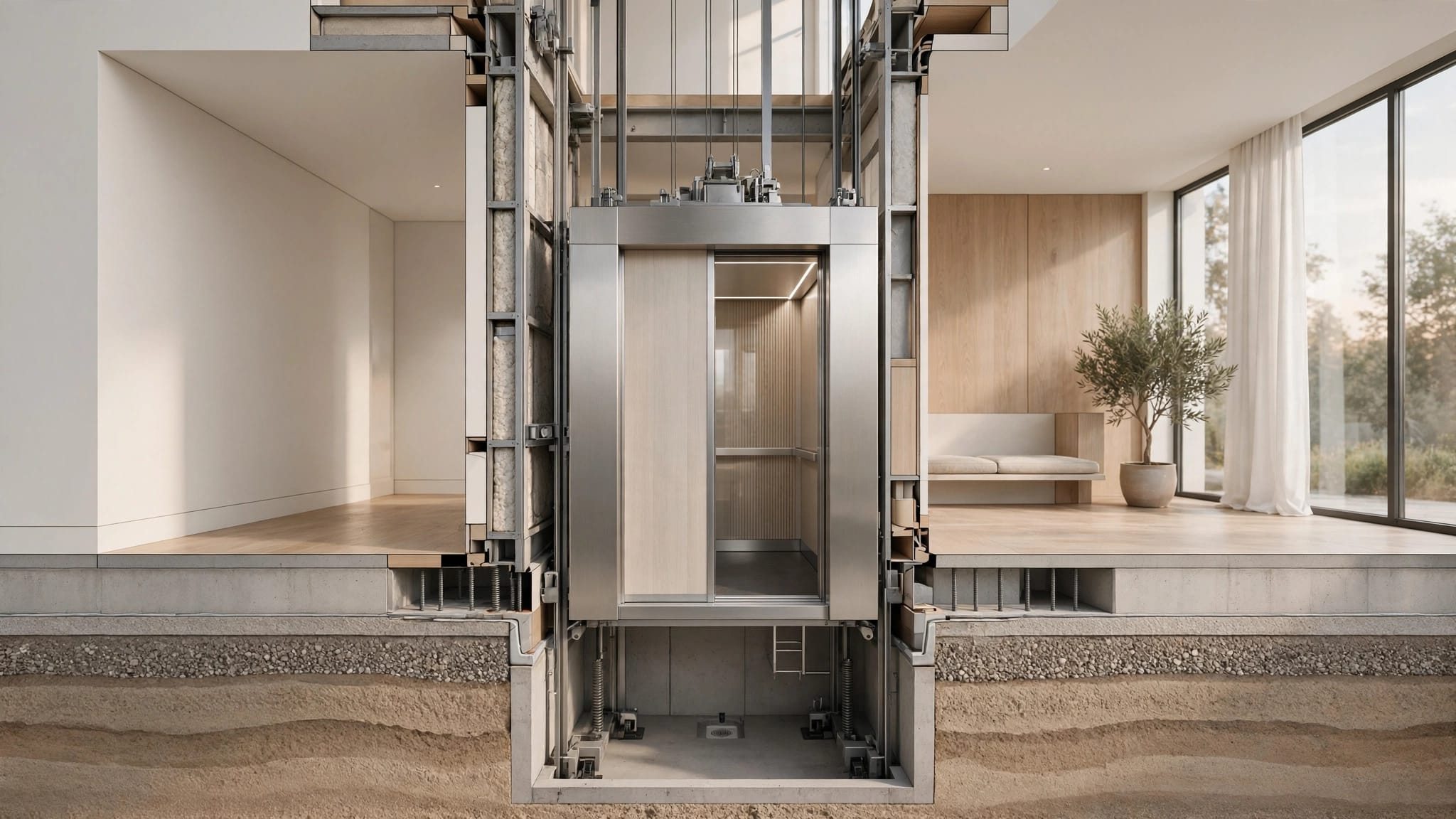
A passenger-compliant elevator is designed for occupied travel between floors. Depending on its approved use, it may also carry goods, which can reduce the need for separate trips with supplies.
On a construction site, a personnel hoist can provide worker transport when selected and operated for that purpose. Stairs may also provide a route for workers who can use them, but they don't replace an accessible route where one is required.
A business can use separate systems: a passenger elevator for people and a material-only lift for deliveries. Each then operates within its own intended use.
Vertical platform lifts and accessible routes
A vertical platform lift, or VPL, may be suitable for a wheelchair user or another person with a mobility disability. Depending on the model and permitted use, an attendant may also travel on the platform.
A VPL follows a different equipment category from a conventional elevator. Its suitability depends on the travel distance, landings, users, and applicable accessibility rules. Our guide to commercial platform lift requirements explains where that choice may fit.
At Veranda 'Vator, we offer cargo lifts, passenger-compliant elevators, and VPLs for these different jobs.
A decision checklist for managers and operators
Use these points when assigning a lift or planning a trip:
- Identify the installed equipment and its documented purpose. Treat a material-only unit as a goods lift, not a worker route.
- Keep the platform clear of riders during material trips. That includes helpers who want to steady a load.
- Include the cart, pallet, and restraints in the load weight. Keep the full load within the rated capacity and platform boundaries.
- Assign trained operators who know the model's controls, gates, and stop procedure.
- Keep people clear of the travel path and landing edges. Stop work if the route isn't clear or communication breaks down.
- Take damaged or malfunctioning equipment out of service and arrange qualified repair.
- Provide a suitable passenger route when workers or visitors need to move between levels.
Match the lift to the job
A material-only rating tells you what the platform is intended to carry: goods traveling without routine riders. Weight capacity, a short travel distance, or a past habit doesn't change that purpose.
Choose equipment designed for people when people need to travel. Keep cargo lifts focused on moving materials, and give operators a clear procedure for every trip.
Recent Posts