
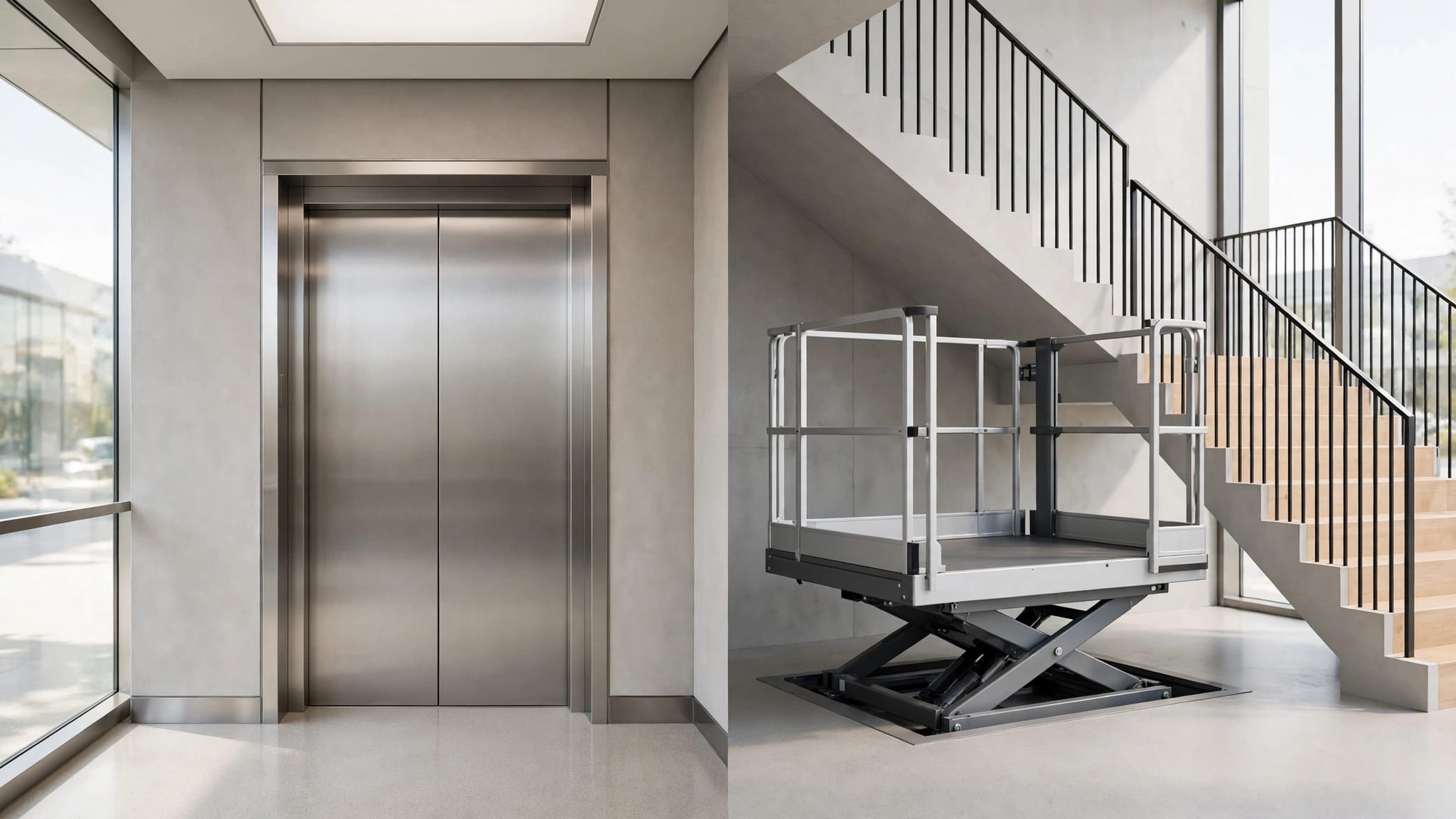
An outdoor lift that travels past its intended stopping point can leave a passenger at an unsafe landing or put the equipment against the end of its travel path. Endpoint protection helps prevent that overrun. Lift limit switches tell the control system when the car or platform has reached a designated point near the top or bottom of its route.
If you're choosing a lift for an elevated home or managing one at a commercial property, it helps to know what those switches can do. It matters just as much to know which protections they cannot replace.
How lift limit switches control upper and lower travel
A limit switch responds when a moving part of the lift reaches a set position. Depending on the design, a cam or other actuator operates the switch and changes an electrical signal. The control system uses that signal to manage travel at an endpoint.
Upper limits protect the space above the lift
At the upper end, a correctly installed limit helps prevent the car or platform from continuing beyond its intended travel. That matters where the lift approaches an overhead structure, guide-rail end, or upper landing.
Stopping at the landing and protecting the uppermost travel boundary may involve different controls. Some designs have a separate final limit intended to respond if normal stopping fails. Ask the manufacturer or installer which devices the installed model uses and what each one does.
Lower limits protect the bottom of the path
The lower endpoint needs the same attention. Continued downward travel could bring the platform into contact with equipment or structures below its intended stopping point.
A lower limit provides a position signal, but it doesn't physically hold the lift in place. The result depends on the rest of the system, including the controller, drive, wiring, and stopping equipment. A switch that hasn't been positioned, tested, and maintained correctly cannot provide dependable endpoint protection.
Where limit switches fit among other safety devices
An endpoint switch addresses position . Other devices respond to speed, motion, access, or a user's command. Those differences matter when someone describes a lift as having "safety switches" without explaining the complete system.
| Device | Main job | What it doesn't replace |
|---|---|---|
| Limit switch | Signals that travel has reached a set point | Braking or overspeed protection |
| Brake or safety gear | Helps slow, stop, or hold equipment as designed | Endpoint detection |
| Overspeed governor, where fitted | Detects excessive speed and initiates its designed protective response | Normal landing control |
| Emergency stop control | Lets a user request a stop | Automatic endpoint protection |
| Gate interlock | Helps prevent travel when an access gate is unsafe | Travel limits |
Stopping at a landing takes coordination
A limit switch isn't necessarily the device that produces precise floor leveling. The stopping sequence depends on the lift's design. Its controls must receive the right signals, and its stopping equipment must respond as intended.
For riders, that coordination shows up as a stable stop and a usable threshold. If the platform repeatedly stops high, low, or short of a landing, don't treat it as a minor inconvenience. Stop using it and ask a qualified technician to find the cause.
A brake addresses a different failure
Brakes and related safeties help control motion under conditions defined by the equipment design. An overspeed governor, on a lift equipped with one, addresses excessive speed. Neither tells the control system where the upper landing is.
Likewise, pressing an emergency stop is a response to a problem, not a substitute for automatic endpoint controls. For a closer look at these distinct roles, see how outdoor elevator safety brakes work. No single device guarantees a safe trip if another part of the installation is damaged or poorly maintained.
Match the safety system to the people using the lift
"Outdoor lift" can describe equipment with different permitted uses. Before discussing switch locations or emergency behavior, identify exactly what is installed and who may ride it.
Passenger elevators and platform lifts carry people
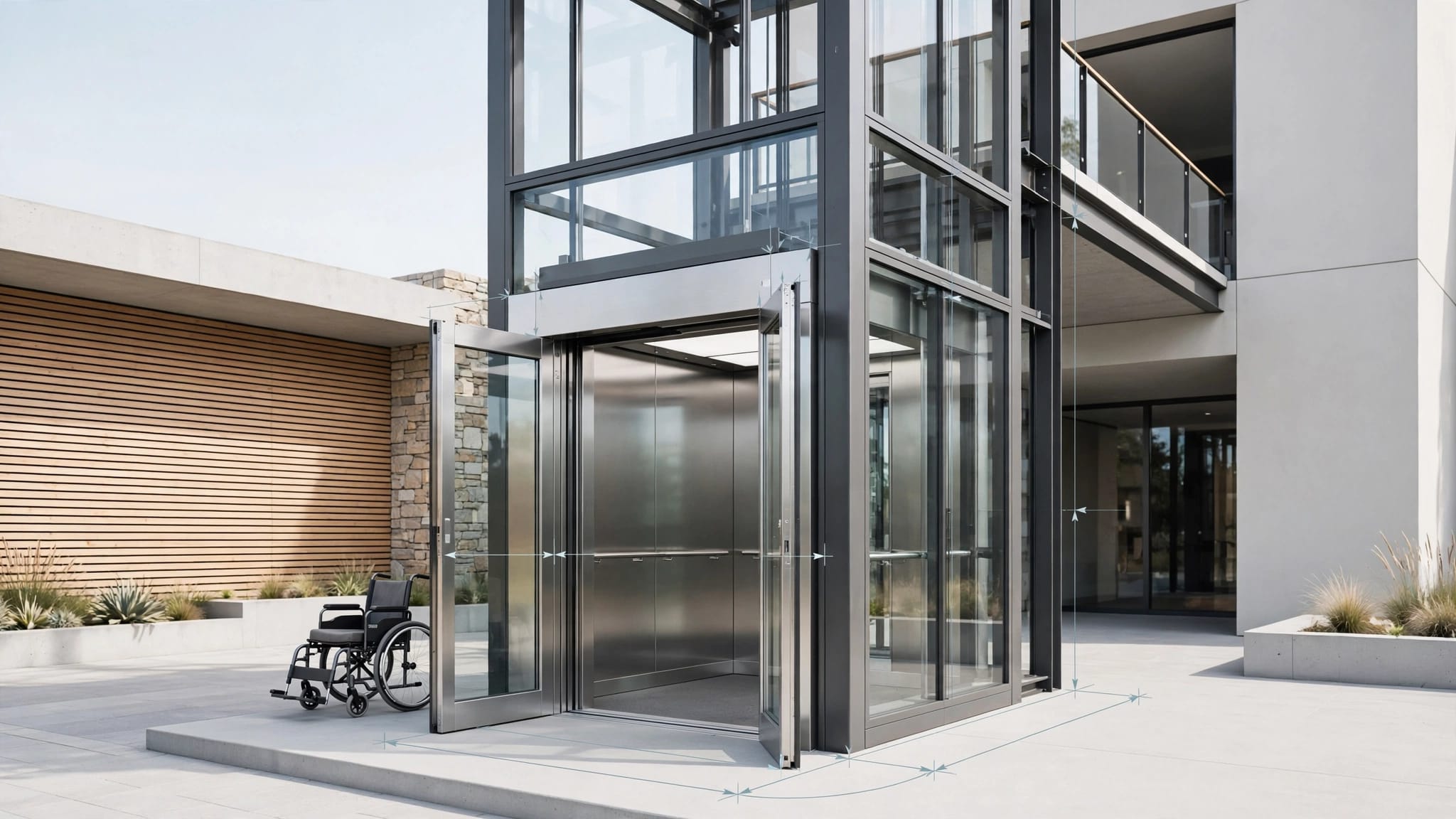
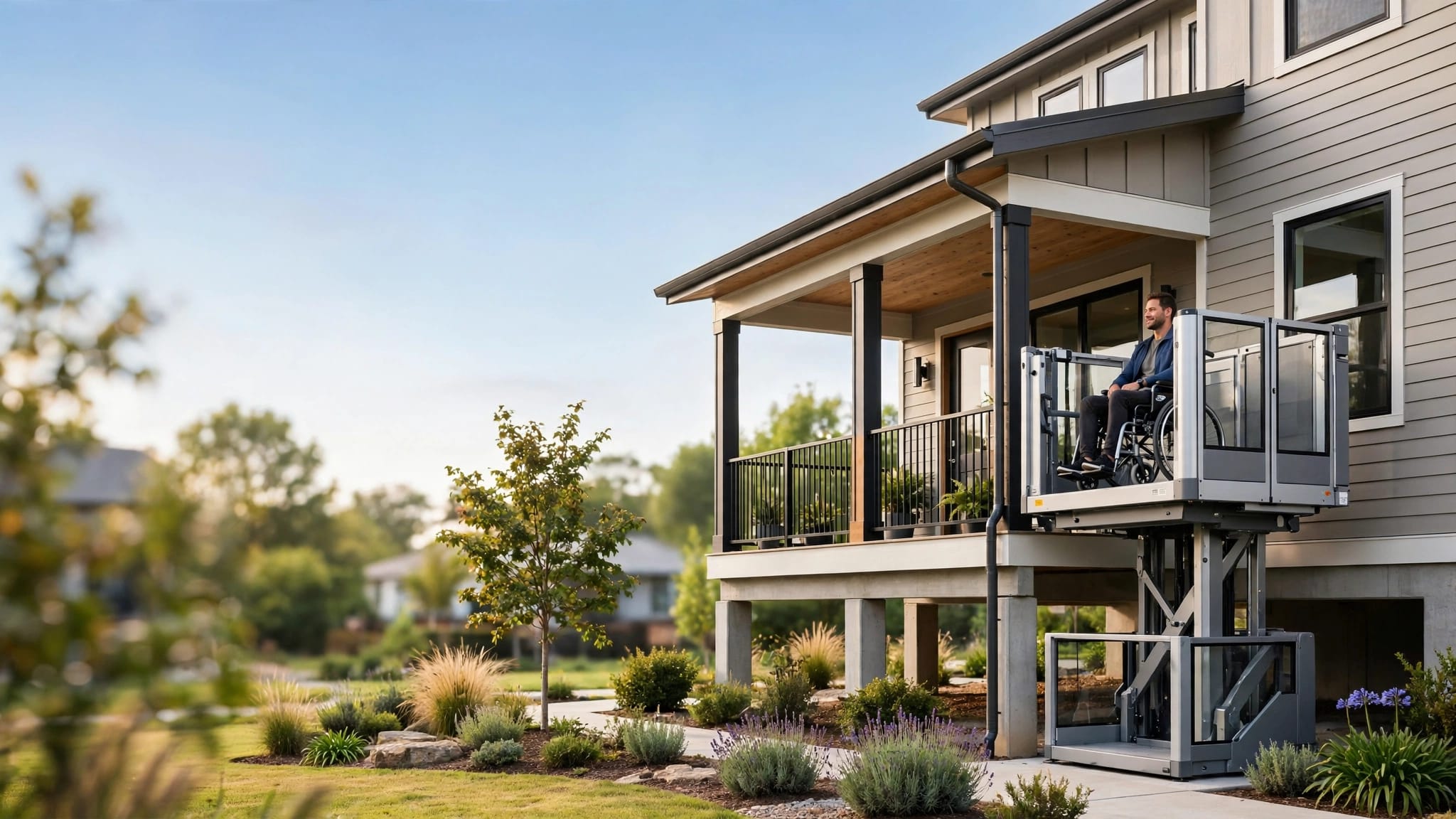
A passenger-compliant elevator is intended for occupied travel. A vertical platform lift (VPL) may provide wheelchair access using a platform rather than a conventional enclosed car. Their gates, controls, travel arrangements, and applicable requirements differ.
In the United States, passenger elevators commonly fall under ASME A17.1, while VPLs often follow ASME A18.1. The manufacturer's documentation and local authority determine which requirements apply to a particular installation. Veranda 'Vator's lift types, travel limits, and safety features also explain its stated 14-foot upward travel limit for VPLs.
Cargo lifts are for materials unless approved otherwise
A cargo lift can move groceries, luggage, tools, or supplies to an elevated level. Its limit switches still matter because an overrun can endanger nearby people and damage the equipment or load. Those switches do not make a material lift suitable for passengers.
Don't let a guest, worker, or resident ride cargo equipment unless its design, documentation, and applicable approvals explicitly allow passenger use. If people need access between floors, select equipment approved for that purpose. Exterior mounting alone tells you nothing about a lift's passenger rating or emergency features.
Outdoor exposure can undermine reliable operation
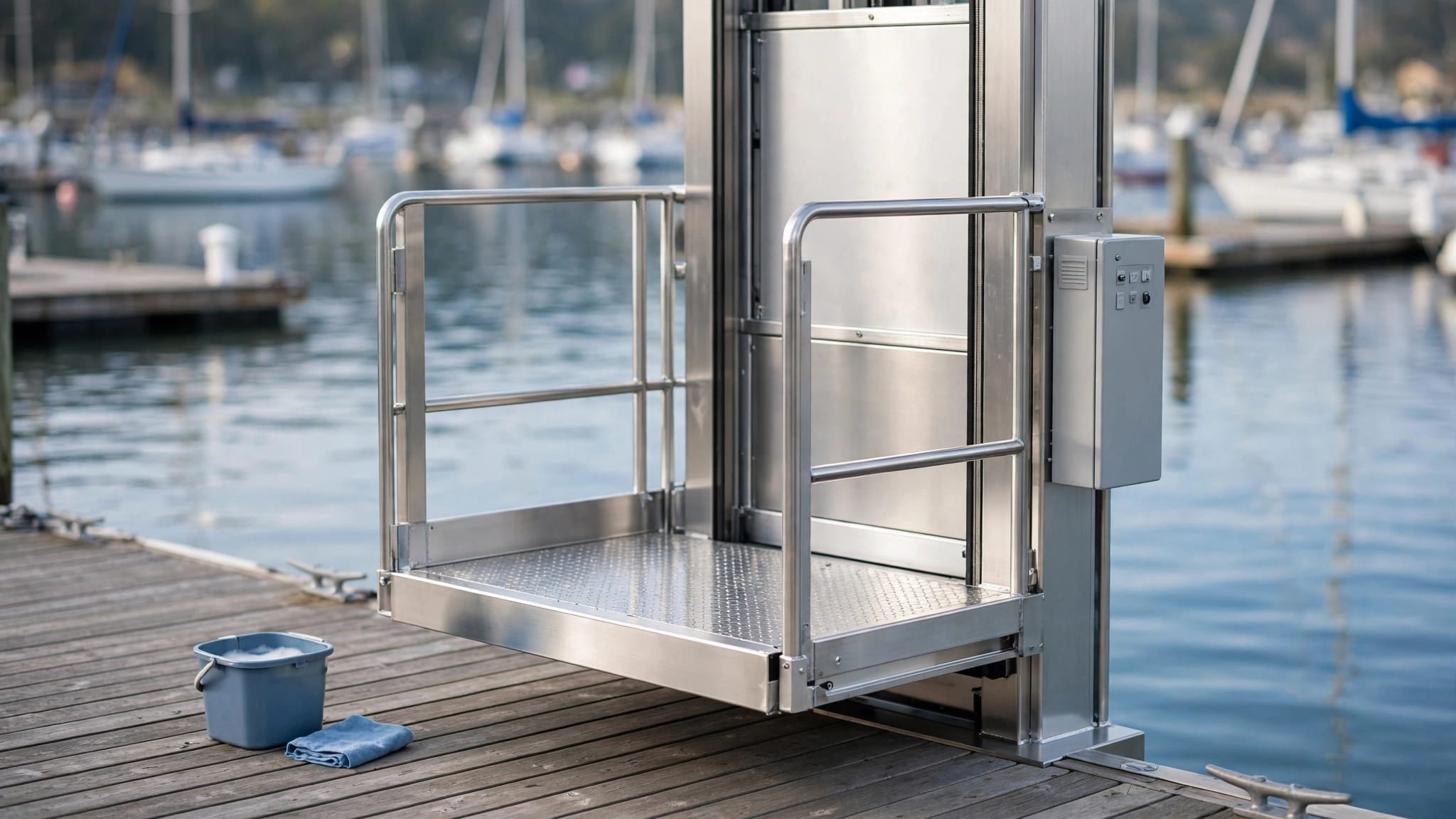
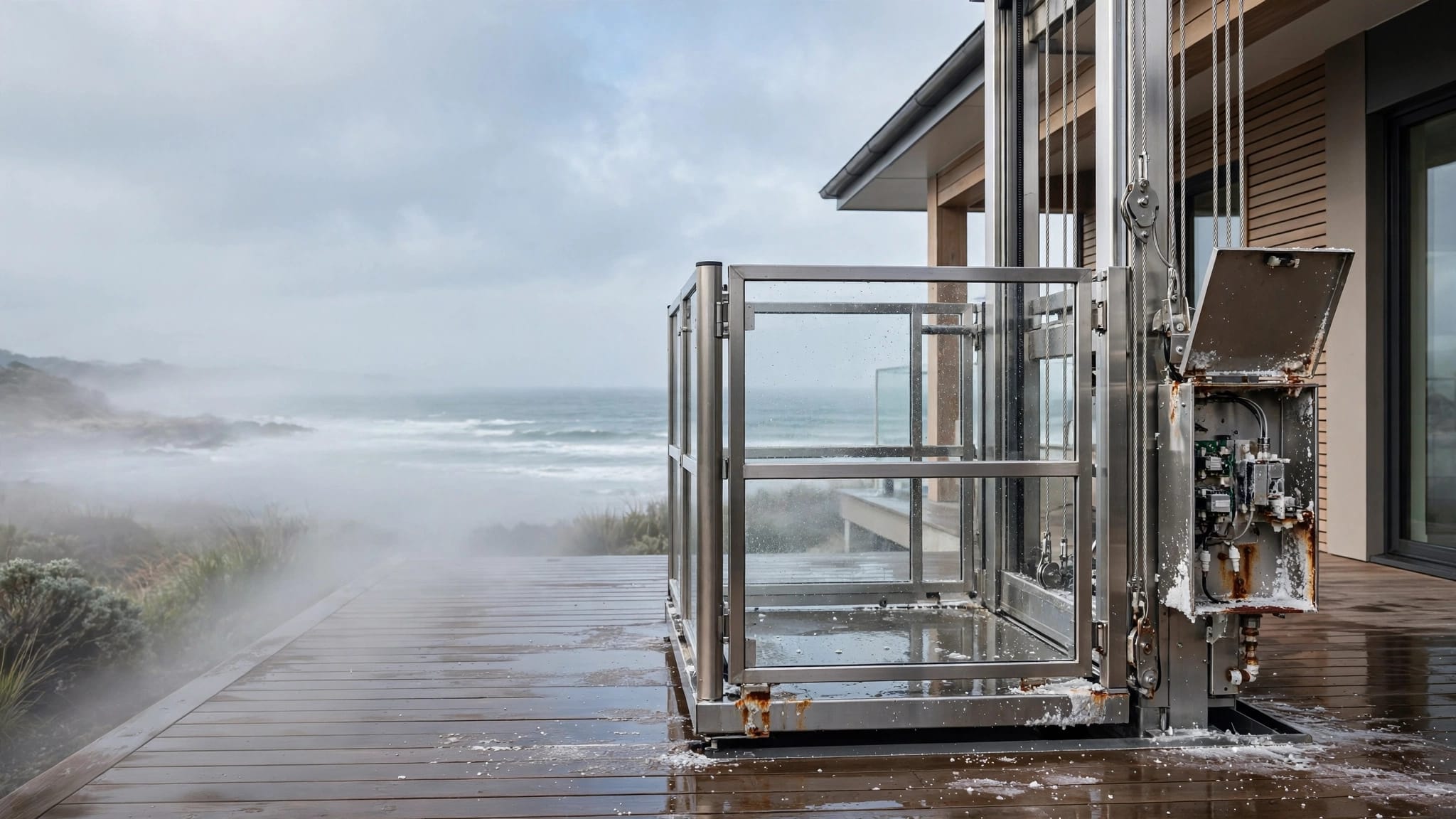
An outdoor installation faces conditions that an indoor lift may never encounter. Salt air, rain, heat, and storm debris can affect electrical connections and moving components, especially at coastal properties.
Moisture and corrosion can cause intermittent faults
Water may enter a connector, conduit opening, junction box, or control enclosure. Corroded terminals can then produce faults that appear and disappear. Mechanical actuators may also stick or shift if surrounding hardware deteriorates.
An intermittent stop is still a fault. Repeatedly running the lift to see whether it "clears up" can put passengers or nearby workers at risk. Owners should report when the problem occurs, which landing is affected, and whether rain or flooding preceded it.
Basic housekeeping supports professional care
Keep landings and drainage paths clear. Report damaged covers, loose hardware, debris near the travel path, and gates that no longer close normally. After severe weather, inspect only what you can see safely from the landing.
Never open an electrical enclosure or bypass a switch during an owner check. A coastal outdoor lift maintenance checklist can help organize routine observations, but electrical testing belongs to qualified service personnel.
Inspection turns endpoint protection into dependable protection
Limit switches need more than a place on a parts list. Their mounting, actuation, wiring, and response must match the installed lift. Inspection also needs to account for the equipment around them.
Ask what the service test covers
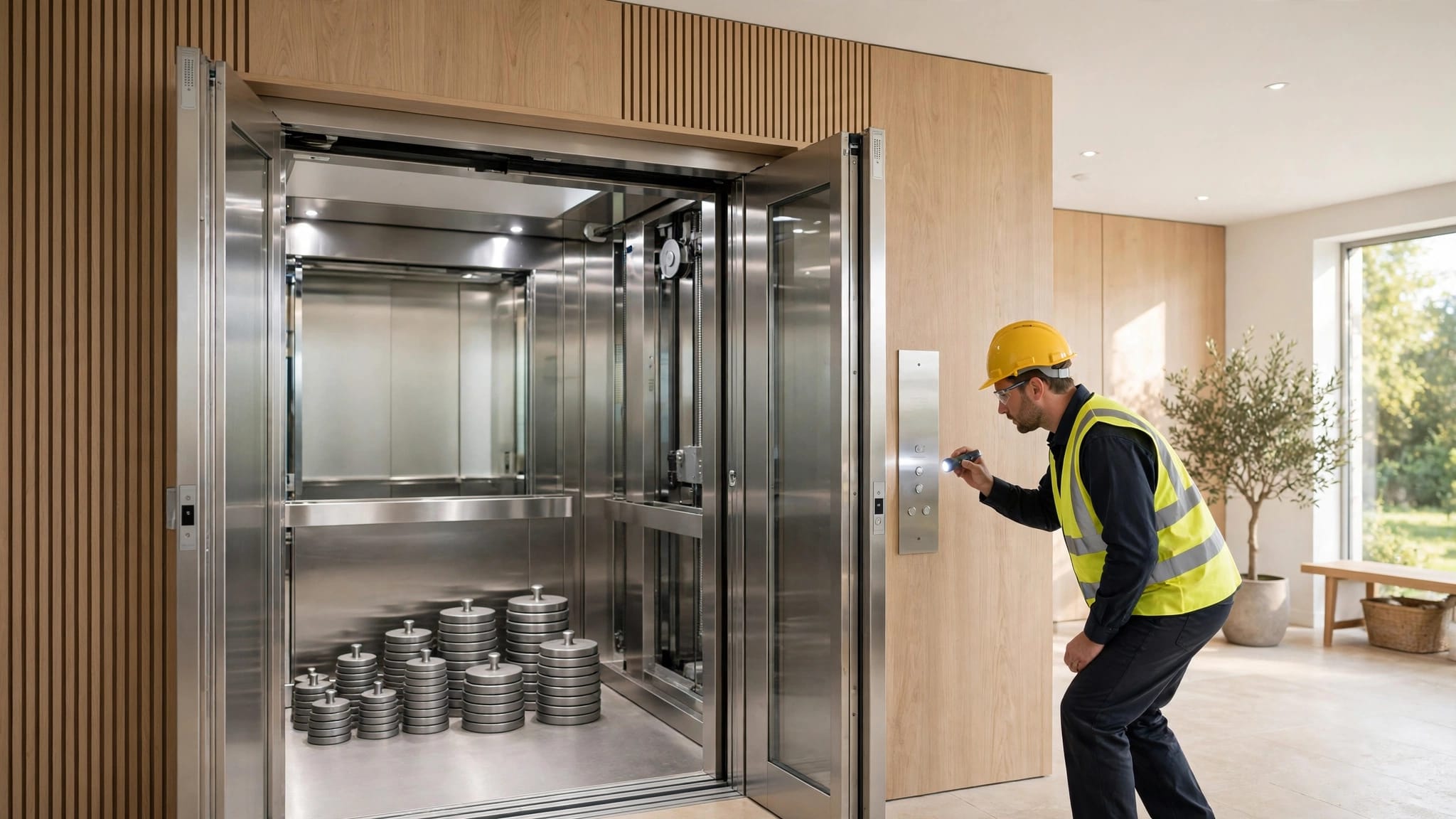
A qualified technician can check the endpoint devices according to the manufacturer's procedures. That may include examining actuators and connections, checking for water entry or corrosion, and verifying how the lift responds at each end of travel.
The correct test and service interval depend on the model, use, exposure, and local requirements. Owners should keep the manual, service records, and contact information together. For help planning visits, review how often outdoor lifts need professional inspection.
Repairs must leave the safety circuit intact
A lift that won't run may be responding to a protective device. Bypassing a limit switch to restore service removes a safeguard without fixing the fault. The same warning applies to gate interlocks and other safety controls.
Technicians need to follow the manufacturer's procedures and control hazardous energy before working on equipment that could move. Property owners should leave covers, wiring, adjustments, and resets to qualified personnel. A written service report should identify the cause, the repair, and any checks completed before the lift returns to use.
Respond safely when a lift misses or overshoots a stop
Watch for a change in normal behavior: uneven landing stops, hesitation near an endpoint, unexpected shutdowns, unusual noise, or a gate that won't latch. Each deserves attention before the next trip.
Keep people clear and call for service
If the lift stops incorrectly, take it out of service and prevent access while you contact the service provider. Record the landing, direction of travel, weather, and any fault indication without opening a panel. Those details can help a technician investigate an intermittent problem.
Don't keep cycling the lift to recreate the fault. If someone is stranded, use the installed communication equipment and follow the site's emergency instructions. Riders shouldn't climb out between landings, and untrained people shouldn't try to move the car or release a brake.
Treat a gate problem as its own warning
A landing gate helps control access to the travel path. Its interlock addresses whether the gate is in a safe condition for operation, rather than whether the lift has reached an endpoint. Both protections need to work.
A platform that stops near a landing isn't an invitation to force the gate or step across a gap. Keep the area clear and request service. The relationship between access barriers and controls is explained in outdoor lift gate and interlock safety.
Plan endpoint protection before installation
For a new lift, ask the supplier to identify the normal stopping controls and any separate final limits. Request an explanation of what happens if the car approaches either end of travel without stopping normally. The answer should refer to the proposed model, not a generic diagram.
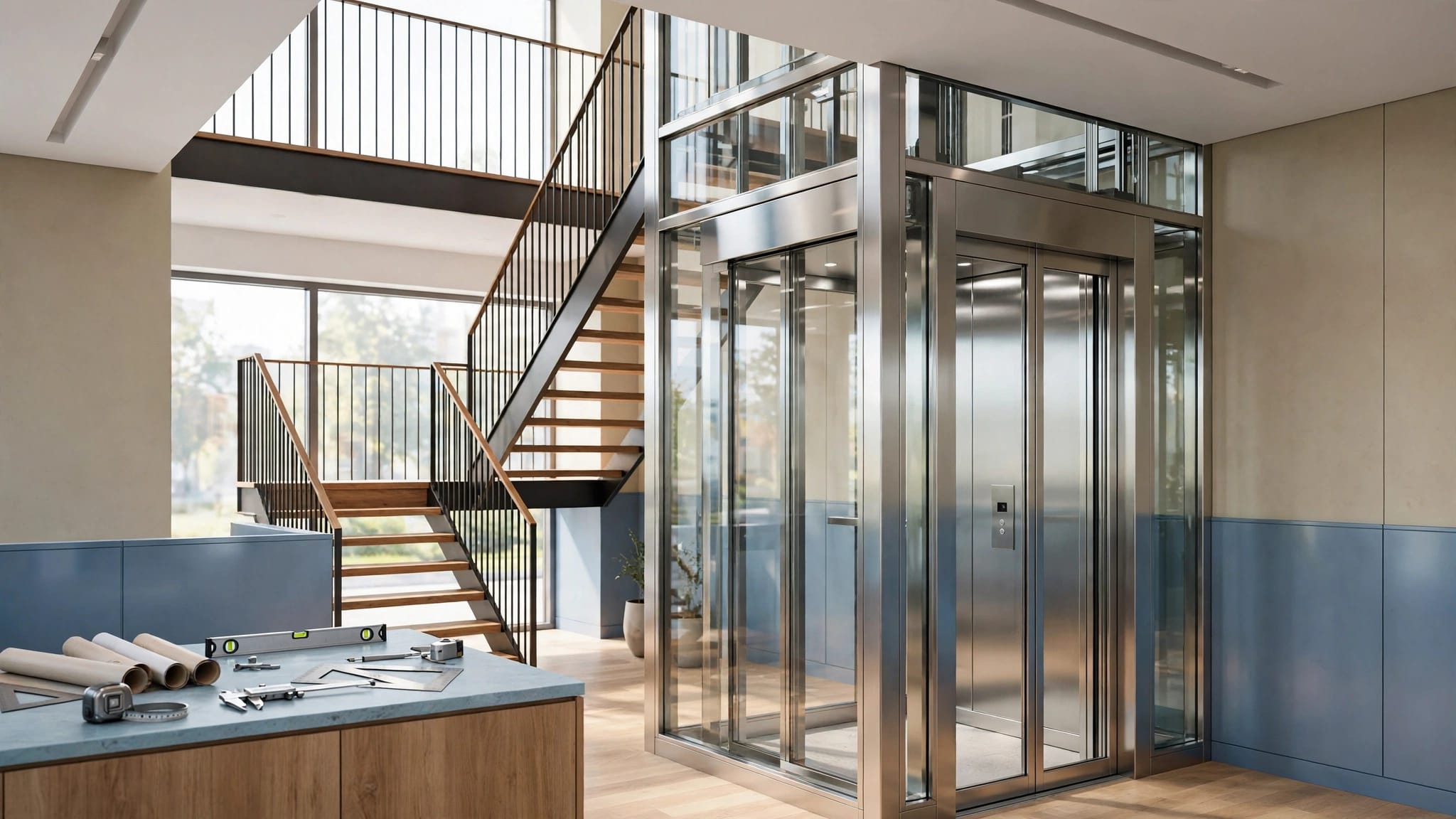
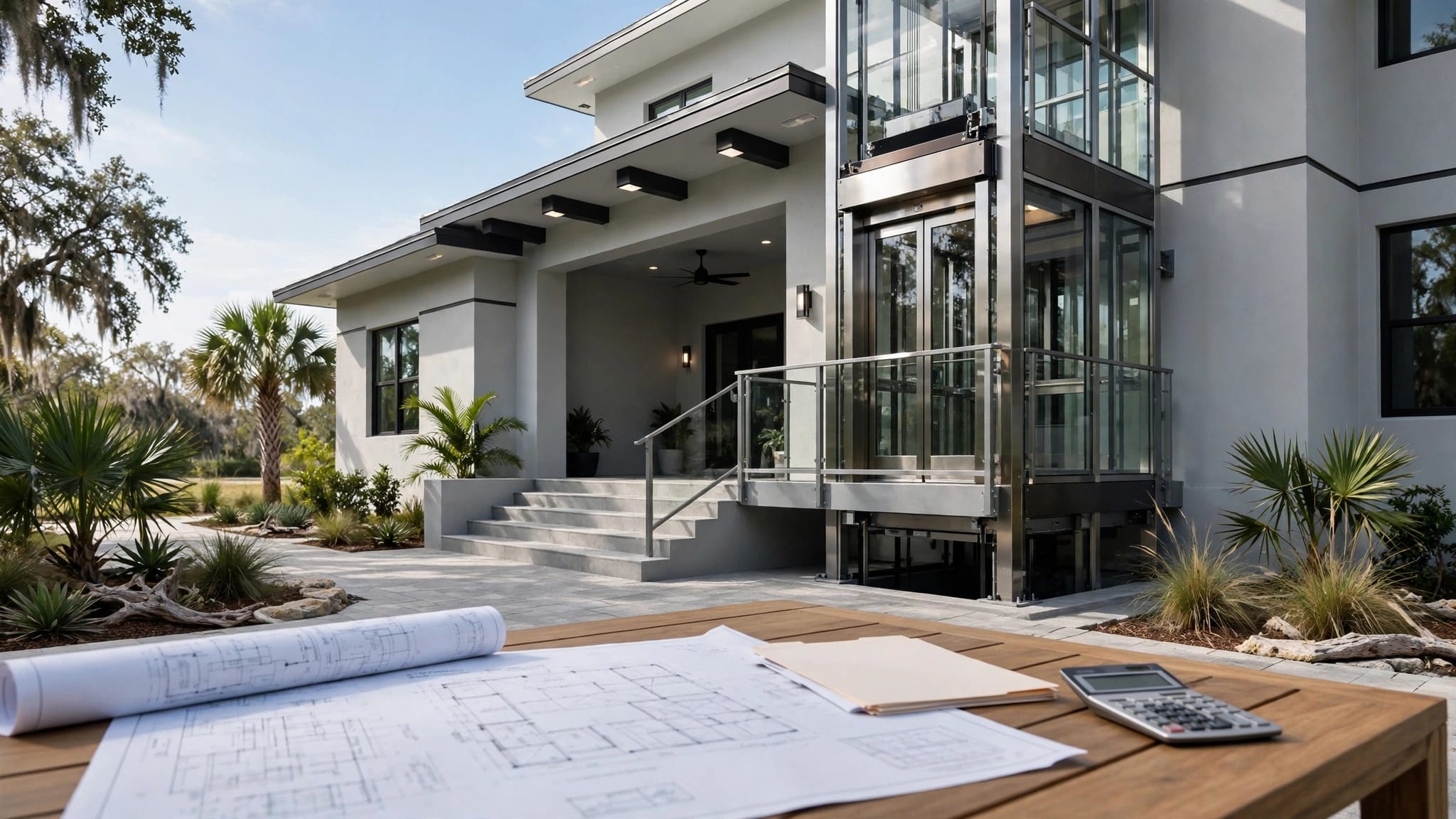
Builders should confirm finished landing heights, overhead space, lower clearances, drainage, and gate locations before equipment is ordered. These details affect how the lift meets the building and where its travel must end. An outdoor elevator site survey checklist can help frame that discussion with the installer.
Finally, confirm who will inspect and service the installed equipment. The right design for a coastal home or commercial property includes access for maintenance and a plan for responding to faults.
Key Takeaways
- Lift limit switches signal when travel reaches designated upper or lower points; their exact operation depends on the installed design.
- Brakes, overspeed protection, emergency stops, and gate interlocks address different risks. None replaces proper endpoint control.
- Passenger approval depends on the equipment category and applicable requirements, not on whether a cargo lift has safety switches.
- Faults, corrosion, and unusual stops call for qualified inspection, not repeated resets or bypasses.
Frequently Asked Questions
Does a limit switch stop an outdoor lift by itself?
No. It supplies a signal within a larger control and stopping system. The controller and other equipment must respond correctly. Its protective role depends on proper design, installation, testing, and maintenance.
Is a final limit switch the same as a normal landing stop?
Not necessarily. Some lifts use a separate final limit as protection beyond normal stopping, while other arrangements differ. Ask the manufacturer or service technician to identify the devices on your model and explain their tested response.
Can I reset a lift that stopped near the upper landing?
Follow the installed equipment's instructions and contact your service provider when a stop is abnormal. Don't repeatedly reset the lift, bypass a switch, or carry passengers while troubleshooting. Keep people clear until qualified personnel determine why it stopped.
Conclusion
A traveler should reach the landing without having to wonder whether the lift will stop. Reliable endpoint protection starts with correctly designed and tested limit switches, supported by the lift's other safety systems.
For outdoor equipment, that protection also depends on clear operating rules and timely service. If a stop changes, take the lift out of use and have the cause checked before the next trip.
Recent Posts