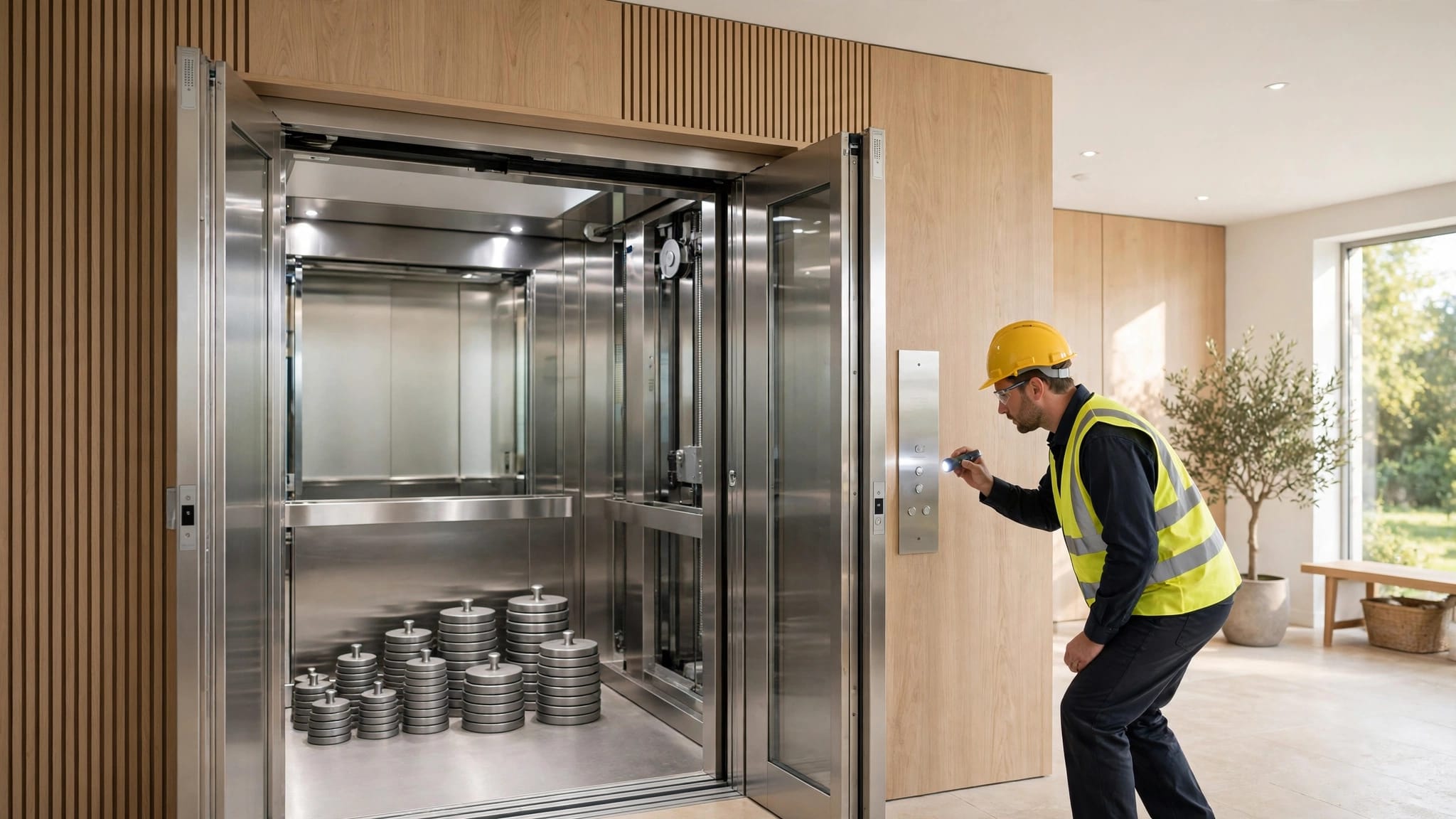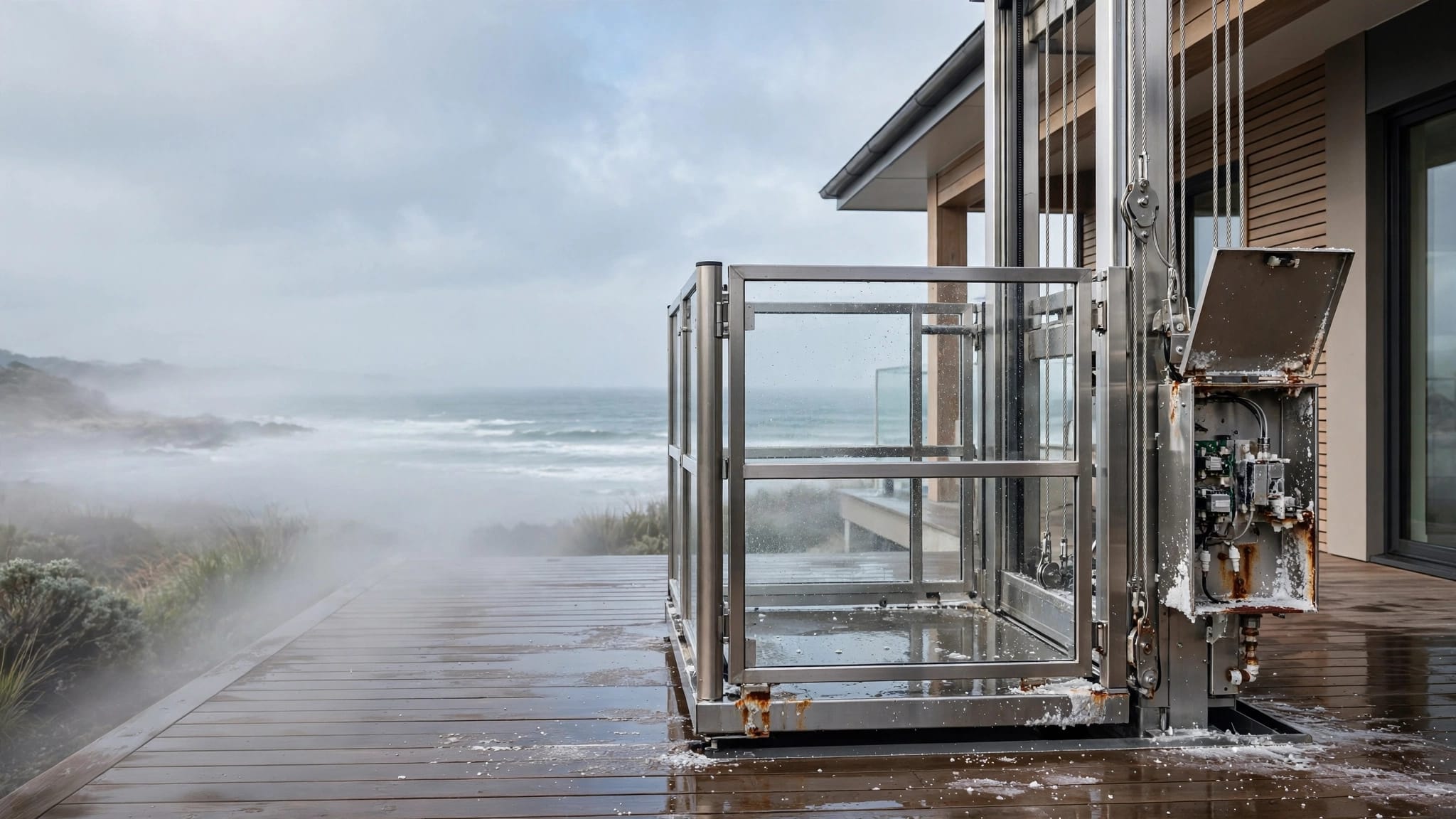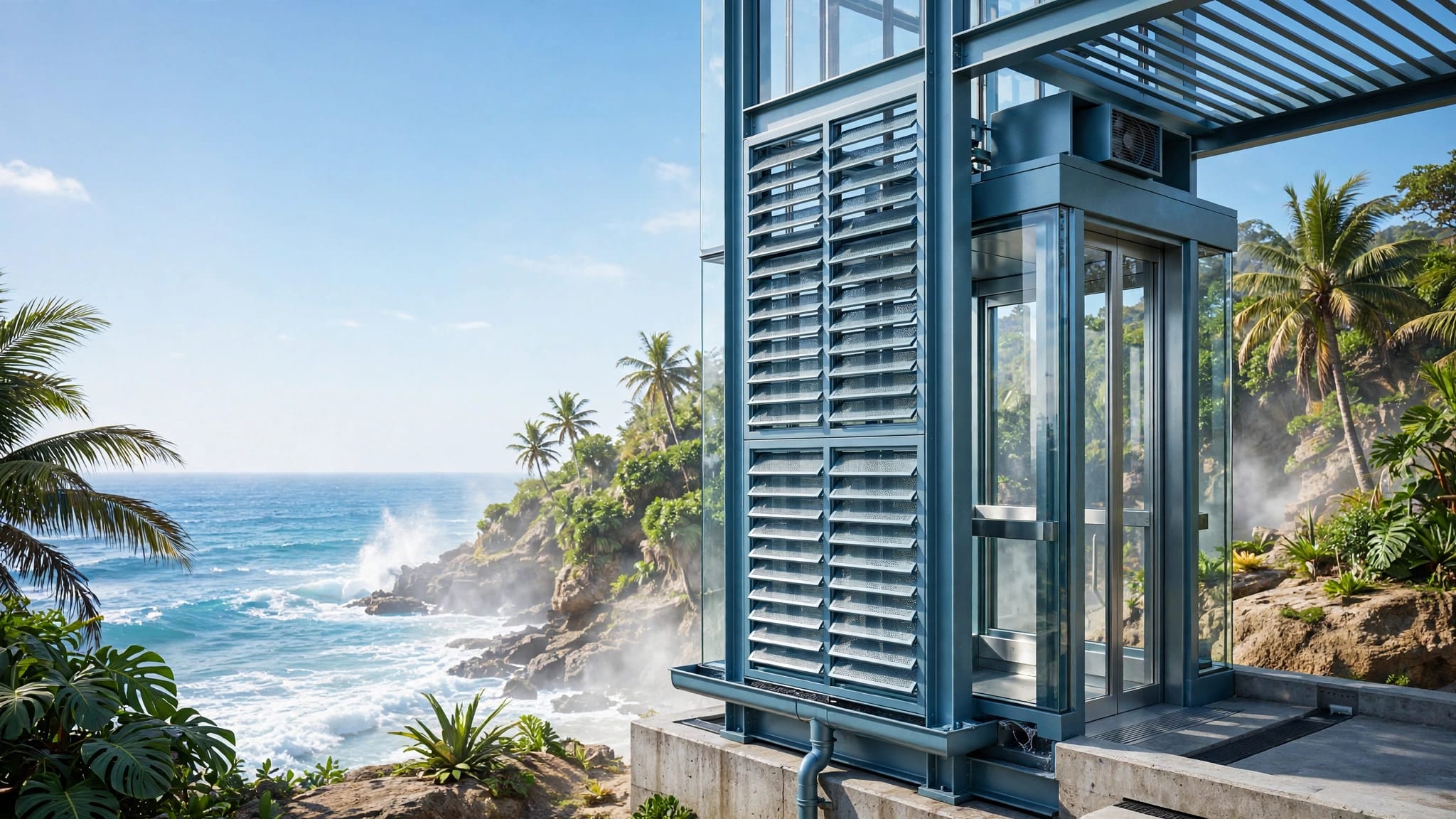
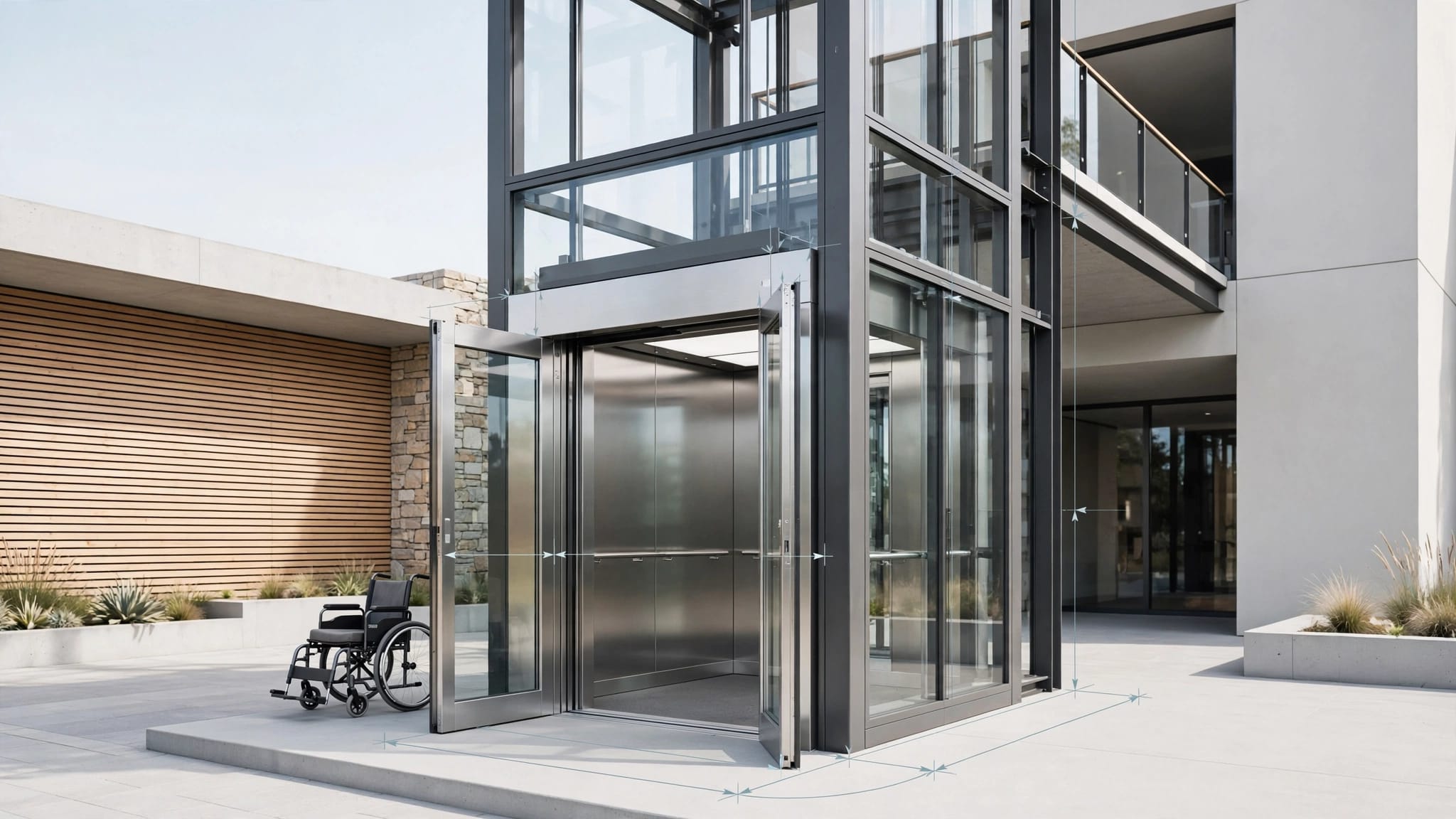
Salt can settle on an outdoor lift long before you see rust. Before cleaning, check what kind of lift you own. A dock hoist and an outdoor cargo lift, passenger elevator, or vertical platform lift have different controls and safety components.
The safest approach is finish-first cleaning : identify the materials, follow the manufacturer's care instructions, and keep water and cleaners away from sensitive equipment. Start with the surfaces you're allowed to clean.
Why boat lift cleaning advice needs a safety check
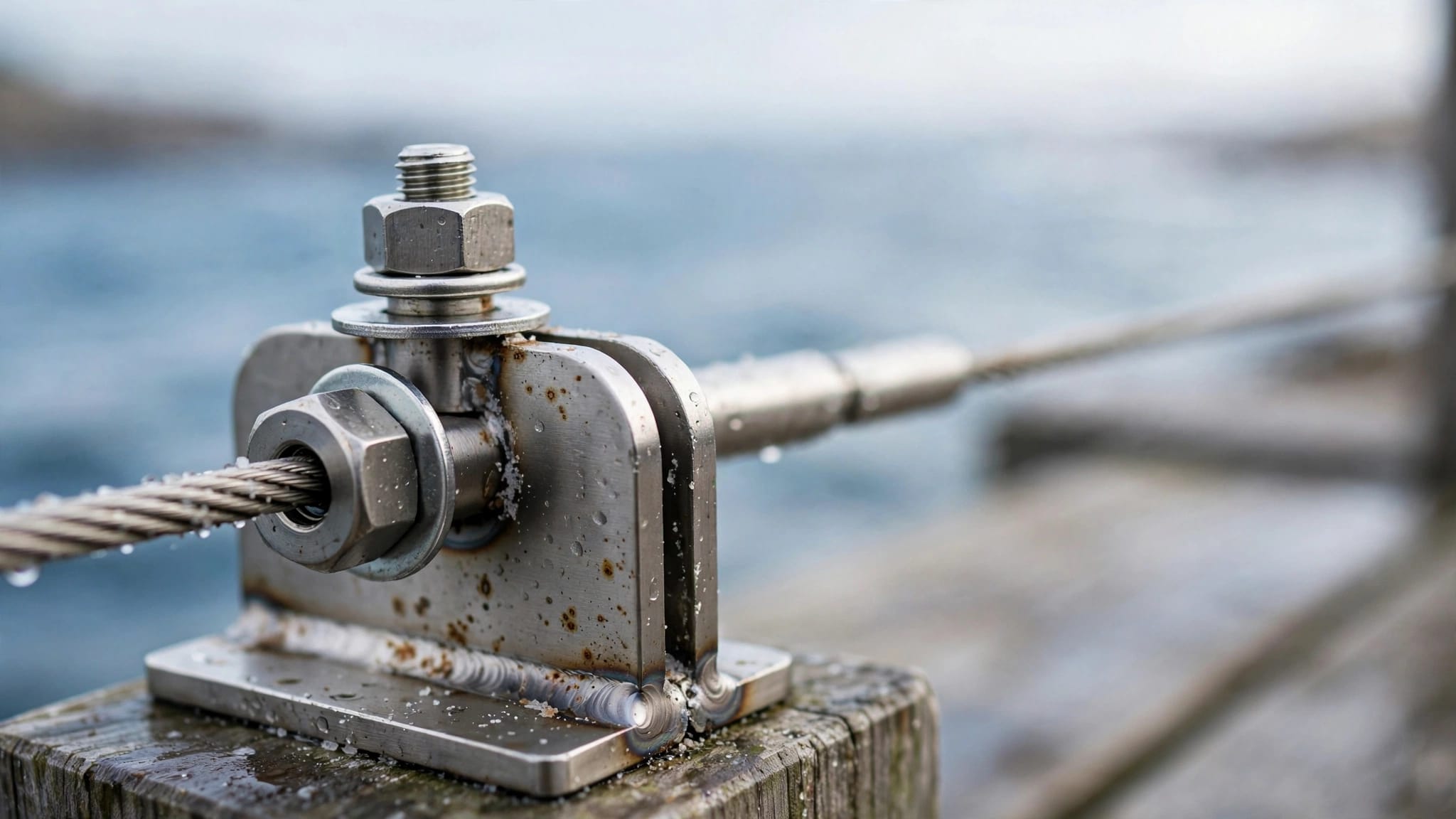
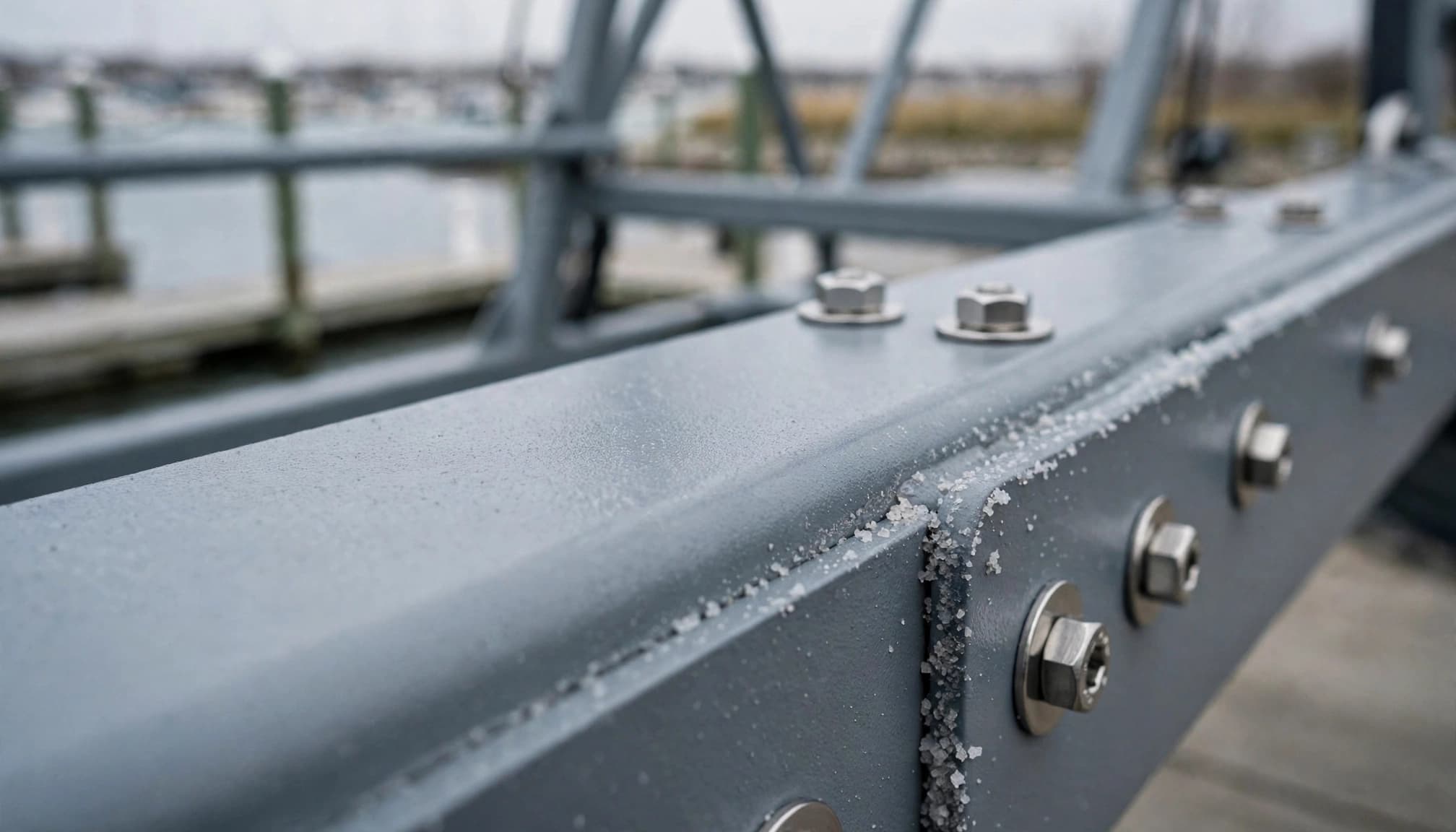
Marine-grade construction helps an outdoor lift withstand coastal conditions, but it doesn't make every part washable. Salt residue can remain after water dries and attract moisture during humid weather. Sand can also collect around gates, landings, and exposed hardware.
A dock-hoist cleaning demonstration may show someone spraying an entire structure. Don't copy that method on an outdoor passenger or cargo lift. High-pressure water can drive grit and moisture toward switches, motors, electrical connections, and other protected areas.
The right boundary depends on the installed equipment. Before cleaning, find its owner documentation and identify which exterior surfaces are owner-serviceable. If the instructions aren't available or don't answer that question, ask the manufacturer or service provider rather than guessing. For a closer look at the problem cleaning is meant to limit, see how salt air damages outdoor elevators.
Identify the finish before choosing a cleaner
A lift may have different finishes and materials on its frame, platform, gates, fasteners, and surrounding enclosure. One product or technique may suit one surface but harm another.
Check the documentation, not the appearance alone
Look for the lift's model information, maintenance instructions, and any guidance for coated metal, exposed hardware, seals, and platform surfaces. Check whether the manufacturer permits owner cleaning, what products it approves, and where water must not go.
A painted or powder-coated surface can look similar to bare metal at a glance. If you can't identify a finish, don't test a cleaner on a conspicuous area. Get confirmation before applying it.
Note damage before it gets wet
Walk around accessible areas and look for chipped coating, staining, pitting, loose hardware, damaged seals, or standing water. Photograph anything unusual so you can describe its location to a technician.
Surface dirt and salt film belong in a routine cleaning plan. Corrosion, coating failure, and loose parts are inspection or repair concerns. Don't scrub away evidence of a problem before it's assessed.
Prepare the lift and the surrounding area
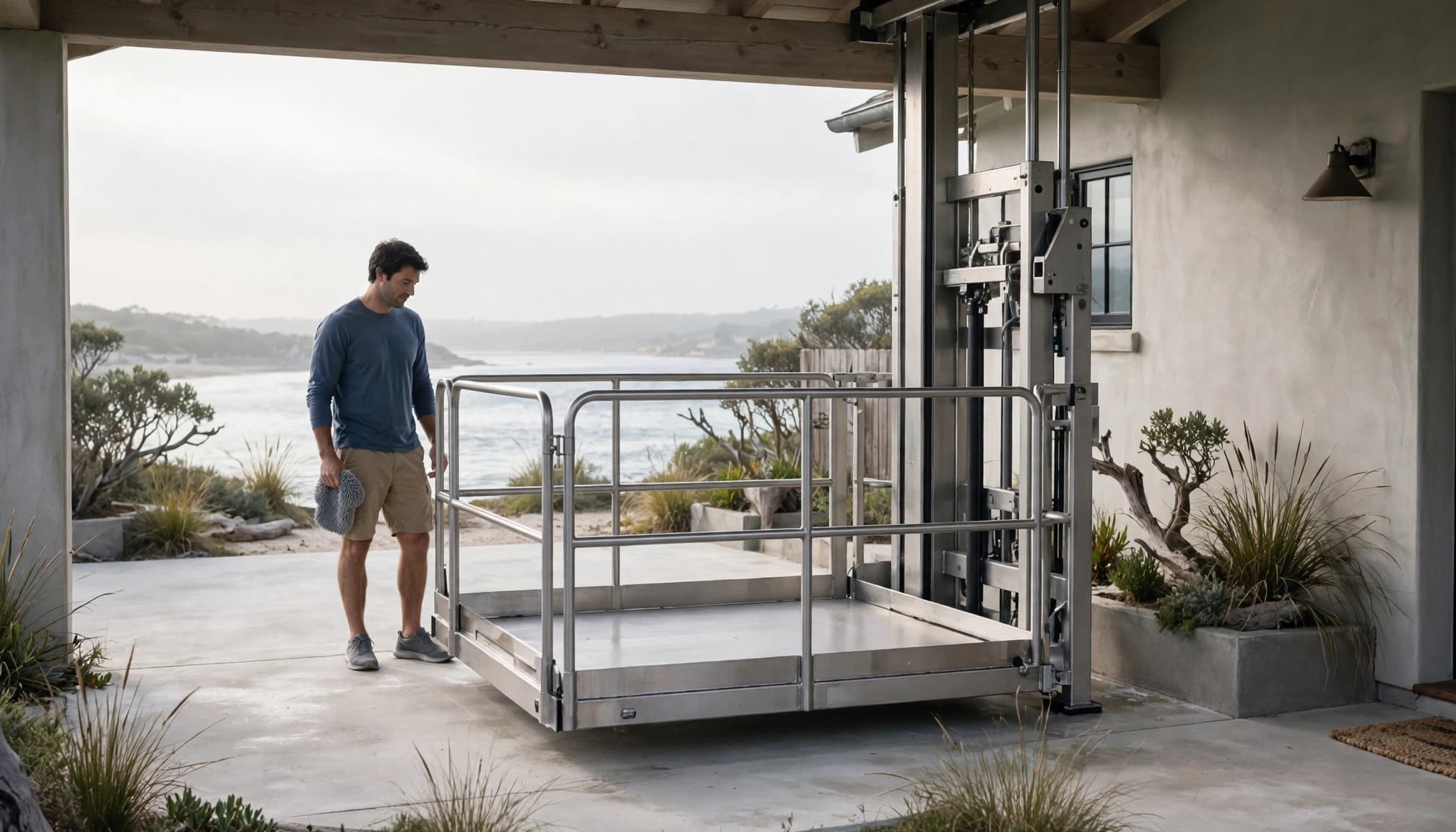
Give yourself clear access without placing anyone in the platform's path. Keep children, visitors, and pets away while the lift is unavailable for cleaning.
Follow the approved shutdown procedure
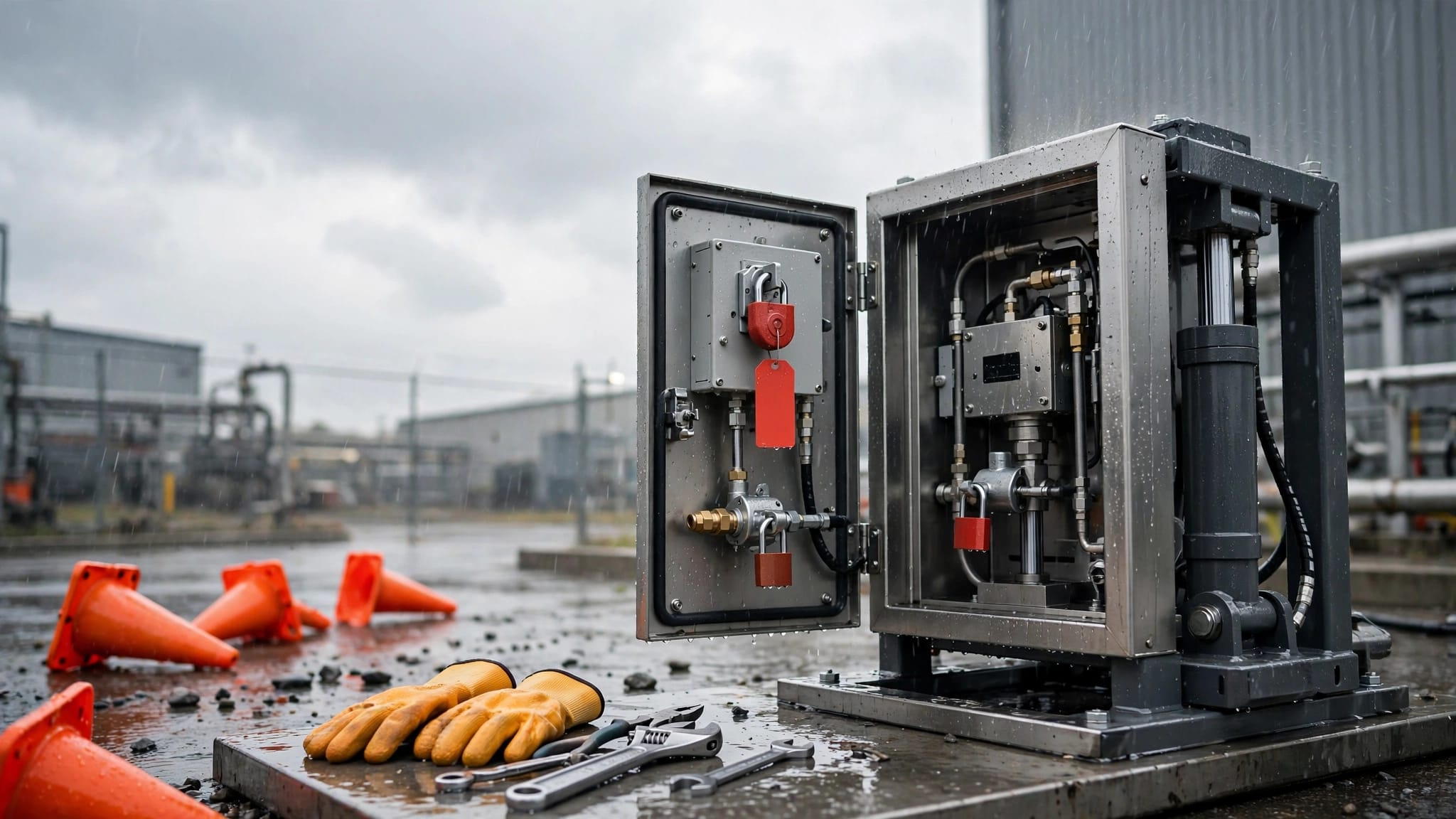
Park and secure the lift as its instructions require. If the manual calls for a shutdown or use of a designated disconnect, follow that procedure exactly. Never remove covers or open an electrical enclosure to prepare for cleaning.
Don't stand on the platform or reach into moving areas to get a better angle. Surfaces beyond safe reach can wait for a service visit.
Clear loose debris first
Remove leaves and loose items from accessible landings and approaches. Collect sand without pushing it into track gaps, switches, or drainage openings. Check that accessible drains aren't blocked and that water can move away from the lift base.
Keep the work area clear of hoses and containers that could create a trip hazard. On a passenger lift or vertical platform lift, a clean, dry approach matters as much as the platform finish.
Follow a finish-safe boat lift cleaning sequence
For an outdoor cargo or passenger lift, use this sequence only on surfaces the manufacturer has approved for owner cleaning. The manual controls which products, tools, and water application methods are suitable.
- Start with loose grit. Remove it using an approved soft, nonabrasive tool. Don't drag sand across a coated surface; grit can scratch it even when the tool itself is gentle.
- Address visible salt deposits. Use the manufacturer's approved method for the accessible exterior finish. If the instructions permit clean-water rinsing, direct water only where allowed and keep it away from electrical or enclosed components.
- Clean remaining grime gently. Choose a cleaner confirmed as compatible with that finish, then follow its stated dilution and application instructions. Don't substitute a stronger household product because a stain persists.
- Remove cleaning residue as directed. Soap or cleaner left in seams can hold dirt or affect adjacent materials. Follow the approved removal method without flooding joints, rails, or equipment housings.
- Let approved surfaces dry. Wipe or air-dry them according to the care instructions. Check nearby landings for puddles before anyone returns to the lift.
Work on one accessible area at a time. That makes it easier to notice a mark that doesn't lift with ordinary cleaning. Leave stubborn staining in place until you've confirmed whether it is grime, corrosion, or finish damage.
Protect the parts that shouldn't be washed
Keep cleaning water and products away from control boxes, motors, sensors, switches, wiring, and electrical connections unless the manufacturer explicitly allows the procedure. Avoid high-pressure spraying near rails and enclosed equipment. Pressure can force salt, sand, and moisture into areas you cannot inspect afterward.
Don't use abrasive pads, metal scrapers, household bleach, harsh acids, or an unapproved rust remover on the lift. These can damage protective finishes or nearby seals. An apparent stain isn't a reason to strip a coating.
Gates, accessible platform edges, and landing surfaces may collect grime, but they also sit close to moving or safety-related parts. Clean only the portions identified as owner-serviceable. Never apply household lubricant to a rail, hinge, cable, or other moving part while you're there; lubrication follows a separate, equipment-specific service procedure.
A surface that stays stained after gentle cleaning may need inspection, not stronger scrubbing.
Check the lift before putting it back into use
Cleaning can reveal a problem that dirt had hidden. Take another look at the surfaces you touched and the landings around them before following the manufacturer's restart instructions.
Look for changes, not only cleanliness
Check for pooled water, blocked drainage, damaged coating, loose fasteners, bent gate parts, and visible corrosion. If water entered a control area or an enclosure, keep the lift out of service and contact a qualified professional.
Don't paint over a rust spot or apply a corrosion-control product to make it look finished. The affected metal and the cause need assessment. A repair may involve more than cleaning the visible spot.
Follow the approved operating checks
Once the lift is dry and the documentation permits restarting it, follow the manufacturer's prescribed checks for gates, controls, and normal operation. Don't bypass an interlock or make repeated trips to see whether an unusual sound goes away.
Stop using the lift if a gate won't latch, travel becomes uneven, or controls behave differently. Keep passengers off a passenger lift and cargo off a material lift until the responsible service provider clears it.
Set a cleaning schedule that fits the site
Exposure matters more than a calendar reminder alone. An open waterfront installation can collect salt and windblown grit faster than a sheltered lift. Heavy rain, nearby irrigation, and poor drainage can change what you find at each visit.
For many coastal properties, a monthly walk-around is a useful starting point. Veranda 'Vator's outdoor lift maintenance checklist includes checks for salt, grit, gates, controls, and visible hardware. The manufacturer's schedule still sets the requirements for your equipment.
Record when you cleaned the lift, what you found, and which areas you left for service. Also note changes after a storm. If floodwater, impact, or wind-driven debris reached the equipment, routine washing isn't enough; follow the manufacturer's storm procedure and arrange an inspection. The site's hurricane preparation guidance for outdoor lifts covers those separate precautions.
Know when cleaning becomes a service call
Owners and property managers can remove ordinary dirt from approved surfaces and report visible changes. A qualified technician should handle work that involves safety components, electrical equipment, adjustments, or repairs.
Treat corrosion as a finding, not a cleaning task
Rust stains, pitted metal, blistered coating, and corrosion around fasteners need assessment. Aggressive scraping can remove protective material without addressing why moisture collects there. Likewise, fresh paint can conceal damage if nobody checks the underlying metal.
Document the location and ask the manufacturer or service provider about an approved repair. Keep a record of coating work, replaced hardware, and follow-up inspections.
Take operating faults seriously
Frayed cables, new grinding sounds, jerky movement, damaged gates, or water inside an enclosure call for professional attention. Don't attempt to wash away debris from inside a guarded mechanism or test a faulty lift with a passenger or load.
Service needs differ by lift type and installation. The guidance on professional outdoor lift inspection intervals can help you discuss a schedule with a provider, while your manufacturer's instructions remain the starting point.
Key takeaways
- Identify the lift's finishes and read its care instructions before selecting a cleaning product or tool.
- Remove grit gently, and clean only surfaces approved for owner care.
- Keep high-pressure water, harsh chemicals, and abrasive pads away from the equipment.
- Refer corrosion, electrical exposure, damaged components, and operating faults to qualified professionals.
Frequently asked questions
Can I pressure-wash a marine-grade outdoor lift?
Don't pressure-wash it unless the manufacturer gives clear instructions permitting that method for the installed model. Avoid directing high-pressure water at rails, controls, motors, sensors, switches, or enclosed equipment. Water forced into those areas can turn a surface-cleaning job into a service problem.
How often should I clean salt off the lift?
Follow the manufacturer's interval and adjust routine checks to the lift's actual exposure. A sheltered residential installation and an open waterfront site won't collect deposits at the same rate. Inspect after significant salt spray or storms, and clean approved surfaces when you find buildup.
Will boat lift cleaning products work on my cargo or passenger lift?
Don't assume they will. Products intended for a dock hoist may not suit your lift's coatings, seals, platform surface, or adjacent components. Use only cleaners approved for the materials and finishes on your installed equipment.
Keep the finish intact and the lift safe
Salt removal helps protect a marine-grade lift, but the safest cleaning stays within the manufacturer's instructions. Identify the finish, handle accessible surfaces gently, and leave corrosion or equipment faults for a qualified technician.
A clean lift should also be a safe lift. Don't return it to use until it's dry, checked, and ready under its approved operating procedure.
Recent Posts