

Residential Lift Load Test: What to Expect

Share this article

A residential lift load test is more than placing weights on a platform and pressing a control. It checks whether the installed equipment performs safely under a controlled load, according to the manufacturer's instructions and the requirements adopted by the local authority.

The exact test depends on the lift type, rated capacity, use, code path, and jurisdiction. A proper residential lift load test should also produce a clear record showing what was tested, who tested it, which equipment was used, and what happened if a defect appeared.

What a Residential Lift Load Test Should Include

A load test forms part of a wider safety assessment. It doesn't replace an inspection of the structure, controls, gates, landing areas, drive system, or safety devices.

A test based on the correct equipment category

First, the examiner should confirm whether the unit is:

  • A passenger elevator
  • A vertical platform lift (VPL)
  • A cargo or material lift
  • A private residence elevator
  • Another equipment category defined by local rules

These categories can have different requirements. ASME A17.1/CSA B44 commonly applies to elevators, while ASME A18.1 commonly applies to vertical platform lifts. A cargo lift may follow a separate material-handling classification.

A platform rated for 750 or 1,000 pounds isn't automatically approved to carry passengers. Capacity and passenger compliance are separate issues. Review these cargo lift vs. passenger elevator differences before deciding what the test needs to prove.

A procedure tied to the manufacturer and local code

The manufacturer's manual should identify approved loading, operating limits, test procedures, and safety precautions. The authority having jurisdiction may also specify the inspection interval, test sequence, examiner qualifications, and required certificate.

The 2025 ASME A17.1/CSA B44 publication covers elevators, dumbwaiters, and material lifts, but local officials may adopt a different edition or add requirements. A professional should identify the adopted rules before testing begins.

Confirm the Lift and Site Before Testing

A good test starts with accurate project information. The examiner should compare the installed equipment with the approved drawings, data plate, contract documents, and manufacturer's specifications.

Check capacity, dimensions, and intended use

The rated load must match the actual equipment configuration. Review the heaviest expected passenger, wheelchair, attendant, cart, appliance, container, or building material. Also consider how the load sits on the platform.

An uneven or concentrated load can create a problem even when the total weight remains below the rating. Platform size matters too. A lift may have enough capacity for a wheelchair or cart but lack the clear width, turning space, or landing approach needed for safe use.

The examiner should record:

  • Model and serial number
  • Rated capacity
  • Number of stops
  • Travel distance
  • Platform or car dimensions
  • Approved passenger or cargo use
  • Gate, door, and interlock arrangement

A builder's lift planning checklist can help identify landing clearances, thresholds, gate locations, drainage, and structural conditions before the test.

Inspect the surrounding installation

The test should not focus only on the moving platform. The professional should review the supports, rails, anchors, landing structure, foundation, gates, guards, and attachment points.

For an outdoor lift, weather exposure adds further concerns. Salt, moisture, flooding, wind, and storm debris can affect the structure and electrical components. Water inside a control enclosure or corrosion at an attachment point may require corrective work before any load test proceeds.

How the Load Portion Is Conducted

The test load must come from the applicable procedure. There is no universal percentage or proof-load value that applies to every residential lift.

Rated load, proof load, and distribution

A rated-load test checks operation with the equipment's stated working load. A proof or safety test may require a different load, duration, arrangement, or sequence. The manufacturer, adopted code, and local authority determine which applies.

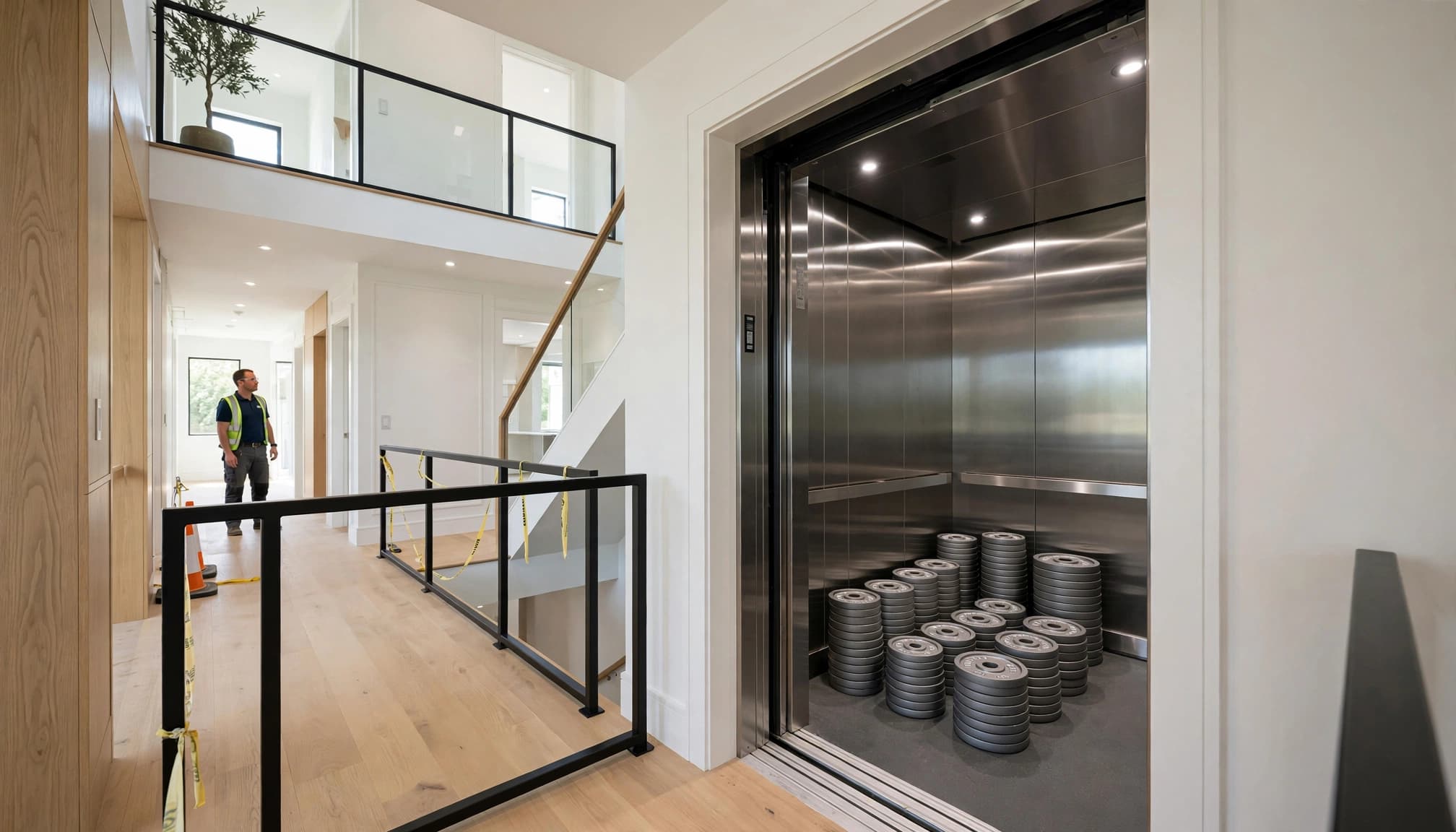
The examiner should document the actual test mass , not simply write "full load." The record should also show how the weights were distributed and whether the load represented the equipment's approved use.

Weights should remain within the manufacturer's loading area. They shouldn't be stacked in a way that creates an unsafe center of gravity, blocks gates, contacts moving parts, or exceeds platform dimensions.

A larger capacity doesn't remove the need for structural review. Increasing the rated load can affect foundation forces, anchorage, power requirements, platform size, and landing construction.

Travel and safety functions under load

The professional may observe the lift during starting, travel, stopping, and landing. Depending on the equipment, the assessment can include:

  • Brake holding
  • Leveling at each landing
  • Gate and door interlocks
  • Upper and lower travel limits
  • Emergency stop controls
  • Safety-device response
  • Unusual noise, vibration, scraping, or hesitation
  • Slippage, drift, deformation, or overheating

The examiner should follow the approved procedure rather than improvise a test. A cargo lift should never carry a person during testing unless it is specifically designed, approved, and labeled for passenger use.

Equipment and Worker Safety Controls

Load testing involves heavy weights, moving machinery, stored energy, and open landings. The work area needs controls that protect the examiner, occupants, contractors, and anyone passing through the property.

Use calibrated equipment

Test weights and measuring devices should be suitable for the planned test. The examiner should verify the identification and calibration status of weighing or measuring equipment and record the relevant reference in the report.

Calibration information matters because the recorded load supports the final decision. A report that lists only an approximate weight gives the owner and authority less confidence in the result.

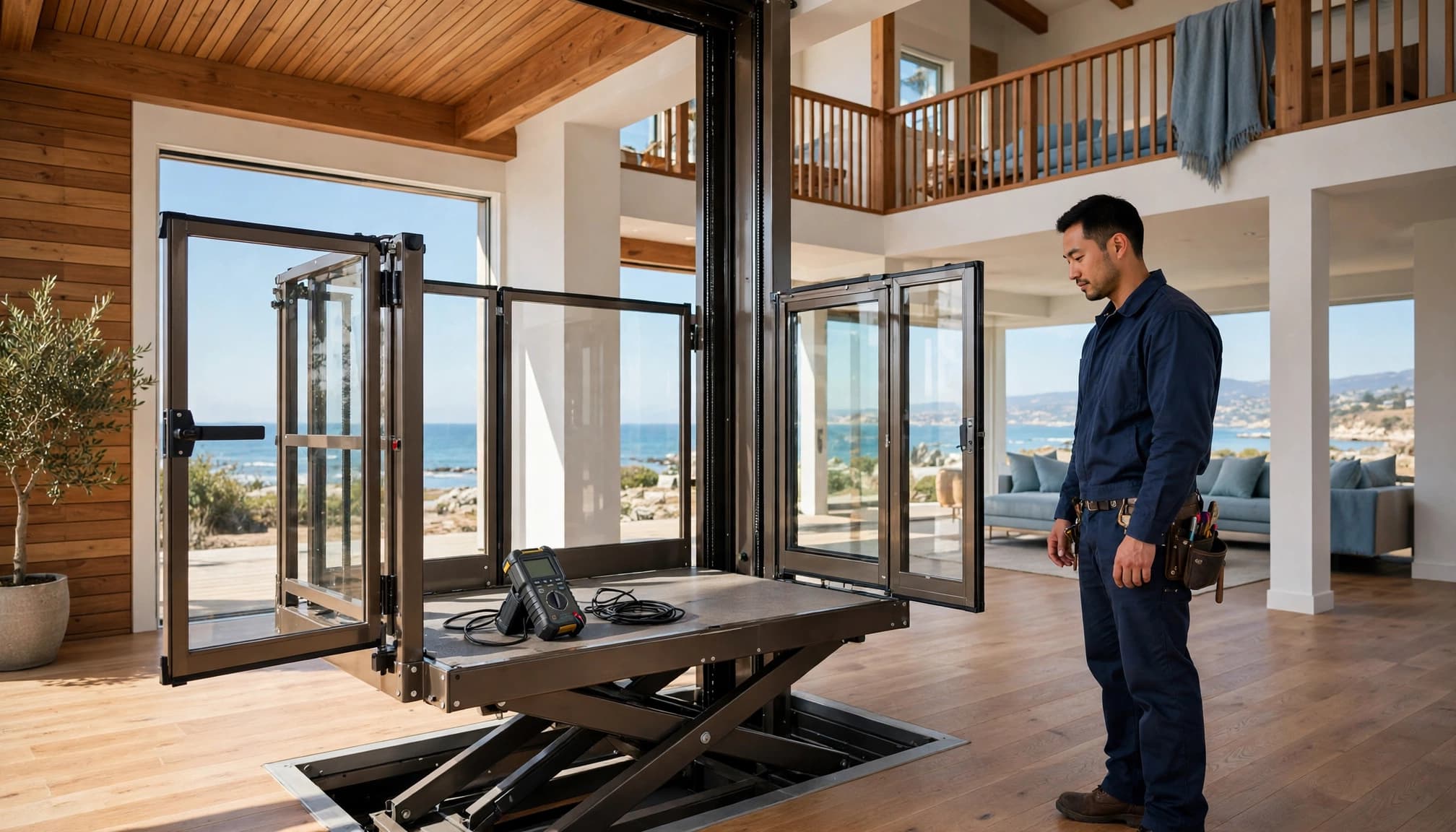
The testing company should also bring equipment appropriate to the lift. This may include inspection instruments, electrical test equipment, communication devices, and tools required by the manufacturer's procedure. Unauthorized tools or temporary bypasses can create a separate hazard.

Control access to the work zone

Before loading begins, occupants should stay away from the lift, landings, shaft openings, platform edges, and moving components. The professional should establish a controlled area and prevent anyone from entering while the lift operates.

Where applicable, the team should use lockout or shutdown procedures, fall protection, barriers, warning signs, and personal protective equipment. The exact controls depend on the equipment and work environment.

No one should hold open, tape down, defeat, or bypass an interlock or sensor. If a safety device doesn't function as intended, the lift should remain out of service until a qualified person assesses it.

What the Test Record Should Show

A certificate or report should allow another qualified person to understand the test without guessing. It should identify the equipment, test basis, conditions, observations, and final status.

Identification and test details

A useful report normally includes:

  • Property address
  • Owner or responsible manager
  • Lift manufacturer and model
  • Serial number or installation identifier
  • Lift type and approved use
  • Rated capacity
  • Applicable code, standard, or local requirement
  • Manufacturer procedure used
  • Date and location of testing
  • Examiner's name, company, and qualifications
  • Test load and load distribution
  • Test weights and calibration references
  • Conditions observed before, during, and after testing

The report should also state anything the technician couldn't test. For example, a test may be limited because a safety device was inaccessible, a component was damaged, or the required load wasn't available.

Certificate, findings, and retention

The final document should clearly state whether the equipment passed the specific test performed, failed it, or needs further action. Avoid vague phrases such as "looks good" or "tested okay."

Keep the certificate with the lift manual, maintenance records, repair invoices, permits, inspection notices, and previous test reports. A complete history helps property managers track recurring defects and demonstrate that required work was addressed.

Inspection intervals vary. For example, Florida Administrative Code 61C-5.013(b) requires annual Category 1 periodic safety tests for elevators covered by that state program. That Florida requirement doesn't establish a universal schedule for every lift or location. Review the applicable outdoor lift inspection frequency with the local authority and service provider.

Defects, Corrective Action, and Retesting

A failed result should lead to a controlled response, not an informal decision to keep using the lift.

Record the defect and operating status

The report should describe the defect in practical terms. Examples include a gate that doesn't latch, brake movement, failed leveling, cracked welds, damaged guards, water in electrical equipment, faulty limits, unusual vibration, or a safety device that doesn't respond.

The examiner should state whether the lift was:

  • Removed from service
  • Restricted to a limited use
  • Tagged out pending repair
  • Allowed to operate under a documented condition

A lift that moves while empty hasn't necessarily passed. Controls can respond while a brake, structure, interlock, or safety circuit remains unsafe.

Document repairs and complete the retest

The corrective-action record should identify the repair, adjustment, replacement part, responsible technician, and completion date. It should also state whether the original test must be repeated.

Retesting should follow the applicable procedure. A repair to a gate may require a gate and interlock check. Work on a brake, drive, controller, platform, or safety device may require a broader assessment.

Don't return the lift to normal passenger or cargo use until the qualified professional and, where required, the authority confirm that the necessary testing is complete. Coastal owners should also maintain a written plan for corrosion, storm, and water exposure, as described in this coastal outdoor lift maintenance checklist.

Key Takeaways

  • Identify the exact lift type before selecting the test procedure.
  • Use the manufacturer's instructions and the code adopted by the local authority.
  • Record the actual test load, distribution, calibration references, and observed behavior.
  • Inspect gates, interlocks, brakes, controls, landings, structure, and safety devices as well as the platform.
  • Keep occupants and unqualified workers outside the testing area.
  • Never assume a cargo lift is approved for passengers because it has a large platform or high capacity.
  • Record every defect, repair, operating restriction, and retest result.
  • Keep the completed certificate with the lift's permanent service records.

Frequently Asked Questions

Can a homeowner perform a residential lift load test?

A homeowner may carry out basic checks only when the manufacturer permits them, such as confirming that a gate closes or that an unloaded platform stops at the landing. A formal load test requires suitable equipment, training, and knowledge of the applicable procedure.

Homeowners should not adjust brakes, bypass interlocks, trip safety devices, or place improvised weights on a platform. A qualified lift professional should conduct the formal test.

Is a 1,000-pound lift automatically safe for passengers?

No. A capacity rating describes how much the equipment is designed to carry under specified conditions. It doesn't establish whether passengers may ride.

Passenger use depends on the equipment classification, design, controls, doors, gates, safety systems, manufacturer approval, and local acceptance. A material lift may carry heavy supplies but remain unsuitable for people.

How often should a residential lift be load tested?

The interval depends on the lift type, jurisdiction, adopted code, manufacturer, and use. Some jurisdictions require annual periodic tests for covered elevators. Other equipment may follow different schedules or event-based requirements after alterations, repairs, extended shutdown, flooding, or safety-device activation.

The service provider and local authority should confirm the required interval in writing.

What happens if the lift fails the test?

The examiner should describe the defect, state whether use must stop, identify the required repair, and determine whether retesting is necessary. Keep people off the lift until the repair and required follow-up testing are complete.

Conclusion

A residential lift load test should produce verified evidence, not a casual demonstration that the platform moves. The strongest process matches the lift category, manufacturer procedure, actual loading conditions, and local requirements.

For homeowners, property managers, and contractors, the final certificate matters as much as the test itself. It should show what was examined, what was measured, what failed, what was repaired, and whether the lift was cleared for its approved use.

Recent Posts

By Veranda 'Vator September 19, 2026
Salt air can damage an outdoor lift before you see obvious rust. For homeowners, coastal lift service contracts should address humidity, wind-driven rain, flooding, storms, corrosion, and the equipment's intended use. A low-cost plan may cover scheduled visits but exclude part...

By Veranda 'Vator September 18, 2026
Salt air can damage stainless fasteners long before a lift shows obvious rust. Stainless hardware corrosion often begins as residue, staining, or pitting around a joint, then spreads where moisture remains trapped. Property owners and maintenance teams can catch early changes...
By Veranda 'Vator September 17, 2026
A small commercial building may need reliable access between floors without the footprint of a full-size passenger elevator. LULA elevators can fit that gap, but only when the building, travel distance, accessibility needs, and local code path support the choice. A limited-use...

By Veranda 'Vator September 16, 2026
The right number of residential lift stops depends on where people, wheelchairs, vehicles, luggage, or supplies need to enter and exit. There is no universal number that suits every home. A two-story house may need two stops, while an elevated coastal home could need three or...

By Veranda 'Vator September 15, 2026
Outdoor elevator financing starts with a clear project, not a loan application. Florida homeowners need to identify the equipment, site work, permits, storm requirements, and access needs before comparing lenders. A cargo lift, vertical platform lift, and passenger elevator se...

By Veranda 'Vator September 14, 2026
An outdoor elevator can look idle while electrical, hydraulic, mechanical, or gravitational energy remains dangerous. A written elevator lockout tagout procedure protects maintenance crews from unexpected movement, startup, and stored energy during inspection, repair, cleaning...

By Veranda 'Vator September 13, 2026
Outdoor elevator ventilation needs careful planning when a lift operates beside the ocean. Heat, humidity, salt spray, wind-driven rain, and direct sun can affect the cab, controls, finishes, and surrounding equipment. For building owners, architects, and facility managers, th...

By Veranda 'Vator September 12, 2026
An outdoor lift can solve a major access problem, but floodplain work requires more than choosing the right equipment. Lift elevation certificates help document how the lift and nearby building relate to flood elevations, grade, and other site conditions. The certificate is no...
By Veranda 'Vator September 11, 2026
An exterior lift can turn a steep porch, raised deck, or split-level entrance into a usable route. However, it has to fit the mobility device, the property, and the weather it will face every day. For homeowners, caregivers, and property managers, outdoor wheelchair lifts need...

By Veranda 'Vator September 10, 2026
A raised coastal home can stay comfortable for decades when every level remains easy to reach. Outdoor elevator planning gives homeowners a practical way to reduce stair use while protecting daily independence. The right lift depends on far more than travel height. Your proper...
Show More