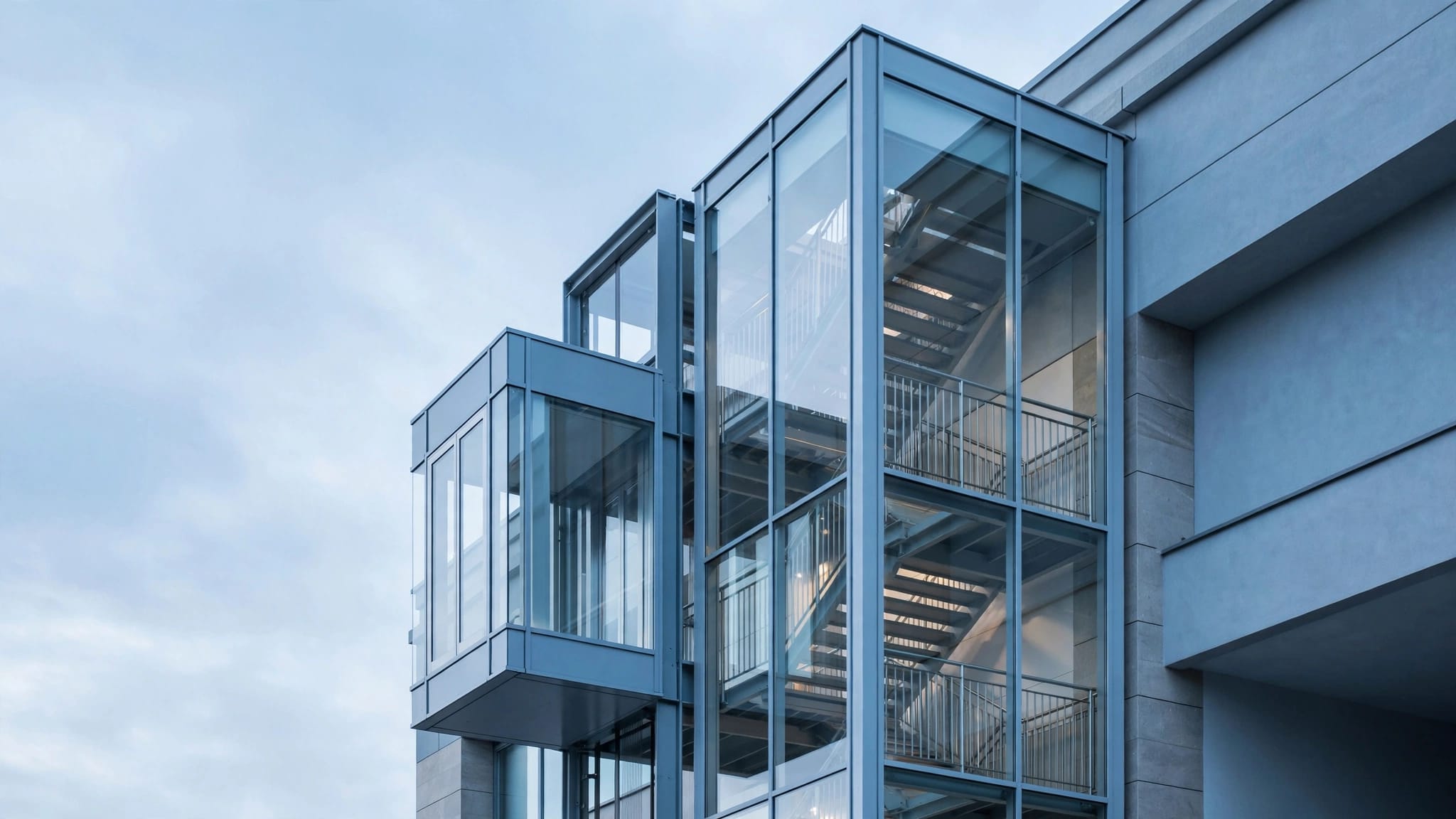
An exterior lift can turn a steep porch, raised deck, or split-level entrance into a usable route. However, it has to fit the mobility device, the property, and the weather it will face every day.
For homeowners, caregivers, and property managers, outdoor wheelchair lifts need more planning than an indoor unit. Rainwater, salt air, gate clearances, power outages, and safe loading all affect whether a vertical platform lift works well over time.
How Outdoor Wheelchair Lifts Support Accessible Entry
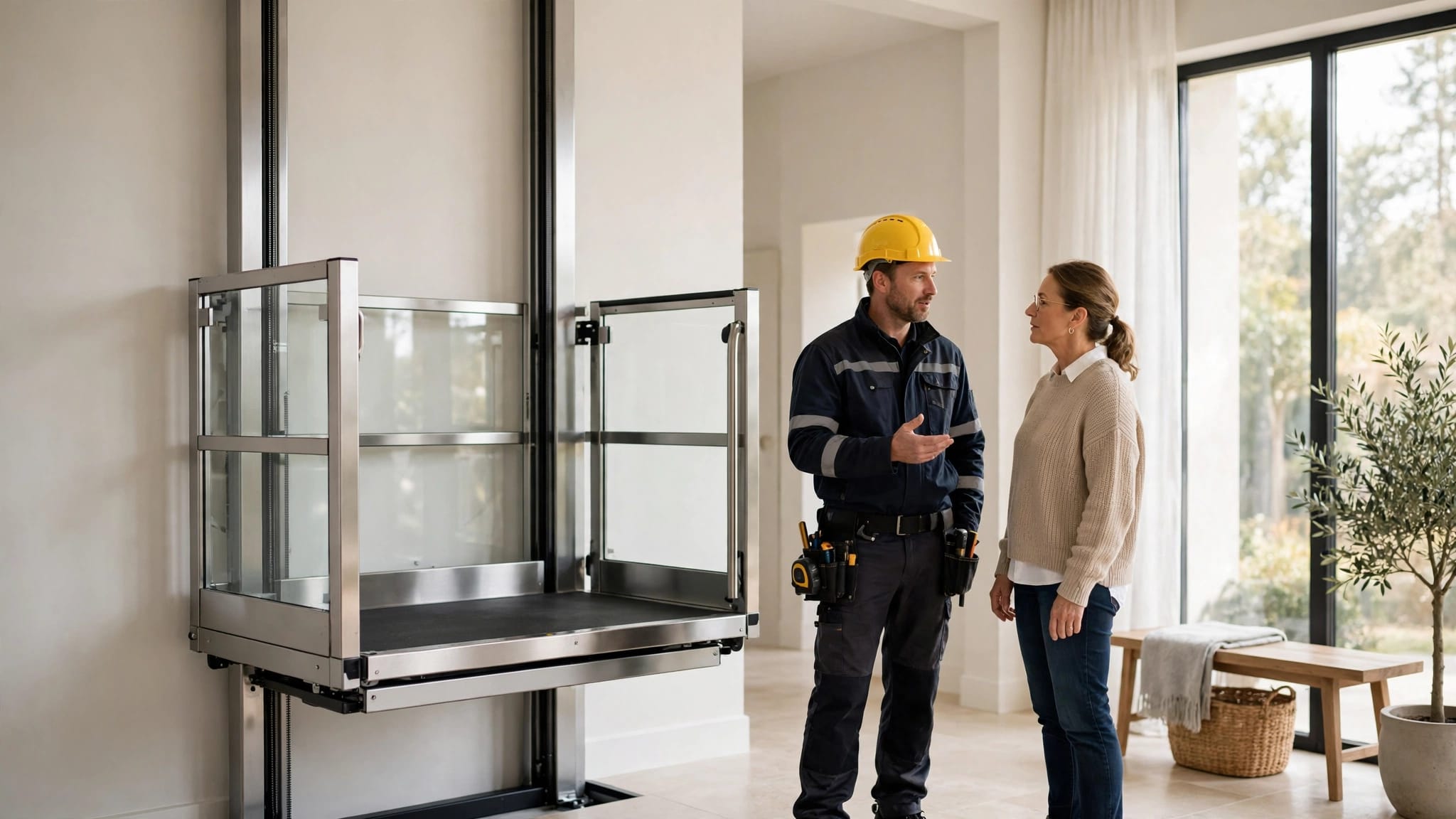
A vertical platform lift, often called a VPL, moves a person and their mobility device vertically on a powered platform. It can provide direct access between grade and an elevated landing without the long footprint of a ramp.
A VPL is different from a cargo lift
Equipment categories matter. A cargo lift moves groceries, tools, luggage, and materials. Unless its manufacturer has designed and approved it for passengers, no one should ride it.
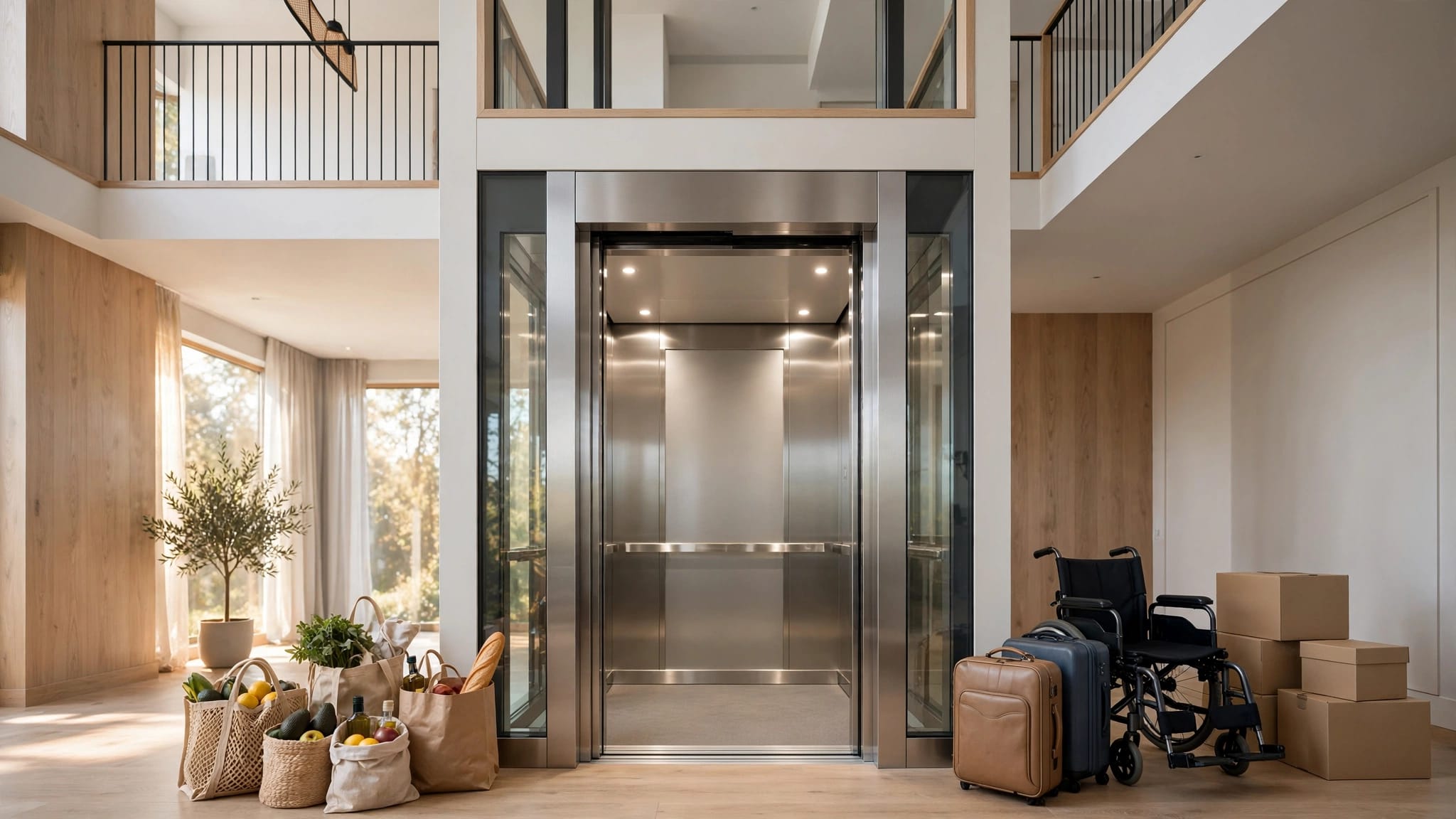
A VPL has a different purpose. Its platform, gates, controls, and safety systems must support wheelchair or scooter access. A passenger elevator follows another equipment category and may suit properties with several floors, frequent passenger traffic, or a need for an enclosed cab.
Before comparing models, document the actual use. Include the rider, their power wheelchair or mobility scooter, an attendant if needed, and anything that may travel with them.
Where a VPL can fit best
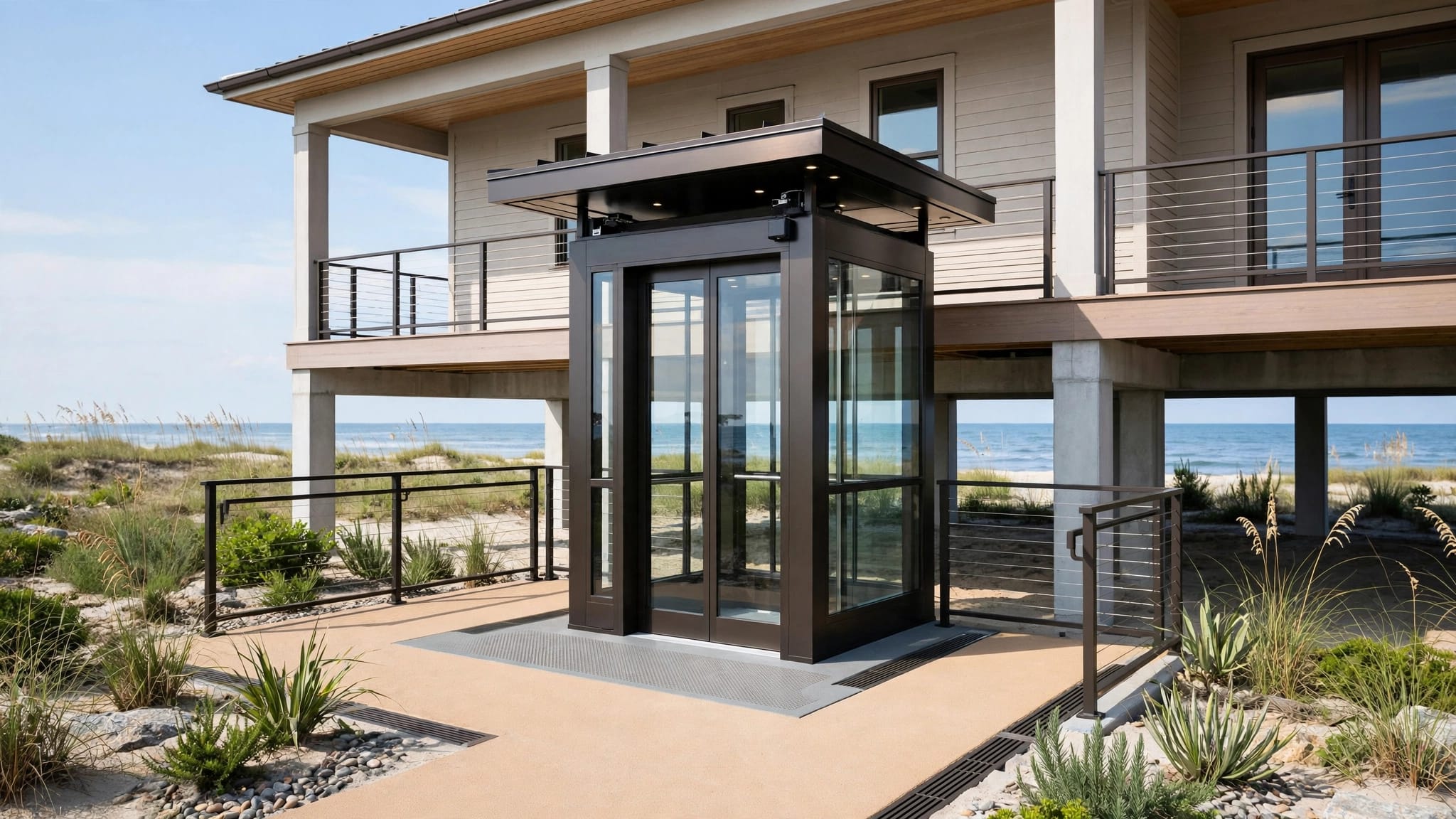
Outdoor VPLs often suit a modest rise to a porch, deck, balcony, church entrance, clinic landing, or raised coastal home. They can also help when a ramp would take up parking, block a walkway, or require too many turns.
Still, the lift needs level, usable space at both stops. A narrow porch or a sloped driveway can make a seemingly simple project difficult. Retrofitting an outdoor wheelchair lift starts with the complete access path, not the space beside the stairs.
Design for Rain, Drainage, and Salt Air
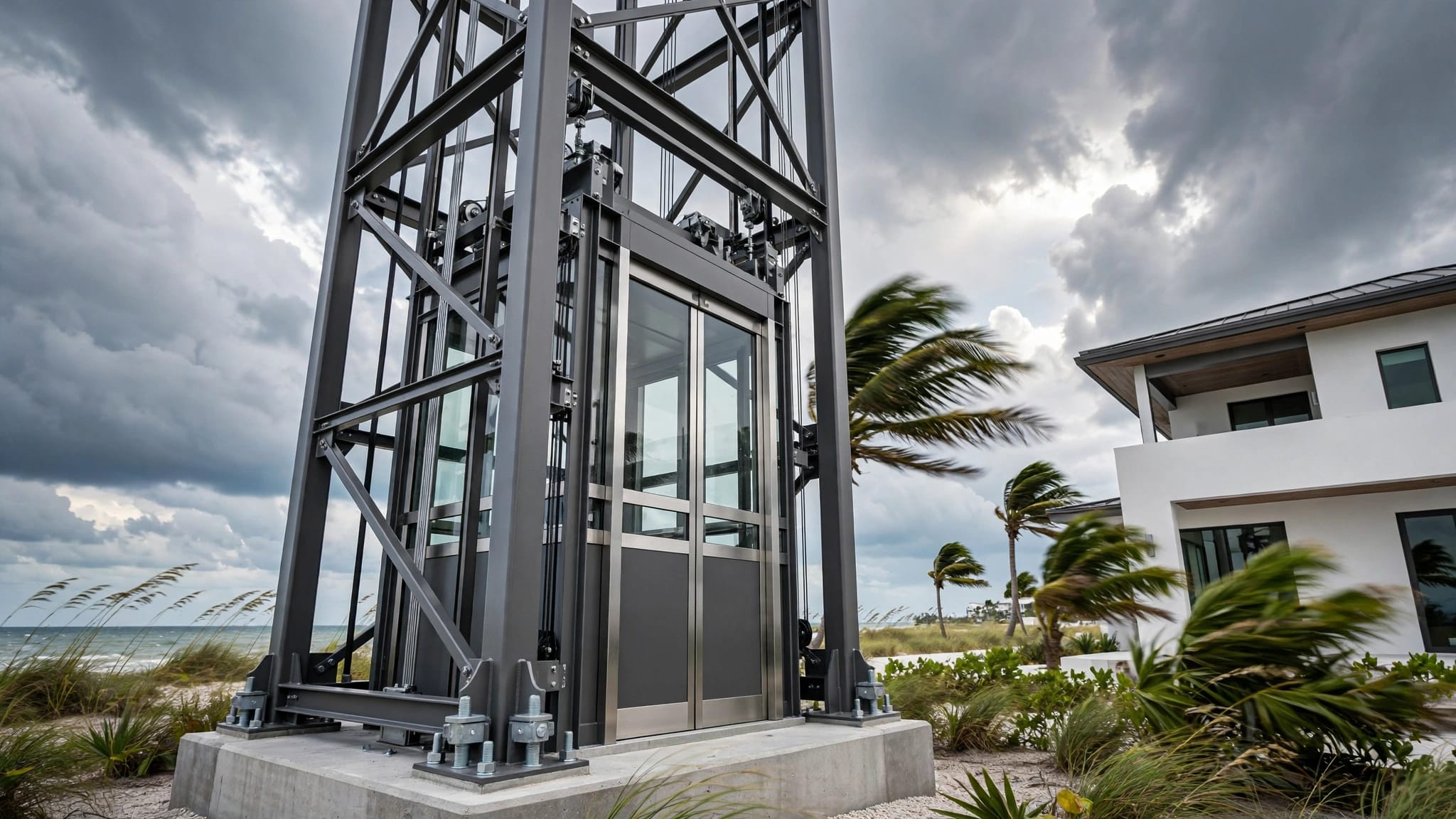
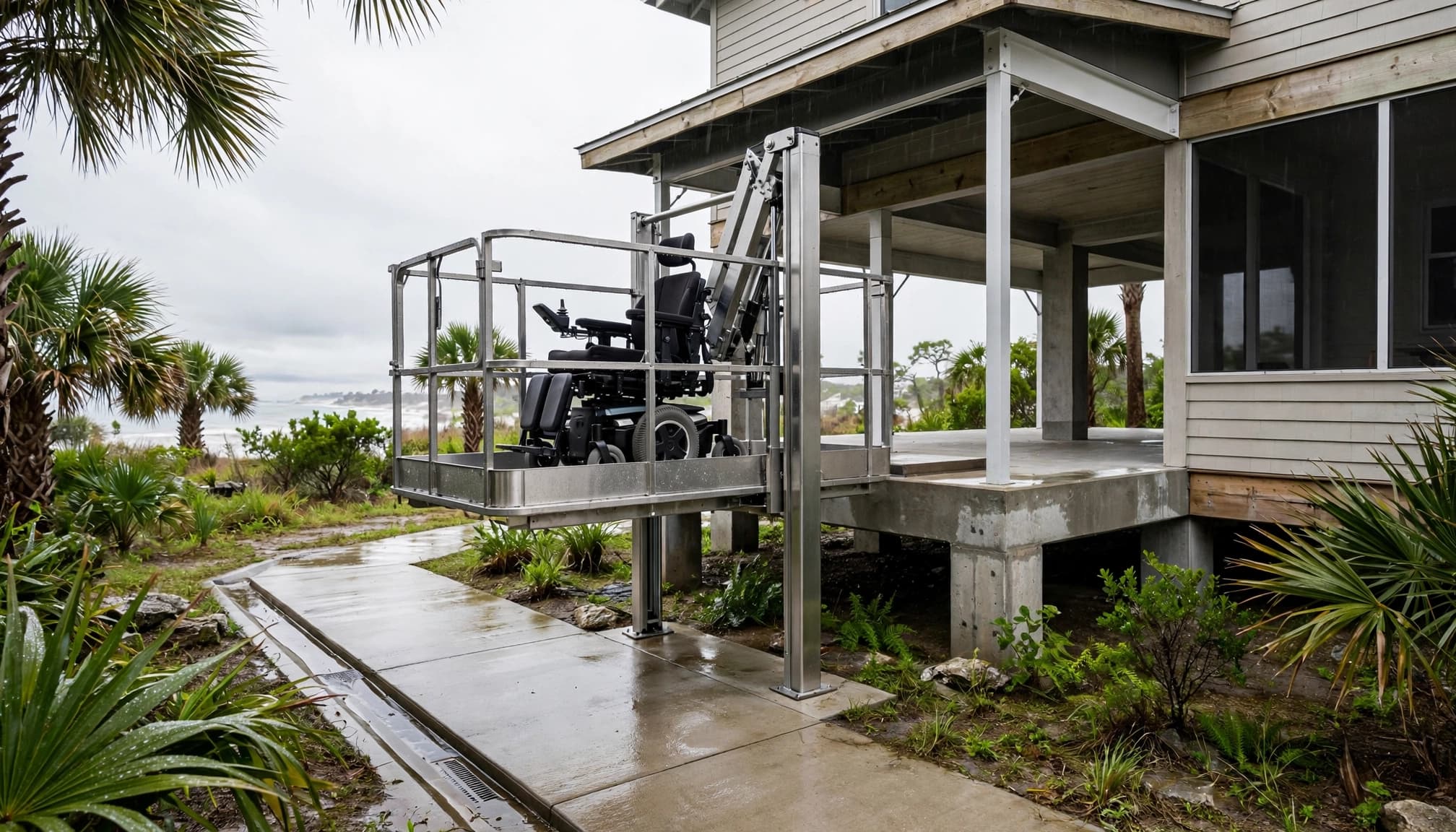
An outdoor lift needs a site that sheds water instead of collecting it. Water that pools at the lower landing can create a slip hazard, interfere with gates, and expose mechanical components to prolonged moisture.
Keep water moving away from the lift
The base, landing, and surrounding paving should direct water away from the lift. If the design uses a pit, the installer should plan an approved drain point and protection against flooding.
Avoid routing roof runoff toward the platform. Downspouts, landscape grading, and nearby hardscape can all send water to the wrong place during a heavy storm. Leaves, sand, and mulch can also clog drains, so drainage needs regular attention after severe weather.
A canopy or other weather cover may reduce direct rain exposure, but it doesn't remove the need for sound drainage. It also has to suit local wind and structural requirements.
Choose corrosion-resistant materials
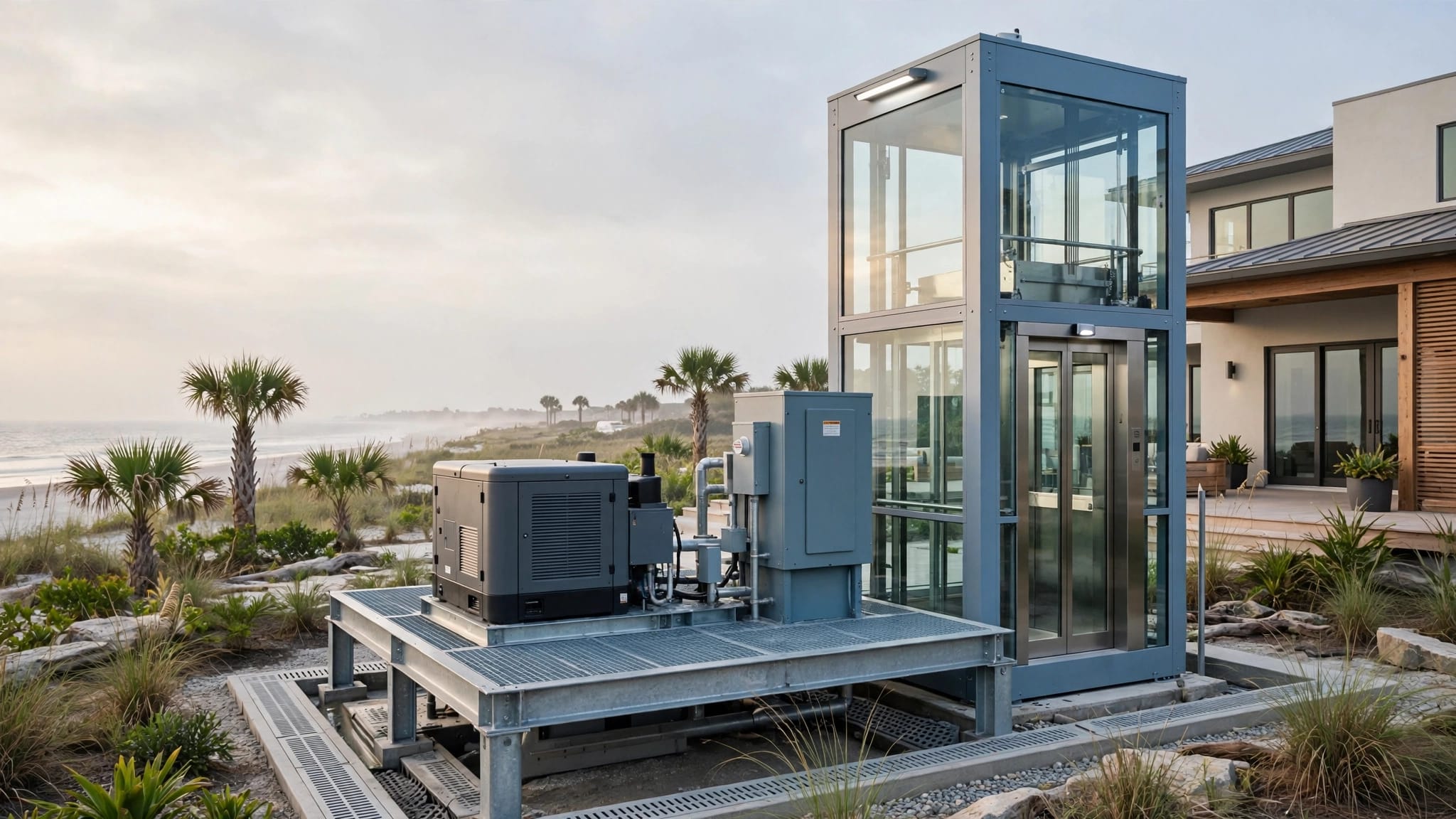
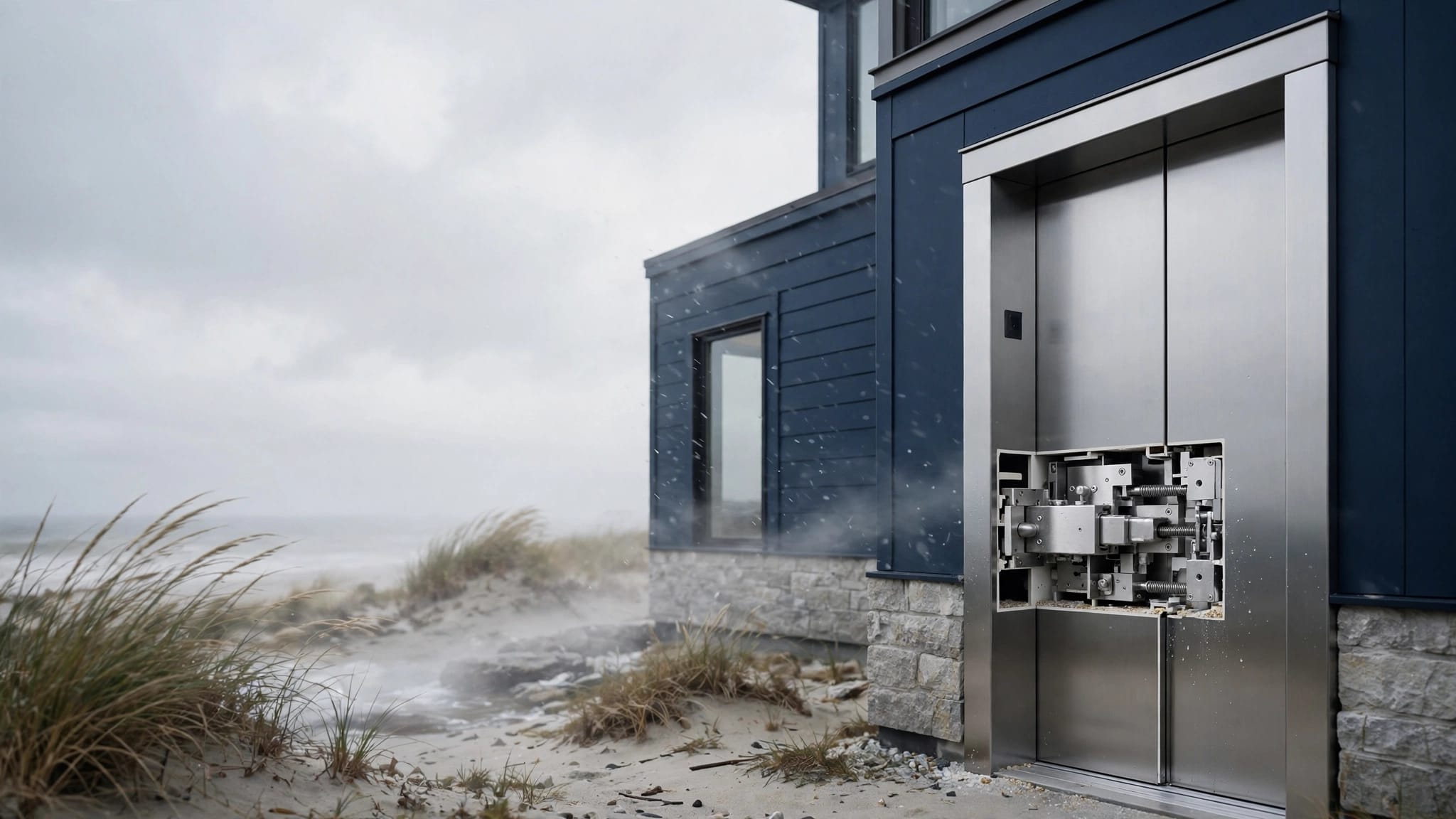
Salt air, humidity, and wind-blown grit can shorten the service life of exterior metal parts. Coastal projects may call for hot-dip galvanized steel, marine-grade coatings, stainless steel hardware, or other materials recommended for that location.
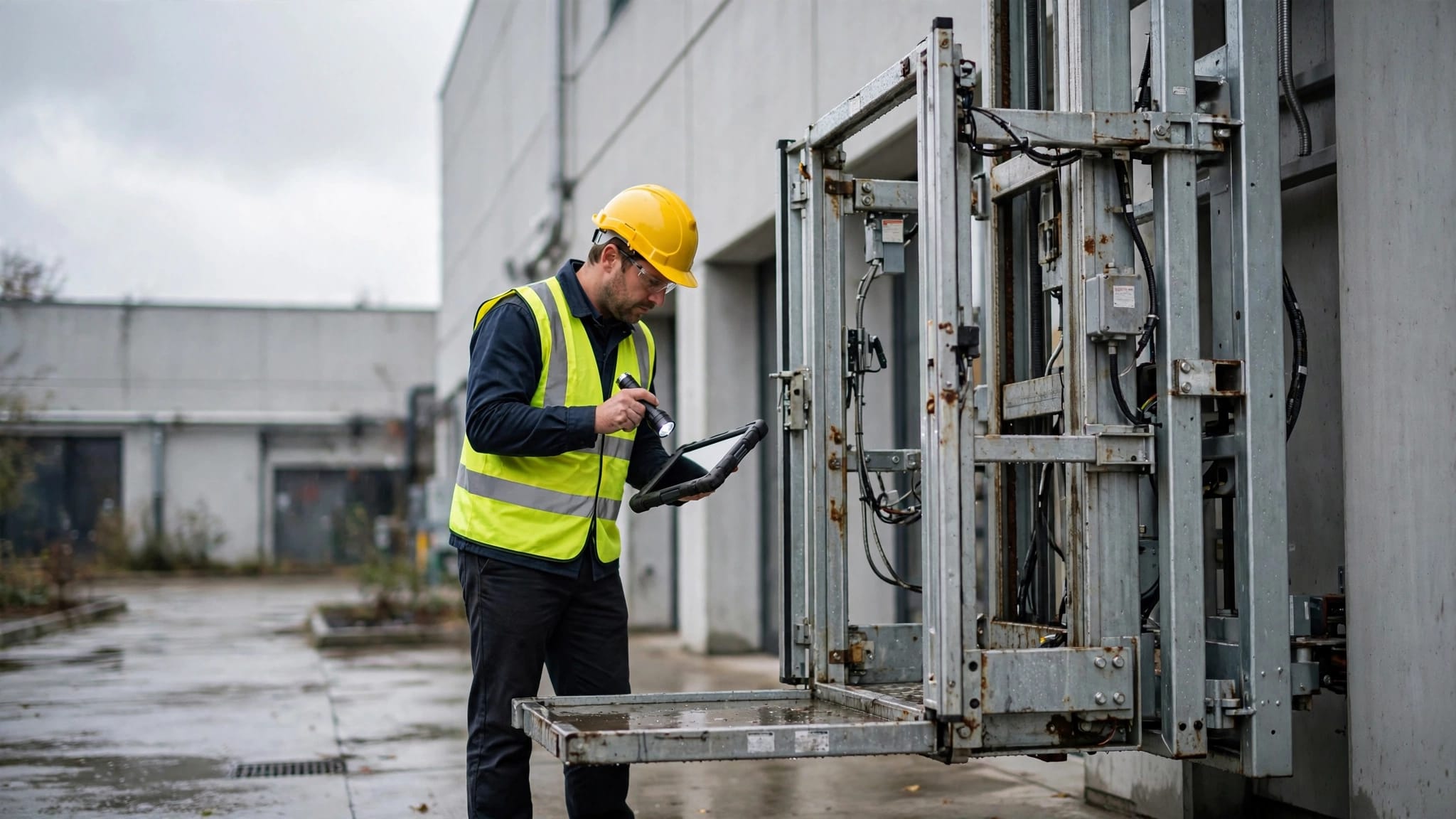
Inspect the entire assembly, including rails, fasteners, gates, anchors, drainage parts, and exposed electrical enclosures. Paint damage and rusty hardware should receive prompt attention before corrosion spreads.
A lift can have weather-resistant finishes and still need cleaning, inspection, and post-storm care.
The porch, balcony, or landing deserves equal review. Existing posts may carry deck loads without being designed for lift forces. A qualified installer or structural professional should assess the foundation, anchors, framing, and attachment points.
Size the Platform Around the Actual Mobility Device
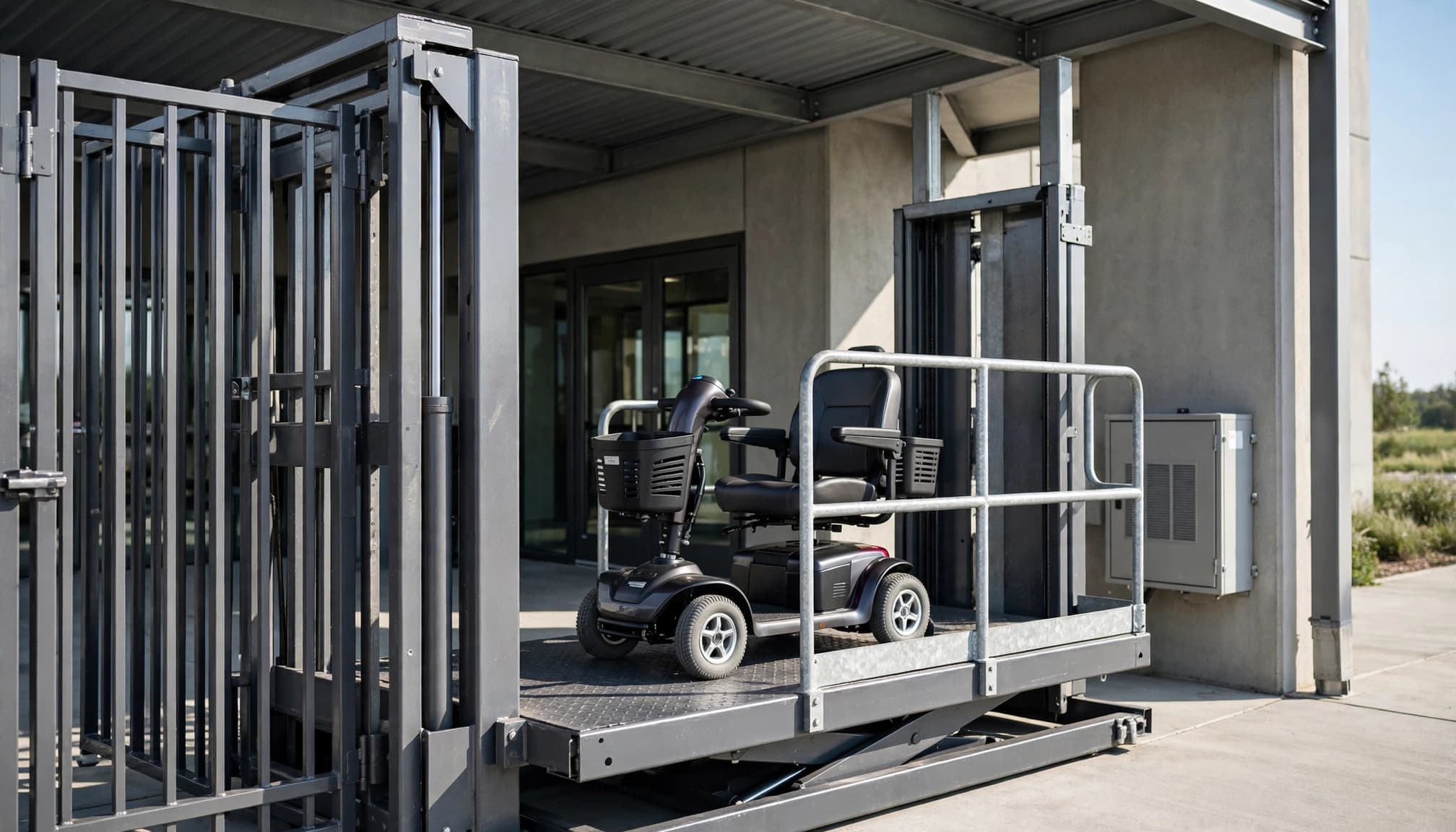
Rated capacity matters, but it doesn't prove that a power wheelchair or scooter can enter, turn, and exit safely. Measure the mobility device in its normal travel position, with footrests, anti-tip wheels, headrests, joystick controls, baskets, and other attached equipment in place.
Measure the full chair or scooter footprint
Record the device's maximum width, total length, turning needs, and weight with its usual rider seated. Add an attendant's weight when a caregiver will ride along. Personal equipment, oxygen, groceries, and bags also count toward the expected load.
Published outdoor configurations may include 36-by-48-inch, 36-by-60-inch, 42-by-54-inch, and 42-by-60-inch platforms. Those figures are planning references, not automatic answers for every device or property.
| Access arrangement | Starting planning reference | What still needs review |
|---|---|---|
| Straight-through entry and exit | 36 by 48 inches | Full device length, gate openings, and landing clearance |
| Longer power wheelchair or scooter | 36 by 60 inches | Joystick clearance, footrests, and approach angle |
| Side-entry or 90-degree movement | 42 by 60 inches clear | Turning space, gate position, and local requirements |
A 750-pound or 1,000-pound rating can still be unsuitable if the platform is too short or the load can't remain stable. Outdoor VPL platform sizing should account for the chair, the user, the landing, and the entire approach.
Check the route before ordering
A mobility device needs a smooth route onto the platform and enough room to leave it at the upper stop. Check thresholds, sill gaps, gate swing, rail placement, overhead clearance, and the landing's finished surface.
Use a firm, slip-resistant surface that lets wheels roll without a sharp jolt. Loose pavers, deep grooves, standing water, and abrupt transitions can make loading difficult.
The platform's floor pattern should provide traction without catching small front casters. Controls also need to remain reachable from the rider's normal position, without placing hands near moving gates or platform edges.
Plan Controls, Backup Power, and Temperature Protection
An outdoor VPL needs simple, dependable controls because its users may have limited hand strength, reduced reach, or difficulty standing. The installer should demonstrate every control before the lift enters regular service.
Use controls that match the rider
Many VPLs use continuous-pressure controls, meaning the user holds the button throughout travel. This helps stop movement if the control is released. Emergency-stop buttons, keyed controls, gate interlocks, alarms, and limit devices vary by model and installation.
For example, the Savaria Multilift lists a 750-pound capacity, continuous-pressure controls, and a dedicated 120-volt, 15-amp circuit. The Harmar Highlander II also lists a 750-pound capacity and 120-volt, 15-amp power requirements. These are model details, not universal VPL specifications.
Safe loading starts before the platform moves. Center the wheelchair or scooter as the manufacturer directs, engage its brake if instructed, keep bags from shifting, and confirm each gate has latched.
Know what backup power can do
Power-loss planning is important for outdoor lifts, especially in storm-prone areas. Some models offer battery backup or emergency lowering. Harmar's ReadyUPS option can provide additional trips during an outage, while other systems may offer only a controlled lowering function.
Ask the installer to demonstrate the installed unit's approved emergency procedure. Find the battery, disconnect, manual-lowering device, reset control, and emergency instructions. Confirm whether the backup feature supports normal travel, a limited number of trips, or only descent.
Cold regions need their own plan. Published VPL options include mast heaters that protect hydraulic fluid from freezing. There is no single verified temperature range for all outdoor lifts, so follow the selected manufacturer's operating guidance.
Build a Routine for Safe Daily Use
Outdoor exposure makes small problems easier to miss until they affect access. A short visual check before use can prevent many avoidable interruptions.
Check the access path and gates
Keep the lower and upper landings free of wet leaves, sand, snow, ice, loose tools, and stored items. Confirm that the route to the lift is level enough for the wheelchair or scooter user to approach safely.
Before travel, check that gates close and latch properly. Do not use the lift if a gate drags, the platform doesn't stop level with the landing, controls behave unpredictably, or an alarm remains active.
Never overload the lift or use it to transport materials that block controls, press against a gate, or extend beyond the platform. A large cooler or box may meet the weight limit yet still create a dangerous clearance problem.
Schedule service and post-storm checks
Follow the manufacturer's maintenance schedule and use qualified service technicians for adjustments and repairs. Regular service commonly includes inspection of drive components, cables or rails where fitted, lubrication points, electrical connections, fasteners, gates, and safety devices.
After a storm, inspect for standing water, wind-blown debris, bent rails, damaged coatings, loose hardware, and signs of electrical exposure. Don't operate the lift after flooding or visible damage until a qualified technician has reviewed it.
Battery systems also need attention. Ask how the battery is tested, charged, dated, and replaced. A backup system that has never been tested may not help when the power goes out.
Travel Height, Codes, and the Site Review
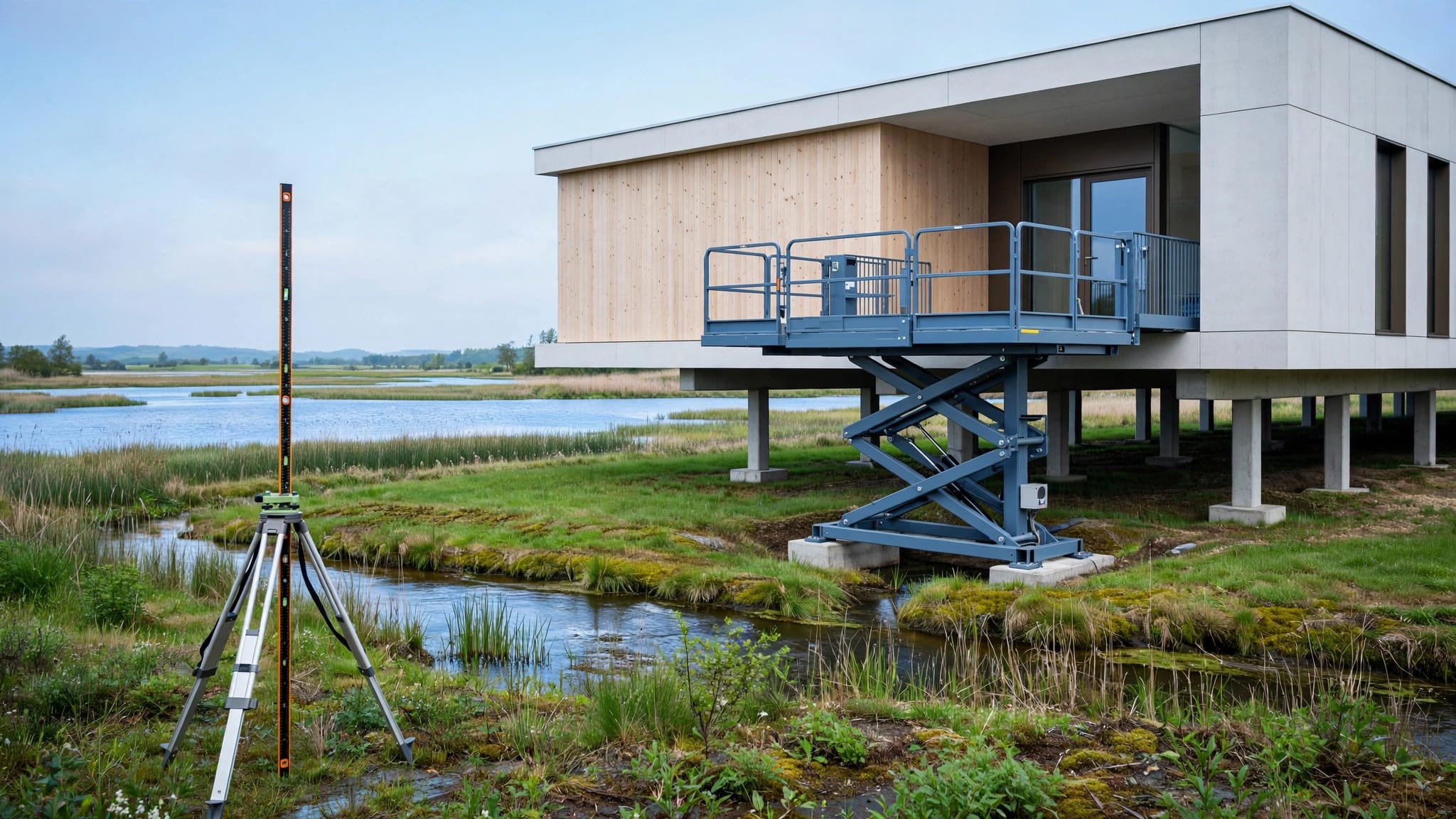
Travel height is the vertical distance between finished floor levels. It affects equipment choice, rail length, structure, power needs, guarding, and the local approval process.
Don't rely on one travel-height number
There is no universal outdoor VPL travel limit. Veranda 'Vator's vertical platform lift FAQs describe VPLs as limited to 14 feet of upward travel. Other published commercial-grade VPL listings show higher figures, subject to local code and project conditions.
Treat a brochure number as the beginning of a conversation. Taller runs may need more engineering, additional structural support, and a different equipment category. Outdoor vertical platform lift travel height depends on the model, the property, and the rules adopted where the lift will be installed.
Get professional review before final drawings
Local building, accessibility, electrical, floodplain, and wind-load requirements can affect the installation. Commercial and public-facing properties may have further obligations. The authority having jurisdiction, often the local building department or inspector, decides which requirements apply.
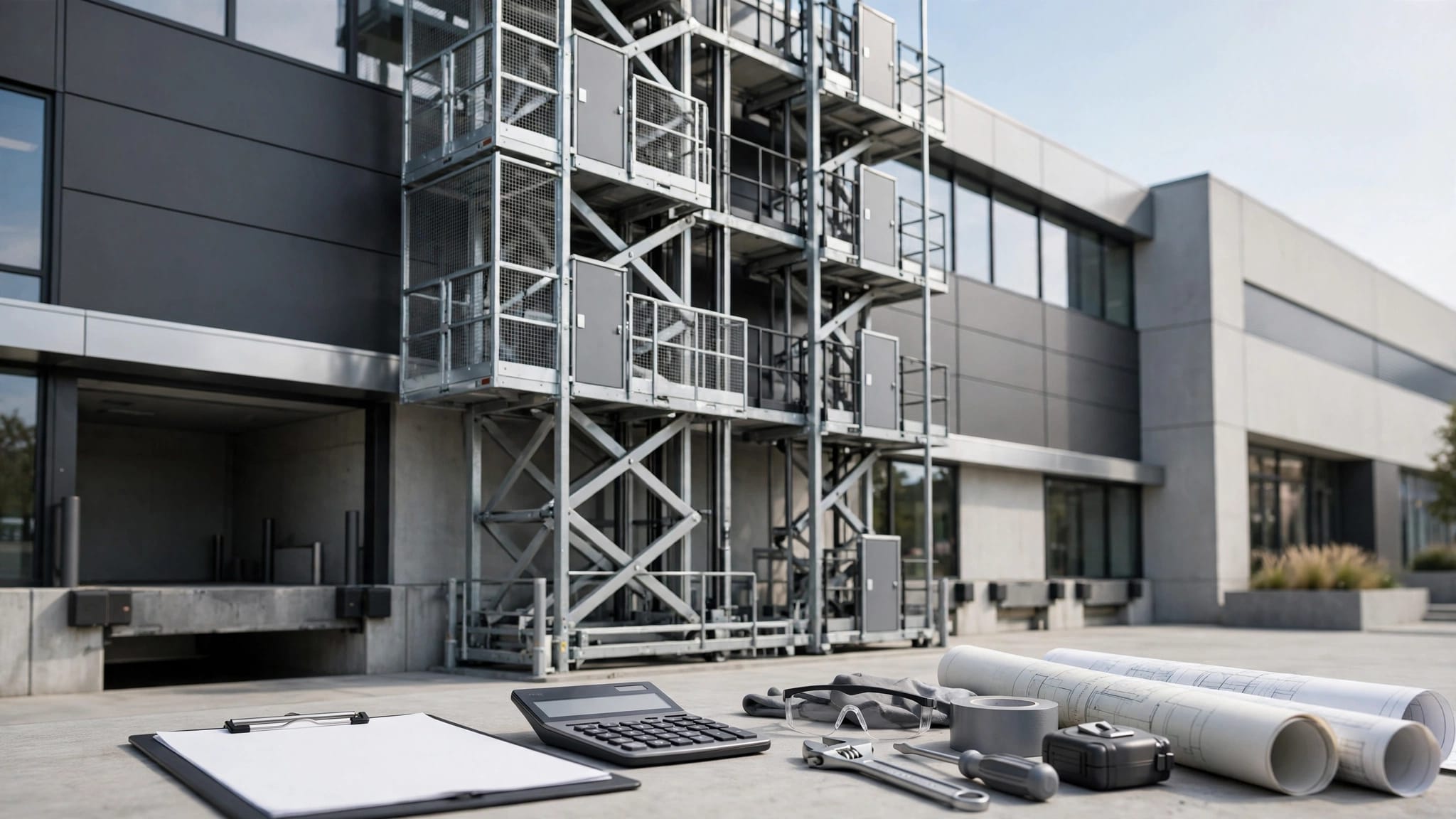
A qualified installer should review finished floor elevations, site drainage, platform dimensions, gate locations, electrical service, foundation conditions, and structural support. An outdoor VPL site survey checklist helps organize these details before equipment is ordered.
Key Takeaways
- Choose a VPL made for passenger and mobility-device access, not a cargo lift that only appears similar.
- Measure the complete power wheelchair or mobility scooter, plus its rider, attachments, and any regular attendant.
- Plan drainage, corrosion protection, wind exposure, and storm recovery before installation begins.
- Confirm how gates, controls, emergency stops, backup power, and emergency lowering work on the installed unit.
- Have a qualified installer and local authorities review structure, permits, accessibility requirements, and site conditions.
Frequently Asked Questions
Can a mobility scooter use an outdoor VPL?
Many scooters can use a VPL when the platform dimensions, capacity, gate arrangement, approach path, and local requirements fit the model. Scooters can be longer than expected because of their tiller, basket, and rear wheels, so measure the full device rather than relying on its seat width.
Does a higher weight capacity mean a larger scooter will fit?
No. Capacity describes the maximum designed load, while platform dimensions and clearances determine whether a device can board and exit safely. The wheelbase, turning space, gate opening, and landing layout all matter.
Will backup power operate the lift during every outage?
Not always. Some systems provide limited battery-powered travel, while others support emergency lowering only. Ask for a demonstration and learn the exact steps for the selected model before an outage occurs.
A Dependable Outdoor Access Route Starts With the Site
The best outdoor VPL is the one that fits the actual rider, mobility device, travel distance, structure, and climate. A platform that works well in dry weather can become unsafe if drainage, corrosion, gates, and backup procedures were treated as afterthoughts.
Careful measurement and qualified installation turn outdoor wheelchair lifts into a reliable part of daily access, even at raised homes and busy exterior entrances.
Recent Posts